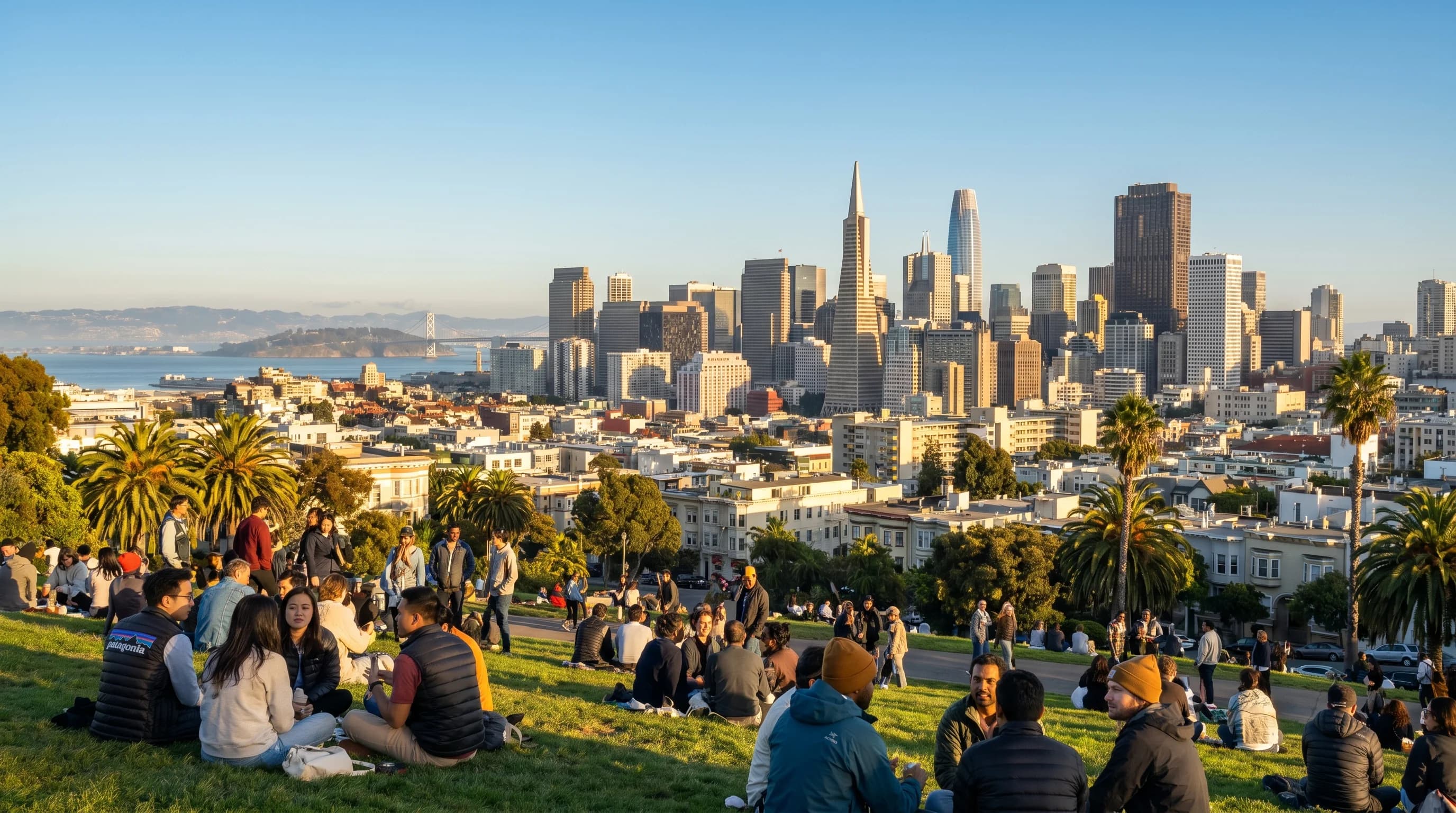
San Francisco does not follow the weather calendar that most American cities use. Summer is the coldest feeling season for many visitors, winter is mild and rainy, and the warmest days of the year arrive in September and October. The city averages about 67 degrees F in September compared to 63 degrees in July, a reversal that surprises nearly everyone who visits for the first time. This month-by-month guide covers what to actually expect, based on decades of weather station data from downtown San Francisco and the coastal stations that capture the fog patterns defining the city's climate.
January and February: The Wettest Months
January is San Francisco's wettest month, averaging about 4.4 inches of rain across roughly 11 rainy days. February is close behind at 4.0 inches. Temperatures are mild for winter: highs reach 57-59 degrees F and lows rarely drop below 46 degrees. Snow is essentially nonexistent in the city itself, though you can occasionally see it dusting the peaks of Mount Tamalpais or Mount Diablo across the bay. The rain comes in multi-day stretches driven by atmospheric rivers, the moisture plumes that carry tropical water vapor directly into the Bay Area coast. Between storms, January can deliver strikingly clear, calm days with visibility stretching to the Farallon Islands.
March and April: Transition to Dry Season
March is the last reliably rainy month, averaging about 3.1 inches. By April, rainfall drops to 1.4 inches and the dry season begins asserting itself. Temperatures start climbing: March highs average 61 degrees F, April reaches 63 degrees. The hills turn bright green from winter rains, and wildflowers bloom across Lands End and the Marin Headlands. These are some of the best months for hiking in the Bay Area, because the rain has greened everything up but the summer fog machine has not yet started. April in San Francisco is genuinely pleasant, averaging more sunshine than June or July.
May and June: The Fog Arrives
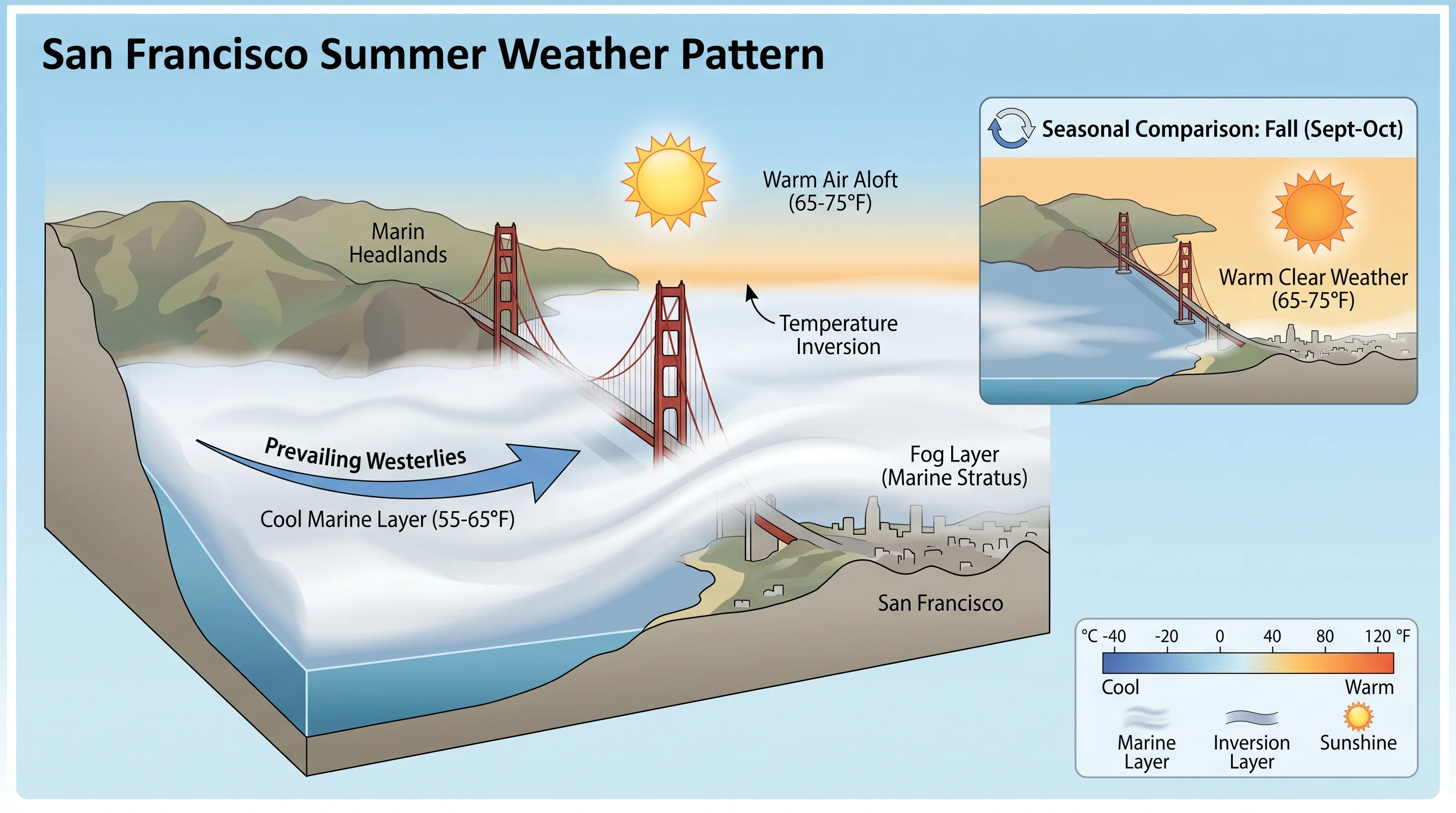
May is a transition month. Early May often feels like an extension of spring, with clear skies and highs around 64 degrees F. By late May, the marine layer begins its summer invasion. The Central Valley heats up, dropping in pressure, and cold Pacific air gets pulled through the Golden Gate with increasing force. June is the foggiest month of the year. Average highs reach only 66 degrees, but that number is misleading: the Outer Sunset and Richmond District may sit at 55 degrees under thick fog while the Mission District hits 72 degrees in sunshine. June is the month when San Francisco's microclimate extremes are most visible.

July and August: Peak Fog Season
July and August are the months that produce the classic "I left my heart in San Francisco but I wish I'd brought a jacket" experience. Average highs are 67 degrees F, but afternoon fog pushes through the Golden Gate almost daily, dropping temperatures in western neighborhoods to the mid-50s. The Fourth of July fireworks at Crissy Field are famously obscured by fog more often than not.
Wind is the other defining feature. Summer afternoon winds through the Golden Gate regularly hit 20-30 mph, making Ocean Beach genuinely cold even on days when Walnut Creek hits 100 degrees. The fog and wind are driven by the same pressure gradient: the hotter the Central Valley gets, the stronger the marine air gets pulled into San Francisco. It is a natural air conditioning system that keeps the city mild but makes layers essential year-round.
September and October: The Real Summer
September and October are San Francisco's warmest months, and locals know this is the real summer. The marine layer weakens as the temperature difference between the coast and the Central Valley narrows. Average highs reach 69-70 degrees F in September, and individual days in the low 80s are common. The Indian summer pattern can push temperatures into the upper 80s or even 90s during occasional offshore wind events.
October is equally warm but carries the first hints of the approaching wet season. Average highs are 69 degrees F, and the month can deliver both the warmest single day of the year and the first significant rain. It is also fire season, when Diablo wind events can spike temperatures well above normal while dropping humidity to single digits. October weather in San Francisco is unpredictable in the best way: you might get a week of 80-degree beach weather followed by the season's first rainstorm.
November and December: The Rains Return
November marks the transition back to the wet season. Average rainfall jumps to 2.5 inches after October's 1.0 inch, and temperatures cool to highs of 62 degrees F. The first winter storms typically arrive in November, sometimes bringing the most dramatic rainfall events of the season when atmospheric rivers make early appearances. December averages 3.8 inches of rain and highs of 57 degrees F, making it the second-wettest month after January.
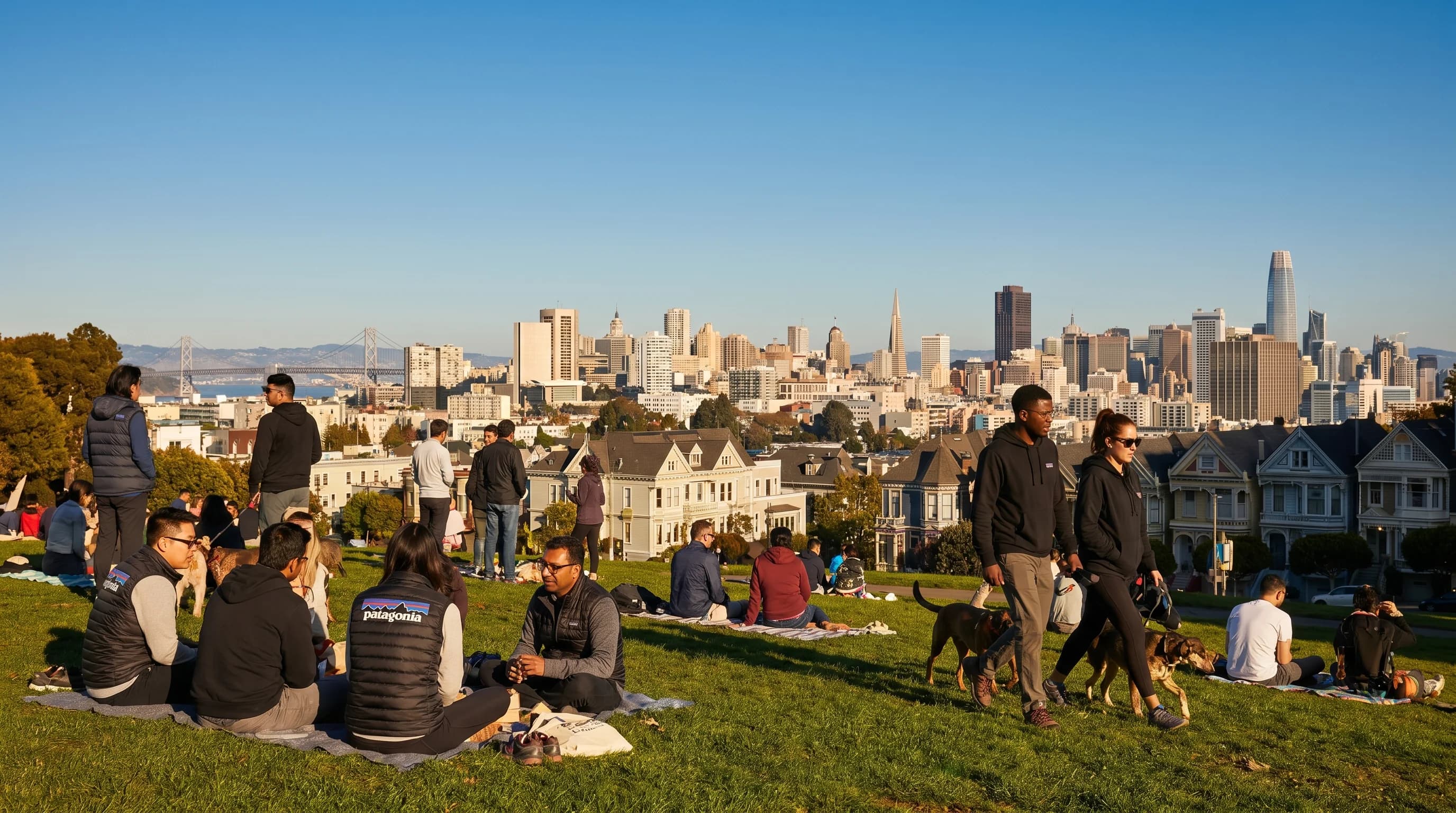
Despite the rain, winter in San Francisco is remarkably mild by national standards. The coldest overnight lows average around 46 degrees F, and temperatures below freezing are essentially unheard of in the city. Between storms, December and January can produce brilliantly clear days with cool, crisp air and the kind of light that makes the bay and the bridges look their best. San Francisco's winter is not about cold. It is about rain, and about the green transformation that rain brings to a landscape that spent six months turning gold and brown.