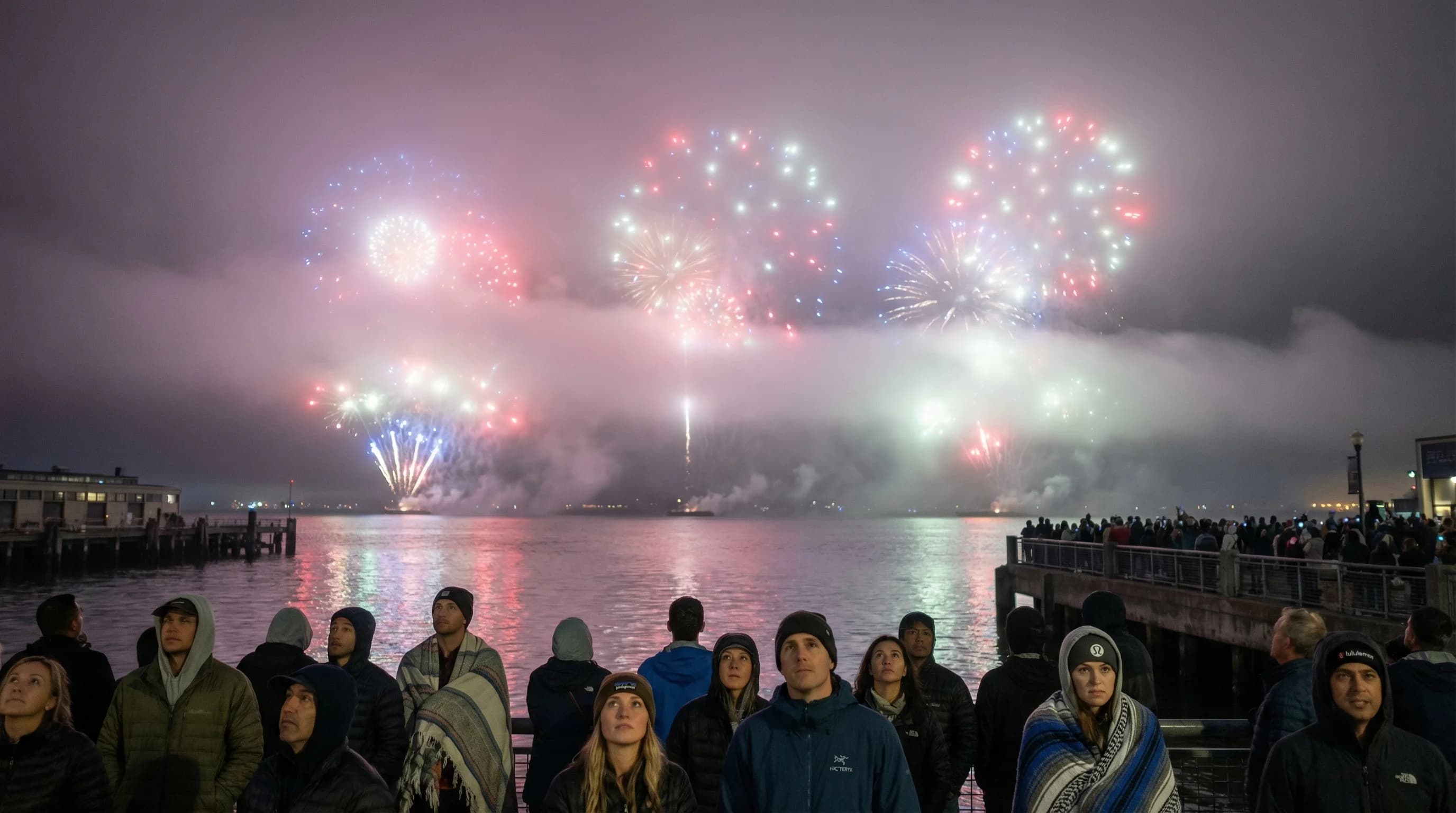
The Fourth of July in San Francisco is one of the most reliably cold Independence Days in the country, and the fog-canceling-fireworks question is genuinely real for anyone planning to watch the show from the city. For 2026, San Francisco's expanded fireworks plan centers the fog question farther west, with Golden Gate Bridge and bridge-adjacent viewing areas like Crissy Field joining the usual northern waterfront conversation. On many years the marine layer is thick enough by the time darkness falls that the fireworks are firing into a ceiling of fog, producing spectacular diffused light and sound visible from nearby but impossible to see clearly from across the bay or from elevated vantage points. Some years are better than others. What determines whether the fog wins on July 4th comes down to the marine layer's behavior at its most intense summer period.
Why July 4 Is So Foggy
July 4 falls almost exactly at the peak of San Francisco's fog season. The North Pacific High is at or near maximum strength in early July, driving the strongest and most consistent onshore flow of the year. The sea surface temperature off the coast is near its summer minimum due to upwelling, maximizing the temperature difference between the cold ocean air and the heated land. The marine layer is at its greatest depth and most persistent. This is the combination that produces the year's foggiest days, and July 4 sits right in the middle of this period.
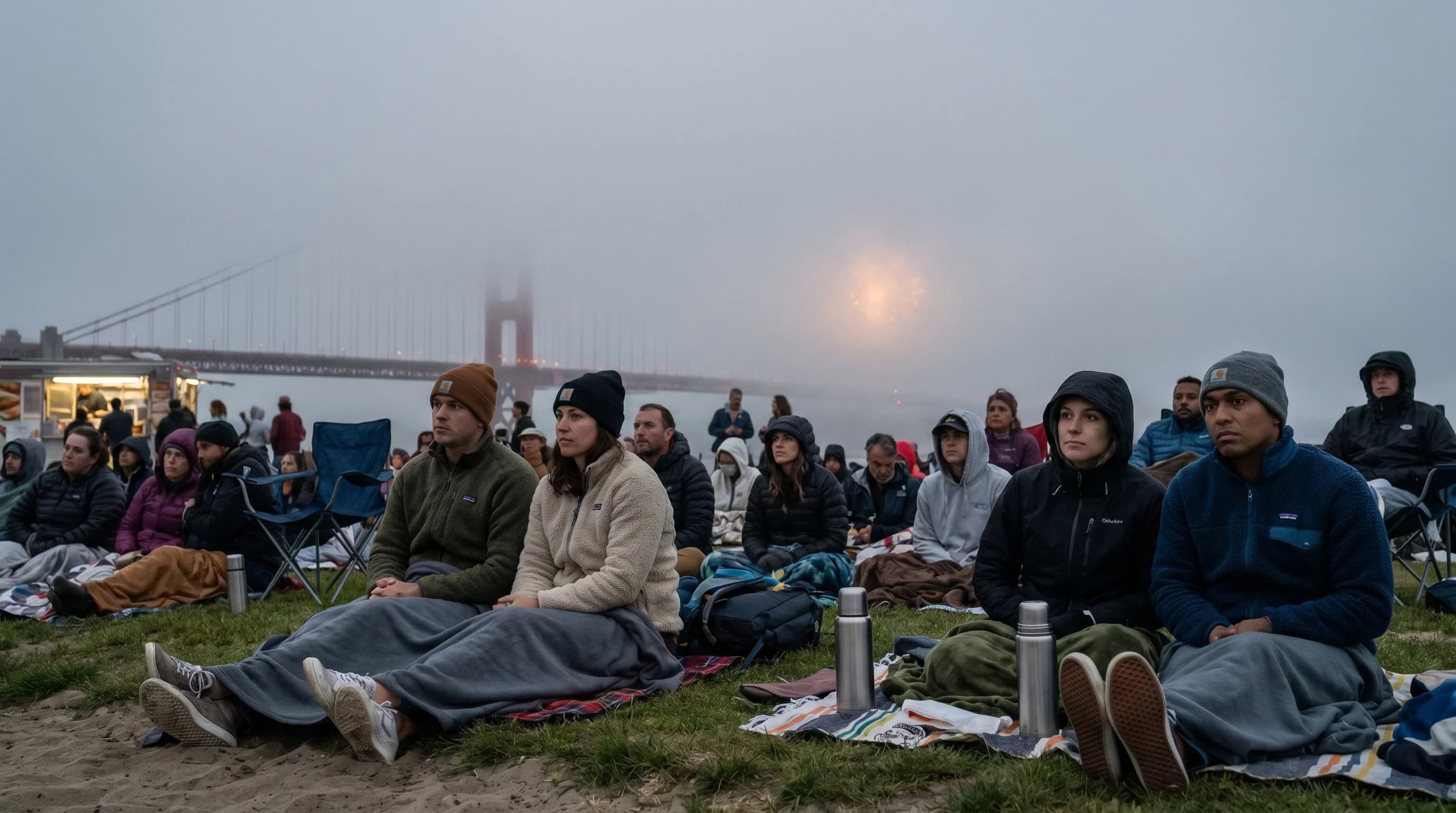
The typical Fourth of July day in San Francisco sees morning fog that partially or fully burns off during midday, then returns in the afternoon and evening as the sea breeze carries the marine air back over the city. By 9:30 p.m. when fireworks begin, the fog is often back in force over the northern and western parts of the city. The Golden Gate and Crissy Field side of the waterfront is closer to the Pacific marine push than Fisherman's Wharf, which makes the 2026 bridge-focused show especially sensitive to low cloud timing. A clear forecast at the Embarcadero can still become a fogged-in view near the bridge.
Where to Watch for Better Odds
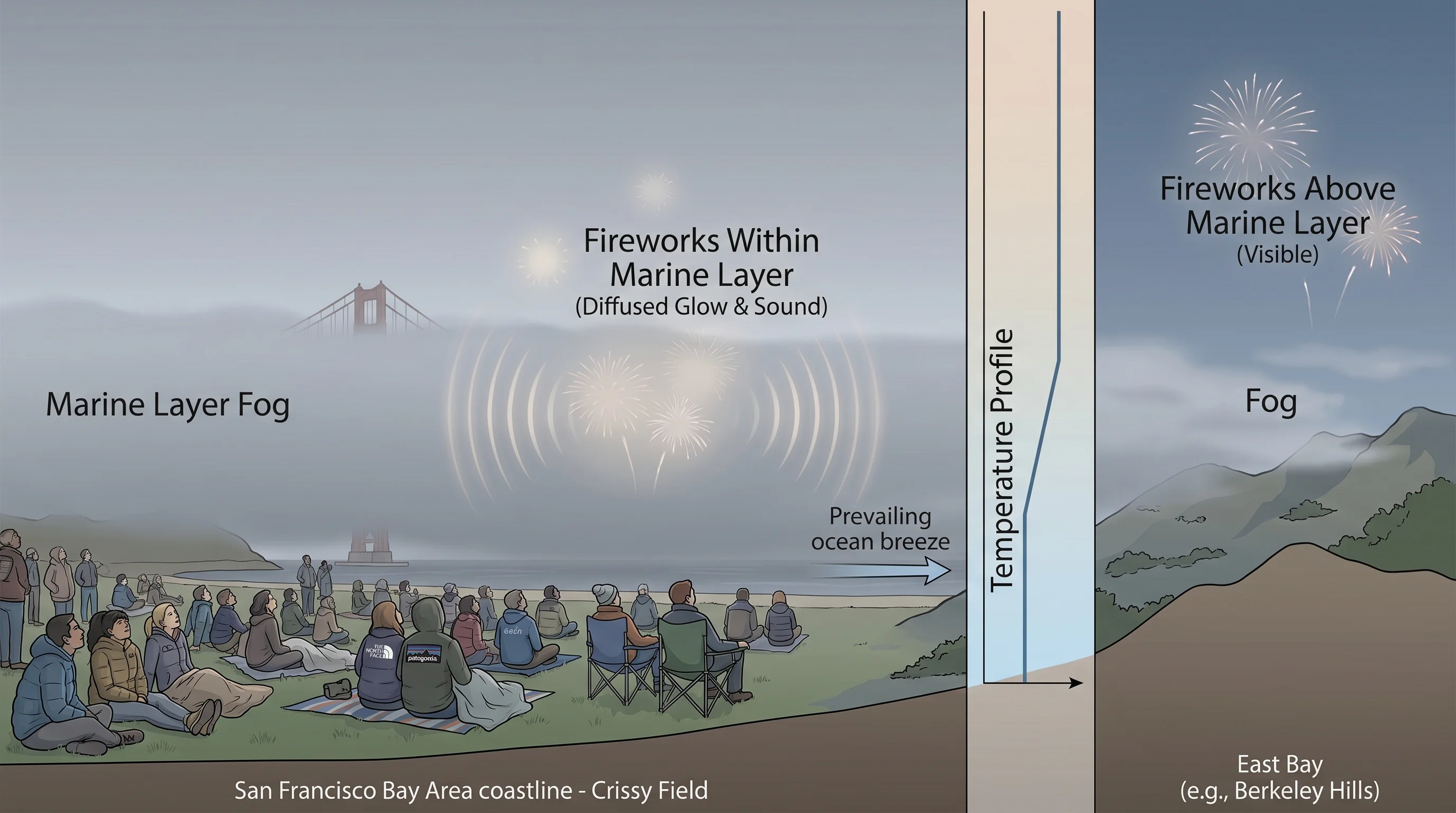
The best strategy for watching San Francisco's 2026 fireworks is to match your viewing spot to the show zone and the fog edge. For the Golden Gate Bridge portion, Crissy Field, Marina Green, and the Presidio waterfront keep you close to the action, but they also sit in one of the city's most fog-exposed evening corridors. The bay-facing eastern neighborhoods, the Embarcadero, the Ferry Building area, Rincon Hill, and the neighborhoods across the bay in Oakland and Berkeley, often have better visibility than the western and northern parts of San Francisco, especially if the lower bridge deck disappears into marine layer.
Elevated spots to the east of San Francisco, the Berkeley Hills, Grizzly Peak, Tilden Park, are sometimes above the marine layer entirely when the fog ceiling is below 1,000 feet, and can provide a bird's-eye view of fireworks bursting above the fog layer with the city lights glowing beneath. This is a spectacular view when it works, and it works on years when the marine layer is present but not too deep, roughly at the 500 to 800 foot level. When the marine layer is exceptionally deep and thick, even hilltop views are fogged in.
The East Bay Alternative
The inland East Bay and South Bay consistently have clearer Fourth of July weather than San Francisco. Cities like Oakland, Walnut Creek, and Fremont see far less fog on summer evenings because they are removed from the marine layer's densest core. Local fireworks shows in the inland East Bay, Walnut Creek, Danville, Pleasanton, typically take place under clear skies with temperatures warm enough for a comfortable outdoor evening in shorts and a light layer. For visitors to the Bay Area on July 4 who prioritize seeing actual fireworks clearly, the inland communities almost always deliver a better viewing experience than San Francisco's waterfront.
This is not to say San Francisco's July 4 is not worth experiencing. Watching fireworks through San Francisco fog has its own atmospheric quality, the diffused glowing light through the clouds, the thunderous sound amplified by the fog, the huddled crowds in their parkas in July, and it is distinctly San Franciscan. But if the goal is clear-sky fireworks, the East Bay is more reliable.
What to Wear on July 4 in San Francisco
The Fourth of July in San Francisco requires the same preparation as any other summer evening in the city: layers, a jacket, and realistic temperature expectations. By the time fireworks begin at 9:30 p.m., the temperature along the Crissy Field and Marina waterfront is typically in the high 50s or low 60s, with wind. People who arrive in shorts and a t-shirt from warmer parts of the Bay Area are a common sight, and they are consistently cold by the time the show ends. The locals who arrive in down jackets are not overdressed; they are appropriately dressed for July 4 in San Francisco, which is a cold-weather event regardless of the calendar.