microclimatesseasonaldestinations

Why Are East Bay Cities Hotter Than the Coast?

By SFBayWeather||Updated |4 min read
Why Are East Bay Cities Hotter Than the Coast?

Key Takeaways

  • The marine layer is the primary driver of summer temperature differences across the Bay Area, cooling the coast intensely and diminishing with each mile inland.
  • Oakland runs 10-15°F warmer than San Francisco on typical summer afternoons because it sits on the eastern side of the bay, partially sheltered from the densest marine air.
  • The Berkeley Hills mark the effective eastern boundary of significant marine influence. Communities beyond them, like Walnut Creek and Concord, receive a weakened, warmer version of the sea breeze.
  • The coast-to-inland temperature gradient is entirely normal summer weather in the Bay Area, not a weather event or anomaly.
  • The same metropolitan area spans climate zones ranging from cool and foggy coastal conditions to hot, dry inland valley conditions separated by 50 miles.

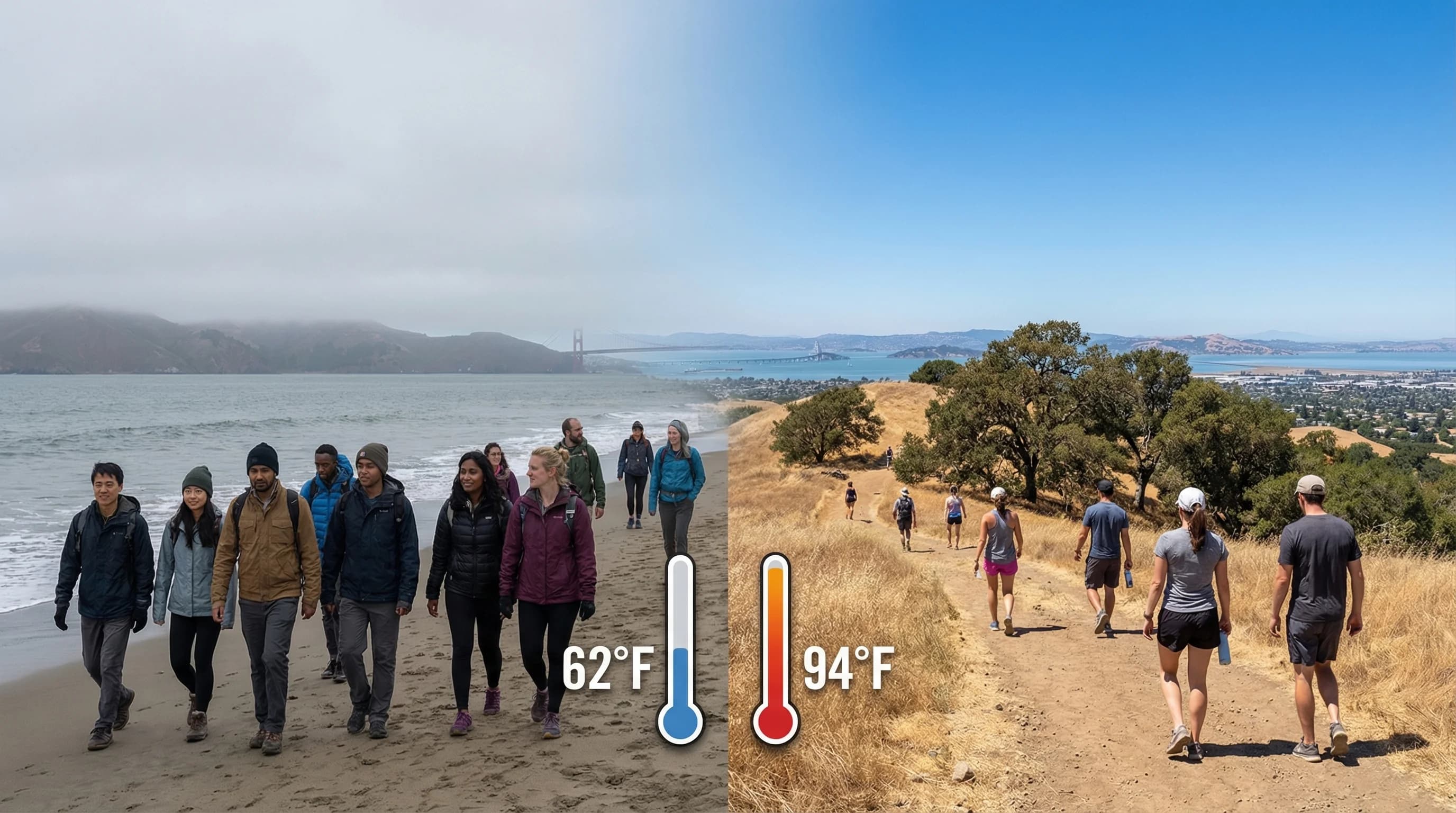
On a typical summer afternoon, the weather in Oakland and San Francisco could hardly be more different. In San Francisco, it is 62 degrees, foggy, and the wind is gusting at 20 miles per hour off the Pacific. In Oakland, 8 miles across the bay, it is 78 degrees, sunny, and the breeze is light and pleasant. In Walnut Creek, 25 miles from the coast, it is 92 degrees with a dry wind. In Livermore, 40 miles from the ocean, it is 98 degrees. All four cities are in the same metropolitan area. They share the same general climate system. But the 30-degree temperature difference between the coast and the inland East Bay is not a weather event. It is the normal daily pattern of summer, explained entirely by geography.

The Marine Layer as the Dividing Line

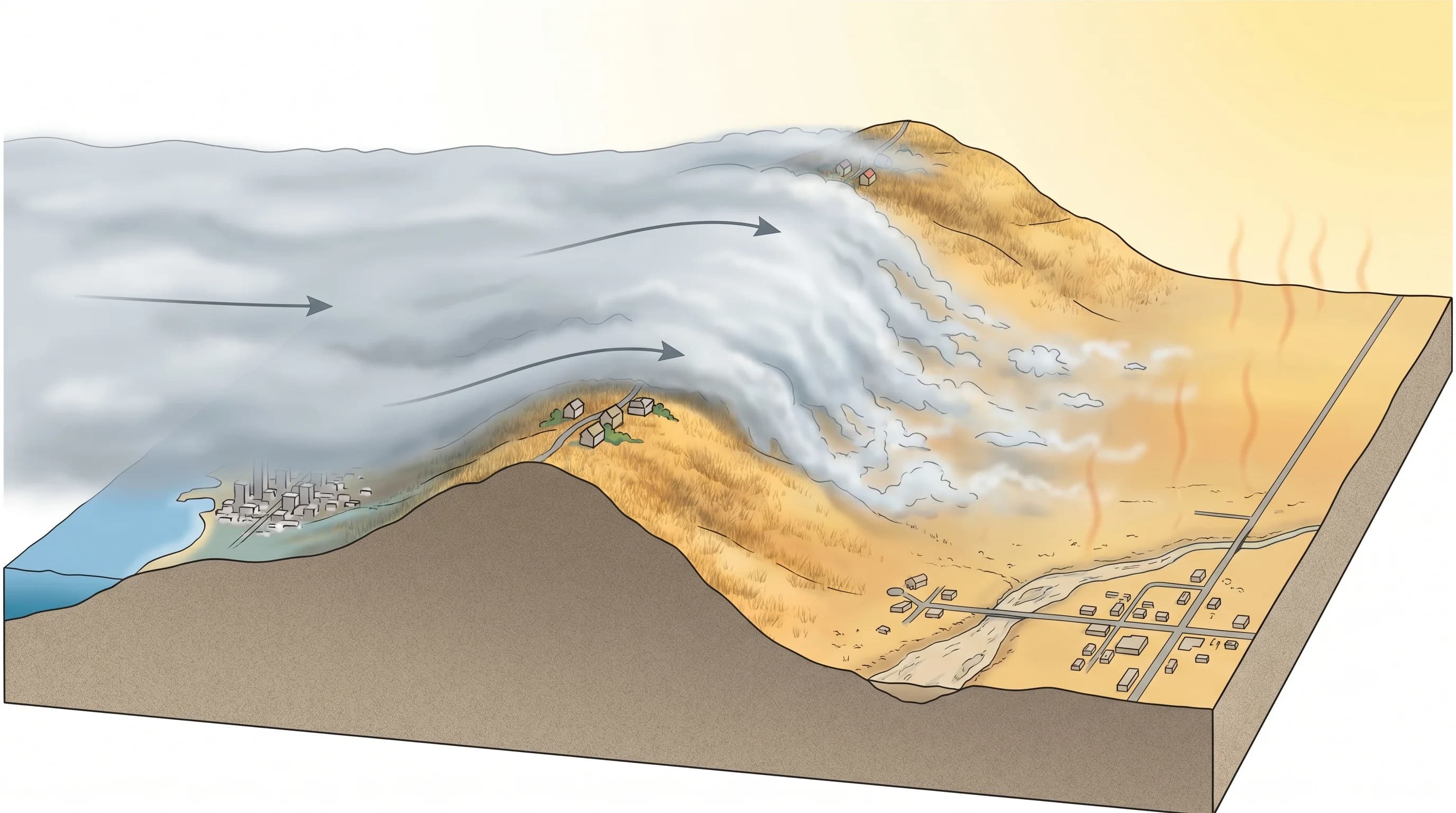
The fundamental explanation for East Bay heat is the marine layer. The marine layer is a shallow body of cool, moist air that forms over the Pacific Ocean and flows onshore through the Golden Gate on summer afternoons. San Francisco, on the ocean-facing tip of the peninsula, is in the full path of this flow. The city sits directly within the marine layer for most of the summer, receiving the cooling effect at its most powerful.

Oakland sits across the bay. The marine air does reach Oakland, eventually. But by the time it has traveled across the bay's 8-mile width, it has warmed slightly, and Oakland's eastern position means it sees the leading edge of the sea breeze rather than the dense marine core that San Francisco experiences. Oakland is noticeably sunnier than San Francisco, routinely logging 30 percent more sunshine hours. It is also warmer, with summer afternoons that typically run 10 to 15 degrees above San Francisco.
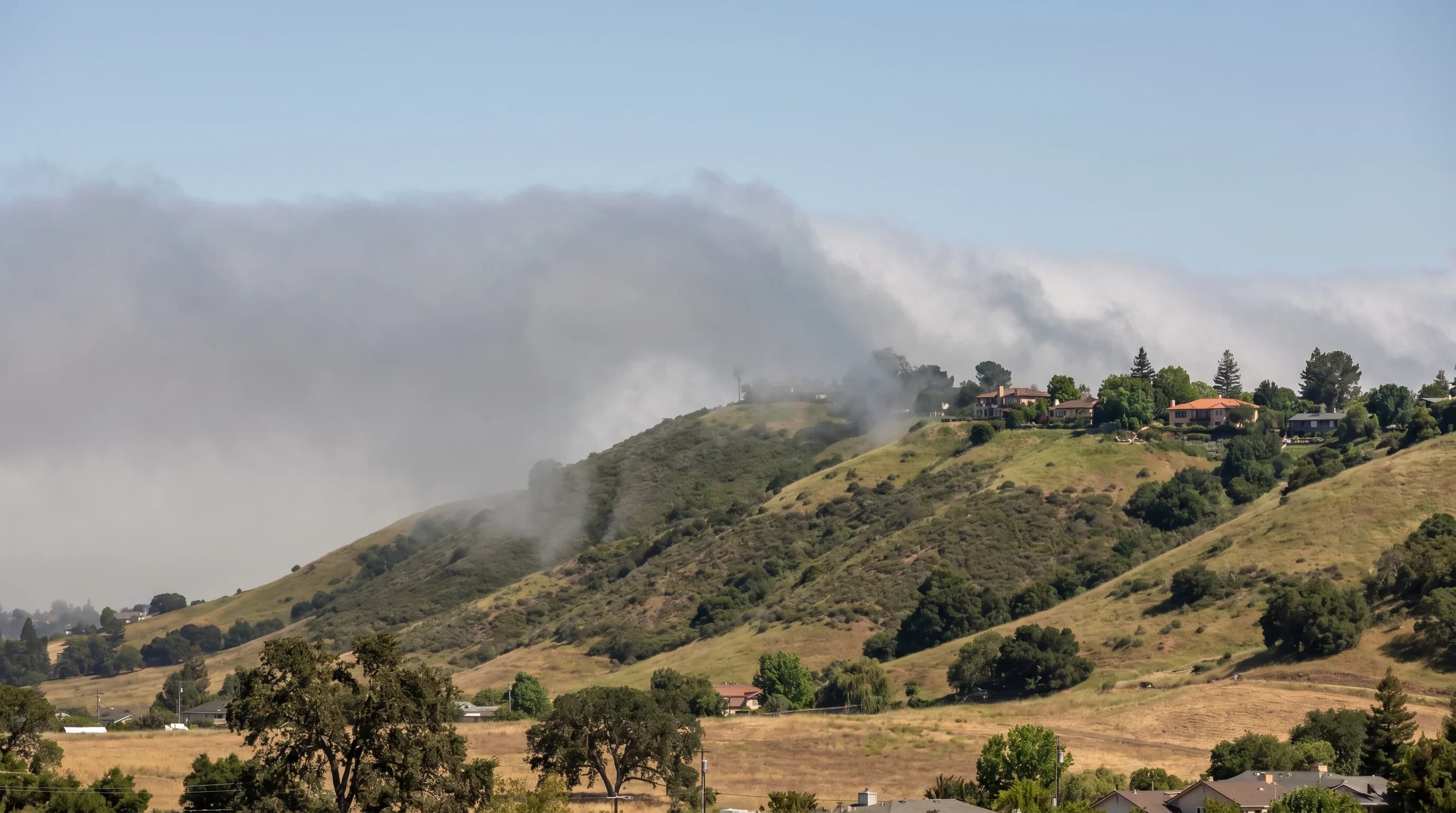
Temperature gradient map showing San Francisco at 62°F, Oakland at 78°F, Walnut Creek at 92°F, and Livermore at 98°F on a typical summer afternoon, demonstrating the coast-to-inland temperature increase
The 30°F coast-to-inland East Bay temperature difference on a typical summer afternoon is driven by the marine layer's reach. San Francisco is buried in marine air. Oakland is partially cooled by it. Walnut Creek is near the limit of its influence. Livermore is beyond it entirely.

The Hills as the Barrier

The Berkeley Hills, the ridge that separates the flatland East Bay cities from the Lamorinda communities and inland valleys, mark the effective eastern boundary of significant marine influence on most summer afternoons. The sea breeze and marine air flow over the hills and can reach the inland valleys, but by the time they arrive in Concord or Livermore, they have been significantly modified by compression and mixing. The inland valleys receive a version of the sea breeze that is weaker, warmer, and drier than the version Oakland receives.
Scientific illustration explaining Why Are East Bay Cities Hotter Than the Coast?

The result is a progressive temperature increase from coast to inland that roughly follows the distance from the Pacific. Berkeley runs slightly cooler than Oakland. Oakland runs cooler than the Diablo Range foothills. The foothills run cooler than the valley floors. And the farthest inland valleys, Livermore and Antioch, run at their own temperature extreme, routinely 30 to 35 degrees warmer than San Francisco on the same afternoon and occasionally exceeding that by wide margins during heat waves.

Why the Difference Matters

The coast-to-inland temperature gradient is not merely interesting to weather observers. It determines where Bay Area residents seek out summer activities and where they retreat from heat. San Francisco's beaches are cold. The East Bay hills are pleasant for hiking when the coastal cities are foggy. The inland East Bay needs swimming pools and indoor cooling that the coast does not. The same metropolitan area contains climate zones that would be considered separate weather regions in most other parts of the country.

Frequently Asked Questions

Why is Oakland warmer than San Francisco in summer?

Oakland sits across the bay from San Francisco, 8 miles to the east. While the marine layer flow comes onshore through the Golden Gate and cools San Francisco directly, Oakland receives a modified version of that air after it has traveled across the bay and warmed slightly. Oakland is also partially shielded from the densest marine core by its eastern position. The result is that Oakland typically runs 10-15°F warmer than San Francisco on summer afternoons and sees 30 percent more sunshine hours annually.

How hot does Walnut Creek get compared to San Francisco?

On a typical summer afternoon with a strong marine push, San Francisco may be at 62°F under fog while Walnut Creek reaches 92°F in full sun; a difference of 30°F across 25 miles. On the hottest summer days, the difference can exceed 35°F. Walnut Creek and Concord lie beyond the Berkeley Hills, which effectively block the marine layer from penetrating at full strength. The sea breeze reaches them, but weakened and warmer after crossing the hills.

Does the East Bay cool down at night?

Inland East Bay cities like Walnut Creek, Concord, and Livermore cool significantly overnight because they are away from the bay's thermal mass. Overnight lows in summer can drop to the low 60s or even the upper 50s after hot days, as radiative cooling is effective in the dry inland valleys. San Francisco, surrounded by water, stays warmer at night due to the bay and ocean moderating temperatures. The overnight temperature difference between coast and inland is smaller than the afternoon difference.

What is the Berkeley Hills weather divide?

The Berkeley Hills run north-south at elevations of 1,200-1,800 feet and mark the effective eastern boundary of significant marine influence in the central Bay Area. West of the hills, in the flatlands from Oakland to Berkeley, the marine layer arrives in a weakened but still cooling form. East of the hills, in the Diablo Valley (Walnut Creek, Concord, Danville), the marine air is blocked or significantly modified. On summer afternoons, the temperature difference across the ridge can be 10-15°F within a few miles.

Does Livermore always get hotter than Oakland?

In summer, yes, consistently. Livermore sits at the eastern end of the Altamont Pass corridor, which funnels the sea breeze efficiently but leaves the Tri-Valley floor exposed to full solar heating with a diminished cooling effect. On typical summer days Livermore averages 95-100°F while Oakland averages 72-75°F. In winter and spring, the difference narrows considerably since solar heating is less intense and the marine layer is less dominant. On cold winter nights, Livermore can actually drop below Oakland due to its inland position and more effective radiative cooling.

Live Bay Area Conditions

Compare fog, temperature, wind, and comfort across the map.

See which microclimates are clear, cool, windy, or warming up right now.

Open the Weather Map
🔒Privacy Policy📄Terms of Service