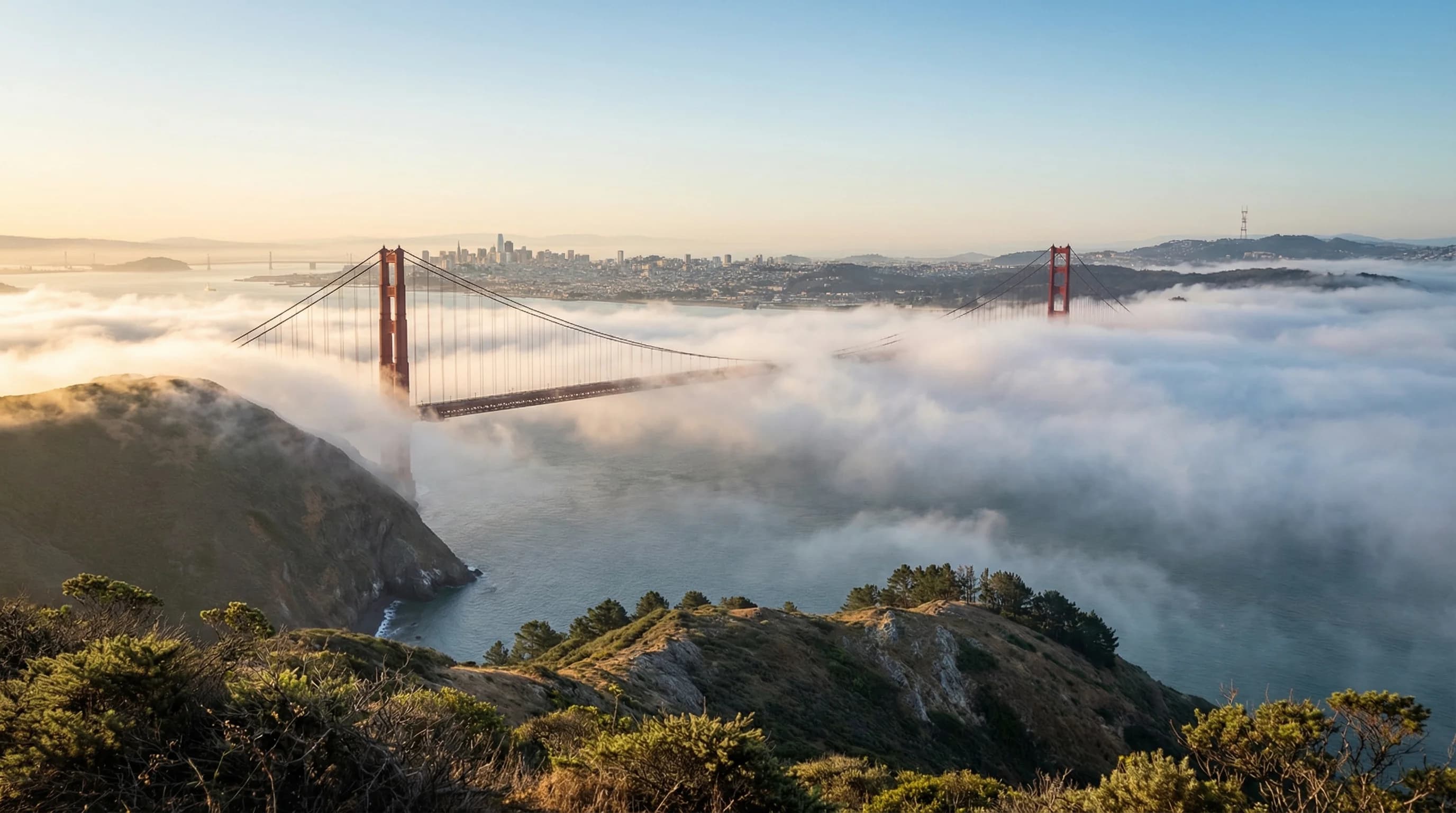
Picture this: it's a Tuesday morning in late June. You're standing at the corner of Judah and 46th in the Outer Sunset, coffee in hand, watching a gray wall of fog pour silently through the gaps between houses. The temperature is 58 degrees. Somewhere inland, the Central Valley is already baking at 95. This is not a weather anomaly. This is San Francisco doing exactly what San Francisco does in summer, which is to say, being thoroughly, stubbornly fogged in.
The fog surprises people who expect California summer to mean sunshine. It surprises visitors who packed shorts and sandals. What it should not surprise is anyone who understands how this city actually works, because the summer fog here is one of the most predictable, mechanically elegant weather phenomena in the country.
Why Is San Francisco Foggiest in Summer?
The short answer is heat, specifically the brutal, relentless heat of California\'s Central Valley. Every summer, the valley interior routinely hits 95 to 105 degrees Fahrenheit. That superheated air rises, dropping surface pressure across the Central Valley floor. Meanwhile, the Pacific Ocean sits at a near-constant 55 to 58 degrees, dense and heavy and cold. Physics demands equilibrium. The pressure difference pulls cool marine air eastward through any gap it can find, and the Golden Gate is the largest gap on the Bay Area coastline. The result is a 40 to 50 degree temperature contrast that drives a daily river of cold air into the city every single afternoon.
This is why summer is foggier than winter. In January, the Central Valley is cool and calm, so there's no thermal engine pulling marine air inland. The pressure gradient disappears, and so does the fog. Winter storms bring rain and clouds, but those are a completely different phenomenon. True marine layer fog, the kind that swallows the Golden Gate Bridge entirely, is a summer product. June alone averages 18 to 20 foggy days. January and February average 6 to 8.
What Is the Marine Layer, Exactly?
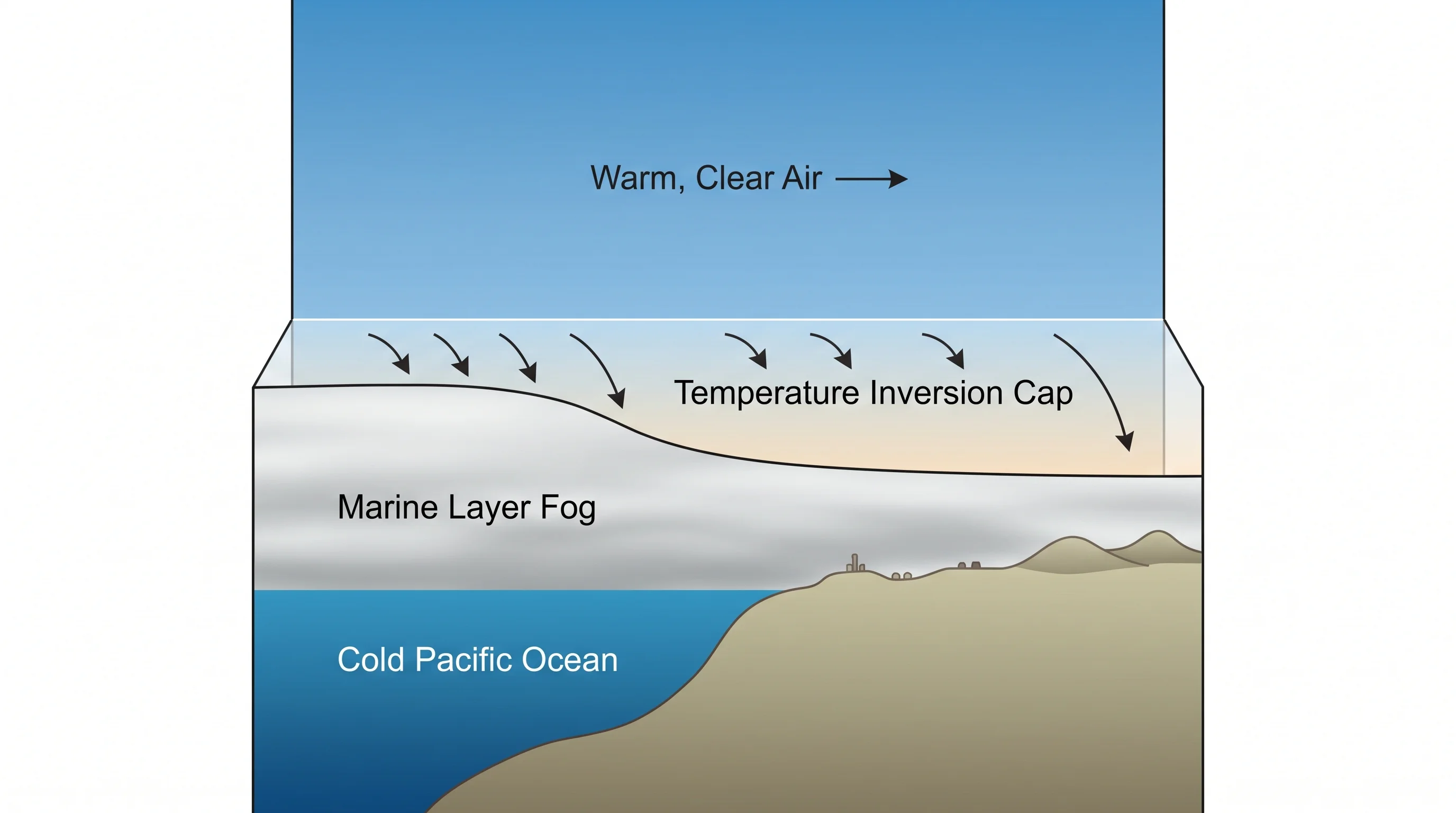
The marine layer is a shallow sheet of cool, moist air that sits near the ocean surface, capped by a warmer layer of air above it. Think of it as a cold air sandwich pressed against the ground, with warm air acting as a lid. In summer, this layer is typically 300 to 800 feet thick over the Bay Area. When that moist air gets pushed inland and forced up over terrain, it cools further and condenses into fog or low clouds. When the sun heats the surface enough to break the temperature inversion at the top of the layer, the fog burns off. On most summer days in San Francisco, that burn-off takes until noon, and in neighborhoods like the Outer Sunset, it sometimes never fully arrives.
The marine layer is not the same as a fog bank in the traditional sense. It's a persistent atmospheric structure that rebuilds every night as the land cools and the ocean influence reasserts itself. Residents who live in the affected areas describe it as living inside a refrigerator that occasionally opens a crack of sunlight in the afternoon. That description is not far off.
Cold Upwelling: The Ocean's Role
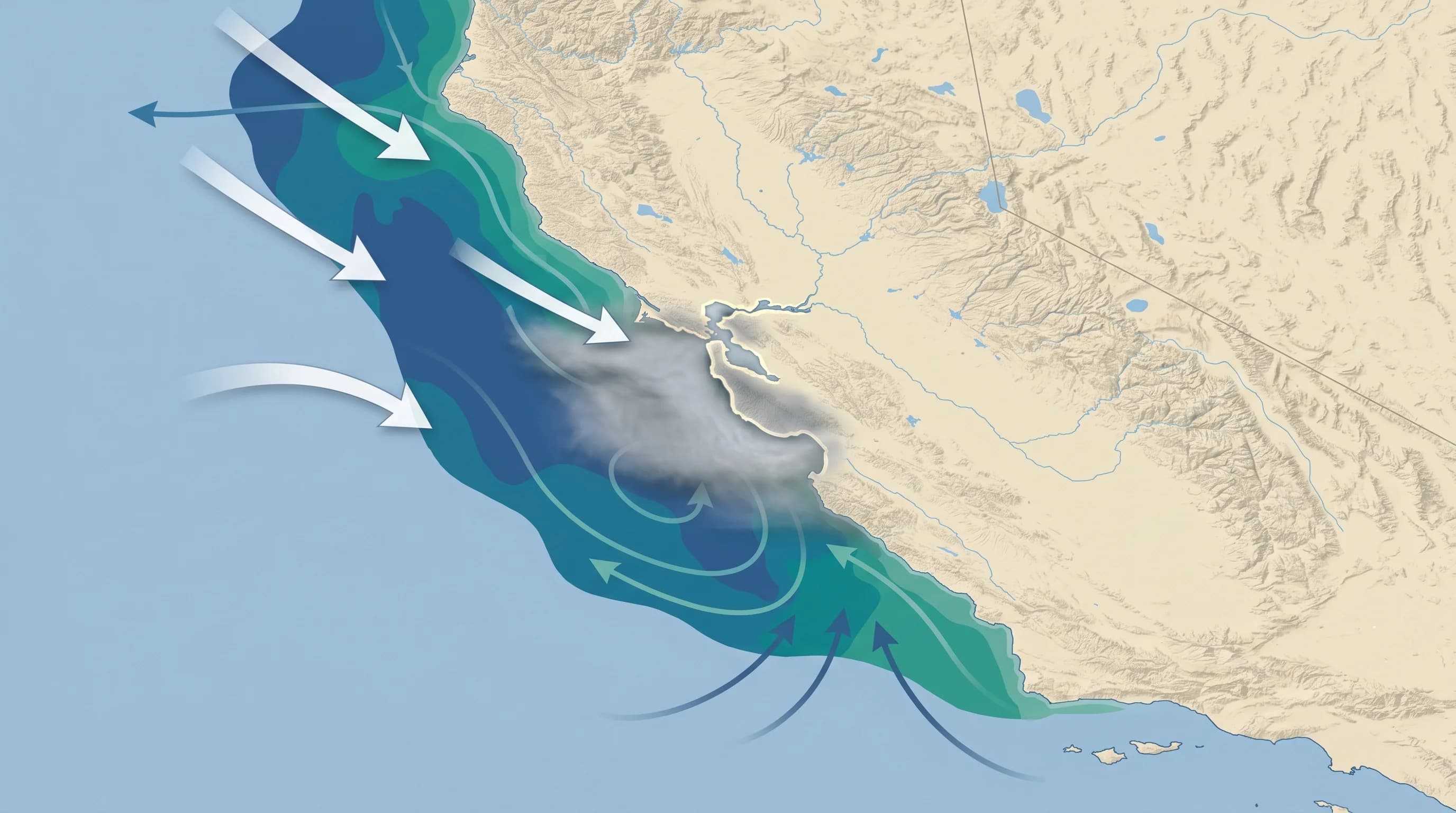
The Pacific Ocean off San Francisco is cold for a reason that has nothing to do with latitude. The California Current flows southward along the coast, and as it moves, prevailing north winds push surface water offshore. When surface water moves away, colder water from 300 to 600 feet below rises to replace it, a process called upwelling. This is why the water temperature at Ocean Beach sits at 55 to 58 degrees year-round, even in August. It is also why swimming in the Pacific here without a wetsuit is a choice made mainly by people who have not yet done it before.
That cold upwelling is essential to the fog machine. It keeps the marine air mass cold and dense, ensuring there's always a supply of chilled air ready to be pulled inland whenever the Central Valley heats up. Without the upwelling, the ocean surface might warm enough to reduce the temperature contrast, and the fog frequency would drop significantly. San Francisco's fog, in other words, is a product of ocean circulation patterns that extend hundreds of miles offshore.
Karl the Fog
San Francisco gave its summer fog a name, and the name stuck. Karl the Fog is the nickname locals use for the marine layer, originally the handle of a social media account that started posting sardonic, first-person fog dispatches around 2010. The account now has over 300,000 followers. Karl complains about being blamed for ruined picnics, takes credit for excellent hair days, and occasionally argues with the sun. The joke works because it captures something real: San Franciscans are not merely tolerating the fog. They have claimed it. July 6 is Karl the Fog Day, an unofficial holiday celebrated with fog photos, fog merchandise, and a degree of genuine civic pride that outsiders find baffling and locals find completely reasonable.
What makes Karl more than a novelty is what the account reflects about how San Franciscans actually feel about the fog. They claim it. They're proud of it. Visitors from Los Angeles complain about it, which locals find deeply satisfying. The fog is part of the city's identity in a way that goes beyond weather preference. It shapes architecture (no one builds outdoor rooms facing west), clothing culture (layers, always layers), and even real estate values (fog-free neighborhoods carry a premium).

Fog Patterns Month by Month
June is the foggiest month, averaging 18 to 20 foggy days. The thermal gradient between the inland heat and the cold coast is at its maximum, and the marine layer is thick and aggressive. Many June mornings in western neighborhoods never see direct sun at all. July is slightly less foggy, averaging 14 to 16 foggy days, partly because the marine layer occasionally gets disrupted by weather systems from the north. August runs 12 to 14 foggy days on average and often feels like the fog is beginning to tire of itself.
Then September arrives, and everything changes. The Central Valley starts to cool. The pressure gradient weakens. Fog days drop to 4 to 6 per month, and San Francisco has its actual summer: warm, sunny, genuinely pleasant afternoons. October continues the trend, and for many longtime residents, October is the best month in the city. This is what gets called Indian Summer, and it is why people who live here are baffled when tourists choose to visit in July rather than October.
Escaping the Fog
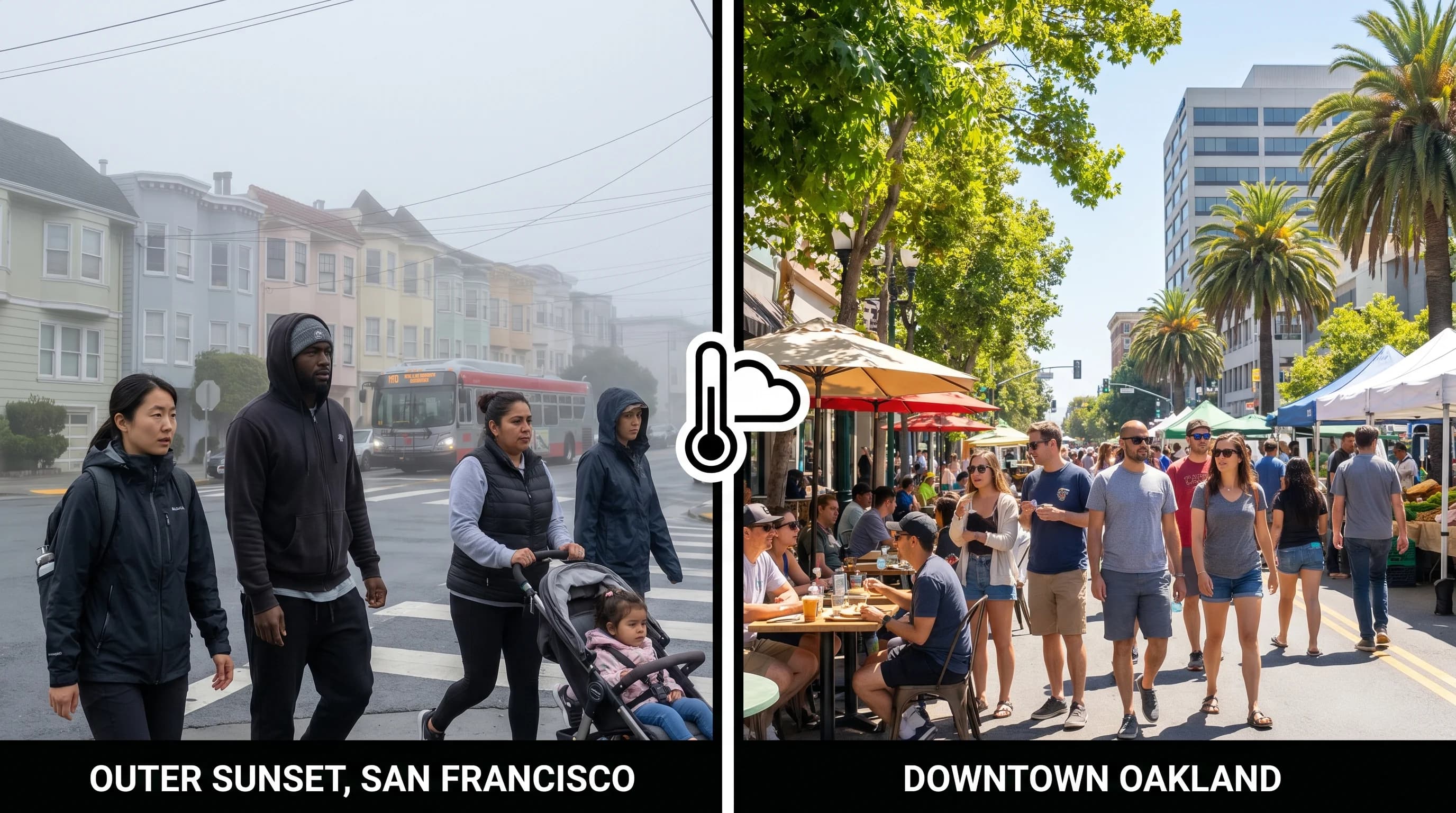
If you want sun in summer, the solution is simple: go east. Oakland sits 10 to 15 miles across the bay, and on a foggy San Francisco morning, it is often running 15 to 20 degrees warmer. The Berkeley Hills act as a natural barrier, blocking the marine layer from pushing further inland. You can see the fog wall sitting neatly against the western slope of the hills while the East Bay basks in sunshine at 78 degrees.
Push further east and the contrast becomes almost comical. Walnut Creek regularly hits 85 to 90 degrees on days when the Outer Sunset is sitting at 62 and overcast. Oakland and Berkeley offer a reasonable middle ground: enough inland distance to escape the worst of the marine layer, but still close enough to the bay to stay cooler than the deep inland valleys. On a typical summer day, Oakland runs 80 degrees while San Francisco's westside neighborhoods sit under fog at 62. That's not a different city. That's a different climate.
The Upsides of the Fog
Here is something the fog skeptics tend to overlook: the marine layer is why San Francisco has such an extraordinarily mild climate. The city almost never sees temperatures above 75 degrees, never sees truly brutal winter cold, and almost never experiences the oppressive humidity that makes summer miserable in most of the country. The fog keeps summer temperatures in a narrow, comfortable range. While Phoenix is cooking at 112 and New York is sweltering through 95-degree humidity, San Francisco is sitting at a breezy 64, which is either delightful or disappointing depending on what you were expecting.
The fog also keeps the hills green longer than they would otherwise be. Coastal vegetation survives the dry California summer partly because of the moisture deposited by the marine layer overnight. Redwood groves in the coastal range intercept fog with their needles, effectively creating a form of precipitation that does not show up in rain gauges. The fog supports entire ecosystems that would not exist under clear summer skies. Karl the Fog, it turns out, is doing a lot of work.