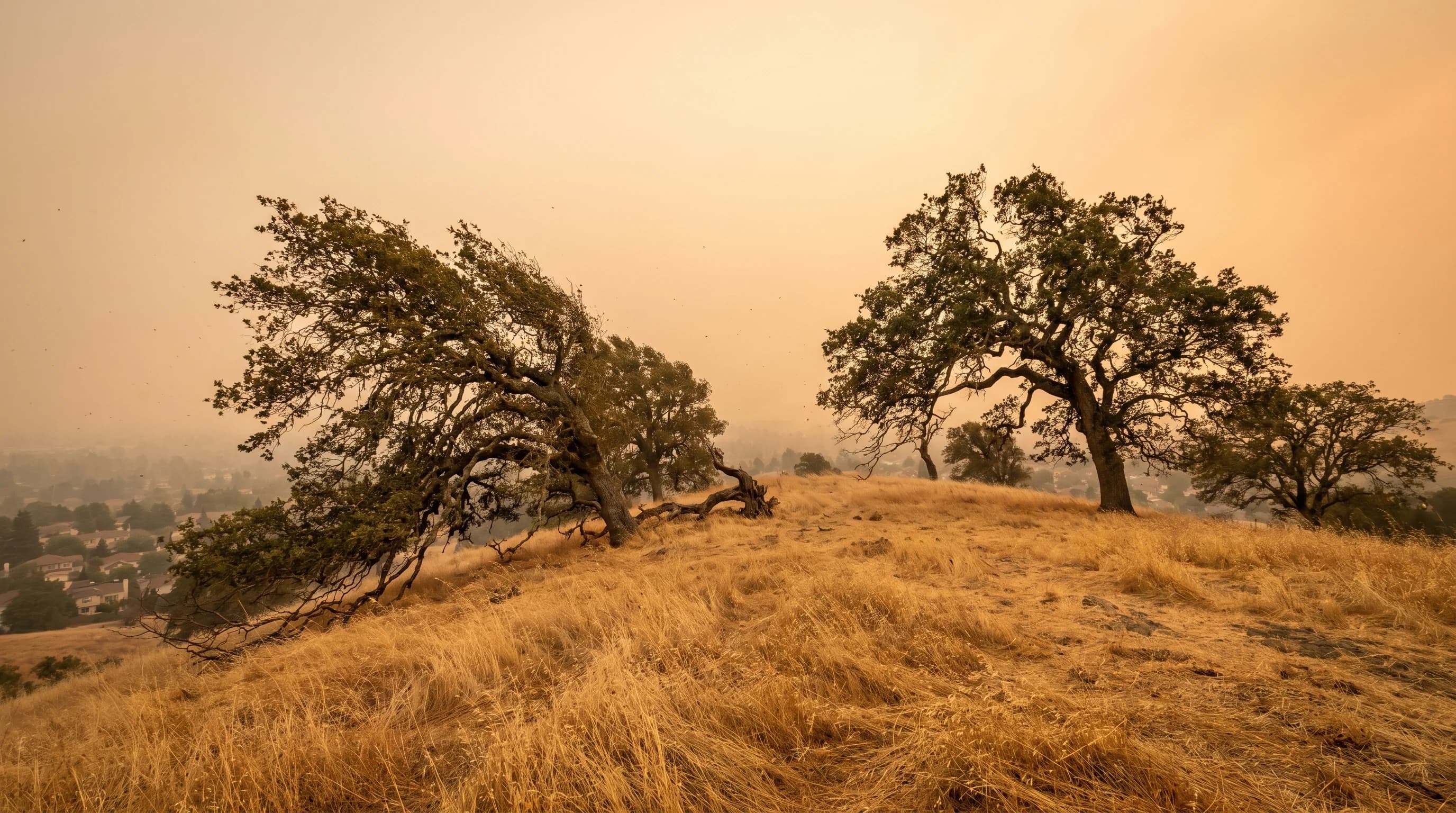
A Red Flag Warning is the highest fire weather alert issued by the National Weather Service (NWS), and it means conditions are actively dangerous for rapid fire ignition and spread. A Fire Weather Watch is the step below: it signals that Red Flag conditions are possible in the next 12 to 72 hours but have not yet materialized. In the Bay Area, these alerts are issued by the NWS San Francisco Bay Area forecast office (WFO MTR) and are most common from September through November, when fire season peaks. Understanding the difference between the two is not academic. It is the difference between "get ready" and "act now."
What Is a Red Flag Warning?
A Red Flag Warning (RFW) is issued when a combination of weather conditions creates extreme fire danger. The NWS criteria for the Bay Area office are specific: sustained winds or gusts of 25 mph or greater, relative humidity at or below 15 percent, and dry fuel conditions. When those three factors align, any ignition source, a downed power line, a car dragging a chain, even a lawnmower blade hitting a rock, can start a fire that grows explosively. During Red Flag conditions, fires can spread at rates exceeding one acre per second in dry grass fuels.
Red Flag Warnings are not forecasts of fire. They are forecasts of weather conditions that make fires extremely difficult to contain once started. The warning typically covers a specific geographic zone (such as the North Bay mountains or the East Bay hills) for a defined time window, usually 12 to 24 hours. In the Bay Area, the most common trigger is a Diablo wind event: offshore flow that sends hot, dry air screaming through the passes and canyons of the Coast Ranges at 40 to 70 mph, dropping humidity into single digits. The Tubbs Fire (October 2017, 5,636 structures destroyed in Santa Rosa), the 1991 Oakland Hills Fire (25 deaths, 3,469 structures), and the Kincade Fire (October 2019, 374 structures) all occurred during Red Flag Warning periods.
What Is a Fire Weather Watch?
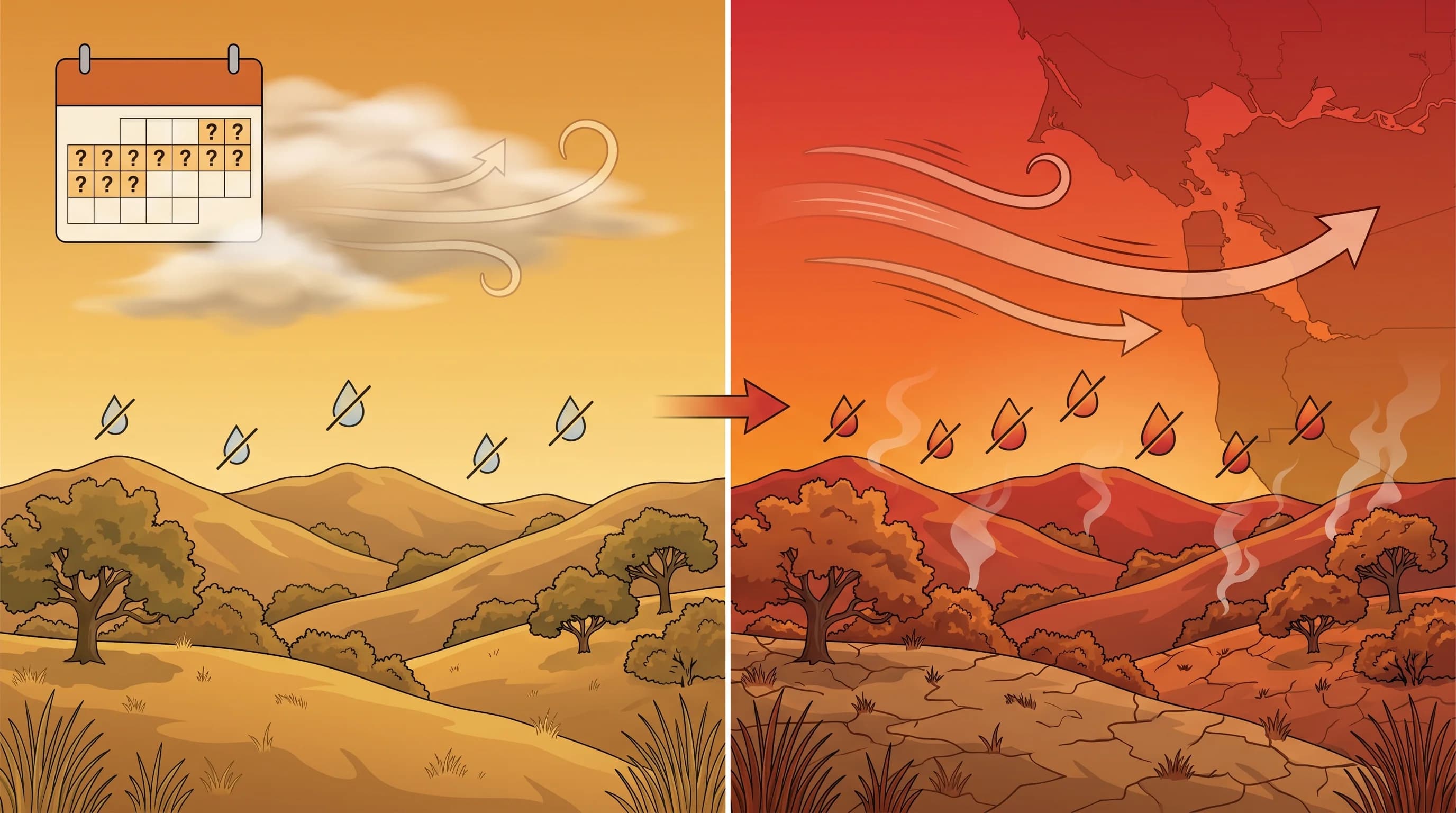
A Fire Weather Watch is the precursor alert. It means the NWS forecasters see a reasonable probability that Red Flag conditions will develop within the next 12 to 72 hours, but there is still uncertainty about whether the event will reach warning criteria. Think of it as the "heads up" phase. The same ingredients are on the table: strong winds, low humidity, dry fuels. The atmosphere is setting up for a potentially dangerous fire weather event, but the models may not yet agree on timing, wind speeds, or just how dry the air will get.
Fire Weather Watches are upgraded to Red Flag Warnings as confidence increases. In practice, the NWS Bay Area office often issues a watch 48 to 72 hours ahead of a Diablo wind event, then upgrades it to a warning 12 to 24 hours before the worst conditions arrive. Not every watch gets upgraded. Sometimes the wind event weakens, the humidity stays a bit higher than predicted, or the event tracks to a different part of the region. But every Red Flag Warning in the Bay Area starts as a watch, and treating the watch seriously gives residents the preparation time they need.
How Do These Alerts Differ in Practice?
The practical distinction is about urgency and action. During a Fire Weather Watch, you should review your evacuation plan, charge devices, locate your go bag, and stay aware of forecast updates. It is the time to clear dry vegetation from around your home if you have not already done so, to park your car facing outward in the driveway, and to know which routes you will take if evacuation orders come. Utility companies like PG&E begin evaluating whether to implement Public Safety Power Shutoffs (PSPS) during the watch phase, and they typically notify affected customers 24 to 48 hours before shutting off power.
During a Red Flag Warning, the conditions are either imminent or already occurring. This is when PSPS events are most likely to be active, when fire agencies staff up to maximum capacity, and when a single ignition can become a multi-thousand-acre fire within hours. Residents in high-risk areas like the East Bay hills ( Oakland, Berkeley), the North Bay wine country (Napa, Sonoma, Santa Rosa), and the inland valleys (Walnut Creek, Concord, Livermore) should be ready to leave on short notice. If an evacuation warning or order is issued during a Red Flag Warning, do not wait to see flames. Leave immediately.
Why Bay Area Fire Alerts Matter More Than You Think
The Bay Area's geography concentrates fire risk in specific, repeating patterns. The inland valleys and hill communities east and north of San Francisco Bay heat up dramatically during fall heat events, while the coast stays cool. Relative humidity in Livermore or Concord can drop below 10 percent during a Diablo wind event while San Francisco remains at 60 percent. This extreme variability means fire alerts are often zone-specific: a Red Flag Warning for the North Bay mountains and East Bay hills may not apply to the San Francisco peninsula at all.
The NWS divides the Bay Area into fire weather zones that reflect these differences. Zone 507 covers the North Bay interior mountains. Zone 508 covers the East Bay hills and the Diablo Range. When you see a Red Flag Warning, check which zones are included. Wildfire smoke affects the entire region regardless of where the fire burns, and air quality can deteriorate to hazardous levels across all nine Bay Area counties within hours of a major fire start. But the fire itself, the immediate physical danger, follows the terrain and the wind.
What Should You Do During Each Alert Level?
During a Fire Weather Watch, preparation is the priority. Confirm that your household has a go bag with medications, important documents, phone chargers, and enough supplies for 72 hours. Identify two evacuation routes from your neighborhood in case one is blocked. Sign up for your county's emergency alert system if you have not already: Nixle, AlertSCC, SoCoAlert, and AC Alert are the primary systems for Bay Area counties. Fill your car's gas tank. If you have large animals or special medical equipment, begin planning for how you will transport them.
During a Red Flag Warning, shift from preparation to readiness. Keep shoes and car keys by the door. Have your go bag in the car. Monitor local fire agency social media accounts and scanner feeds for real-time information. If you see smoke, call 911 immediately. Do not assume someone else has reported it. During the Tubbs Fire, some neighborhoods had less than 15 minutes between the first visible flames and full structural involvement. The single most important decision you can make during a Red Flag Warning is to leave early if you are in a high-risk zone, before you are told to.
How Often Does the Bay Area Get Red Flag Warnings?
The Bay Area typically receives 5 to 15 Red Flag Warnings per fire season, with most concentrated in October and November. Some years bring more: the fall of 2019 saw multiple overlapping Red Flag events across Northern California. Other years are quieter, particularly when early-season rain arrives in October and wets down fuels before the worst wind events develop. Fire Weather Watches are more frequent, as many potential events weaken before reaching warning criteria.
Climate trends point toward longer and more intense fire weather seasons. Rising temperatures dry out vegetation faster. The Bay Area fire season has expanded from a roughly August-to-October window in the 1970s to a July-through-December window today. The December 2017 Thomas Fire in Ventura County and the November 2018 Camp Fire in Butte County both demonstrated that catastrophic fire weather can occur outside the traditional peak months. For Bay Area residents, treating every Red Flag Warning as a serious event is no longer overcautious. It is realistic.
The alert hierarchy exists for a reason: it gives you a structured timeline to prepare. A Fire Weather Watch is your signal to plan. A Red Flag Warning is your signal to be ready to move. The Bay Area's fire history proves that the distance between a Red Flag Warning and a life-threatening evacuation can be measured in minutes, not hours. Take both alerts seriously, prepare during the watch, and act without hesitation during the warning. Your preparation time is the watch period. Once the warning drops, the window for preparation is closed.