safetyseasonalclimate science

Wildfire Smoke and Bay Area Air Quality

By SFBayWeather||Updated |6 min read
Wildfire Smoke and Bay Area Air Quality

Key Takeaways

  • Wildfire smoke reaches the Bay Area from fires hundreds of miles away, transported at altitude by upper-level winds from Northern California, Oregon, and Washington.
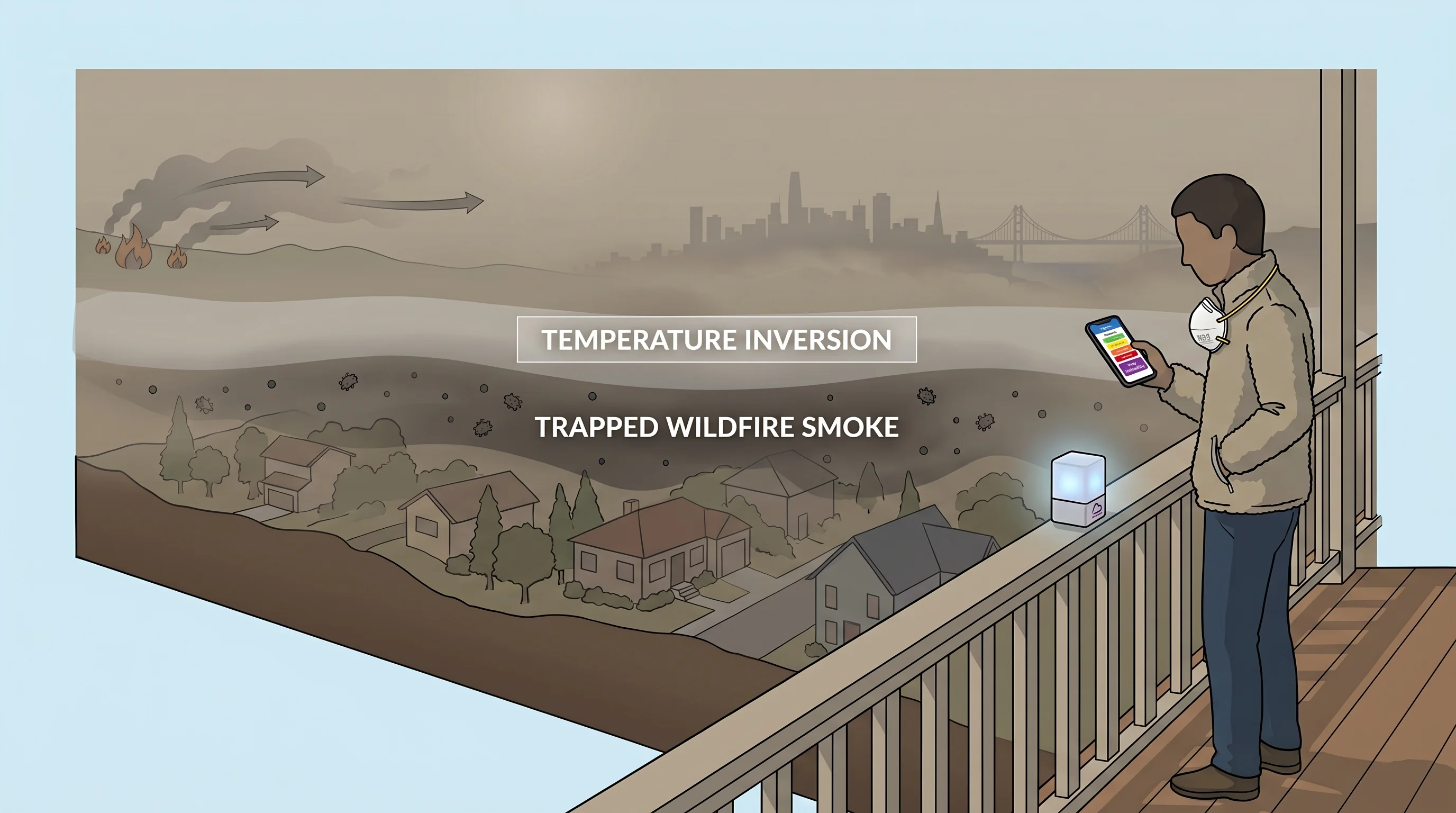
  • Temperature inversions trap smoke at ground level. The same inversion that creates the marine fog ceiling can concentrate wildfire particulates in the surface layer where people breathe.
  • The November 2018 Camp Fire produced two consecutive weeks of hazardous air quality in the Bay Area, the worst in the region's recorded history, from a fire in Butte County 150+ miles away.
  • N95 and KN95 masks provide meaningful protection from wildfire smoke particulates; surgical masks and cloth masks do not filter fine particles effectively.
  • Bay Area Air Quality Management District provides real-time AQI at monitoring stations throughout the region, air quality can vary significantly between coastal and inland locations during smoke events.

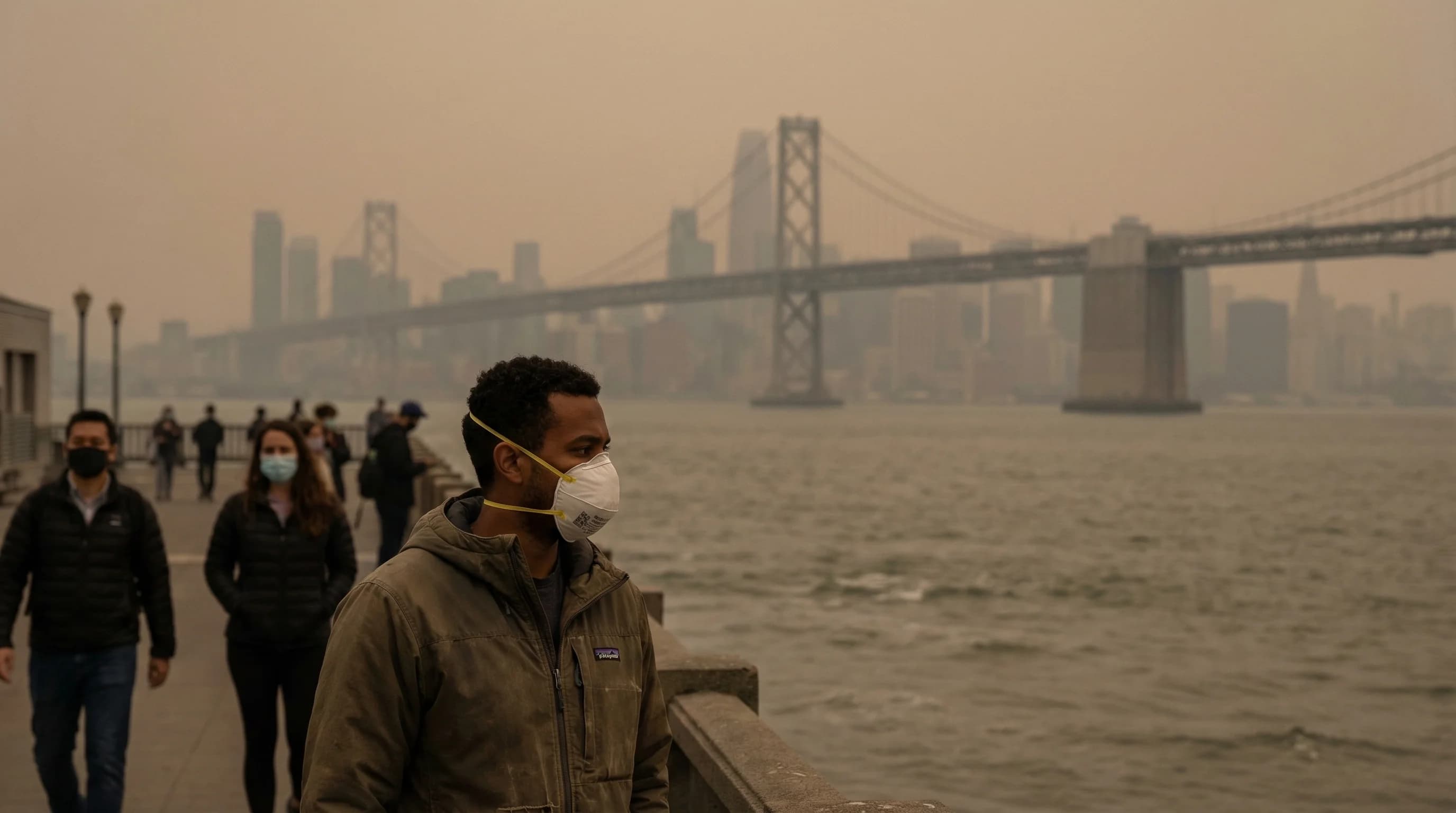
Wildfire smoke has become the Bay Area's most significant and unpredictable air quality event of the past decade. In the summers and falls of 2017, 2018, 2019, 2020, and 2021, the region experienced episodes of hazardous smoke-induced air quality that closed schools, canceled outdoor events, emptied streets, and strained health systems. The smoke did not come from local fires. It came from fires in the Sierra Nevada, the North Coast ranges, the Cascades, and even Oregon and Washington. The Bay Area sits in a geography that concentrates and traps smoke from sources hundreds of miles away, and understanding how that happens is essential for anyone trying to plan outdoor activities, manage health conditions, or simply understand why the sky turns orange.

How Wildfire Smoke Reaches the Bay Area

Wildfire smoke is transported in the upper atmosphere by the same wind patterns that drive California's weather. During summer and fall, when fires are most active, the prevailing flow at altitude is often from the north or northeast, the same direction as Diablo offshore winds at the surface. Smoke from fires in Northern California, Oregon, and Washington rises to several thousand feet altitude and rides these upper-level winds southward and westward toward the Bay Area.

The critical factor for Bay Area air quality is what happens when that smoke descends. During inversion conditions, which are common in summer and fall, the smoke cannot mix through the atmosphere vertically. It descends through or under the inversion base and becomes trapped in the surface layer where people breathe. An inversion that protects the Bay Area from heat by capping the marine layer can simultaneously trap wildfire smoke at ground level, producing air quality that is far worse than the same amount of smoke would produce in an atmosphere without an inversion.
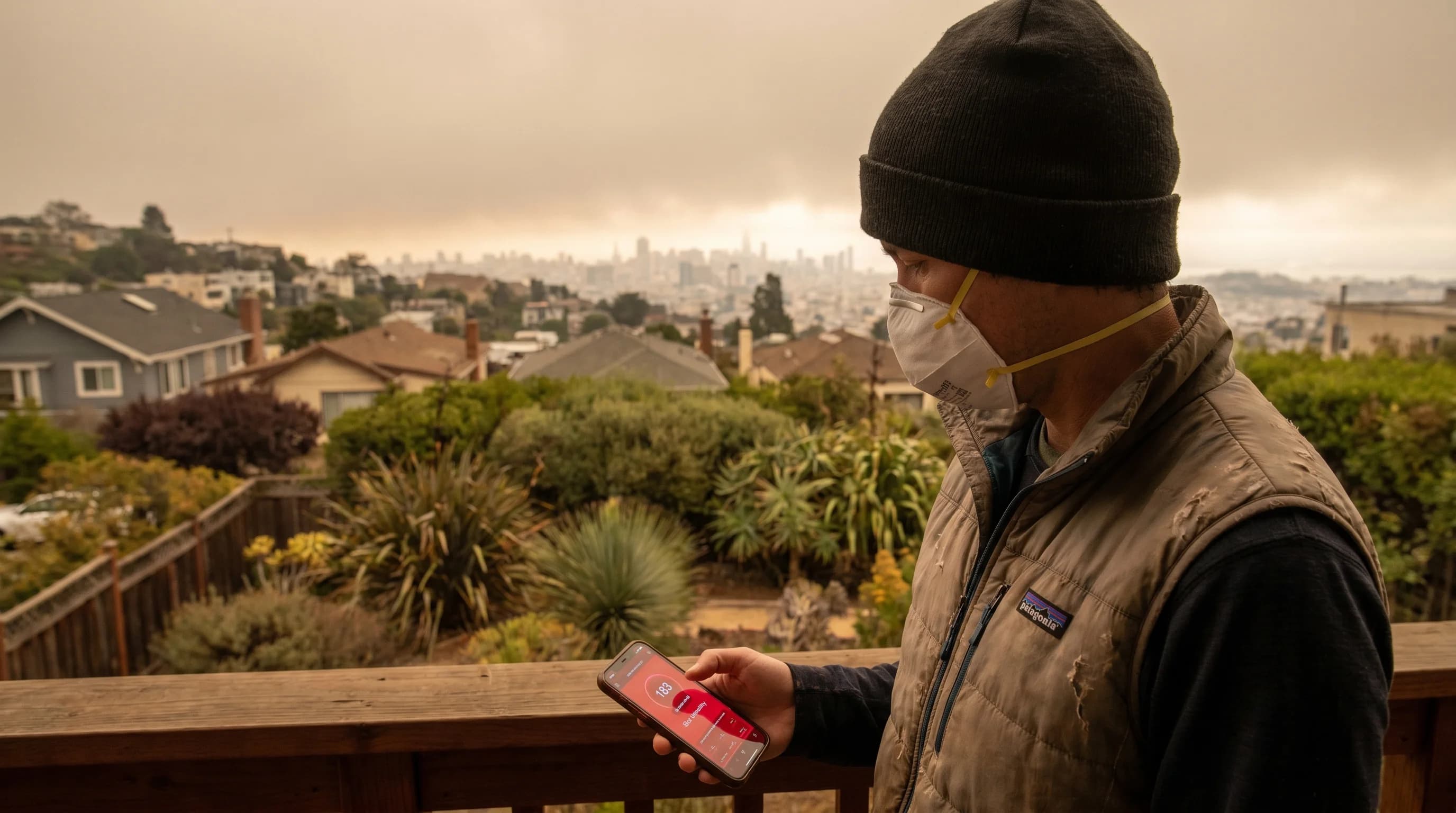
Bay Area skyline obscured by wildfire smoke, orange-tinged air, reduced visibility across the bay, AQI meter showing hazardous conditions
Wildfire smoke reaches the Bay Area from fires hundreds of miles away, transported at altitude by upper-level winds. When temperature inversions trap the smoke at the surface, AQI can reach hazardous levels within hours, regardless of whether any fire is burning locally.

The Camp Fire: November 2018

The most damaging smoke event in Bay Area history was produced by the Camp Fire in Butte County in November 2018. The fire, which destroyed the town of Paradise and killed 85 people, ignited on November 8 during a period of strong offshore winds that drove rapid spread. As the fire consumed roughly 153,000 acres in its first days, the smoke column was transported southwestward by upper-level flow directly toward the Bay Area.
Scientific illustration explaining Wildfire Smoke and Bay Area Air Quality

For two weeks in November 2018, the Bay Area experienced what were at the time the worst air quality conditions in its recorded history. AQI readings exceeded 300 at multiple Bay Area monitoring stations, with the Unhealthy for Sensitive Groups threshold at 101 and Hazardous beginning at 301, for consecutive days. Schools closed throughout the region. Masks, which few Bay Area residents owned, sold out at hardware stores. The experience was a watershed moment: for the first time, wildfire smoke had disrupted Bay Area life for an extended period in a way that felt like a new normal rather than an aberration.

Protecting Yourself During Smoke Events

The primary protective actions during smoke events are straightforward but require preparation. Stay indoors with windows and doors closed. Use air purifiers with HEPA filtration. A single room air purifier in a bedroom provides the most critical protection for sleeping hours. If you must go outside, N95 or KN95 masks provide meaningful filtration of fine particulates; surgical masks and cloth masks are far less effective. Check AQI before outdoor exercise, as activities that increase breathing rate also increase particulate inhalation. Those with asthma, heart disease, or other cardiopulmonary conditions should be especially cautious when AQI exceeds 100.

The Bay Area Air Quality Management District provides real-time AQI readings at monitoring stations throughout the region. Air quality can vary significantly within the Bay Area during smoke events. The marine layer can scrub smoke from coastal areas while inland areas remain severely affected, or an inversion can trap smoke in the East Bay flatlands while the Marin Coast is clear. Checking the nearest monitoring station rather than a regional average gives the most actionable information for your specific location.

Frequently Asked Questions

How does wildfire smoke reach the Bay Area from distant fires?

Wildfire smoke rises to thousands of feet altitude in large fire plumes and is then transported by upper-level winds. During summer and fall, prevailing upper-level flow often comes from the north and northeast; from the direction of Northern California, Oregon, and Washington. Smoke rides these winds southward and westward toward the Bay Area. When the smoke descends and encounters a temperature inversion, it becomes trapped at ground level rather than mixing through the atmosphere.

How do I protect myself during Bay Area smoke events?

Stay indoors with windows closed. Run air purifiers with HEPA filters; a single room air purifier in the bedroom provides the most critical protection. If going outside, wear N95 or KN95 masks, which filter fine particles effectively; surgical masks and cloth masks are not adequate for smoke. Avoid outdoor exercise when AQI exceeds 100. Check the BAAQMD website or AirNow for real-time AQI at the monitoring station nearest your location. Those with asthma, heart disease, or other cardiopulmonary conditions should follow physician guidance on activity restrictions.

Why was the 2018 Camp Fire so bad for Bay Area air quality?

The Camp Fire destroyed more than 18,000 structures in and around Paradise, California; an unusually large amount of structural material burning at once, in addition to the forest fuels. The smoke column was transported directly toward the Bay Area by upper-level winds from the northeast. Temperature inversions over the Bay Area trapped the smoke at ground level for days at a time. The combination of an extremely large fire, direct smoke transport, and persistent inversions produced two weeks of consecutive hazardous and very unhealthy air quality; the worst sustained air quality episode in the Bay Area's recorded history.

When is wildfire smoke most likely to affect the Bay Area?

The highest risk period is late July through October, coinciding with peak fire season in Northern California. August and September see the most significant smoke events from local Bay Area fires (the Diablo Range, East Bay hills, Santa Cruz Mountains, and North Bay wine country). October through November brings risk from fires in Northern California, Oregon, and Washington, whose smoke is transported southward by post-frontal northerly winds. Winter and spring smoke events are rare.

Does outdoor activity need to stop during all smoke events?

It depends on the AQI. At Green (0-50) and Yellow (51-100) levels, most people can exercise outdoors normally. At Orange (101-150), sensitive groups, including those with asthma, heart disease, children, and older adults, should limit prolonged outdoor exertion. At Red (151-200) and above, everyone should reduce outdoor activity, and sensitive groups should stay indoors. During the worst smoke events (Purple or Maroon AQI), it is safest to stay inside with windows closed and an air purifier running. Air quality can change by 100+ AQI points within a few hours as smoke plumes shift.

Live Bay Area Conditions

Compare fog, temperature, wind, and comfort across the map.

See which microclimates are clear, cool, windy, or warming up right now.

Open the Weather Map
🔒Privacy Policy📄Terms of Service