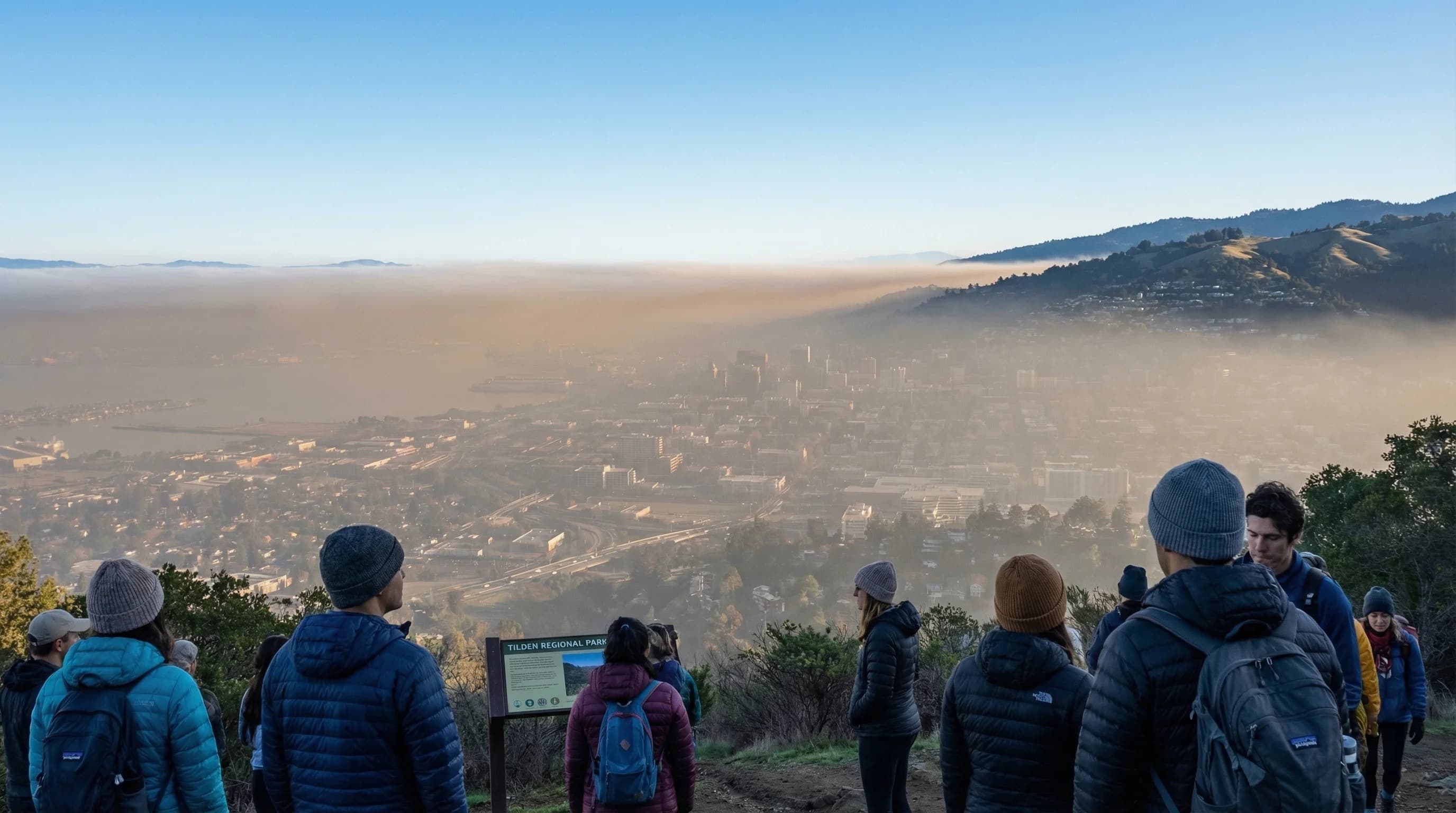
Bay Area air quality is not fixed; it changes with the weather, sometimes dramatically, sometimes within hours. The same marine layer that makes Bay Area summers pleasant also scrubs pollution from coastal areas. The same temperature inversions that create the region's distinctive morning fog trap pollutants at the surface during winter and fall. The sea breeze that cools the inland valleys also disperses the vehicle emissions those valleys produce. The result: the Bay Area Air Quality Management District issues Spare the Air alerts on some winter days and not others, why AQI in downtown Oakland can be 150 while AQI in Half Moon Bay is 30 at the same moment, and why the region's worst air quality days are often windless, calm winter days rather than the windy summer afternoons people might expect.
Inversions and Winter Air Quality
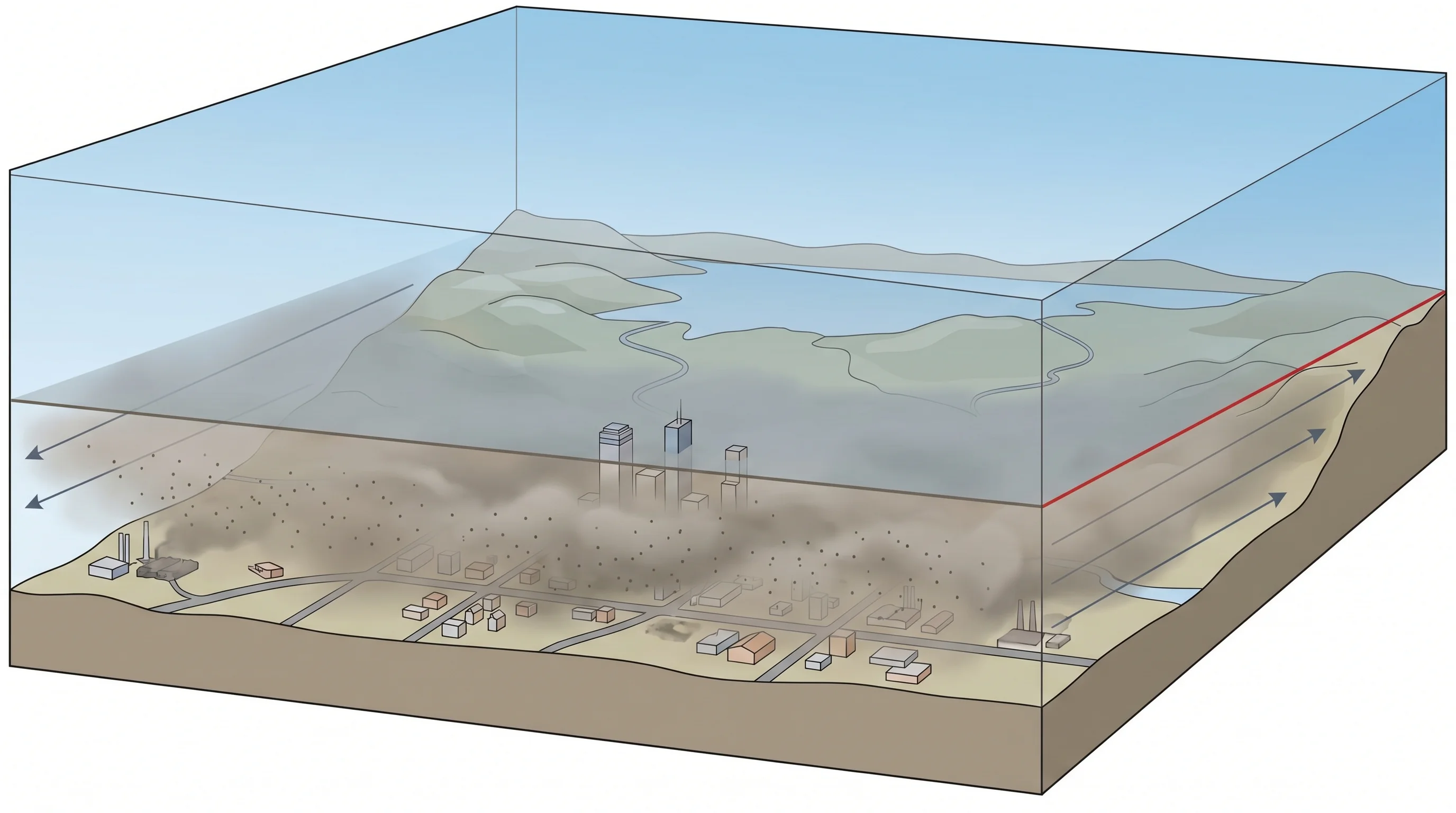
The Bay Area's worst non-smoke air quality occurs during winter radiation inversions, the same atmospheric condition that produces tule fog. On clear, calm winter nights, the ground cools by radiating heat to space. The surface air cools by contact with the ground, becoming denser than the warmer air above it. The result is a temperature inversion: a lid that prevents vertical mixing and traps the lower air in place.
When morning arrives and commuters start their cars, wood fires are lit, and industrial activity begins, the emissions from all these sources have nowhere to go. The inversion cap holds them at ground level. Concentrations of particulates, nitrogen dioxide, and other pollutants build through the morning, often reaching their daily maximum in the mid-afternoon before the inversion begins to weaken. On the worst winter air quality days, the ones that trigger Spare the Air alerts, PM2.5 concentrations can reach unhealthy levels for sensitive groups across the region.
Sea Breeze and Summer Air Quality
Summer air quality in the Bay Area is substantially better than winter air quality, because the sea breeze provides continuous mixing and flushing of the atmosphere. The afternoon westerly flow that cools the inland valleys also disperses pollutants, replacing the stagnant surface air with fresh marine air that pushes emissions downwind and prevents concentrations from building.
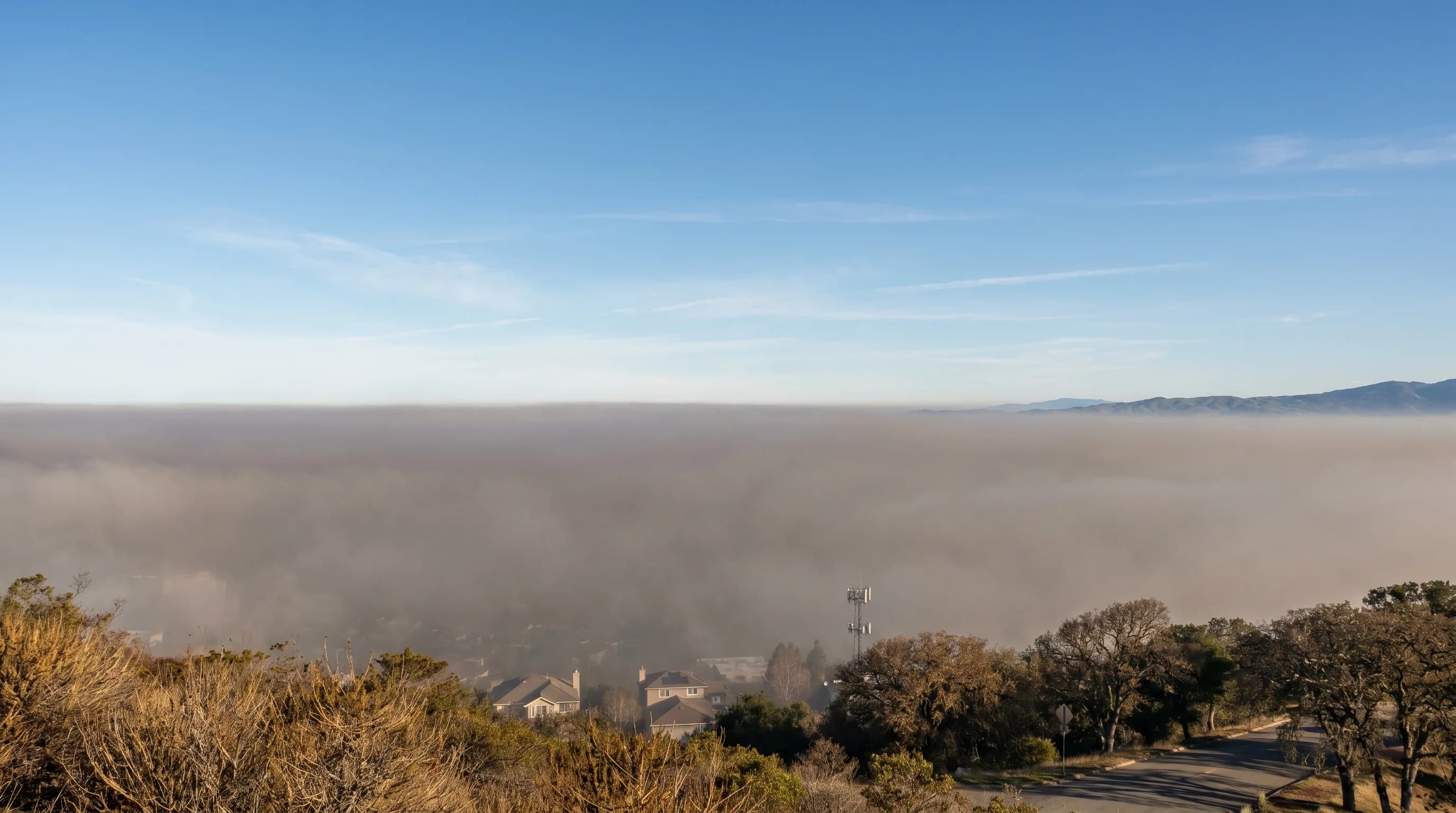
The marine layer itself also contributes to summer air quality through a process called marine air scavenging: the moist marine air absorbs and deposits fine particles, removing some fraction of particulate pollution from the surface layer. Coastal areas within the marine layer's direct influence consistently show lower particulate counts than inland areas on the same day, reflecting both the dilution from the sea breeze and this scavenging effect.
Wood Burning and Spare the Air
The Bay Area Air Quality Management District's Spare the Air alerts are triggered by forecast conditions that combine a persistent inversion with wood-burning activity. Wood smoke is a significant source of fine particulate matter, PM2.5, in the Bay Area's winter air quality inventory. A single fireplace burning for a few hours can produce the equivalent particulate emissions of multiple car trips. When the winter inversion prevents those emissions from dispersing, the cumulative effect of thousands of fireplaces burning simultaneously across the region can push AQI from acceptable to unhealthy levels.
Spare the Air day restrictions prohibit wood burning in fireplaces and wood stoves on nights when the inversion is forecast to be persistent and strong. The alerts are issued by the BAAQMD and carry legal force: wood burning on a Spare the Air day is subject to fines. The alerts are issued the afternoon before the restricted day, providing enough warning for residents to make alternative heating plans. Compliance is monitored by air quality staff and neighborhood observation, and the program has measurably reduced winter particulate concentrations in the Bay Area since it was implemented.