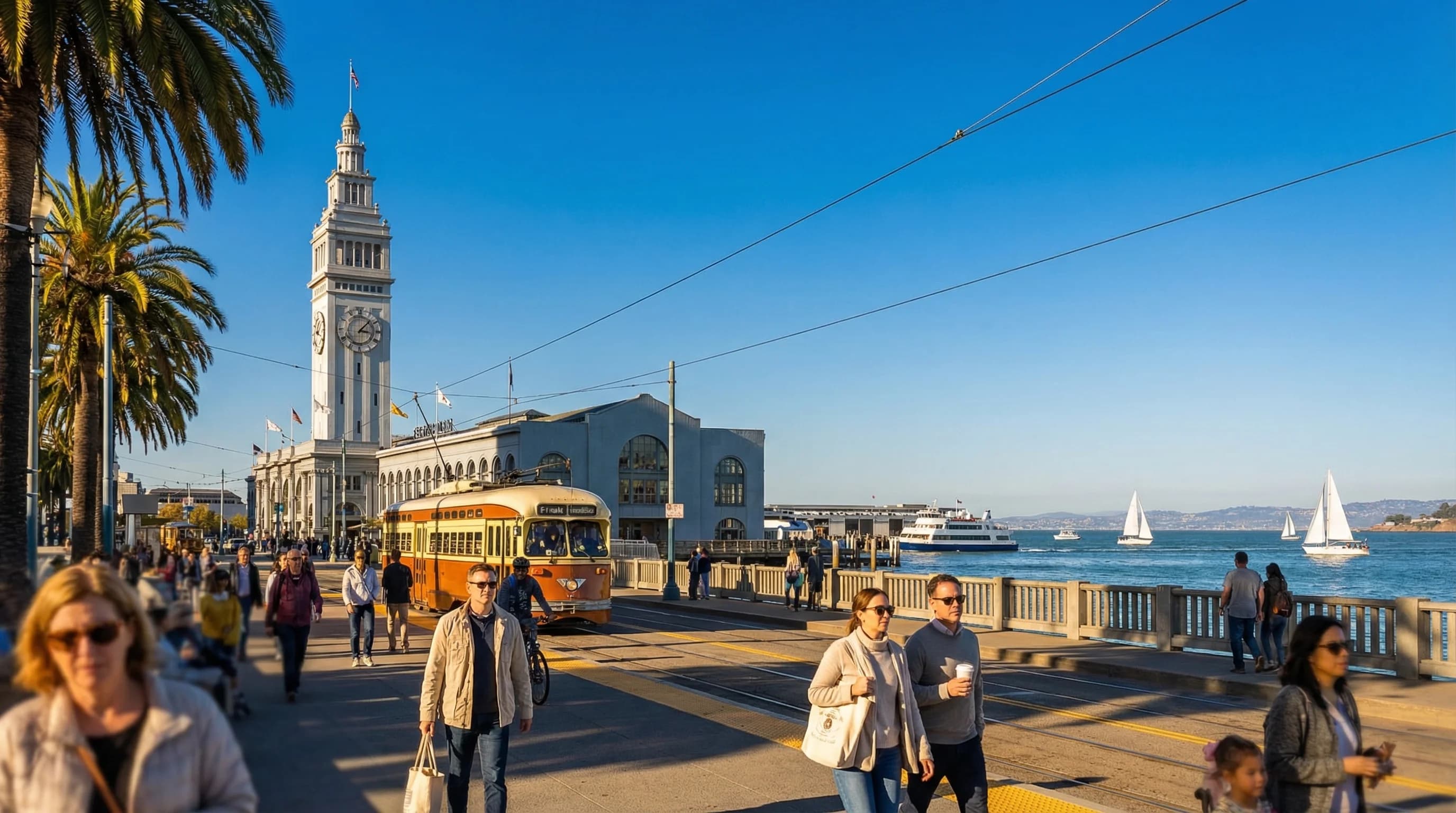
If you are planning a trip to San Francisco and want warm, clear weather, here is the advice you probably did not get from anyone: skip June, July, and August. The best months to visit are September and October, when the famous summer fog has retreated, the marine layer has weakened, and the city finally delivers on its California promise. The fact that summer is also the peak tourist season is a scheduling coincidence, not a weather endorsement.
The Best and Worst Months for San Francisco Weather
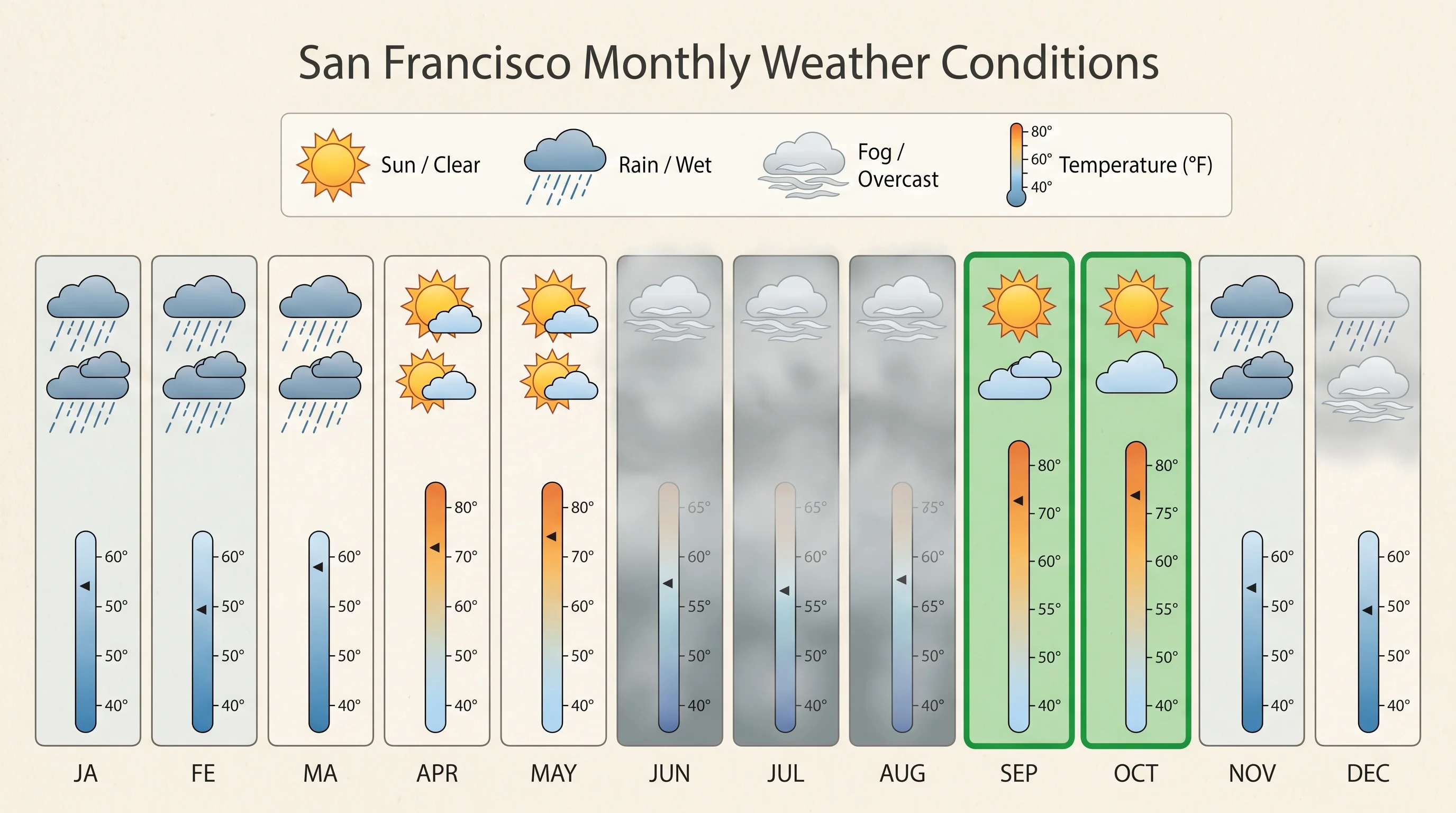
The rankings are fairly clear once you look at the actual data. September and October are the best: average highs in the mid-to-upper 60s, only 2 to 6 foggy days per month, and essentially no rain. These months are warm by San Francisco standards, reliably sunny in the afternoons, and genuinely pleasant for outdoor activities. April and May are decent: mild (60 to 70°F), less fog than summer, some variability with occasional rain, but generally a good shoulder season. November is acceptable: cooler (55 to 65°F), the rainy season beginning, less fog than summer but more clouds.
And then there is the tourist trifecta of June, July, and August. These months average 64 to 67°F on the coast, with 12 to 20 foggy days per month. The morning fog is near-guaranteed, afternoons are often still cool and gray, and anyone who packed for California warmth spends money on a sweatshirt at a gift shop on Fisherman's Wharf. December through February is the rainy season: overcast, wet, temperatures in the low 50s. Beautiful in a moody way, but not what most visitors are hoping for.
Why September and October Are the Clear Winners
September is the single best month to visit San Francisco, and the reasoning is meteorologically solid. The summer marine layer, which has been suppressing coastal temperatures and blocking sunshine since May, begins to weaken in late August as the Pacific Ocean surface warms slightly from months of accumulated solar energy. By September, that warming has reduced the temperature gradient that drives the fog inland. The fog machine runs at reduced power. The afternoons clear.
October is nearly as good and in some ways better for warmth. Average highs reach the upper 60s citywide, with the sunniest neighborhoods like the Mission pushing past 70°F. Fog frequency drops to 2 to 4 days per month. Rainfall is still essentially zero. This is the Bay Area's Indian Summer, the period when residents who endured a foggy June and July finally get their reward. Outdoor dining in neighborhoods like the Mission and Castro, which are among the sunniest parts of the city even in summer, is genuinely pleasant without a jacket.
The Summer Reality: Fog, Layers, and Surprise
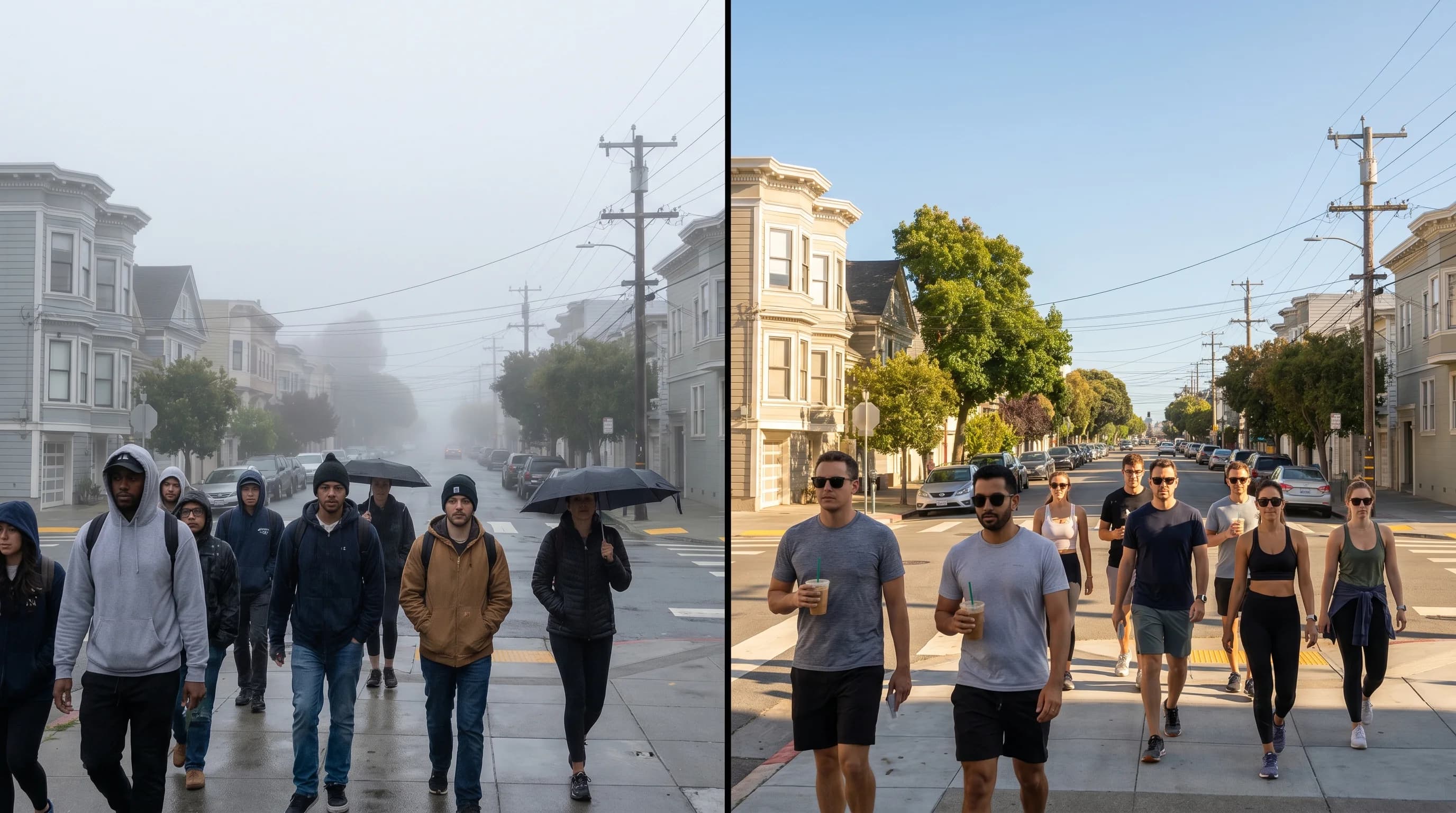
June, July, and August are peak tourist season in San Francisco not because the weather is good but because the calendar says summer and Americans take vacations in summer. The weather does not cooperate with this logic. The same pressure gradient that pulls cold Pacific air inland in summer keeps the coast at 62 to 67°F while the rest of the country bakes. San Francisco locals wear light jackets to outdoor concerts in July while tourists in shorts look confused and cold.
This is not a reason to avoid summer entirely. The city is beautiful and energetic in summer, events are plentiful, and the fog itself has a dramatic quality that photographers and filmmakers have used to iconic effect. But visit in summer knowing what you are getting into: cool temperatures, fog-heavy mornings, and no guarantee of afternoon sunshine. Pack accordingly. The fog is part of the experience, not a malfunction.
Spring and Fall Shoulder Seasons: Decent Alternatives
If September and October are not possible, April and May are the next best option. Spring brings mild temperatures in the low to mid 60s, less marine layer fog than summer, and the green hills and wildflowers of the surrounding landscape at their best. Rain is still possible in April, especially early in the month, but the storms are usually brief and the sunny days between them are genuinely warm. May is the more reliable of the two, with longer dry stretches and temperatures nudging toward 70°F.
November sits at the start of the rainy season but before the heaviest rain typically arrives. It is cooler than the fall peak (55 to 62°F on the coast), with increasing clouds and occasional rain, but still less fog-bound than the summer months. A November visit trades some sunshine reliability for lower crowds and prices, which is a reasonable deal depending on your priorities.
Winter in San Francisco: Rain, Quiet, and Its Own Beauty
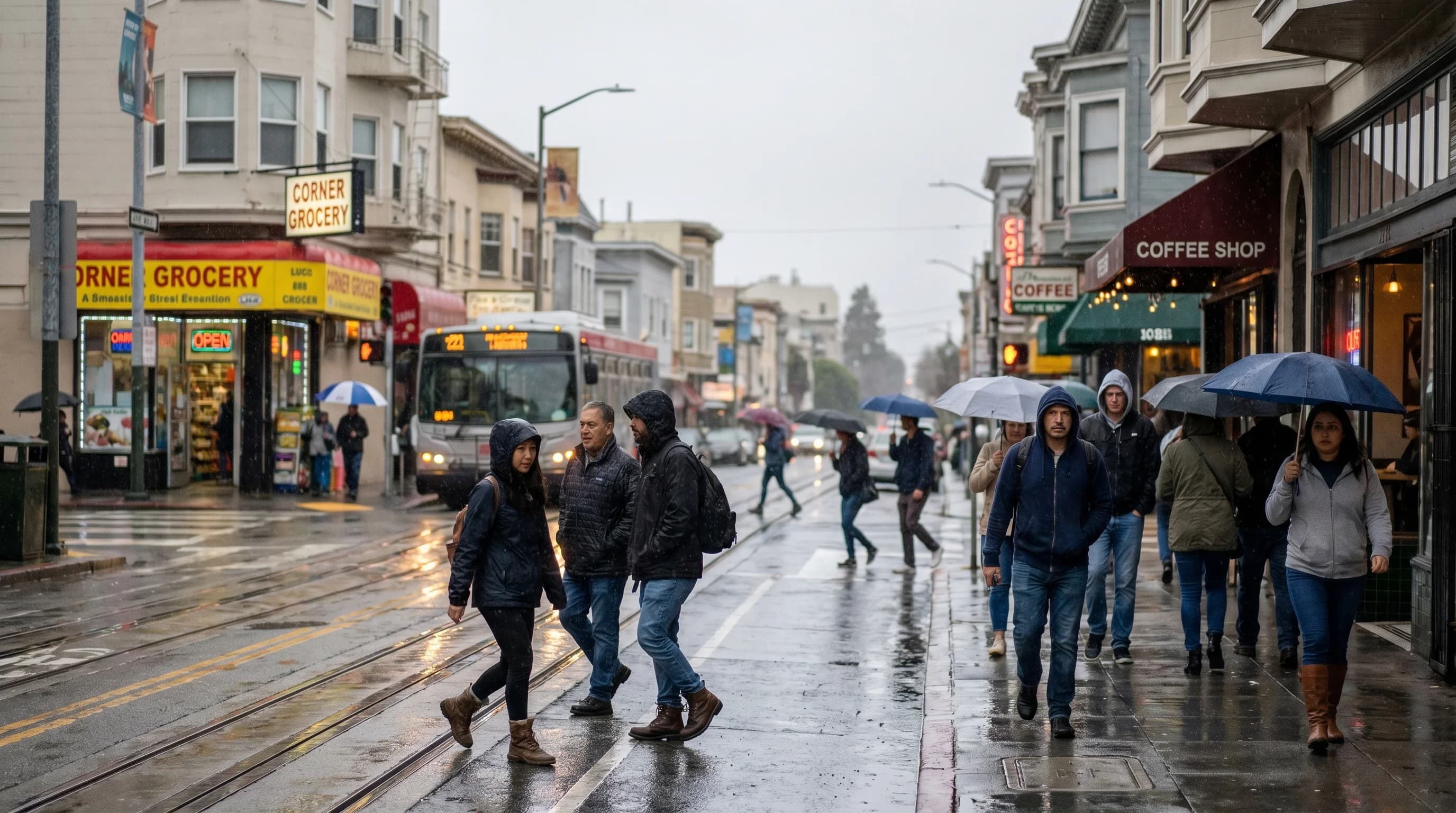
December through February is the rainy season. Average highs drop to 55 to 58°F, rain falls regularly (though rarely in the sustained downpours of wetter climates), and the city takes on a quieter, more local character as the tourist volume drops. The hills surrounding the bay turn green. Storm light makes the bridge and bay look dramatic in a way that clear summer days rarely do. If you have seen San Francisco only in summer, you have not seen the full picture.
Winter is genuinely worth visiting if you accept the weather on its own terms. Lower hotel rates, shorter lines at popular attractions, and a city that belongs more to its residents than its visitors can be a refreshing change. But it is not the weather that made San Francisco famous.
Planning Your Trip Around What You Actually Want
The formula is simple. Want warm, clear weather and the classic California experience? Book September or October. Willing to accept fog and cool temperatures for the tradeoff of events and energy? June through August works. Want mild spring weather with green hills and wildflowers? Try April or May. Want solitude and moody beauty? December or January.
The only wrong choice is visiting in summer while expecting hot California sunshine and being genuinely surprised when it does not arrive. San Francisco's weather is honest and consistent. It just runs on a calendar that is about two months behind the rest of the country. Once you know that, you can plan accordingly and enjoy the city in whatever season you choose.