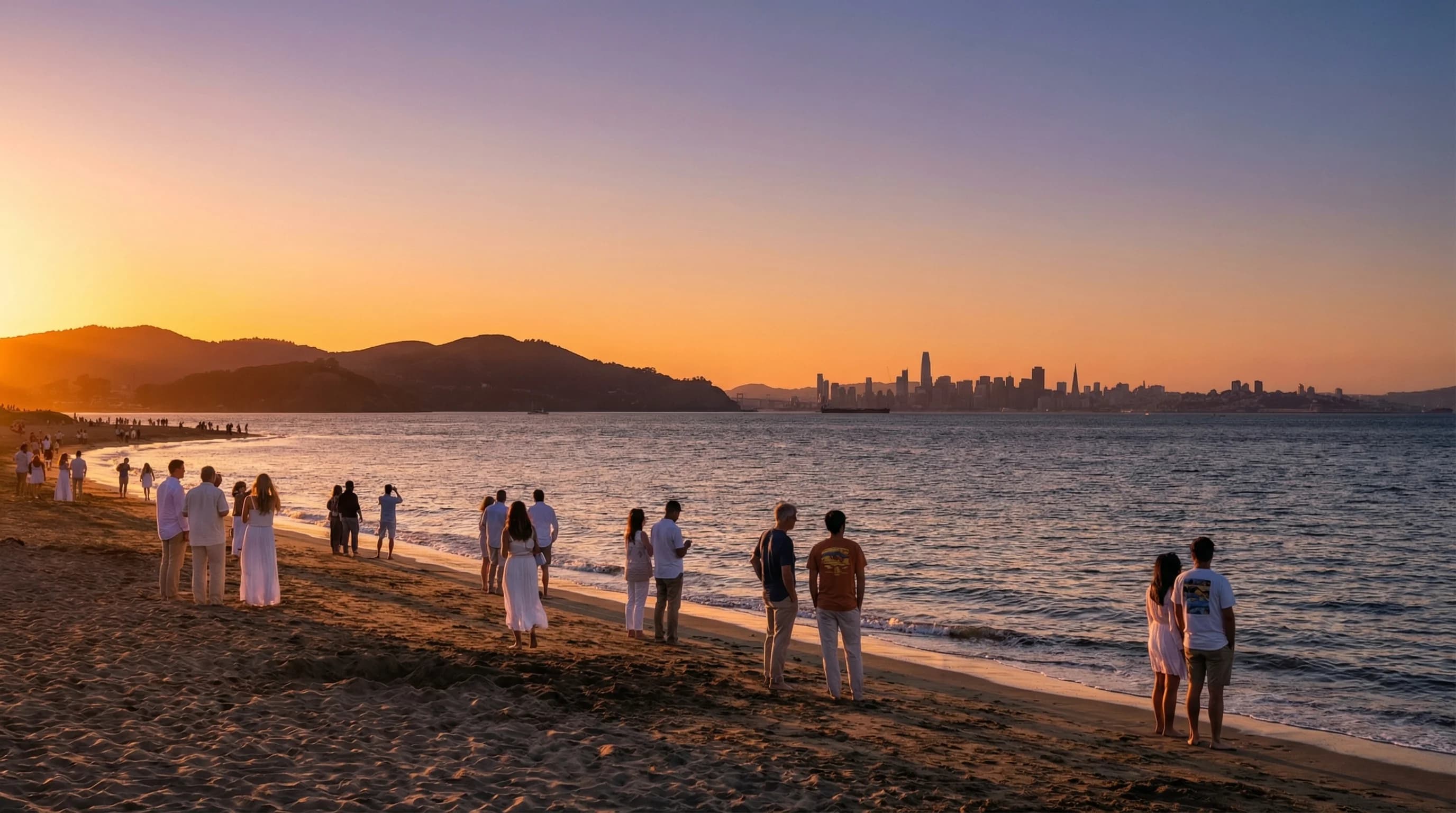
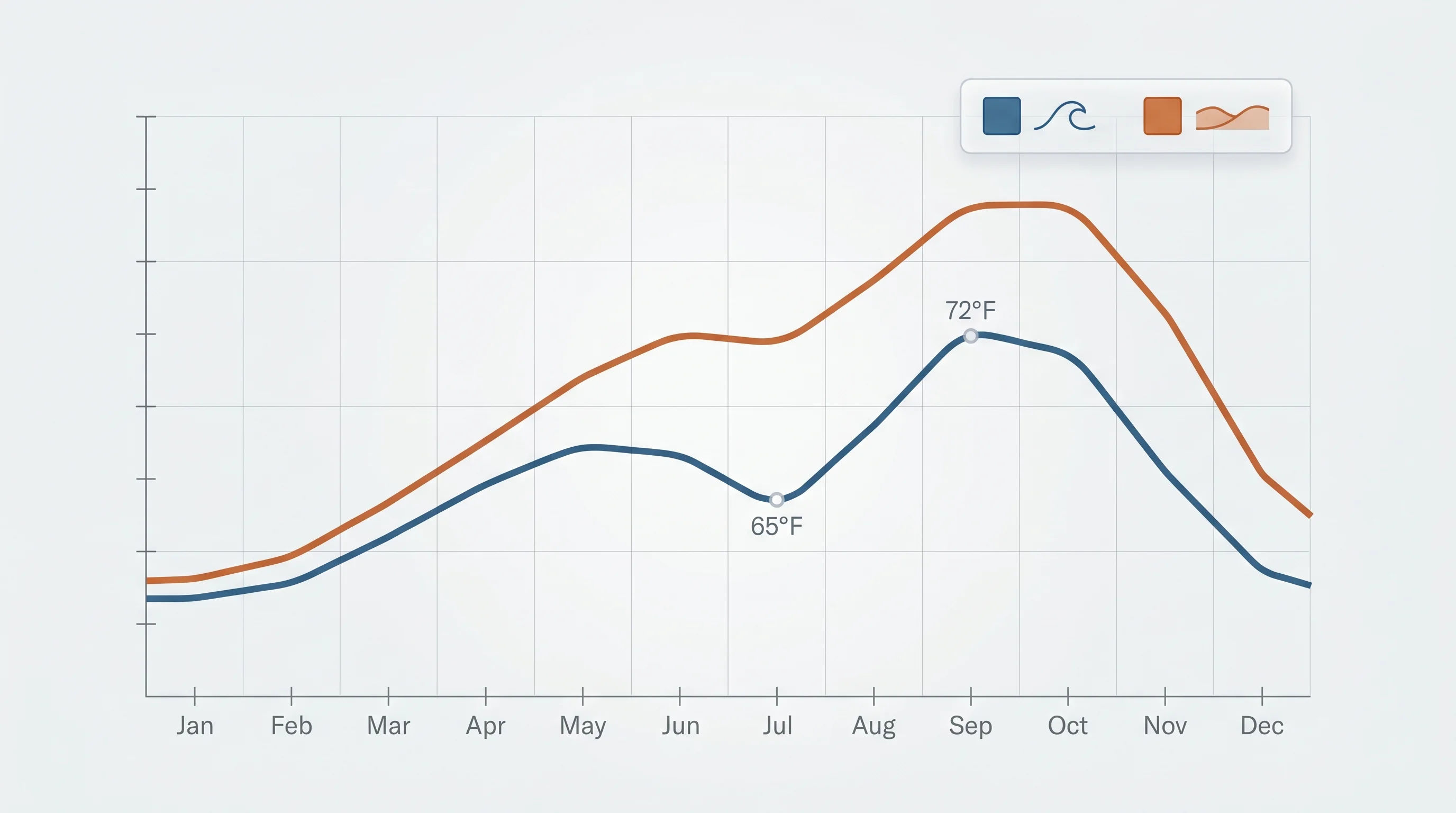
Here is something that surprises almost every visitor who books a July trip to San Francisco expecting California sunshine: the Bay Area's warmest months are September and October, not July and August. The coast averages around 66°F in July. By September, it climbs to 72°F. October often nudges 74°F. This is not a quirk or an anomaly. It is a reliable, repeating pattern driven by ocean physics and atmospheric dynamics that play out the same way every year.
Is September Really Hotter Than July? The Numbers Say Yes
The data is consistent and has been for decades. On the San Francisco coast, June averages around 64°F with roughly 18 to 20 foggy days in the month. July edges up to 66°F with 14 to 16 foggy days. August starts improving: 67°F, around 12 foggy days. Then September arrives and the numbers shift dramatically: 72°F, only 4 to 6 foggy days. October is the peak: 74°F, 2 to 4 foggy days, clear skies the norm rather than the exception.
Inland, the pattern is even more pronounced. Walnut Creek, which runs 15 to 25°F warmer than the coast in summer, sees its peak heat in August (around 95°F average high) but its most pleasant weather in September and October when temperatures settle into the mid to upper 80s with clear skies and lower humidity. The whole Bay Area shifts into a different gear starting in late August.
Why Summer Fog Keeps July Cooler Than You Expect
The reason July is cooler than September comes down to the marine layer. June, July, and August are peak fog months in the Bay Area. The same pressure gradient that drives inland heat pulls cold ocean air toward the coast, and that cold air condenses into fog as it moves over land. The fog blankets the coast from the early morning into the afternoon, blocking solar heating, keeping air temperatures suppressed, and making San Francisco feel more like a cool spring day than the middle of summer.
Even on days when the fog burns off by noon, the morning fog has already done its damage. The sun had hours of heating time taken from it. The coastal air never fully warms up the way it would on a clear day. Residents in neighborhoods like the Outer Sunset or Berkeley near the water know this intimately: a July “sunny” afternoon is genuinely cooler than a September afternoon, even if the sky looks the same.
How the Ocean Warms Slowly and Triggers Fall Clearing
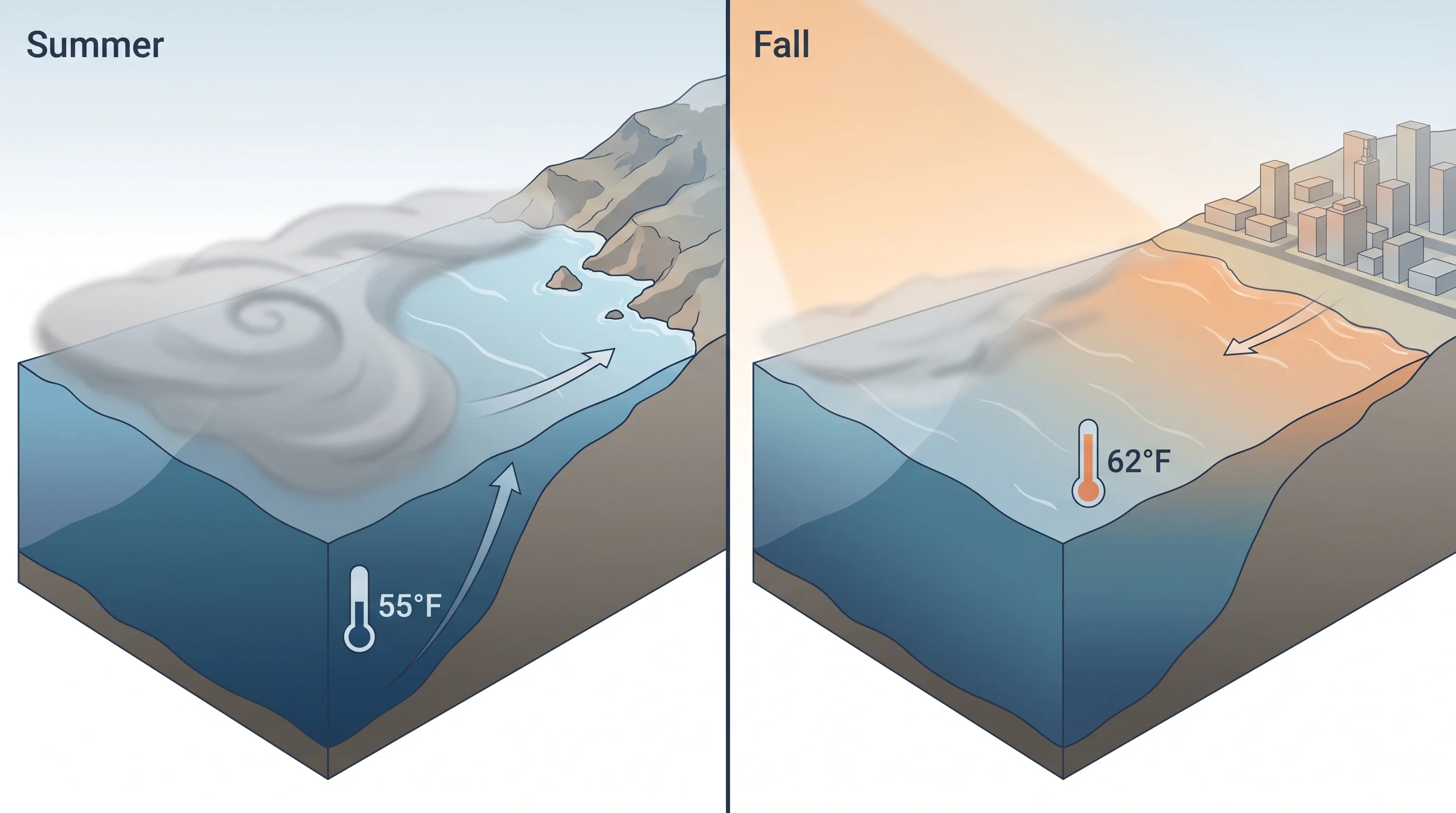
The Pacific Ocean off San Francisco stays at 55 to 58°F year-round, kept cold by the California Current and coastal upwelling. But “year-round” is a slight oversimplification. The ocean does warm slightly through summer from months of accumulated solar energy. It just does so very slowly, taking two to three months to respond to changes in solar input.
By September, the ocean surface has absorbed enough summer warmth that its temperature ticks up a few degrees. That small increase matters enormously. Warmer surface water means the temperature contrast between the ocean and the land is slightly smaller. A smaller contrast means a weaker pressure gradient. A weaker pressure gradient means less force pulling cold marine air toward the coast. The fog machine begins to run at reduced power, and eventually it largely shuts off for the fall.
When Upwelling Weakens and the Fog Machine Shuts Off
Coastal upwelling is the other half of the equation. Throughout spring and summer, persistent northwest winds blow parallel to the California coast. These winds push surface water offshore, and cold water from the deep ocean rises to replace it. This upwelling of cold deep water is what keeps the California coast at 55°F even in August, while the interior bakes at 100°F.
By late August and into September, the seasonal wind pattern shifts. The northwest winds weaken. Less cold water gets pushed to the surface. The upwelling that has been refreshing the cold layer slows, and the ocean surface begins to warm from within rather than being constantly recharged with frigid deep water. The fog-generating mechanism loses its most reliable cold-water fuel. The result is clearer skies, warmer temperatures, and the fall warmth that longtime Bay Area residents think of as the real season.
What Indian Summer Actually Means in the Bay Area
The term “Indian Summer” refers to an unseasonably warm period in fall, typically after the first frost of autumn in most parts of the country. The Bay Area's version is different. Here, the entire stretch from September through October is Indian Summer, a period when the city finally delivers on its California promise. Temperatures on the coast reach 70 to 75°F. Inland climbs to 85 to 90°F under blue skies. The mornings are cool and crisp, the afternoons are warm and clear, and the fog that ruled from June through August is largely gone.
This is the season when San Francisco's outdoor restaurants fill up without people wearing three layers. When beaches at Oakland and the Marin Headlands are actually pleasant to sit on. When the Golden Gate Bridge is visible from Crissy Field for entire days at a stretch. Locals consider this their payoff for enduring the foggy summer that tourists mistake for the city's best season.

Planning Your Bay Area Trip Around This Counterintuitive Pattern
The practical takeaway is straightforward. If you want warm, clear weather in the Bay Area, visit in September or October. If you visit in June, July, or August, pack layers and mentally prepare for cool mornings and fog-dominated afternoons, especially near the coast. Many visitors have a wonderful time in summer San Francisco because the city is beautiful and alive, but it is not the warm California experience they imagined.
One useful way to think about it: the Bay Area's seasons run about two months behind the calendar. The official summer months feel like spring. September and October feel like summer. The good news is that once you know the pattern, you can plan around it with precision. The warmth is not random or unpredictable. It arrives reliably every year, right on schedule, as soon as the fog decides to go home.