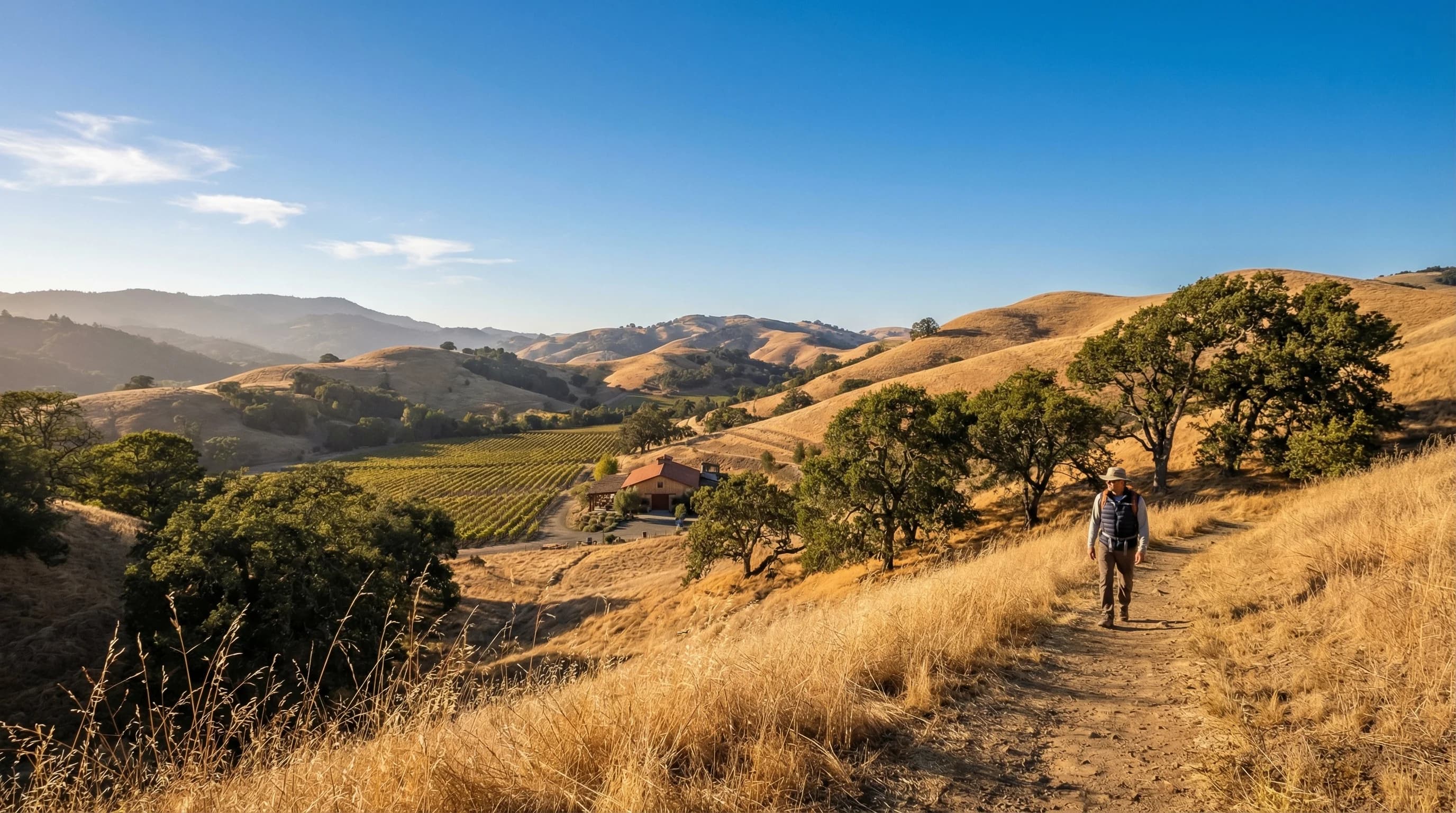
The Bay Area's warmest months are not what most people expect. Ask a new resident when they should plan their outdoor events, beach days, and winery visits for the best weather, and many say July or August. This is the wrong answer for most of the Bay Area, and especially wrong for San Francisco. The combination of the marine layer's peak intensity in summer and the September retreat of the North Pacific High makes September and October the warmest, sunniest, and most reliable months across most of the region. This phenomenon, so well-known locally that it has a name, Indian summer, is one of the most distinctive features of Bay Area seasonality and one of the most useful pieces of knowledge for planning any outdoor activity.
Why September and October Are Warmer Than July
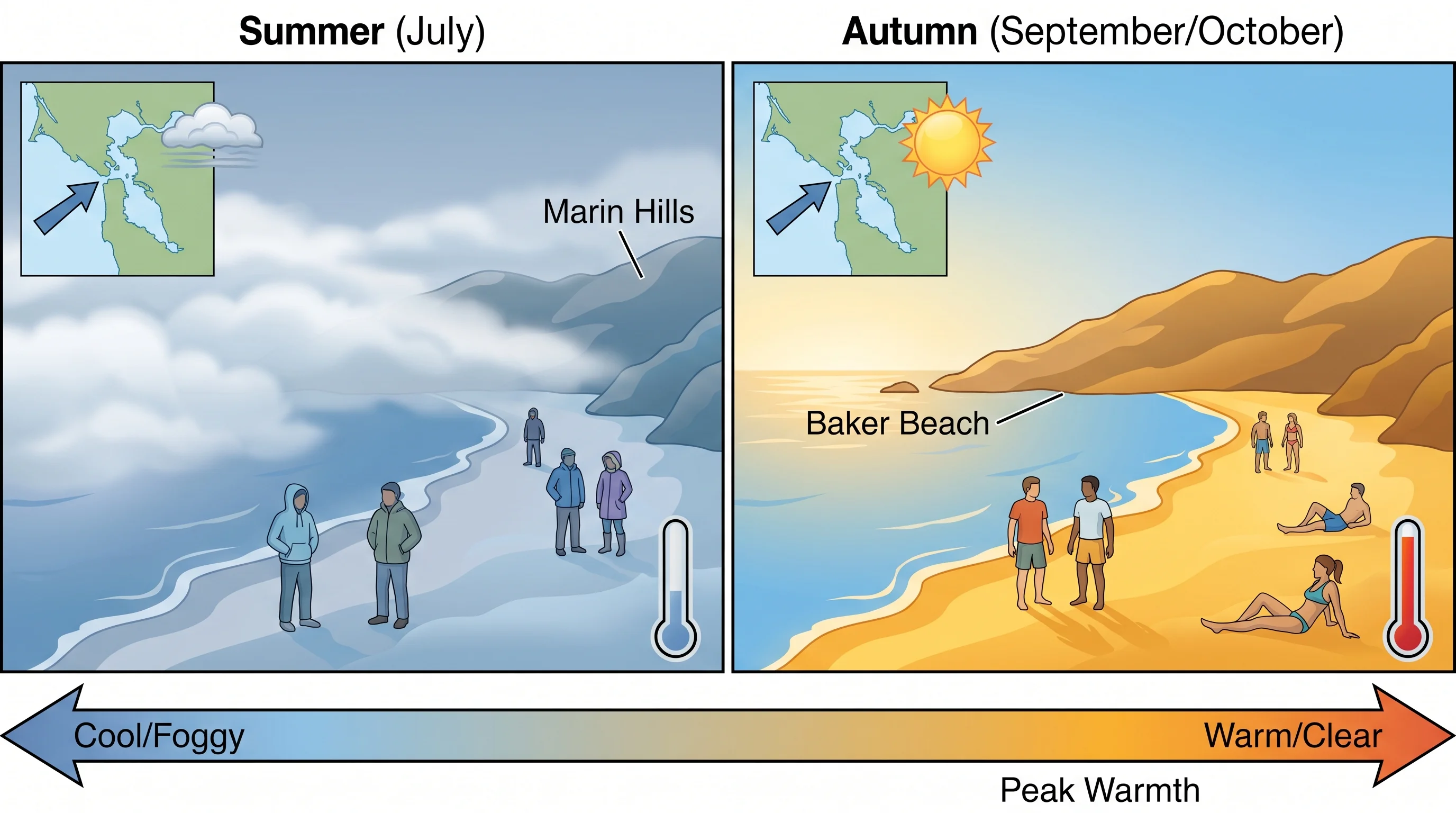
During July and August, the North Pacific High is at maximum strength and positioned at its summer location offshore of California. This drives intense onshore flow, a deep marine layer, and reliable afternoon fog and cool temperatures across the Bay Area coast and most of the region. San Francisco's average July high is only about 67 degrees, cooler than many winter destinations in other states. August is similar.
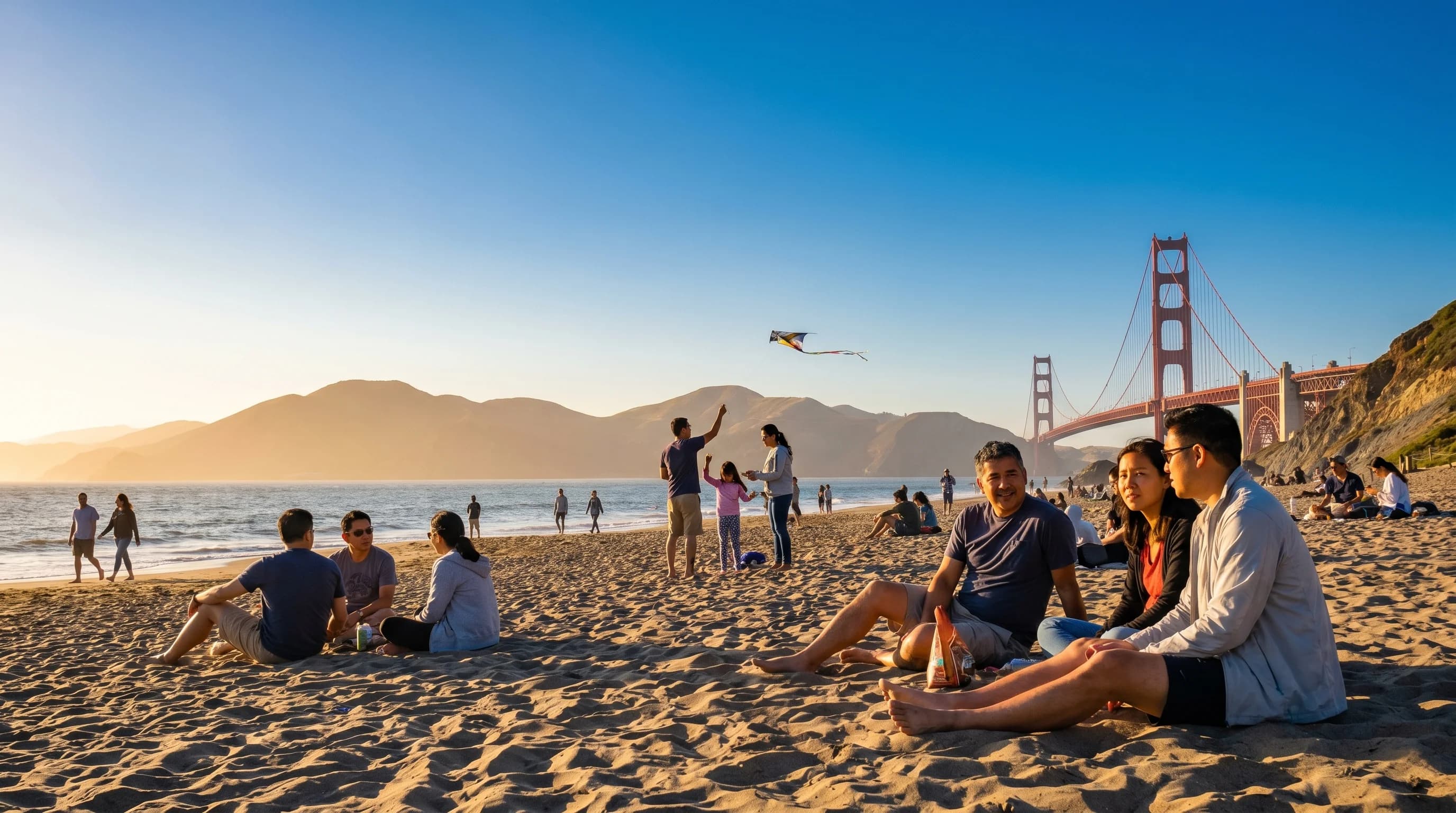
In September, the North Pacific High begins to weaken and drift southward as the sun's path moves lower in the sky. The marine layer thins and retreats. The sea breeze weakens. Afternoons that were foggy in July are now often sunny and warm. By late September and October, the pattern is frequently reversed from summer: warm, clear, dry days with light winds, minimal fog, and the golden-orange light that photographers and winemakers both associate with autumn. San Francisco's average September high is around 70 degrees, only modestly warmer than July, but the sunshine hours increase dramatically, and the fog frequency drops.
The Warmest Month by Location
The answer to "when is the Bay Area warmest" depends on where in the Bay Area you are. For coastal San Francisco and the outer peninsula, September and October are clearly the warmest months. The summer marine layer has retreated enough to produce days that are genuinely warm, something July rarely achieves. For the inland East Bay valleys like Livermore and Concord, July and August are actually the hottest months, because the inland valleys heat aggressively even during the summer marine push. The marine layer's retreat in September and October brings Indian summer to the coast, but the inland valleys are already at their peak in July and August.
Wine country is another case. Napa and Sonoma valleys have hot summers and then a warm, extended fall that makes October genuinely pleasant rather than merely warm. The harvest season from August through October is the most visited time in wine country for good reason. The conditions are ideal for both the grapes and the visitors.
Best Time for Outdoor Activities
For most Bay Area outdoor activities, hiking, winery visits, beach days in the East Bay or South Bay, outdoor concerts and festivals, September and October offer the most reliable, comfortable conditions. The fog has retreated, the temperatures are warm without being extreme, the days are still long, and the wildfire risk that peaks in the North Bay in October has not yet been fully realized.
The caveat is wildfire and fire weather risk. October brings Diablo wind events, hot, dry offshore winds from the northeast that are the primary driver of Northern California's worst fires. The October 2017 and 2019 fire events, and the October wind events that recur each year, mean that Indian summer's warmth and beauty come with a genuine safety concern for communities in fire-prone areas. The weather is wonderful. The fire risk is real.