
Every summer, tens of thousands of tourists arrive in San Francisco expecting California warmth and leave confused, cold, and newly in possession of an overpriced sweatshirt from a waterfront gift shop. The average high in San Francisco in July is 66°F. In August it reaches 67°F. These are not summer temperatures by any conventional measure. They are the temperatures of a mild spring day in most of the country. The reason is not random or mysterious. It is the direct result of ocean physics, atmospheric pressure, and geography working together in a way that has nothing to do with the month on the calendar.
Is San Francisco Really Cold in Summer? Yes, and the Numbers Prove It
The temperature data for San Francisco is remarkably consistent across decades. June average high: 64°F. July: 66°F. August: 67°F. Compare those to inland Bay Area cities in the same months: Walnut Creek averages 88 to 93°F. Livermore runs 88 to 95°F. Concord reaches 90 to 95°F. These cities are 15 to 25 miles away. The temperature gap is not a weather anomaly. It is the stable, predictable result of the geography between them.
Even within San Francisco, summer temperatures vary enormously by neighborhood because of the city's microclimates. The Outer Sunset faces the ocean directly and rarely exceeds 62°F in summer. The Mission District, shielded by hills and facing south, can reach 72°F on the same afternoon. But even the warmest SF neighborhoods are cool by summer standards. The city as a whole simply does not get hot in summer.
The Pacific Ocean Is 55-58°F Year-Round: The Root Cause
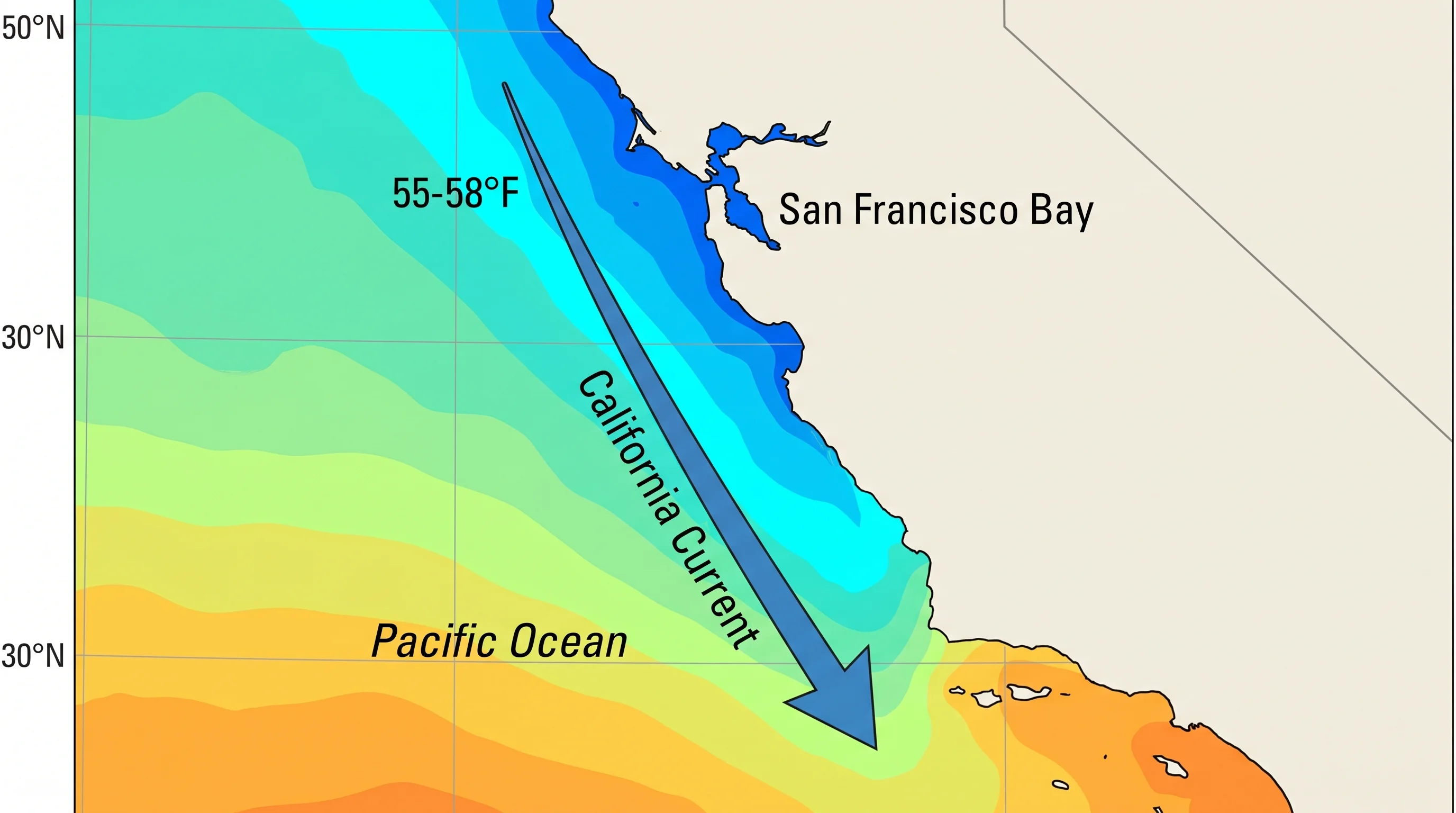
The fundamental driver of San Francisco's summer cold is the Pacific Ocean. The water off the coast stays at 55 to 58°F year-round, maintained by two interacting systems. The California Current flows southward along the coast, bringing cold water down from the north. Coastal upwelling, driven by persistent northwest winds in spring and summer, pulls cold deep water up to replace the surface water pushed offshore. The result is ocean water that is essentially the same temperature in August as it is in February.
This cold water chills the air that moves over it. When that chilled marine air gets pulled onshore by the pressure gradient, it arrives at the coast already cooled. No amount of summer sunshine can fully overcome what amounts to a permanent air conditioning system operating offshore. The ocean does not have a summer mode.
How Marine Layer Fog Adds Another Layer of Cooling
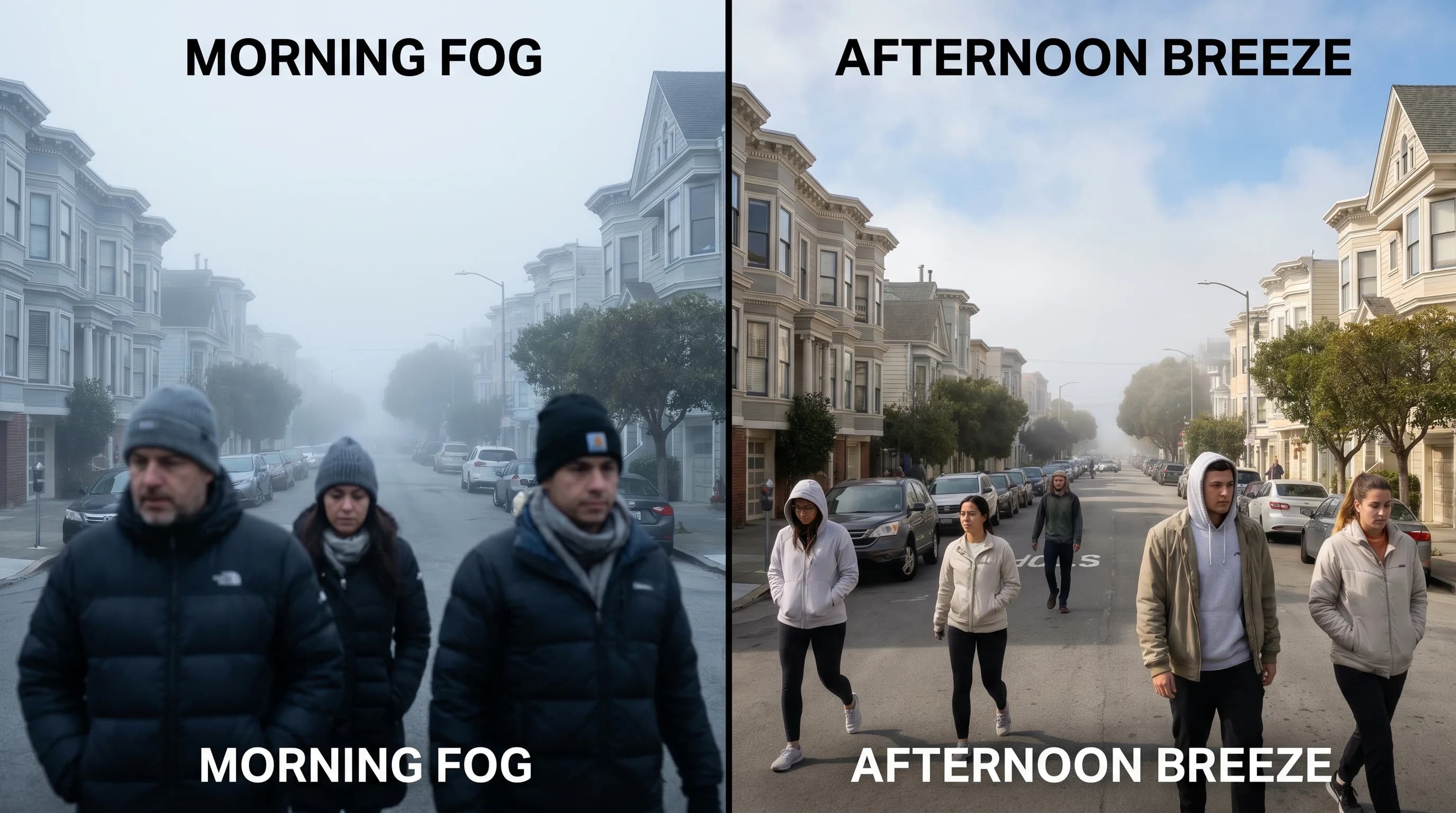
On top of the baseline ocean cooling, the marine layer fog actively suppresses summer temperatures. The fog forms when cold marine air moves over slightly warmer coastal land and condenses into a low cloud layer. This fog, which blankets the coast from early morning through much of the afternoon during peak summer months, does two things to temperatures. First, it blocks direct sunlight, preventing solar heating from warming the ground and air. Second, the fog itself is cold and moist, actively cooling the air it contacts.
Even on days when the marine layer burns off by noon or 1pm, the morning fog has already suppressed the temperature cycle. The sun had half the day taken from it. By the time the city is clear, the afternoon is partly spent and the evening cool-down is already beginning. San Francisco can have a genuinely sunny afternoon and still not exceed 70°F because the fog did its work in the morning hours.
Why Inland Heat Actually Makes the Coast Colder
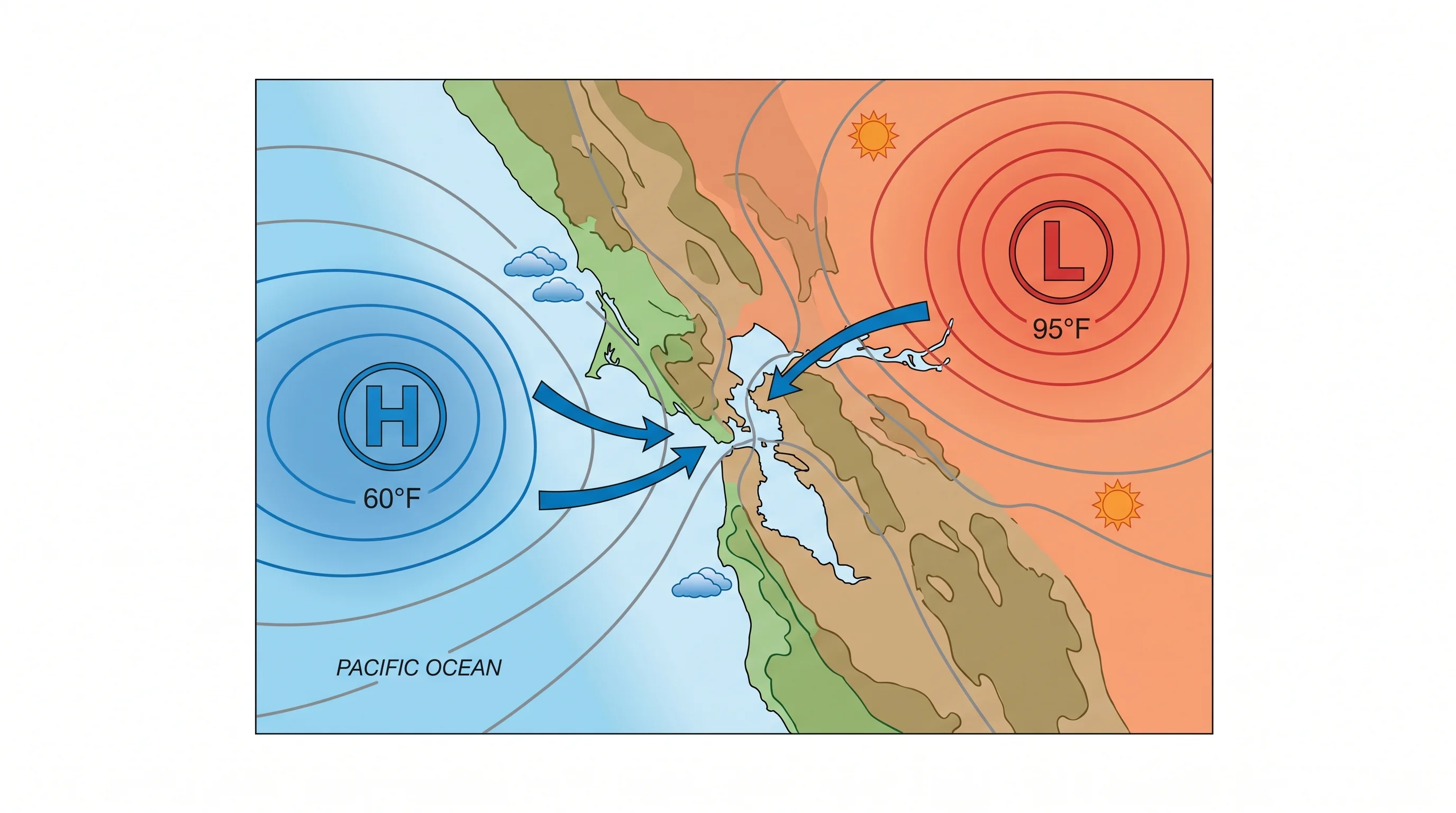
Here is the counterintuitive part: the extreme heat that builds in the Central Valley and inland Bay Area during summer actually makes the coast colder, not warmer. Extreme inland heat (95 to 105°F) creates a strong low-pressure zone over the land. Cold, dense marine air sitting over the 55°F ocean is under relatively higher pressure. Air flows from high to low pressure. So the cold marine air gets pulled toward the inland heat, flowing in through the Golden Gate and coastal gaps toward the interior.
This circulation pattern means the coast is constantly refreshed with cold ocean air. Hot inland air does not flow back toward the coast because the pressure gradient is working the other direction. The hotter it gets in Concord and Livermore, the more aggressively cold air gets pulled toward the coast, and the cooler San Francisco stays. Summer heat and summer coastal cold are not separate phenomena. They are two sides of the same pressure system.
Why SF Summer and SF Winter Feel Surprisingly Similar
One of the stranger features of San Francisco's climate is how similar summer and winter feel. Average high in January: 57°F. Average high in July: 66°F. That is a 9-degree seasonal spread, compared to 30 or 40 degrees in most American cities. The reason is the ocean. The Pacific stays at 55 to 58°F whether it is January or August, providing a consistent moderating influence in both directions. The ocean prevents the city from getting very cold in winter and prevents it from getting warm in summer.
Long-term residents describe this as the “seasonless” quality of the city. The fog changes direction seasonally, the rain comes in winter, but the fundamental temperature character of the city barely shifts. This is reassuring and maddening in equal measure, depending on whether you moved here for the stability or were hoping for actual summer.
When Does San Francisco Finally Get Warm?
The fog retreats in late August and September as two things happen: the pressure gradient that drives the marine layer weakens slightly as inland temperatures begin their seasonal decline, and the Pacific surface water warms by a few degrees from months of accumulated summer solar energy. These changes are small in absolute terms but large enough to shift the balance. September averages 72°F on the coast, October reaches 74°F, and fog frequency drops from 15 to 20 days per month in summer to 2 to 6 days per month in fall.
This is the season Bay Area residents think of as their actual summer: warm afternoons, clear skies, the fog finally gone. The practical advice follows directly from this pattern. If you want warm, sunny San Francisco, visit in September or October. If you visit in July because the calendar says summer, bring a jacket and buy a fog guide. Both experiences are worth having. They are just not the same experience.