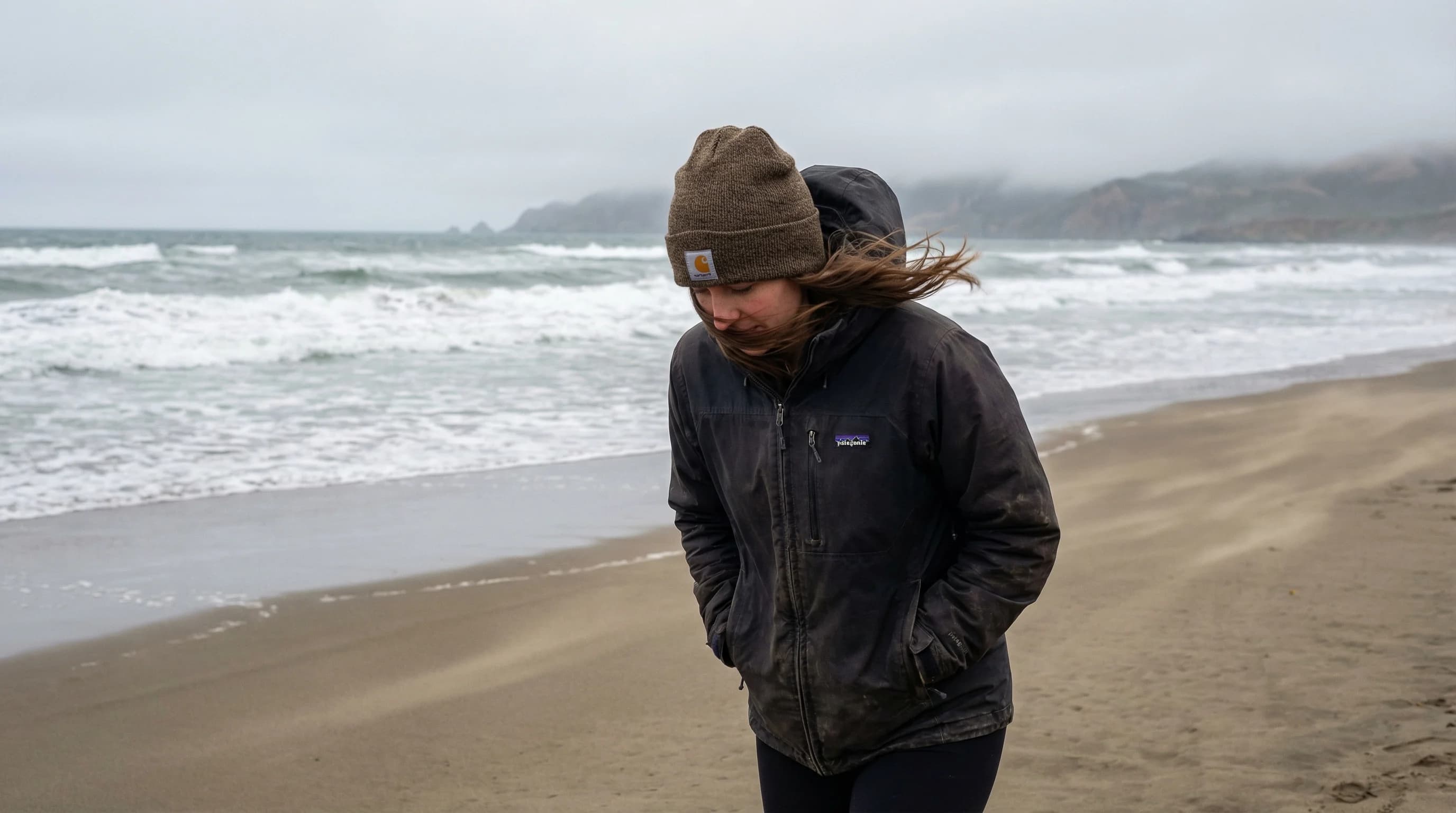
Visitors to the Bay Area often make the same mistake in July. The thermometer reads 60 degrees, the sky is sunny, and they dress for a pleasant summer day. Within an hour of arriving at Ocean Beach or walking across the Golden Gate Bridge, they are cold. The temperature never changed, but the wind did. This is Bay Area wind chill at work, and it operates at temperature ranges that most people associate with mild, comfortable weather. That wind chill effect is why a 55-degree San Francisco afternoon can feel like 40 degrees, why summer at the coast requires a jacket, and why the same temperature reads completely differently at Berkeley and at the Marin Headlands.
How Wind Chill Works
Wind chill is the perceived decrease in air temperature caused by wind moving over the skin. The human body generates heat, and a thin layer of warm air naturally accumulates near the skin. Wind strips this insulating layer away, forcing the body to generate more heat to maintain core temperature. The faster the wind, the more rapidly it removes that warm air boundary, and the colder the skin feels. The wind chill temperature is the equivalent still-air temperature that would produce the same rate of heat loss from exposed skin.
Standard wind chill formulas apply most meaningfully below about 50 degrees Fahrenheit. The National Weather Service defines wind chill as a factor when temperatures are at or below 50°F and wind speeds are 3 mph or above. In most of the United States, this means wind chill is primarily a winter concern. In the Bay Area, 50°F is summer weather at the coast and a common morning temperature even in the warmest months, which is why wind chill matters in July here in a way it simply does not in Sacramento or Los Angeles.
Bay Area Wind Chill by Location
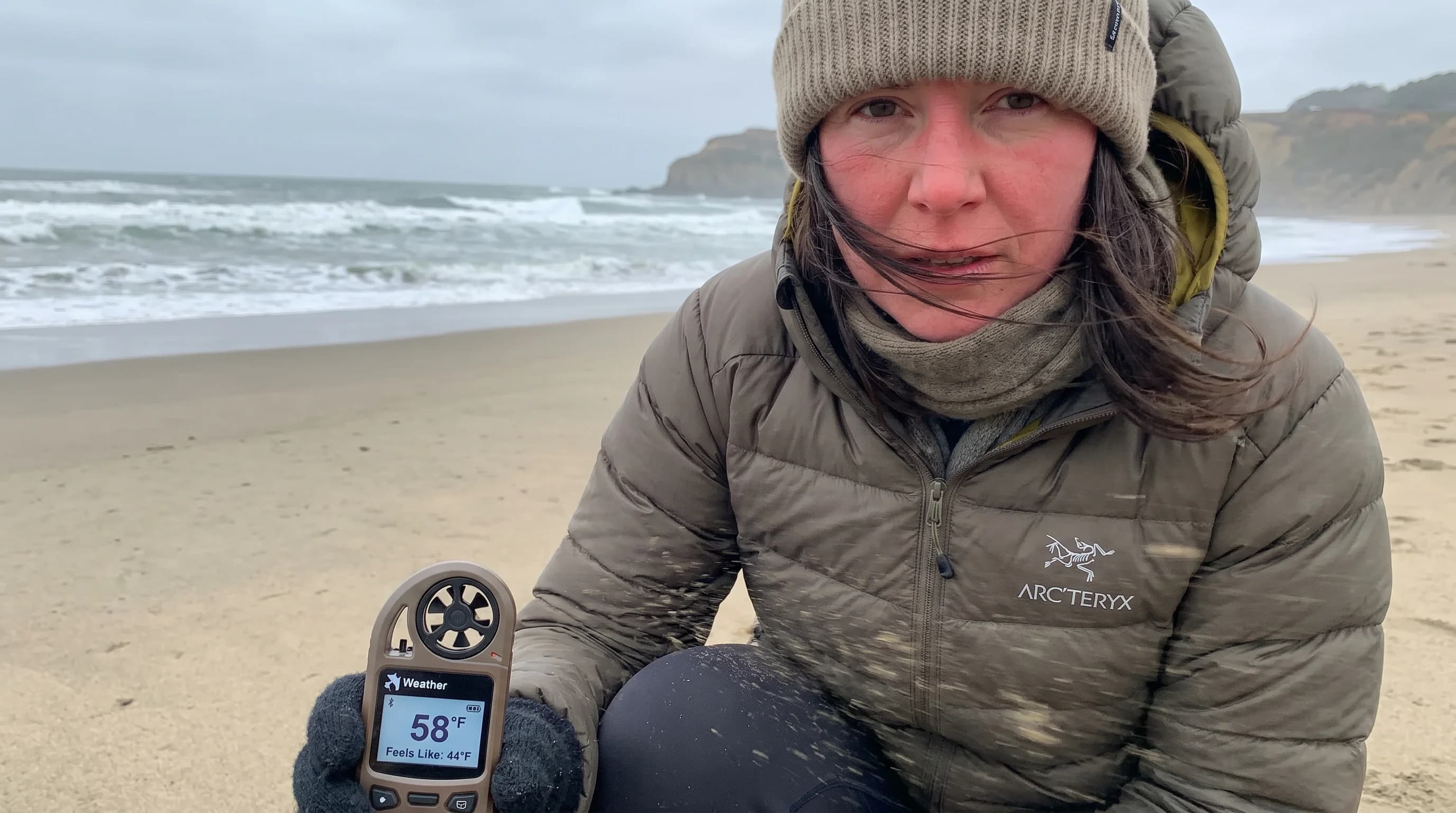
The Bay Area's most wind-exposed locations are also among its most visited. The Marin Headlands and the north side of the Golden Gate Bridge receive sustained winds of 20 to 30 mph on most summer afternoons. At 50 degrees and 25 mph wind, the wind chill equivalent is around 40 degrees. Ocean Beach in San Francisco is similarly exposed: a 58-degree day with 20 mph sea breeze produces a perceived temperature around 49 degrees. The eastern span of the Bay Bridge can sustain 30 mph crosswinds on strong sea breeze days.
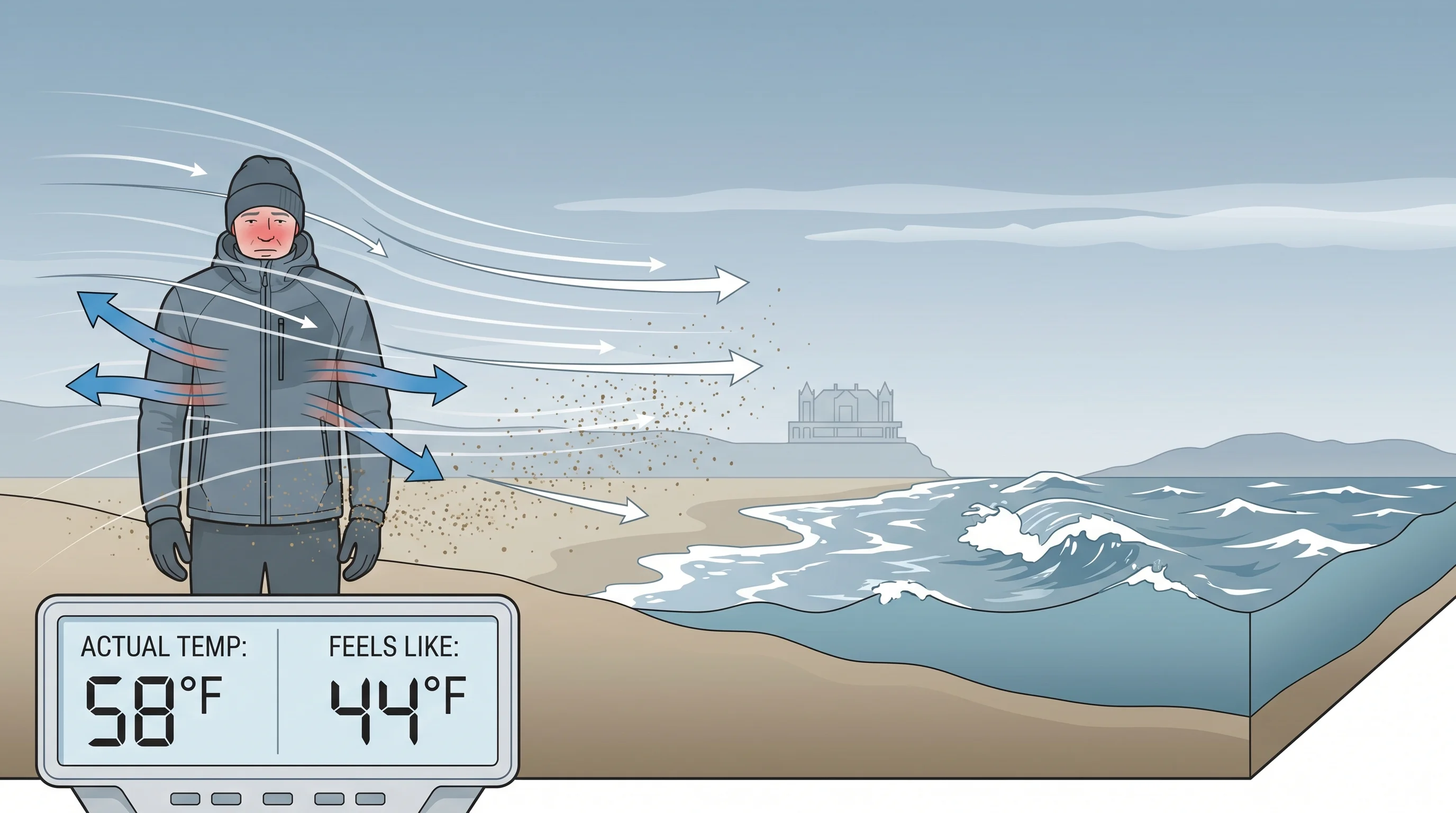
The contrast with the East Bay is instructive. On the same afternoon that San Francisco is at 55 degrees with a 25 mph sea breeze producing a wind chill near 40, Walnut Creek may be at 88 degrees with a light breeze and no meaningful wind chill. The marine influence pushes temperatures down and winds up on the coast, while the inland valleys are warmer, slightly breezy by late afternoon, but not in any way cold. The 30-degree temperature difference between coast and inland East Bay in summer is real, but the felt temperature difference can approach 50 degrees when wind chill is accounted for.
Dressing for Bay Area Wind Chill
The standard Bay Area advice, always carry a jacket, is directly about wind chill, even if people don't describe it that way. A windproof outer layer is more effective than a heavier piece of clothing that lets wind through, because wind chill works by stripping the warm air boundary layer. A thin windbreaker on top of a t-shirt provides more thermal comfort at Ocean Beach than a thick sweater without wind protection.
Foggy conditions amplify wind chill. When fog is present, the moisture in the air transfers heat away from the skin more rapidly than dry air at the same temperature, a process called convective heat transfer. A 58-degree foggy day with 20 mph wind feels colder than a 58-degree clear day with the same wind speed, because the fog adds a humidity factor to the heat loss equation. At Ocean Beach or on the Golden Gate Bridge on a foggy summer afternoon, the experienced temperature can feel 20 to 25 degrees below the actual air temperature, the combination of wind chill and fog moisture creating conditions that are genuinely cold by any standard, regardless of the thermometer.
Wind Chill and Bay Area Microclimates
Wind chill is one of the reasons Bay Area microclimate differences matter more than raw temperature data suggests. Two neighborhoods at the same temperature can feel dramatically different if one is sheltered from wind and the other is exposed. The Mission District in San Francisco runs warmer than the Sunset District partly because it is sheltered by Twin Peaks from the direct sea breeze; the temperature difference on a summer afternoon is real, often 10 to 12 degrees, but the felt difference is larger because the wind exposure that the Sunset receives is absent in the Mission. Weather apps show air temperature; the felt experience depends on where you are standing relative to the wind.