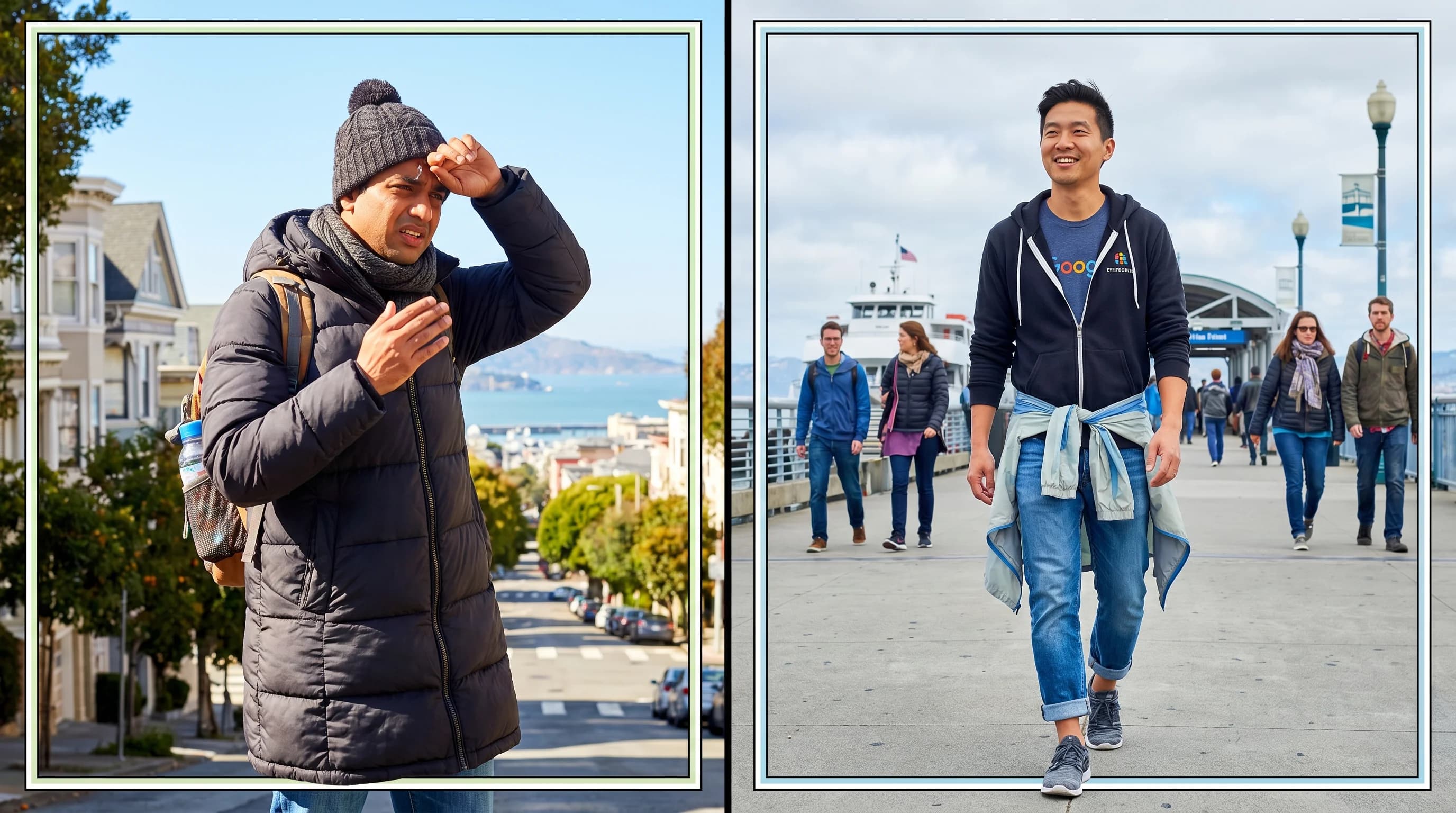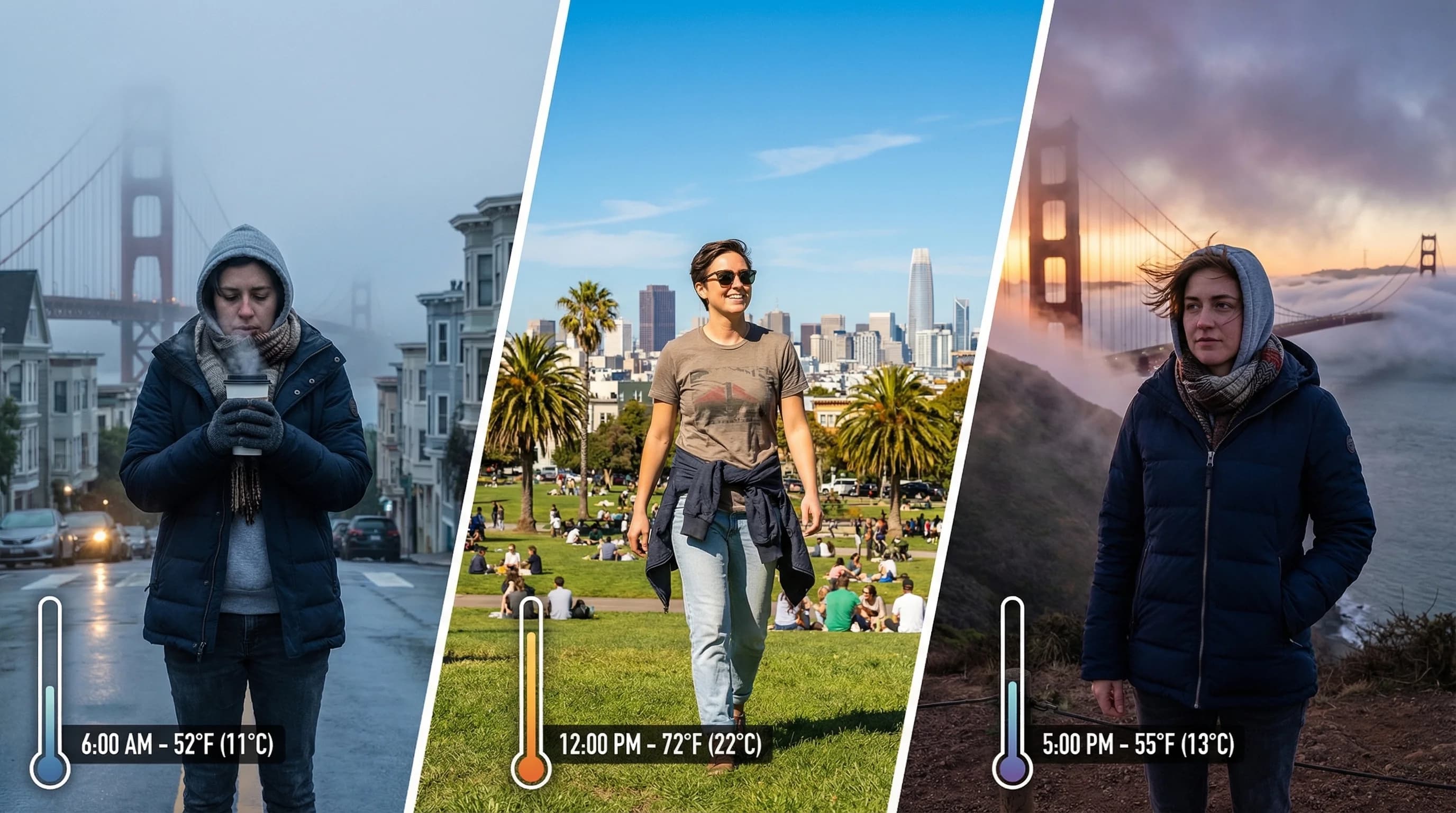
Every city has its unspoken dress code. San Francisco's is not about fashion. It is about function. Locals carry a light jacket on the sunniest June afternoon not because they are pessimistic but because they have been to San Francisco before. The city's daily temperature cycle, which runs from a foggy 55°F morning to a cleared 68°F afternoon and back to a cool 58°F evening, makes a single outfit inadequate from the first day of the year to the last. Layers are not a preference. They are the only system that works here.
The Daily Temperature Cycle That Makes Layers Non-Negotiable
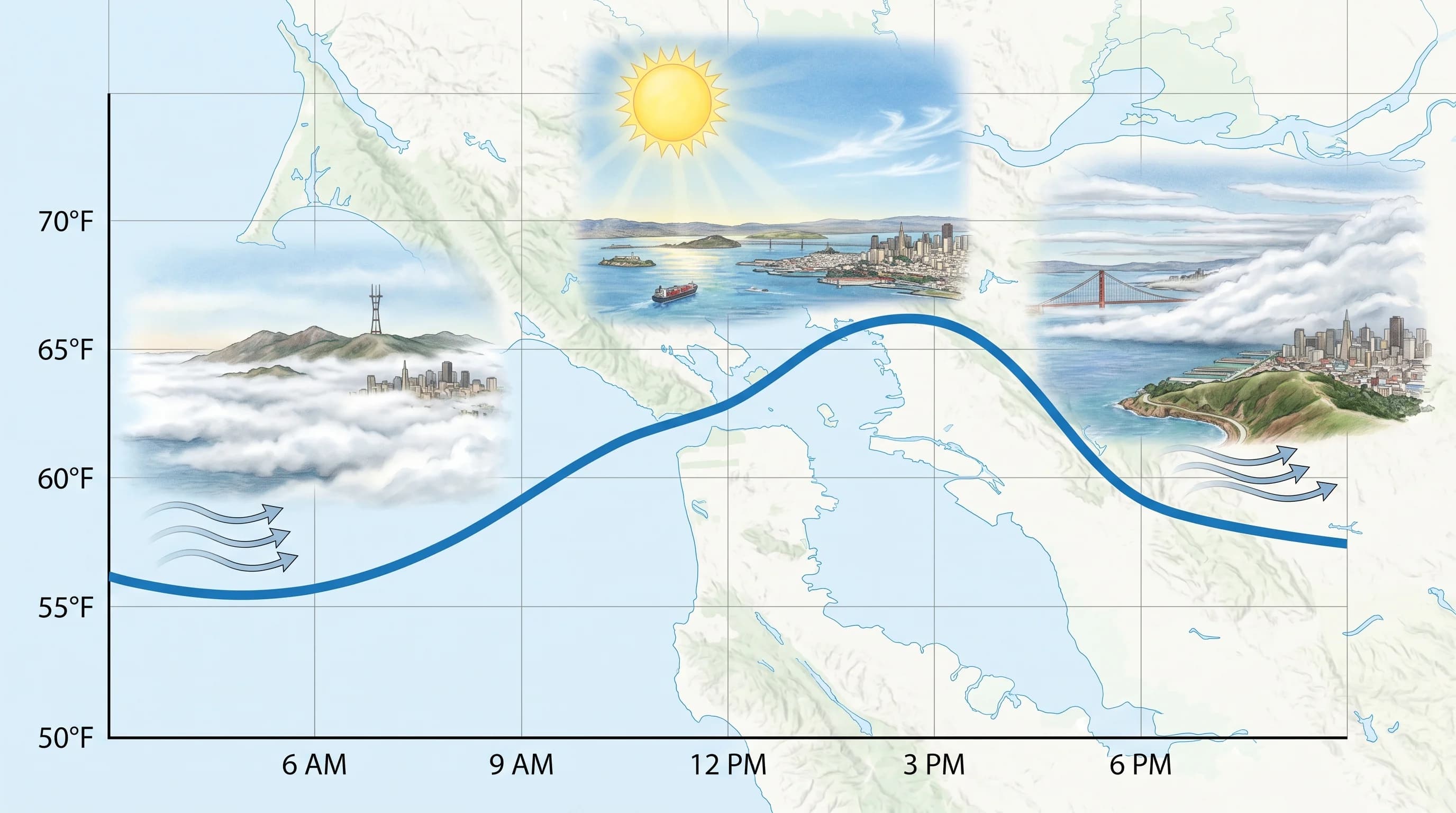
On a typical summer day in San Francisco, the morning starts at 54 to 57°F under a marine layer that may not lift until 11am or noon. The afternoon clears and the temperature climbs to 68 to 72°F, warm enough to shed a jacket. By 5pm, as the fog returns and the onshore wind picks up, the temperature drops back toward 58°F and continues falling into the evening. That is a 15-degree swing across eight hours. On days when the fog burns off quickly and the afternoon heats up faster, the swing can reach 20 degrees.
This pattern repeats year-round with minor adjustments. In fall it is slightly warmer and less fog-dominated. In winter the fog is replaced by cloud cover and rain. In spring the mornings are cool and the afternoons can surprise you with real warmth. The swing is smaller in fall and slightly larger in summer, but no season in San Francisco produces conditions stable enough to abandon the layering principle.
The Three-Layer System: How Locals Actually Dress
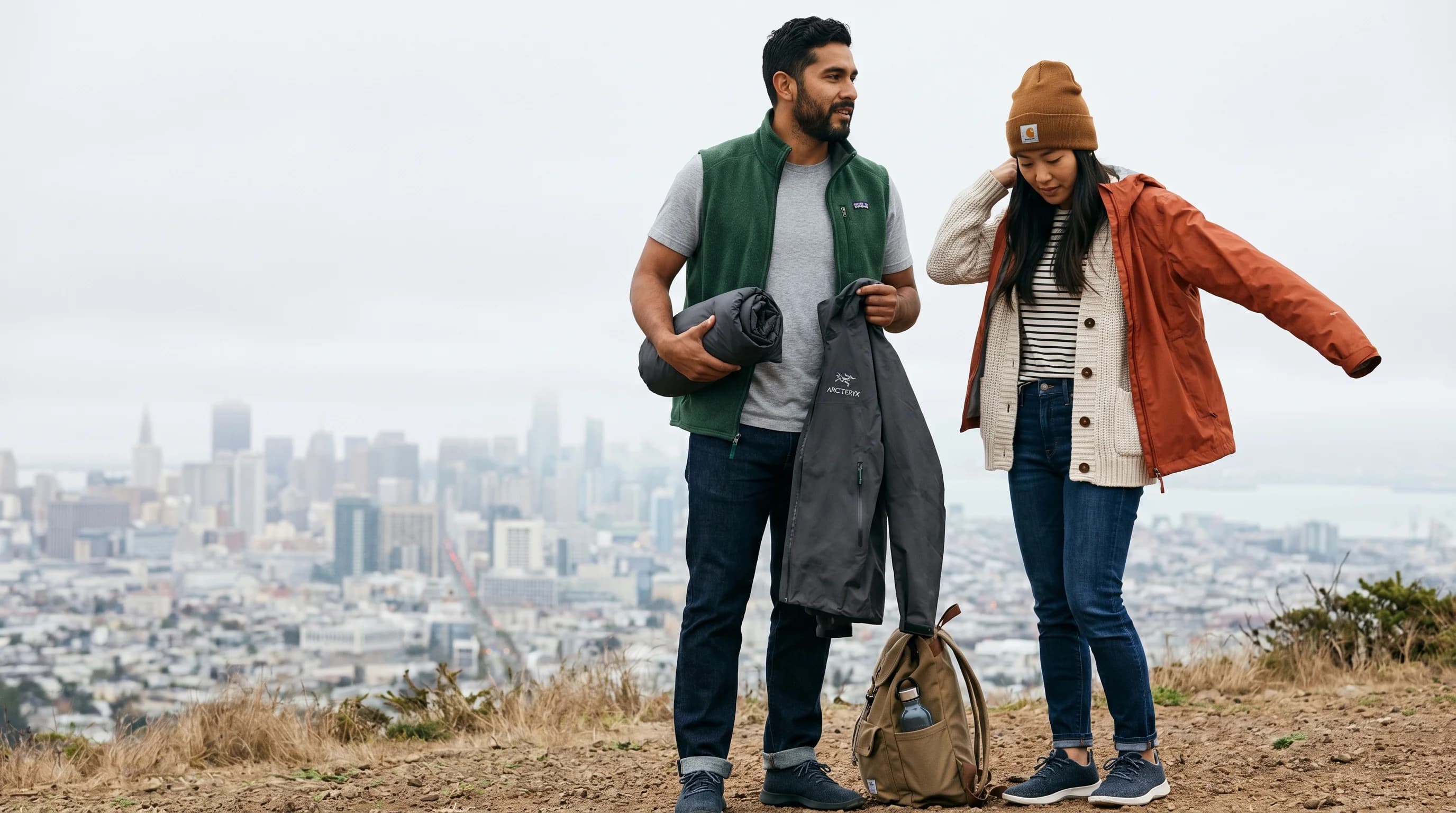
The system that works is three layers used as removable tools rather than a fixed outfit. Base layer: a lightweight t-shirt or moisture-wicking top that handles the warm part of the day without overheating. Mid-layer: a cardigan, light sweater, or thin fleece that provides actual warmth for morning and evening without being so heavy that it is miserable to carry when you remove it. Outer layer: a windbreaker or rain jacket that handles the marine wind and occasional fog drizzle. This outer layer should be light enough to compress into a bag or tie around your waist. It is not a statement piece. It is infrastructure.
The three pieces together span the full range of a typical SF day. In the morning fog, all three are on. When the afternoon clears and warms, the outer and mid layers come off and go into the bag. At 5pm when the marine layer returns, they go back on in reverse order. The system is fast, easy, and it works without thinking about it after the first day.
Why a Single Outfit Always Fails
The two tourist approaches that fail reliably are dressing for the warm part of the day (arriving at the wharf in a t-shirt and shorts at 8am, cold and miserable) or dressing for the cold part (wearing a heavy coat by noon on a cleared afternoon, overheating and carrying something unwieldy for six hours). Both approaches solve one phase of the day and sacrifice the other two.
The heavy winter coat is the most common overcorrection. People hear “San Francisco” and “cold” and pack the same gear they would bring to Chicago in November. But San Francisco winters are mild (temperatures rarely below 45°F even at night), and a heavy coat is overkill on most days and an active burden when you warm up indoors or on a hill climb. The beach outfit with no backup is the other mistake. June visitors who pack as if they are going to Los Angeles spend their first two days cold and their third day buying a sweatshirt at Fisherman's Wharf.
Adjusting Layers by Season Without Starting Over
The three-layer principle stays constant. What changes by season is the weight of each layer. In summer, the lightest versions of all three work: thin t-shirt, thin cardigan, nylon windbreaker. In fall, the same principle applies but slightly heavier: a real sweater instead of a cardigan, the same windbreaker. In winter, the outer layer should be waterproof rather than just wind-resistant, the mid-layer should be heavier (fleece or wool), and a hat and gloves appear in the bag for evenings.
Spring sits between summer and fall: light mid-layers work on most days, but a light rain jacket rather than a pure windbreaker is worth having in April when rain is still possible. The point is that the system does not require a complete rethink each season, just recalibration of the same three components. Once you understand the template, packing for San Francisco becomes simple in a way it never felt before.
The One Item You Always Bring
If there is a single piece of clothing that defines the San Francisco experience, it is a light, packable jacket. Not a sweatshirt (too bulky to carry easily, does not handle wind or drizzle). Not a heavy coat (overkill). A thin nylon or softshell jacket that compresses into a fist-sized package and lives in your bag every day you are in the city. This jacket handles the morning fog, the afternoon breeze off the bay, and the evening cooling all in one garment. Locals own multiple versions of this jacket because they have learned that it is the item they reach for constantly and the one they most regret not having when they forget it.
The culture of San Francisco reinforces this. The city is deeply casual, and the layered look, a t-shirt under a cardigan under a jacket, is standard in any neighborhood and at any occasion short of a formal event. There is no social pressure to overdress or underdress. The jacket in the bag is the local uniform, and once you adopt it, San Francisco stops feeling like a weather puzzle and starts feeling like a city where you always know what to wear. That is worth more than any single outfit choice.