seasonaldestinationstips

What's the Warmest Month in the Bay Area?

By SFBayWeather||Updated |4 min read
What's the Warmest Month in the Bay Area?

Key Takeaways

  • San Francisco's warmest month is September (average high 68-70°F), when Indian summer conditions bring sunshine and light winds after the summer fog retreats.
  • October is close behind September for San Francisco and often feels warmer despite slightly lower average temperatures due to more sunshine and lower humidity.
  • Inland East Bay valleys (Livermore, Walnut Creek, Concord) peak in July or August, when summer heating is most intense during the longest days.
  • The Bay Area's warmest month for visitors depends entirely on destination: September-October for San Francisco and wine country, July-August for inland activities.
  • The coexistence of two different "warmest months" separated by 20-50 miles is a direct consequence of the marine layer's seasonal behavior.

Identifying the Bay Area's warmest month requires specifying which part of the Bay Area and what you mean by "warmest." For coastal San Francisco, the warmest month in terms of mean temperature is September or October, after the summer fog has retreated but before the fall rains arrive. For the inland East Bay valleys, the warmest month is almost certainly July or August, when the maximum summer heat loads coincide with the fewest storm interruptions. Wine country, by another set of measures, peaks in September during harvest season. These are not minor regional variations. They represent genuinely different climate regimes separated by 20 to 50 miles, driven by the same orographic and maritime geography that makes the Bay Area's microclimate structure so complex.

San Francisco's Warmest Month

In San Francisco, September is the warmest month by most measures. The city's average September high temperature is around 68 to 70 degrees Fahrenheit, modestly above July's average of around 67. But the difference is more pronounced in practice than the averages suggest, because September sees far more sunshine hours than July. A July day in San Francisco might average 67 degrees but feel cold because the sky is overcast and the wind is gusting. A September day at the same temperature feels warm and pleasant because the sun is out and the wind is lighter.

October is close behind September for San Francisco and, in some respects, more consistently pleasant. The Indian summer conditions of October bring warm, sunny afternoons with low humidity and light winds, conditions that San Franciscans recognize as the city's best weather of the year. October's average high is slightly lower than September's, but the clarity and warmth feel superior to the fog-heavy summer months.
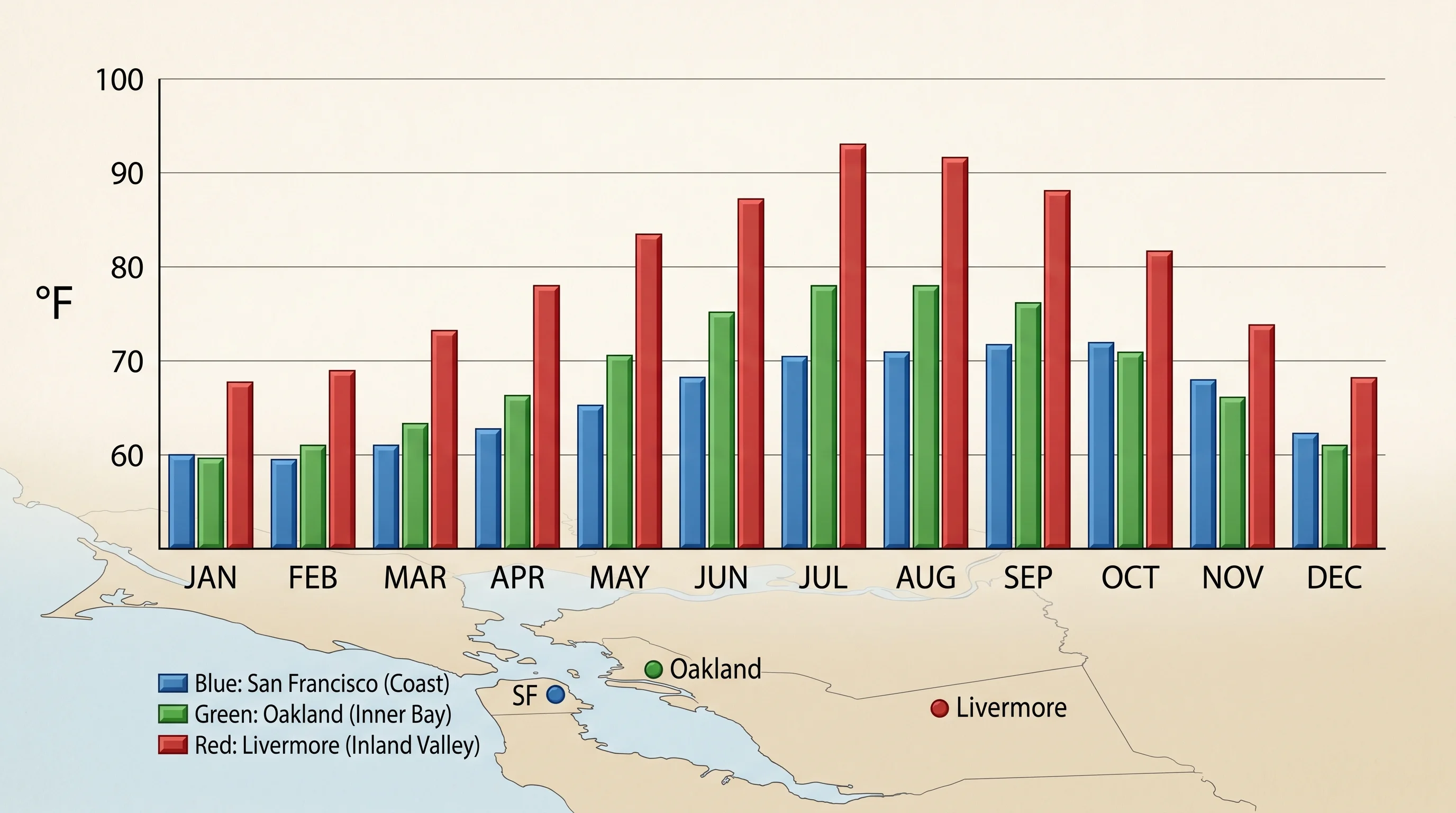
Bay Area temperature comparison chart showing July through October average highs by location: San Francisco peaks in September-October, inland East Bay peaks in July-August, demonstrating the regional variation in warmest month
The Bay Area's warmest month varies by location. Coastal San Francisco peaks in September-October (Indian summer), when the marine layer retreats. Inland East Bay valleys peak in July-August. The two regimes co-exist 20-50 miles apart, driven by different relationships with the marine layer.

Inland Bay Area: July and August

For the inland East Bay and South Bay valleys, July and August are the hottest months because summer heating reaches its maximum intensity during the longest days. Livermore averages July highs around 90 to 95 degrees Fahrenheit. Concord and Walnut Creek run similarly hot. The sea breeze provides afternoon relief but does not prevent these cities from reaching their peak temperatures in midsummer.

By September, the inland valleys begin to cool slightly as the North Pacific High weakens and the sea breeze extends its reach further inland on more days. October brings Indian summer to the inland valleys too, with warm, clear afternoons and light winds, but October is rarely as hot as July in the inland East Bay. The warmest month for the entire Bay Area region, including the inland valleys, is typically July by total heat accumulated.

Warmest Month for Visitors

The answer to "when should I visit for warm weather" depends entirely on where you are going and what you mean by warm. If you are visiting San Francisco and want warm, sunny weather, plan for September or October, not July. July in San Francisco is famously cold by summer standards. If you are visiting the wine country in Napa or Sonoma and want harvest conditions, September through October is exactly right. If you want maximum heat for inland activities:Lake Berryessa, the Delta, Mount Diablo, July or August gives you the highest temperatures and the longest daylight.

Frequently Asked Questions

What is the warmest month in San Francisco?

September is typically the warmest month in San Francisco by mean temperature, with average highs of 68-70°F. October is close behind and often feels warmer in practice because it brings clearer skies, lower humidity, and lighter winds. July, despite being the height of summer, is one of the coldest months in San Francisco due to the marine layer. The city's famous summer fog peaks in July, keeping temperatures in the low to mid-60s under overcast skies on many days. San Francisco's warmest weather arrives after the North Pacific High begins to weaken in September, allowing the marine layer to retreat.

When is the best time to visit San Francisco for warm weather?

September and October are the best months to visit San Francisco for warm, sunny weather. Indian summer conditions during these months bring temperatures in the 65-75°F range, clear skies, and light winds. Avoid July and August if you want sunshine and warmth; these are San Francisco's foggiest months, with overcast skies and temperatures that rarely exceed 65°F. Late April and May are the spring shoulder season with good weather before the summer fog arrives. October is arguably the most reliably pleasant month of the year in San Francisco.

Is July or August hotter in the East Bay?

July and August are approximately tied as the hottest months in the inland East Bay, with July typically edging August by a degree or two. Livermore averages July highs of 90-95°F; Concord and Walnut Creek run similarly. The long June solstice days provide intense solar heating, and the North Pacific High is at peak strength in July, maintaining a consistent pressure gradient that drives the sea breeze but does not prevent inland cities from reaching their peak temperatures. By September, the inland valleys begin to cool as the High weakens.

Why is September warmer than July in San Francisco?

In July, the North Pacific High is at maximum strength and the marine layer is deepest, keeping San Francisco blanketed in fog and cool. By September, the High weakens and the marine layer retreats, allowing afternoon sunshine to warm the city. The actual solar angle is lower in September than July, but cloudless afternoons deliver more warmth than foggy July days. This counterintuitive pattern; cooler in midsummer, warmer in early fall, is one of the Bay Area's most distinctive climate features.

Does the Bay Area have a true summer?

Yes and no. The inland East Bay and South Bay experience a genuine hot summer from June through August, with highs regularly in the 90-100°F range. San Francisco and the coast experience a different kind of summer, a foggy, cool season often referred to as "the marine layer season." For coastal residents, the real summer feeling (warm, sunny, comfortable) arrives in September and October. Wine country occupies a middle ground: Napa and Sonoma are warmer than the coast in summer but cooler than the inland valleys, with their best warm weather in September through harvest season.

Live Bay Area Conditions

Compare fog, temperature, wind, and comfort across the map.

See which microclimates are clear, cool, windy, or warming up right now.

Open the Weather Map
🔒Privacy Policy📄Terms of Service