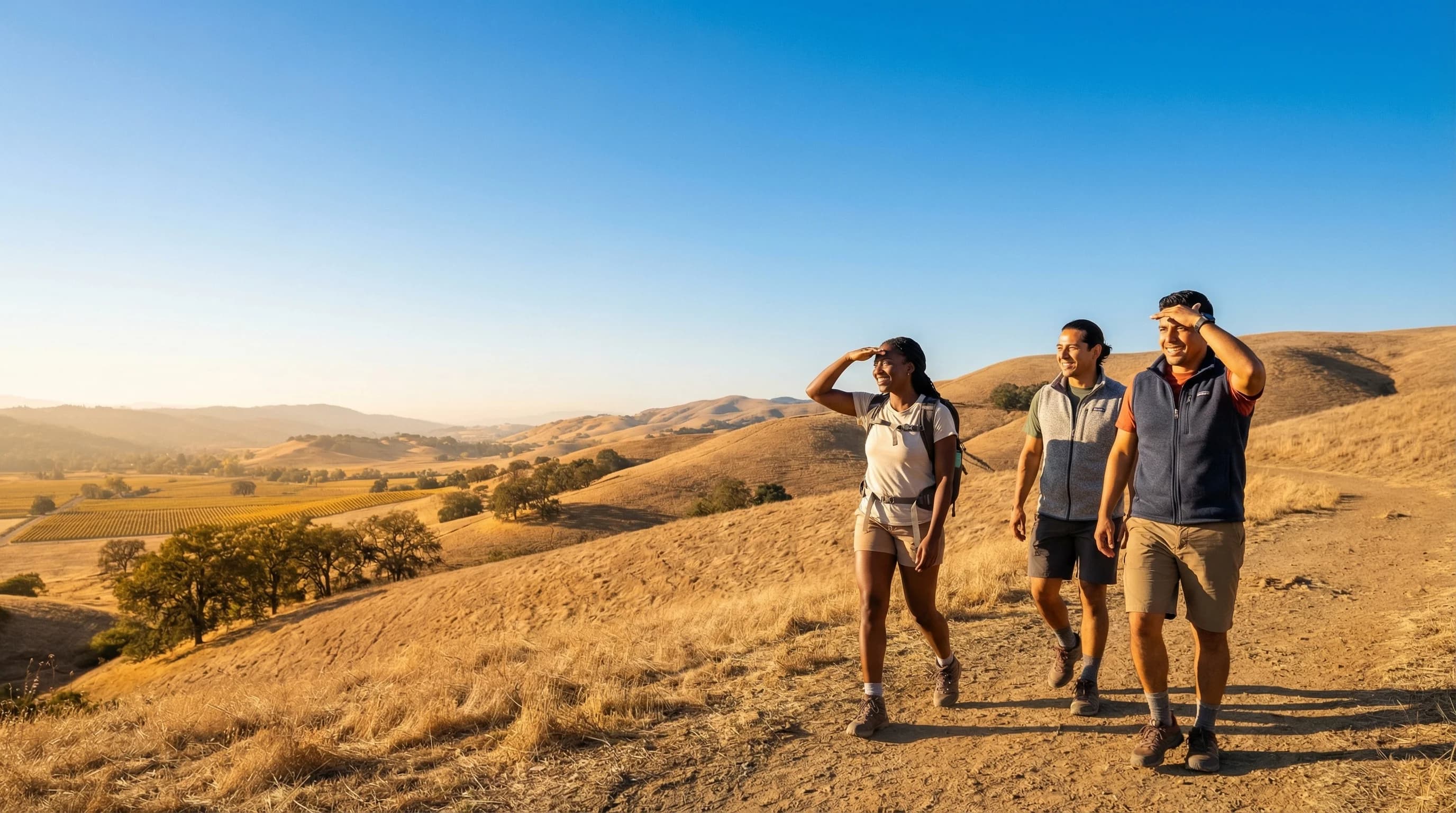
In most of the United States, fall means cooling temperatures, shorter days, and the gradual retreat of summer warmth. The Bay Area works differently. September and October are often the warmest, sunniest months of the year across the inland Bay Area, the wine country, and the East Bay hills. This phenomenon, called Indian summer, is not a fluke of unusual weather but a predictable and recurring feature of the Bay Area's climate driven by specific atmospheric changes that happen every fall. If you want the most reliably warm, fog-free weather the region offers, late September through mid-October is the time to be here.
Why Bay Area Fall Is Warmer Than Summer
The Bay Area's summer fog and cool temperatures are products of the North Pacific High, a persistent high-pressure system that sits offshore from roughly June through August and drives the marine layer onshore. As autumn arrives, the North Pacific High weakens and drifts south. The pressure gradient that pushed cool, moist ocean air inland relaxes. Without the sustained onshore flow, the marine layer weakens and the coastal fog machine runs at reduced capacity.
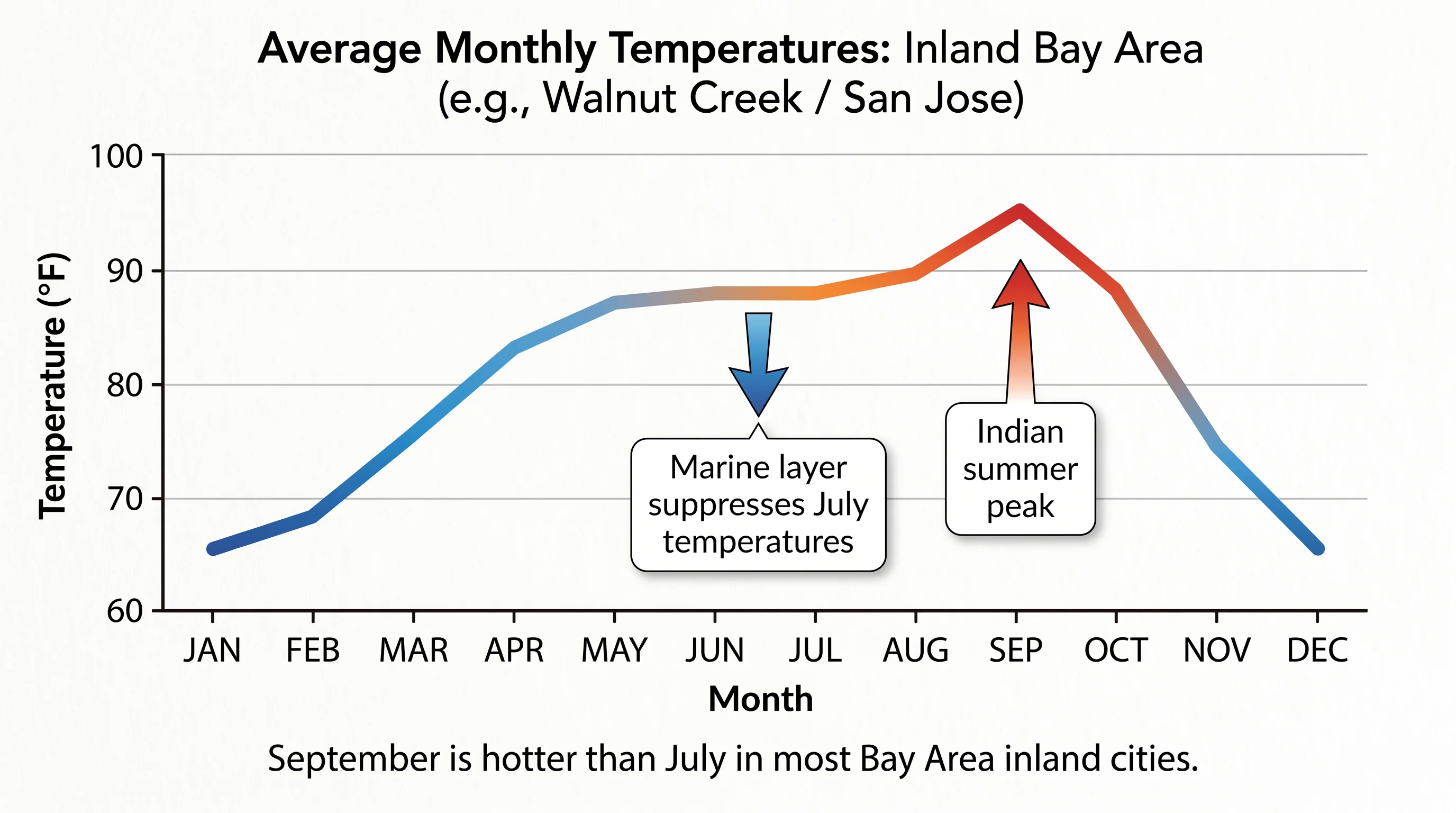
At the same time, residual summer heat in the interior valleys continues to build under clear skies, and the sun angle, while lower than in June, is still high enough to warm the land surface effectively. This combination of weaker marine cooling and persistent land heating produces the warmest conditions of the year for most inland Bay Area locations. San Jose, Walnut Creek, Livermore, and Napa Valley all see their warmest typical temperatures in September rather than July. The pattern is consistent enough that wine growers depend on it: the final push of fall warmth is essential for completing the ripening of many grape varietals before harvest.
Indian Summer vs. Diablo Wind Events
Not all fall heat is the same. Gentle Indian summer warmth, with its clear skies and moderate temperatures in the 75 to 85 degree range, is a benign and pleasant phenomenon. Diablo wind events, offshore flow situations where dry, hot winds blow from the interior toward the coast, compressing and warming as they descend, are a different matter entirely. Diablo wind events produce temperatures of 90 to 105 degrees Fahrenheit even in typically cool coastal communities, relative humidity that can drop below 10 percent, and wind gusts that turn any spark into an inferno.
Indian summer and Diablo wind events share the same underlying atmospheric mechanism, offshore flow replacing the normal onshore marine pattern, but differ in intensity. Moderate offshore flow gives you pleasant Indian summer afternoons. Strong offshore flow gives you Diablo wind conditions: extreme heat, extreme dryness, and elevated fire danger. The boundary between them is not always sharp, and the Bay Area's fall heat events can escalate from pleasant to dangerous within a day if an offshore flow strengthens unexpectedly.
Where Indian Summer Is Most Pronounced
The Indian summer phenomenon is most dramatic in the communities that are most constrained by the marine layer during summer. The wine country valleys of Napa and Sonoma see dramatic Indian summer conditions because the marine layer is weaker in fall, allowing their normally warm afternoon temperatures to climb without the evening cooling that the marine push provides in summer. Harvest season in Napa and Sonoma would be impossible without this fall warm window.
The East Bay hills and inland valleys also experience Indian summer more intensely than the coast. Walnut Creek, Danville, and San Ramon see their September averages run warmer than July averages. Even the normally cool San Francisco can experience Indian summer conditions when offshore flow is strong enough; the days when San Francisco hits 80 degrees in October are Indian summer days, and they are memorable precisely because they are so rare for the city.
The coast and the western Bay Area communities remain coolest during Indian summer, though even they warm compared to their fog-heavy July and August baseline. Half Moon Bay might climb to 68 degrees on an October Indian summer day, not warm by inland standards, but noticeably warmer than the 60-degree foggy days that dominated all summer. The entire regional temperature spectrum shifts upward in fall, even if the coastal end of the spectrum never reaches what the inland end experiences.
Planning Around Indian Summer
Indian summer is the most reliable warm season for outdoor activities across most of the Bay Area. Wine country events, harvest festivals, hiking in the East Bay hills, beach days at Point Reyes National Seashore, all benefit from October's tendency toward clear, warm, fog-free days. The crowds that fill summer tourist destinations also thin considerably in fall, making September and October the closest the Bay Area comes to having both good weather and accessible parks and trails.
The caveat is fire. Indian summer's warmth and dryness arrive alongside elevated fire danger throughout the hills and wildlands of the Bay Area. The combination of dry grasses cured by a summer without rain, low humidity from offshore flow, and the potential for Diablo wind conditions makes October one of the most fire-prone months of the year. The fires that have caused the most destruction in recent Northern California history, including the Tubbs Fire, Kincade Fire, and Camp Fire, all occurred in October or November during offshore wind events. Indian summer's warmth is genuinely enjoyable, but it comes with awareness of what the same atmospheric conditions can enable.