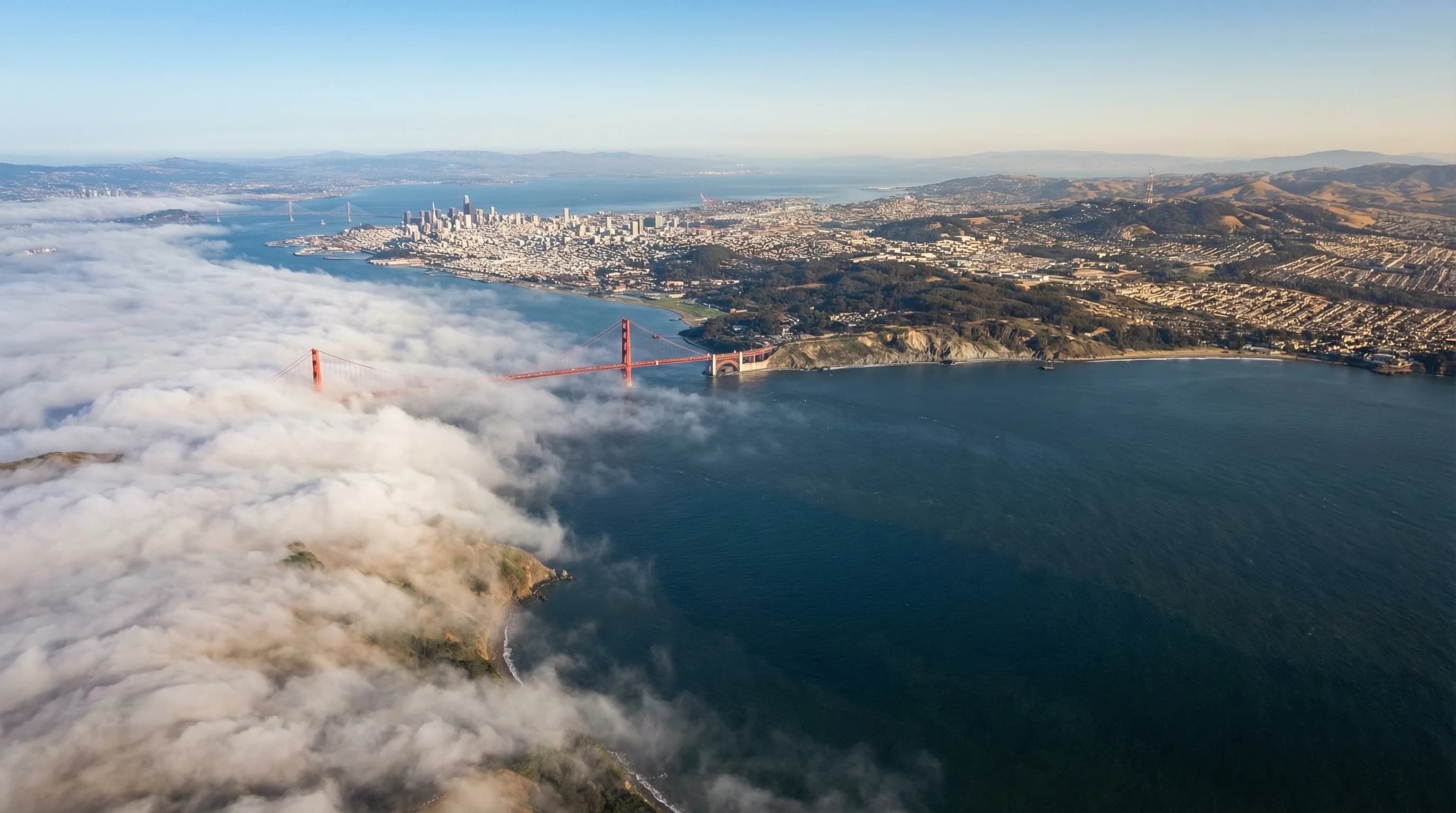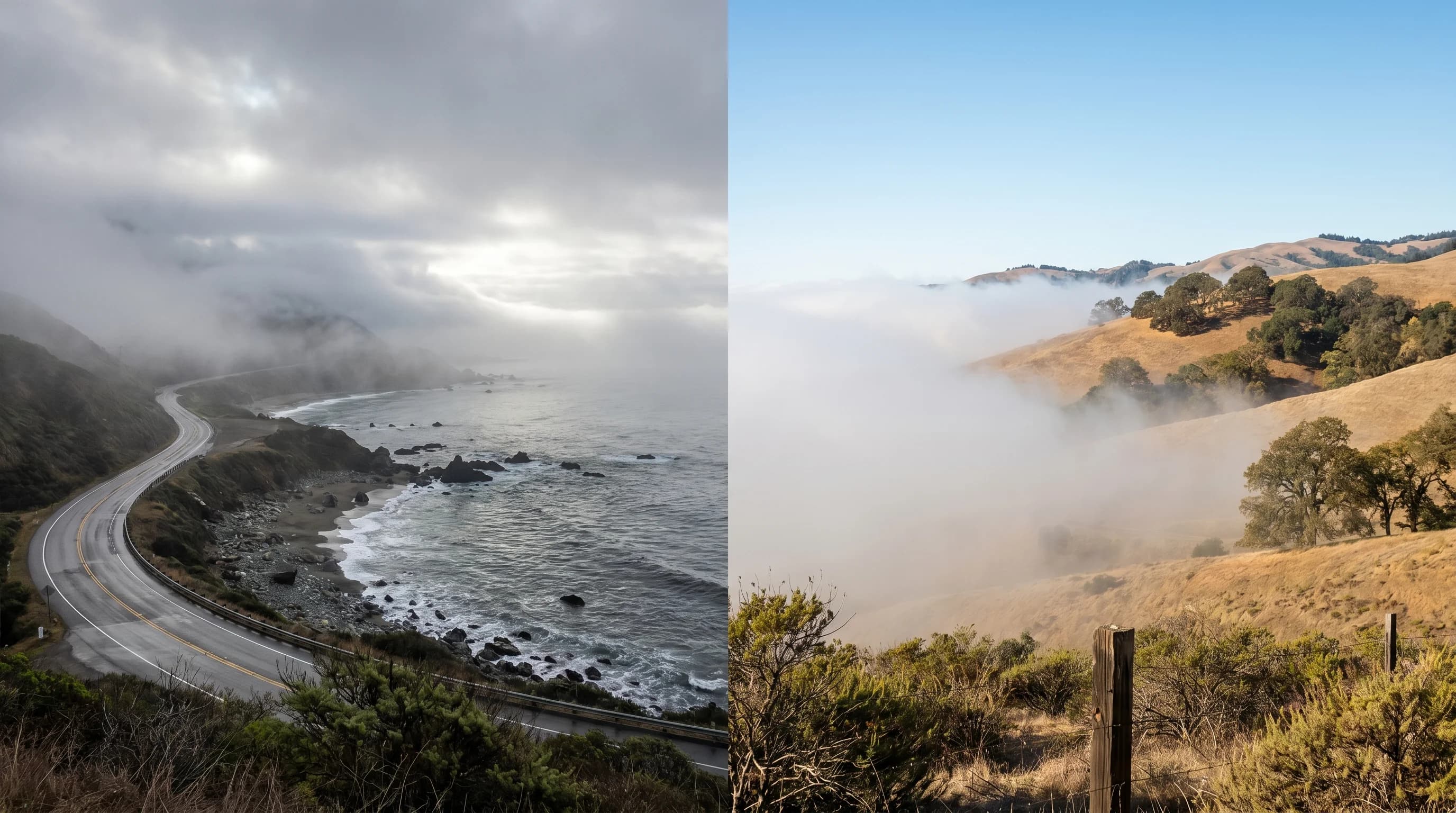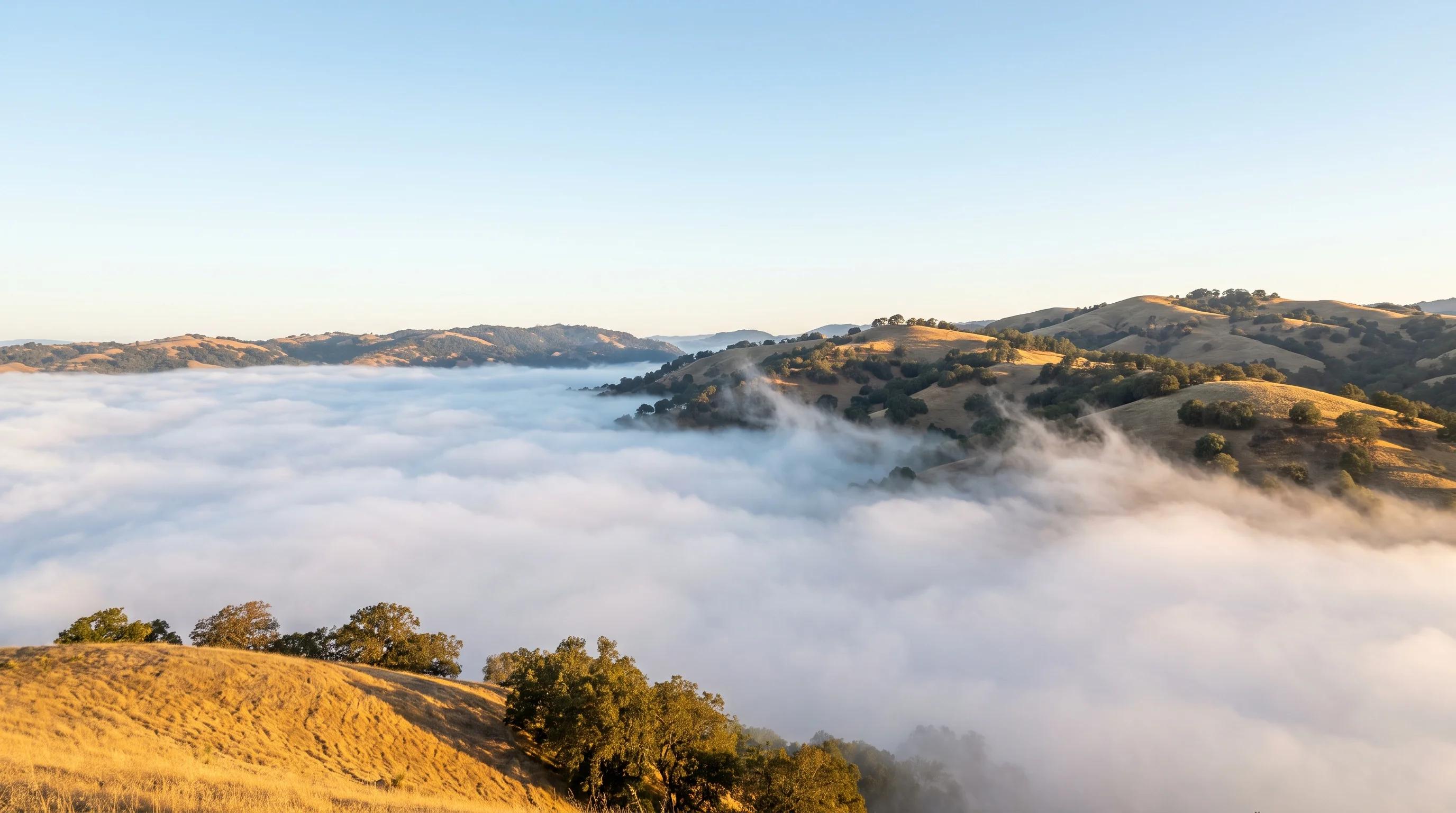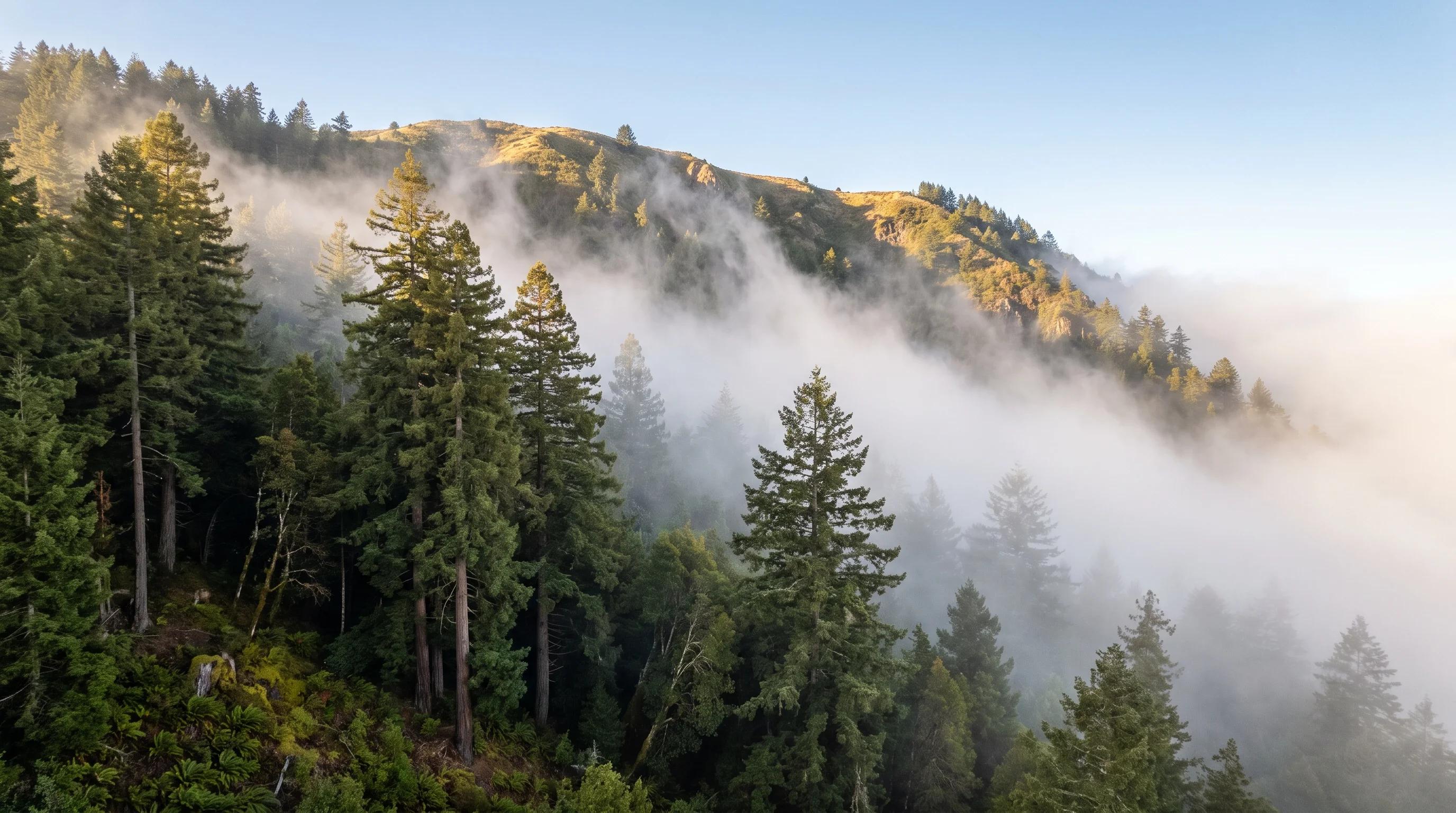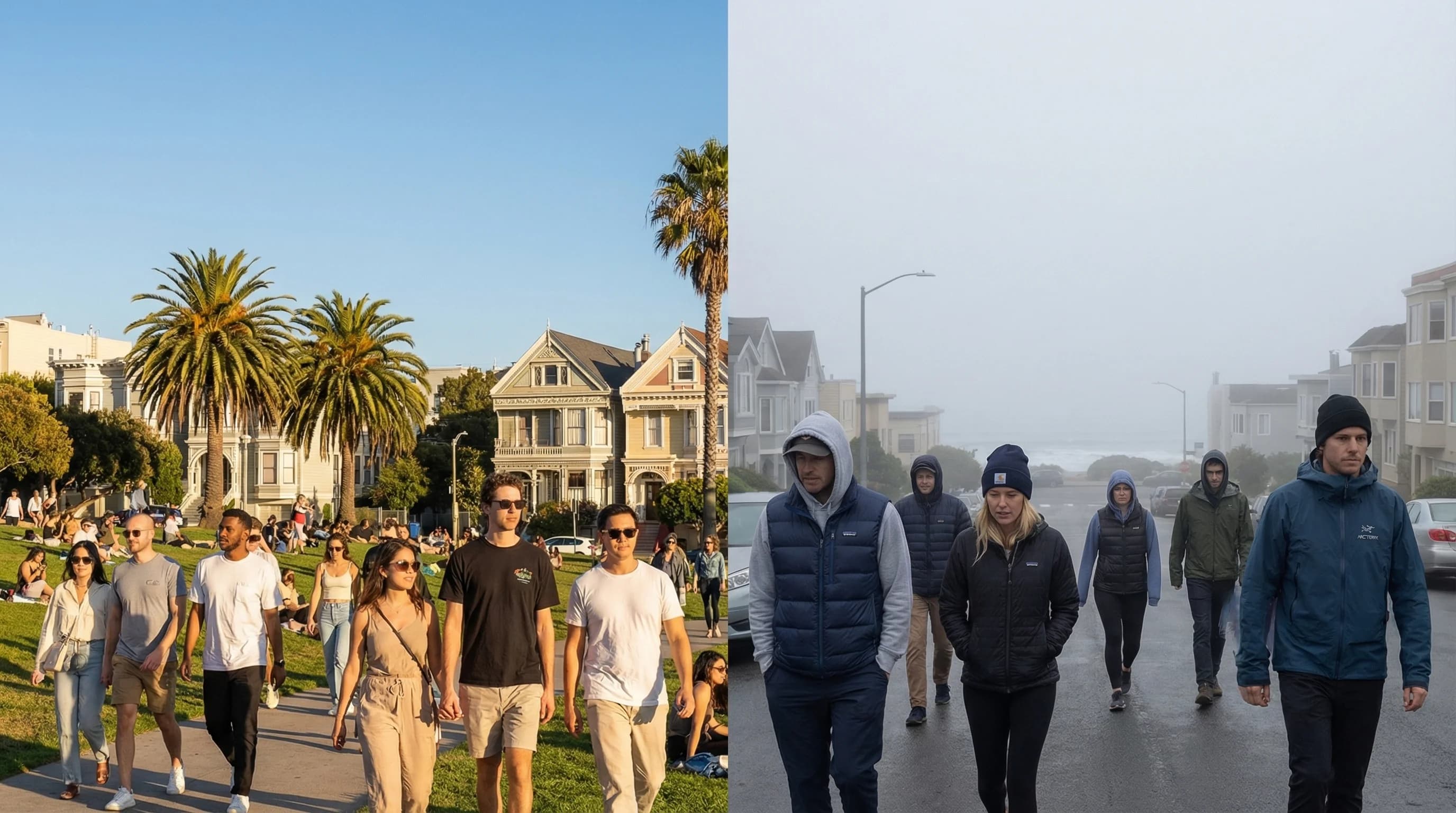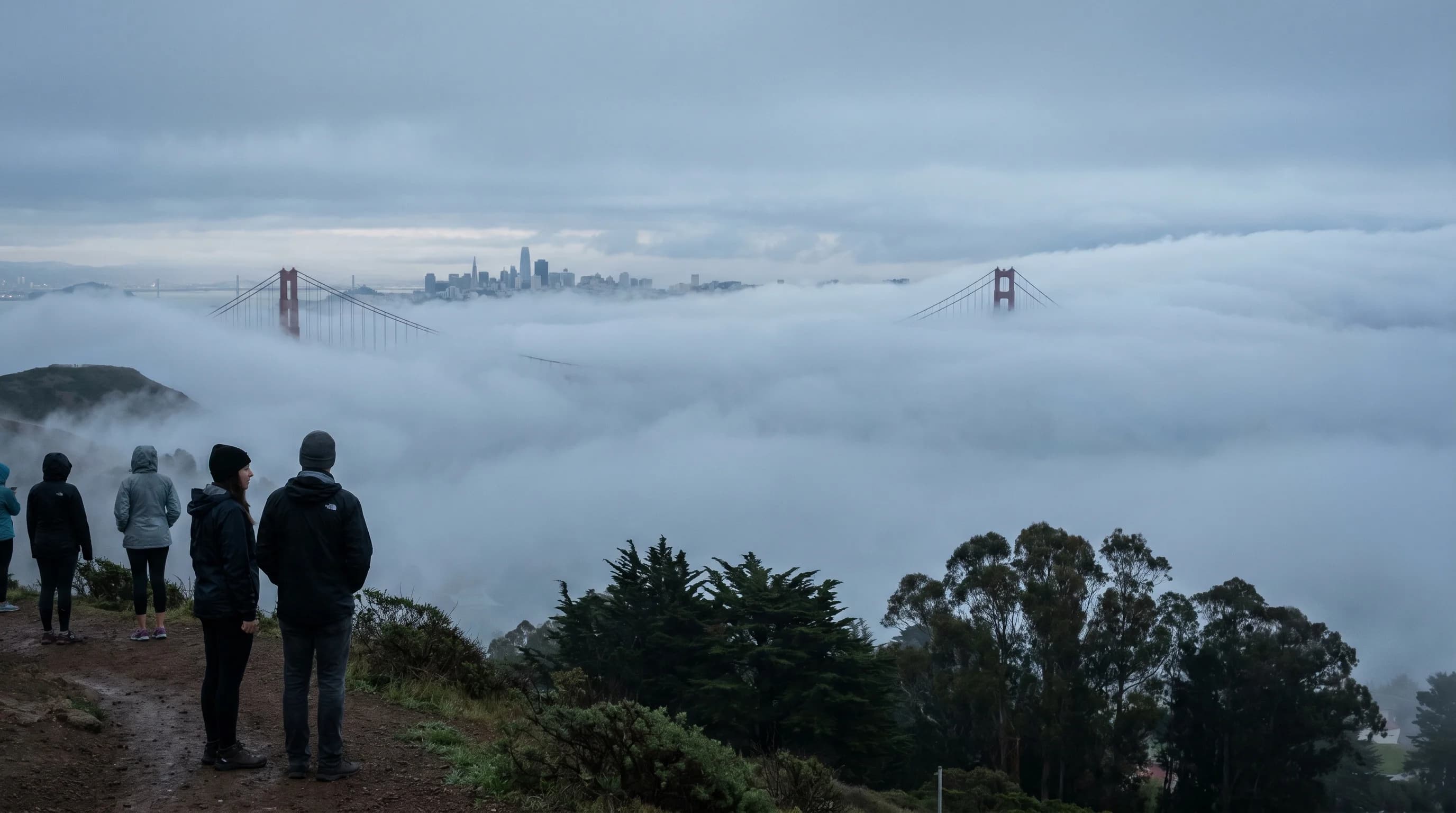
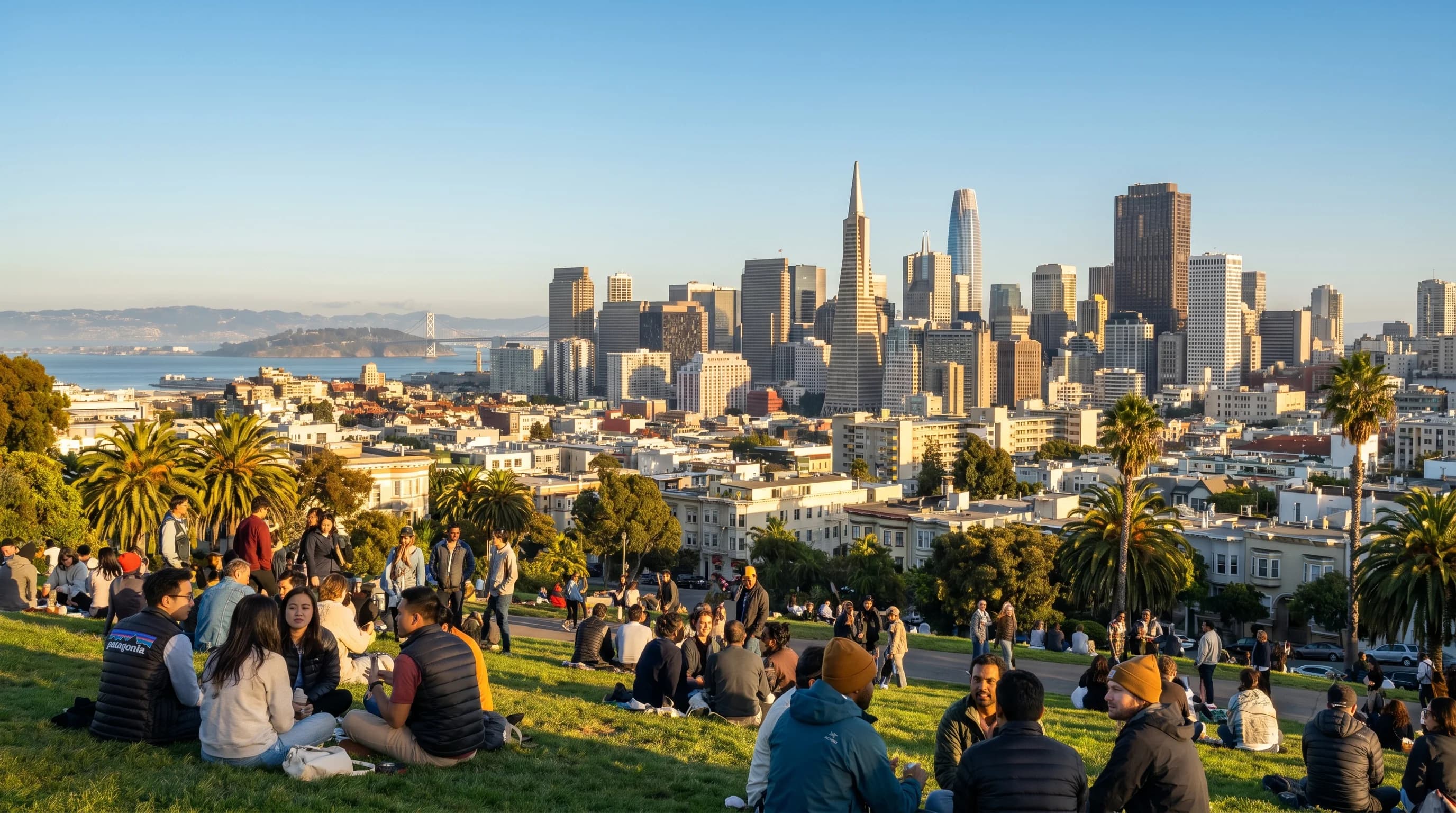
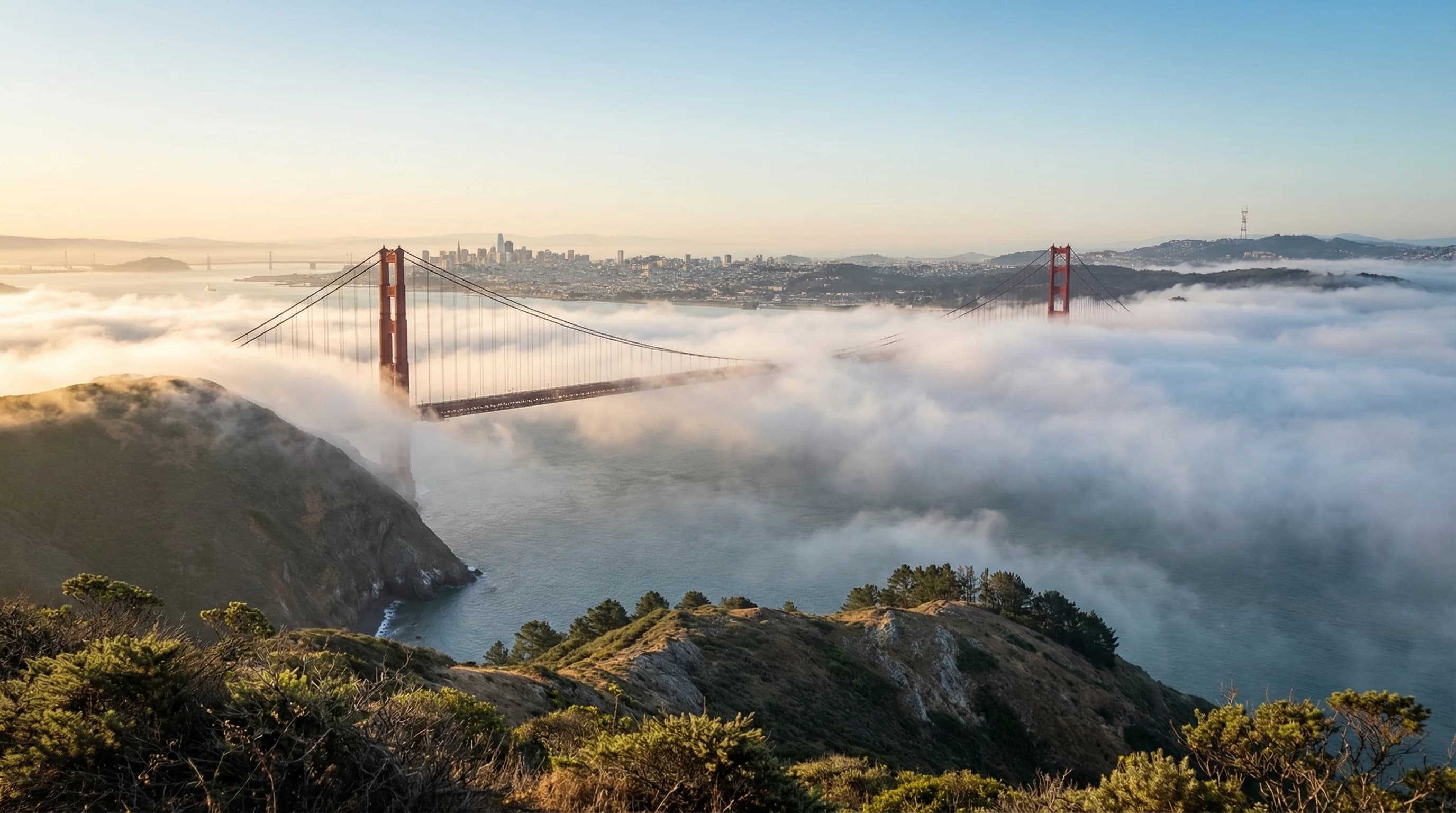
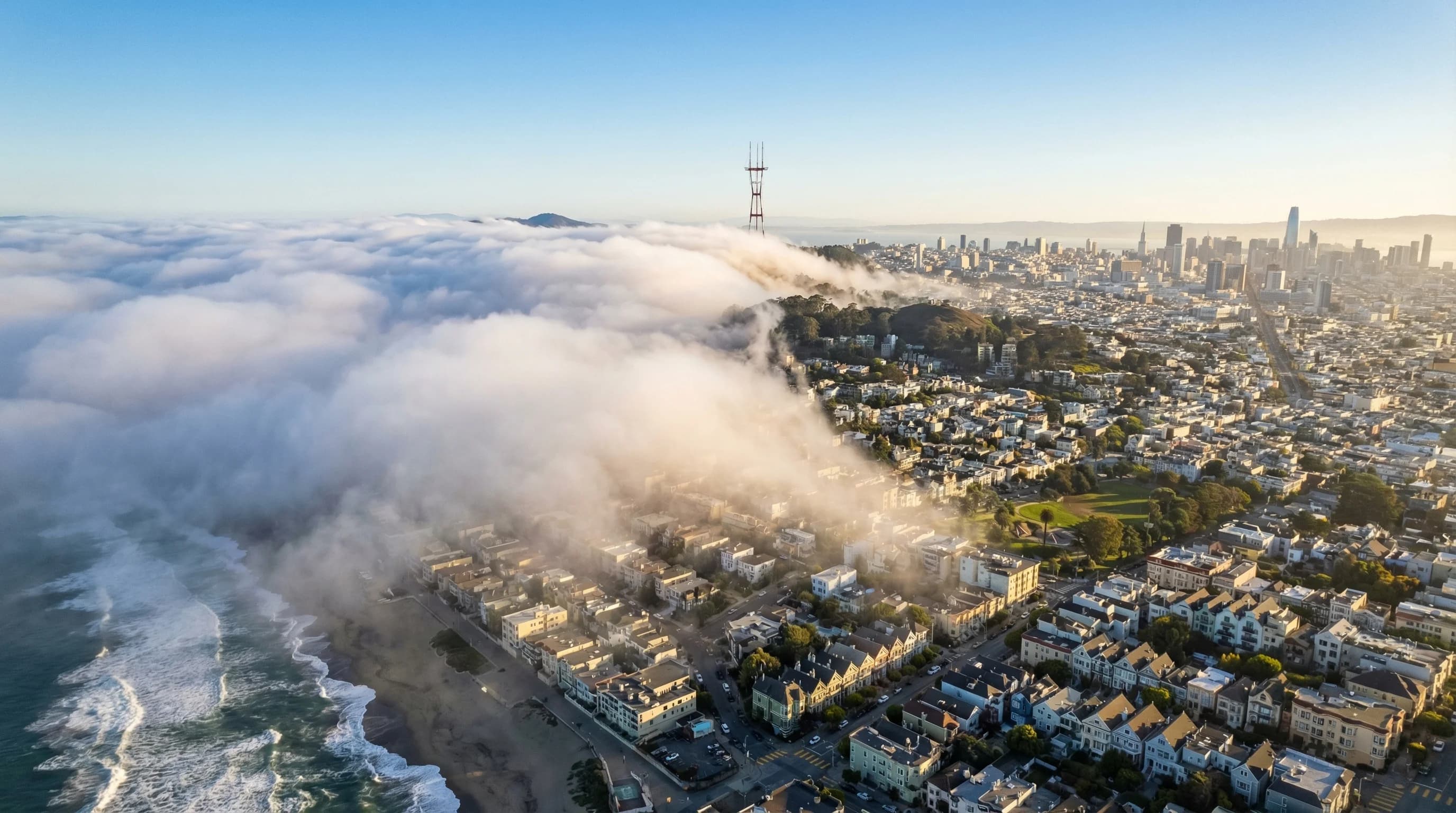
June is when the summer fog season settles in over San Francisco. Much of the country starts summer with warm, sunny days, but San Francisco often sits under a thick marine layer instead. That gray blanket can keep the western neighborhoods in the mid 50s for days at a time. The downtown station averages a June high of 66.5°F, though that single number hides big differences across the city. On the same afternoon, the Mission District might reach 72°F in sunshine while the Outer Sunset, less than three miles away, sits at 55°F under a gray sky. In June, San Francisco's microclimates are on full display.
Why Is June So Foggy?
June fog builds because the gap between ocean and inland temperatures grows quickly as summer begins. The cold California Current and spring upwelling keep the ocean surface in the low to mid 50s. Inland, Sacramento averages a June high of about 88°F and often tops 95°F on hot afternoons.
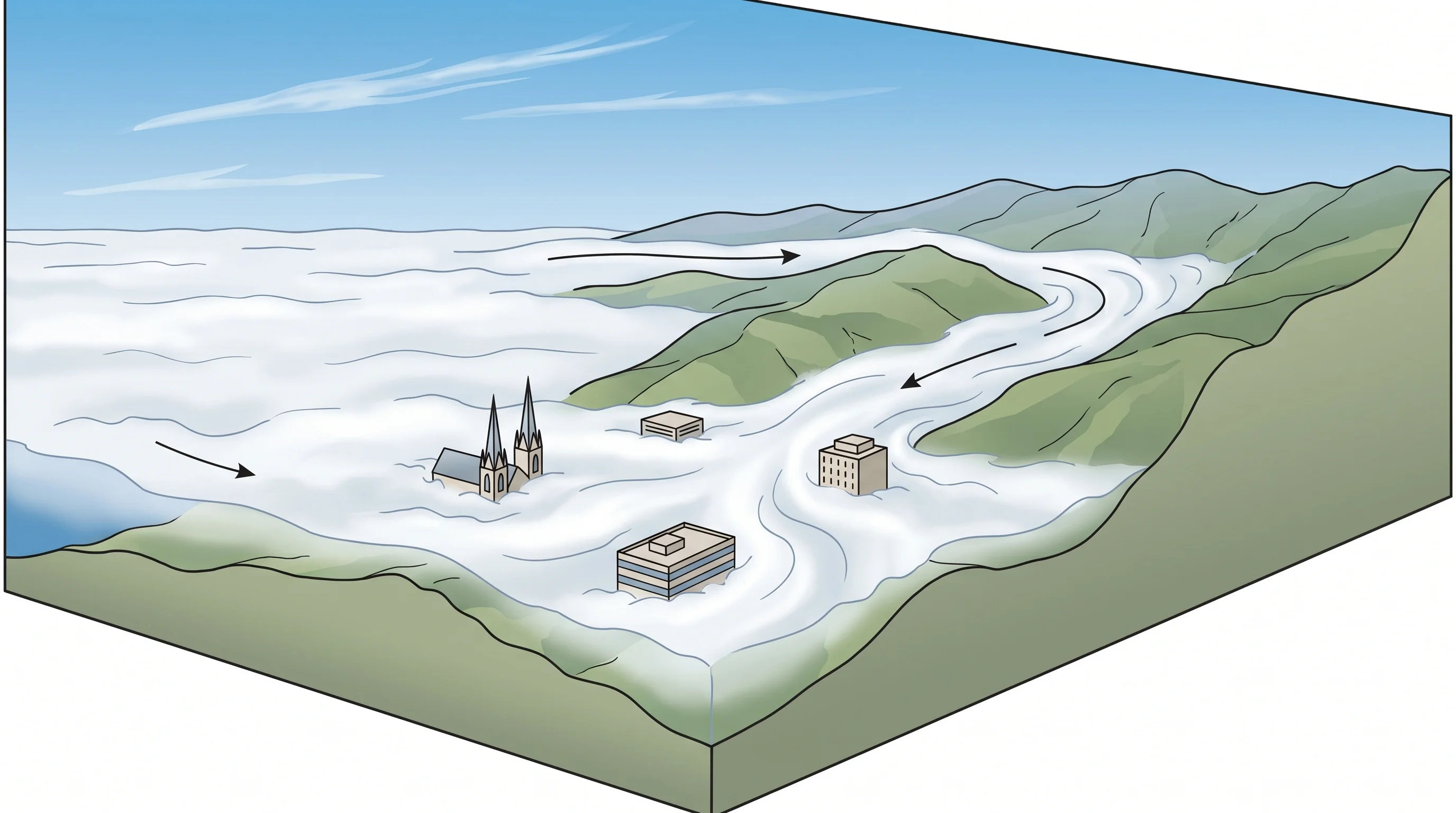
That difference of 35 to 45 degrees creates a strong pull of air from the coast toward the hot interior. Moist ocean air chilled by the cold water forms the marine layer offshore. The inland heat then draws it through the Golden Gate and over the western half of the city.
June is not the foggiest month, though, because the contrast keeps growing into July and July is San Francisco's foggiest month. In NOAA HRRR model data from 2014 to 2026, fog covered the Outer Sunset in about 38 percent of 7 a.m. hours in June. In July that share rose to about 54 percent. June is the month when the occasional gray mornings of May become a near-daily pattern, and the guide to San Francisco weather in July covers the peak.
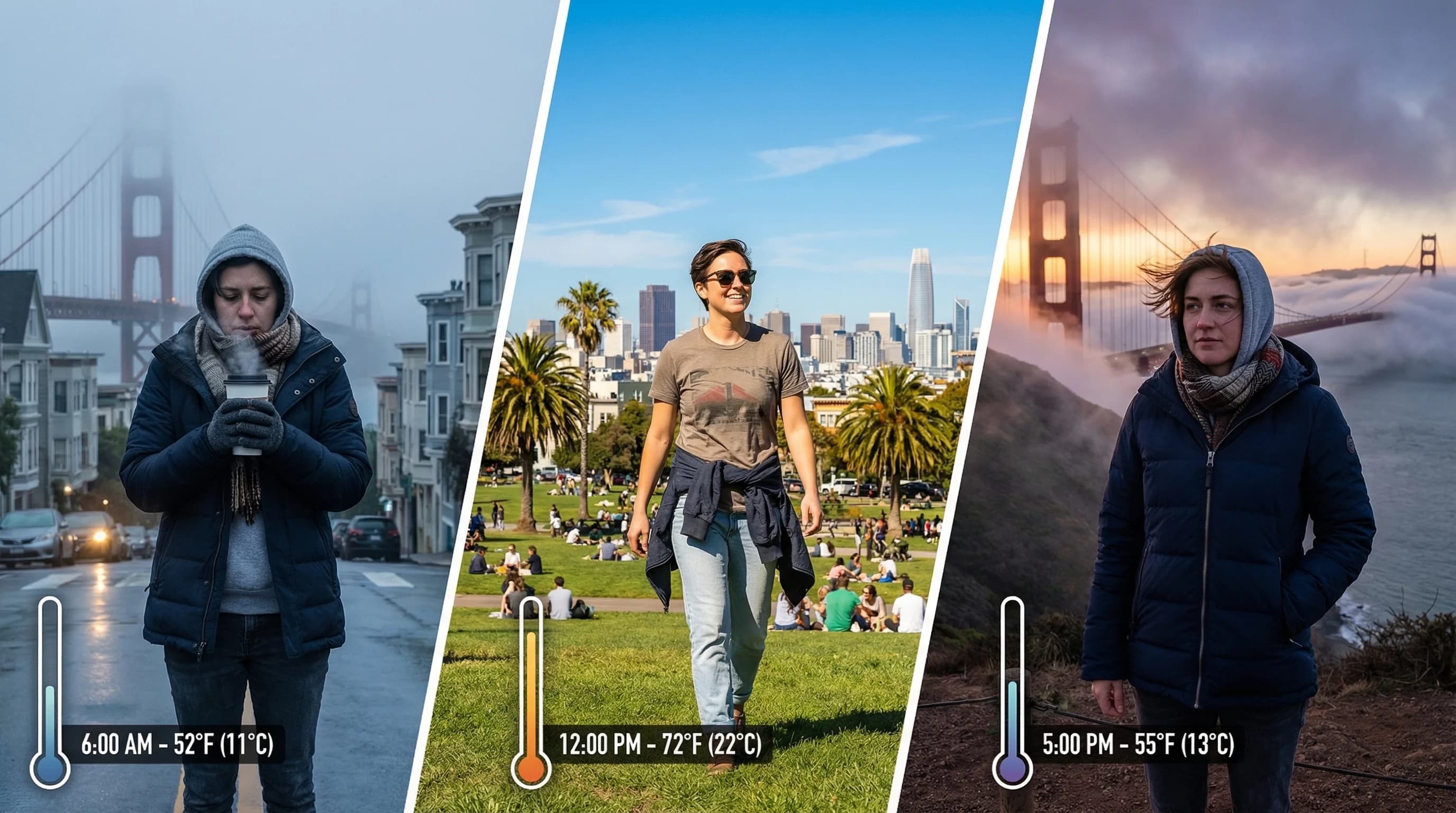
The fog follows a daily rhythm in June. The sea breeze pushes it inland in the late afternoon and evening, and it is thickest overnight and in the early morning. By mid-morning, the sun starts thinning it from above. By early afternoon, downtown and the eastern neighborhoods usually clear while the coast stays gray. This burn-off pattern gives San Francisco its classic June day, with a foggy morning, a partly sunny afternoon and the fog rolling back in around dinnertime.
June also brings the longest days of the year. Near the solstice, the sun sets around 8:35 p.m., so evenings stay light for a long time. On foggy days, though, much of that long evening passes under a low gray ceiling, and the air cools quickly once the fog returns. If you want a sunny sunset, the east side of the city and the hills above the fog give you the best odds.
June Temperatures by Neighborhood
Temperatures vary a lot across San Francisco in June. The Outer Sunset and the Richmond face the ocean and sit right in the path of the incoming marine air. Their June afternoons usually run in the upper 50s to low 60s.
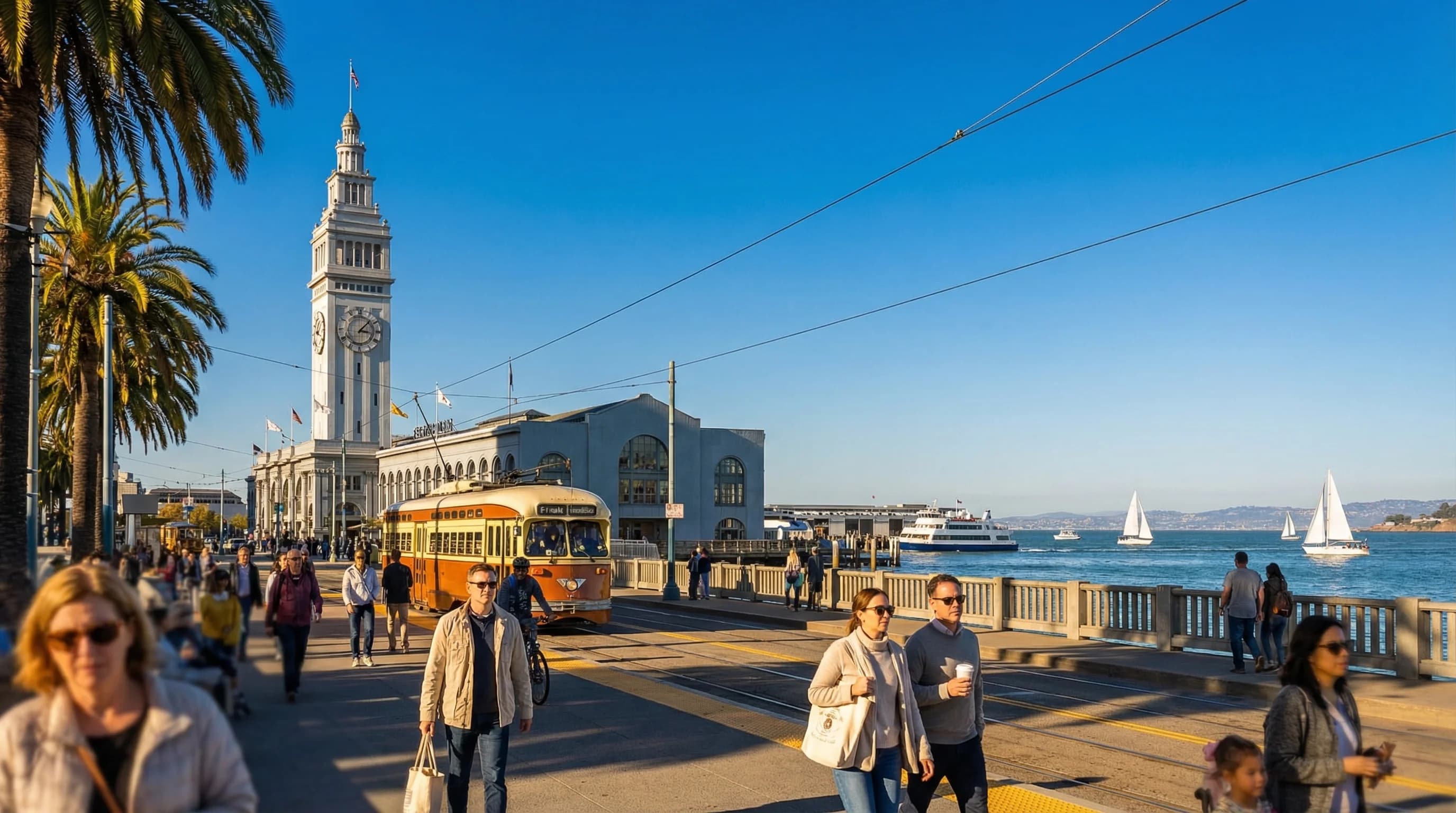
The Mission District sits in the shelter of Twin Peaks and the surrounding hills, which block much of the fog, and it averages about 70°F on June afternoons. The Embarcadero and downtown fall in between, usually around 64°F to 67°F, depending on whether the afternoon fog reaches the bay side of the city.
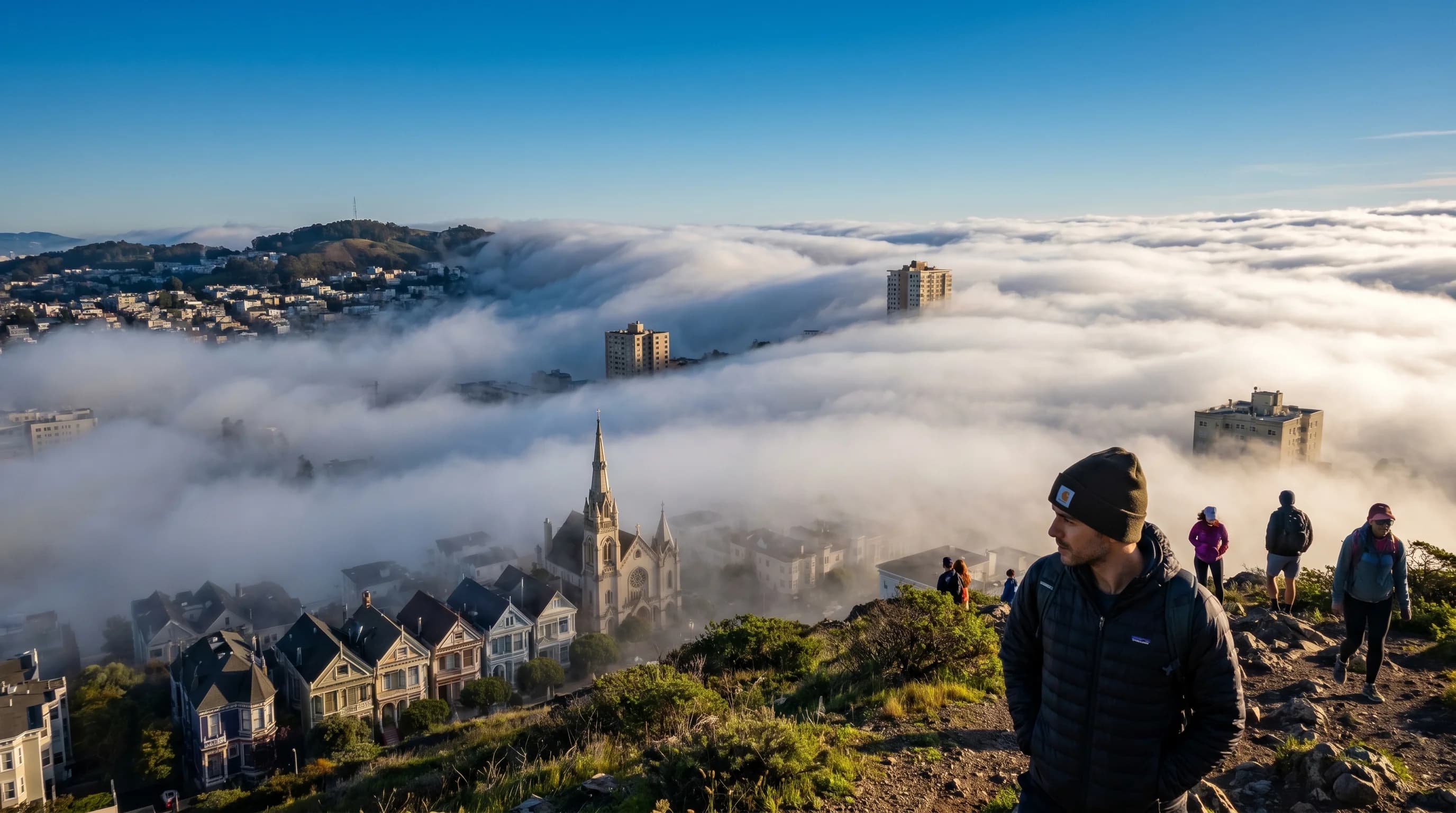
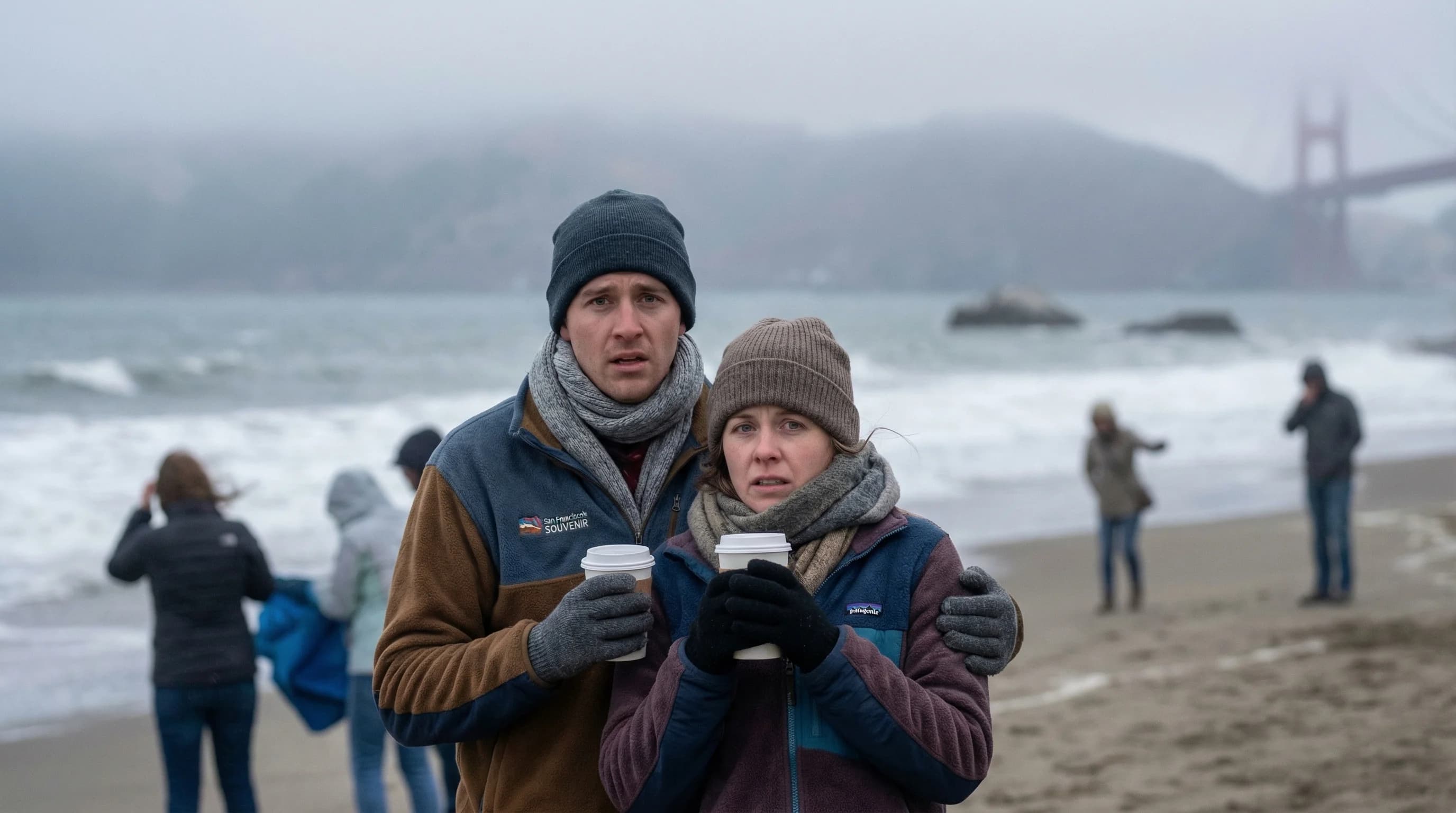
This east-west temperature gradient is why experienced San Franciscans dress in layers every day, even in June. You can go from a sunny 72°F lunch in the Mission to a foggy 56°F afternoon at Ocean Beach in 20 minutes. The temperature does not fall gradually along the way. It drops sharply as you cross the line of hills that separates the sheltered east side from the fog-facing west side.
Rain and Wind in June
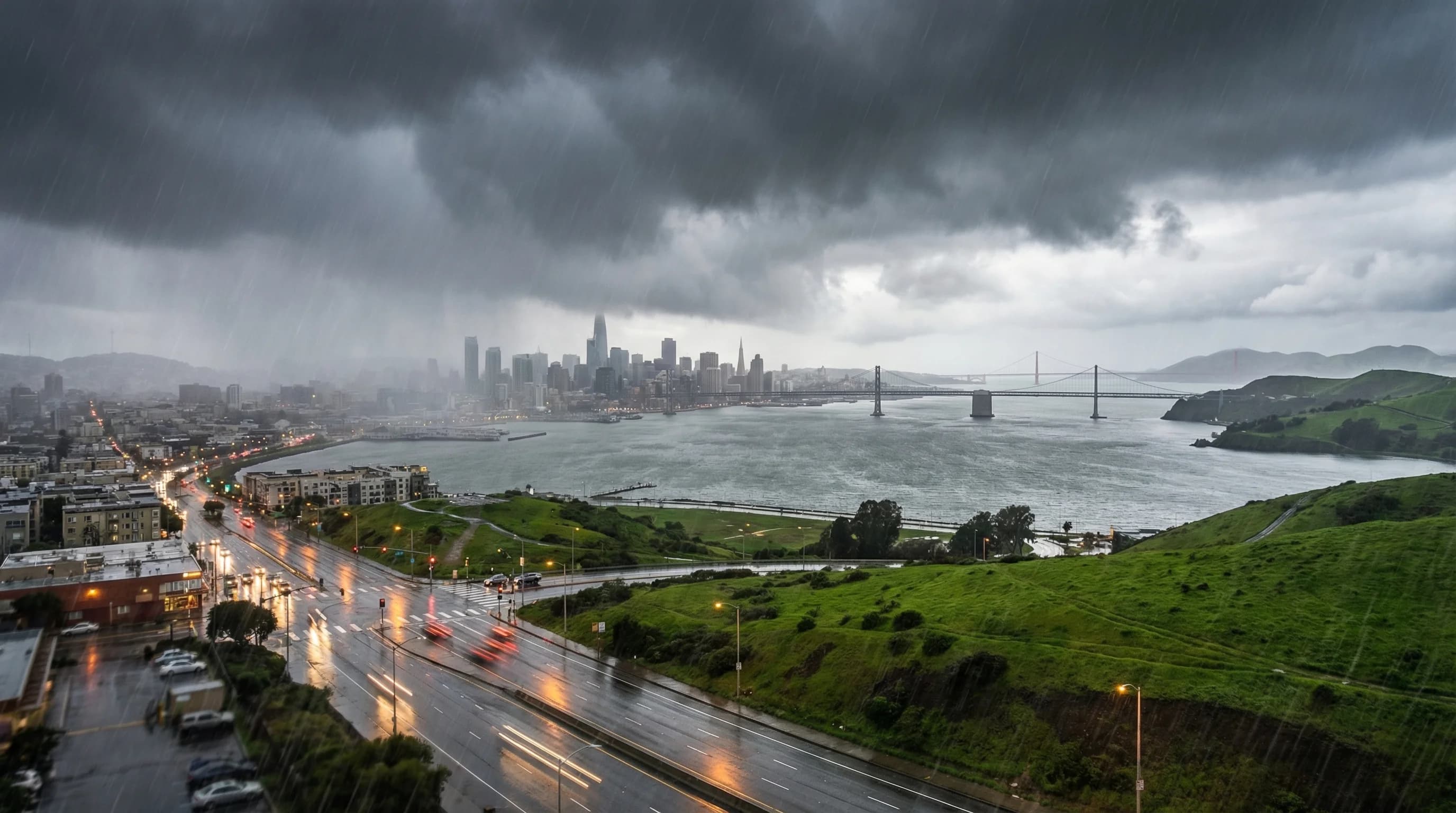
Rain is rare in June, with the downtown station averaging just 0.20 inch for the month. That usually comes from a single late-season shower, and many Junes have none at all. San Francisco's wet season ended months earlier, and the dry season is well established.
The dampness you feel in June comes from fog drip instead. As the marine layer drifts through, water collects on leaves, needles and other surfaces and falls to the ground. Walk under the cypress trees at Lands End on a foggy afternoon and you can get dripped on even though no rain is falling.
Wind is the other defining feature of a San Francisco June. In NOAA HRRR model data, the 2 p.m. wind at Crissy Field averages about 18 mph in June, with stronger gusts. The same pull of air that brings the fog also drives that wind. The windiest spots are the beaches, the headlands and the west-facing neighborhoods.
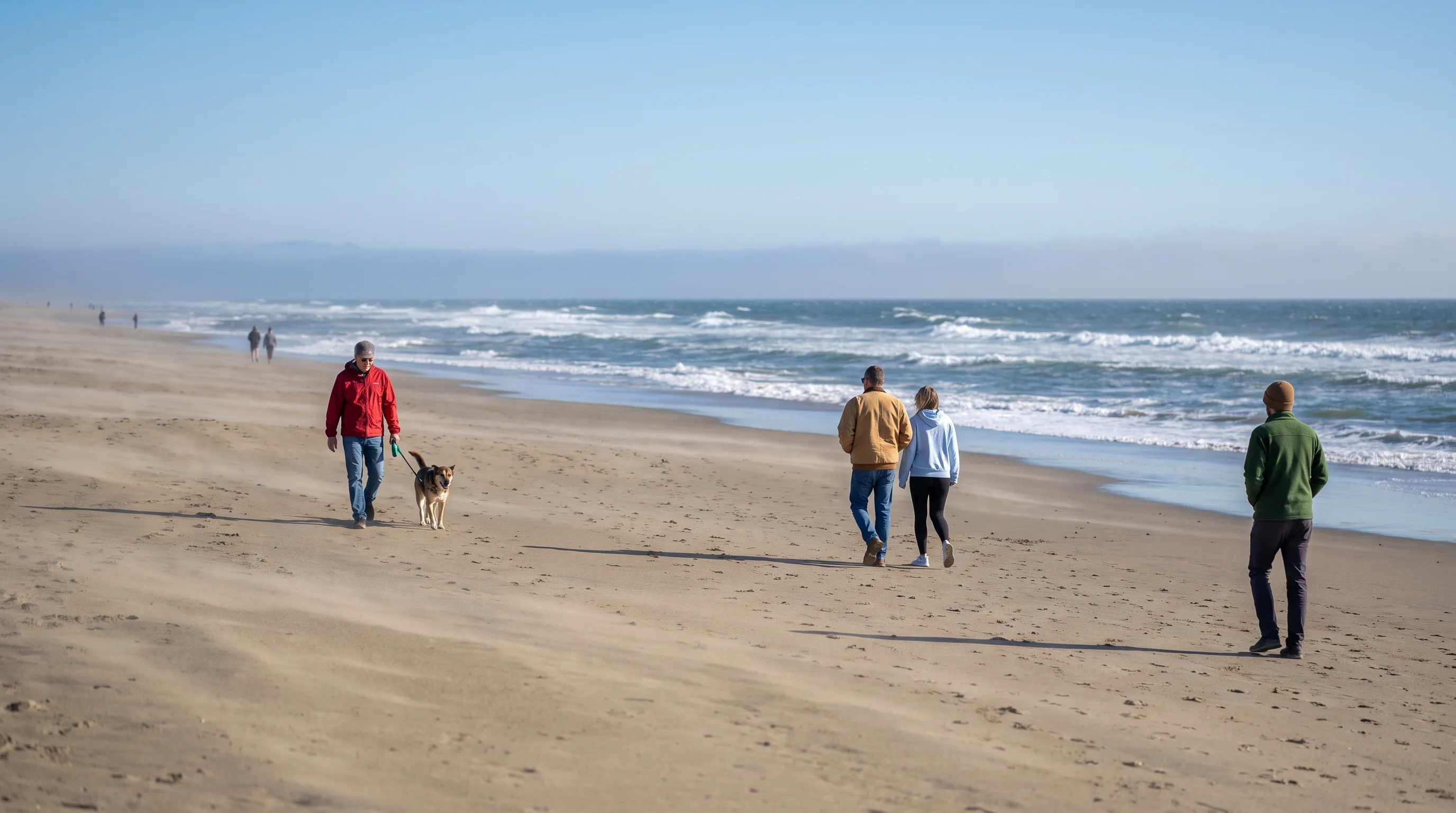
Ocean Beach in June is rarely a place for sunbathing, because the wind and fog make it cold even at midday. The Crissy Field shoreline draws windsurfers and kiteboarders for the same reason, since the June wind is strong and dependable.
What to Pack for June in San Francisco
Plan on layers for June in San Francisco, especially in the western half of the city. For the western neighborhoods or anywhere near the water, bring a warm middle layer such as a fleece or sweater. Add a jacket that blocks the wind, and wear long pants. In the Mission or downtown you can dress lighter, but keep the warmer layers in your bag, because the fog can roll in quickly later in the afternoon.
The biggest mistake visitors make in June is expecting the weather of the rest of California. Sacramento averages about 88°F in June and San Jose about 79°F, while the Outer Sunset can stay in the 50s under fog. Mark Twain almost certainly never said that the coldest winter he ever spent was a summer in San Francisco. Even so, the line fits June well, especially for first-time visitors who packed for the beach.
Inland heat waves can still reach the city now and then. When a strong ridge of high pressure builds over California, the marine layer can shrink for a day or two. Even the west side may then warm into the 70s or 80s. Those breaks rarely last, and the fog usually returns within a few days.