fogmicroclimatesdestinations

Why Does the Mission District Feel Warmer Than the Sunset?

By SFBayWeather||Updated |5 min read
Why Does the Mission District Feel Warmer Than the Sunset?

Key Takeaways

  • The Twin Peaks ridge (922 feet) functions as a geographic barrier that partially blocks marine air flowing from the Pacific from reaching the Mission District directly.
  • The Mission District runs 8-12°F warmer than the Outer Sunset on a typical foggy July afternoon. On strong marine push days, the difference exceeds 15°F.
  • Adiabatic compression warms the air slightly as it descends the eastern slopes of Twin Peaks, reducing fog formation on the leeward side.
  • Dolores Park on the Mission-Castro border stays sunny 2-3 hours longer than the city's western parks on days when the marine layer is moderate.
  • The Mission, Castro, Noe Valley, SoMa, and Potrero Hill all share the same leeward-warming characteristic and are reliably sunnier than western neighborhoods.

Within San Francisco, a distance of three miles can separate a foggy, 58-degree afternoon from a sunny, 70-degree one. The Outer Sunset District, facing the Pacific on San Francisco's western edge, is among the foggiest and coolest urban neighborhoods in the continental United States on summer afternoons. The Mission District, tucked behind the Twin Peaks ridge in the city's interior, is reliably warmer, sunnier, and more sheltered from the ocean wind. The difference is so consistent and so large that San Francisco residents use it to plan their afternoons: when friends say "let's meet in the Mission because it's sunny," they are making a meteorological observation with practical consequences. That temperature gap is a core feature of San Francisco's microclimate system, and the explanation is entirely geographic.

Twin Peaks as a Weather Barrier

The primary explanation for the Mission District's warmth is the Twin Peaks ridge. Twin Peaks rises to 922 feet above sea level, and its paired summits function as a geographic barrier that the marine air flowing in from the Pacific must either pass over or flow around. The Outer Sunset District, located on the ocean-facing side of Twin Peaks, receives the full force of the marine push, cool, moist air at sea level flowing directly off the Pacific. The marine layer settles into the Outer Sunset, the winds are strong, and the fog hangs low.

The Mission District sits on the leeward (eastern) side of Twin Peaks and the associated hills of Noe Valley and the Castro. The marine air that flows over the ridge descends and warms slightly as it moves down the eastern slopes. This warming, called adiabatic compression, raises the temperature of the descending air, reducing its tendency to form fog. The Mission receives a version of the marine air that has been modified by its passage over the ridge. It is still cooler than Oakland or the inland East Bay, but warmer and sunnier than the Outer Sunset or Outer Richmond on the same afternoon.
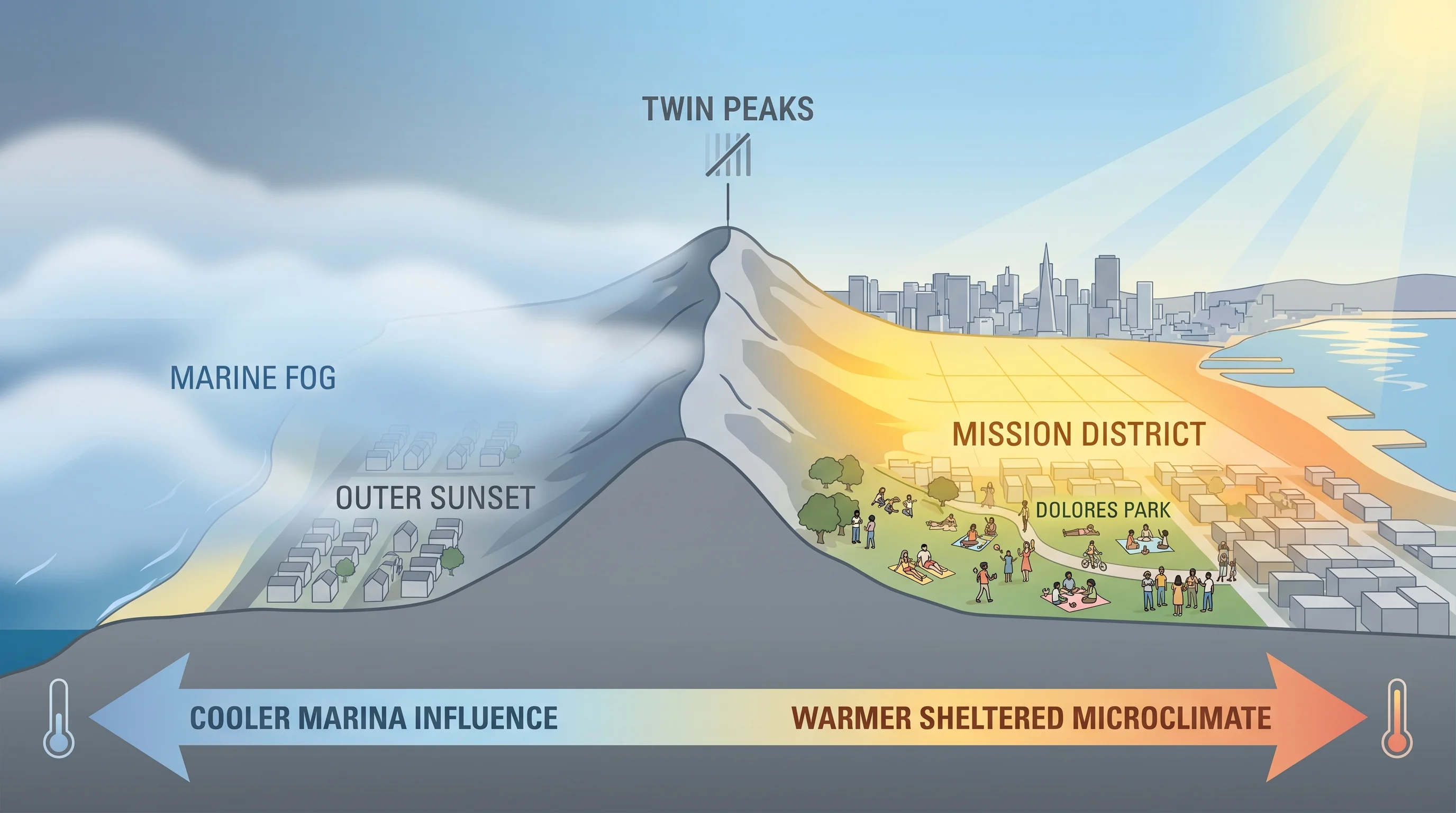
San Francisco neighborhood temperature map showing the Outer Sunset at 58°F under dense fog, and the Mission District at 68°F in sunshine, with Twin Peaks as the dividing barrier
The Twin Peaks ridge divides San Francisco's microclimate. The Outer Sunset faces the Pacific directly, receiving dense fog and cool temperatures. The Mission District sits in the ridge's lee, sheltered from the worst marine push and typically 10-15°F warmer on the same summer afternoon.

How Much Warmer Is the Mission?

On a typical July afternoon when the marine layer is moderate, the Mission District runs about 8 to 12 degrees warmer than the Outer Sunset. On strong marine push days, the foggiest July afternoons when fog persists all day in the western neighborhoods, the difference can exceed 15 degrees. The Mission at 68 degrees and sunny while the Outer Sunset is at 53 degrees and completely fogged in is not unusual. The two neighborhoods are 2.5 miles apart.
Scientific illustration explaining Why Does the Mission District Feel Warmer Than the Sunset?

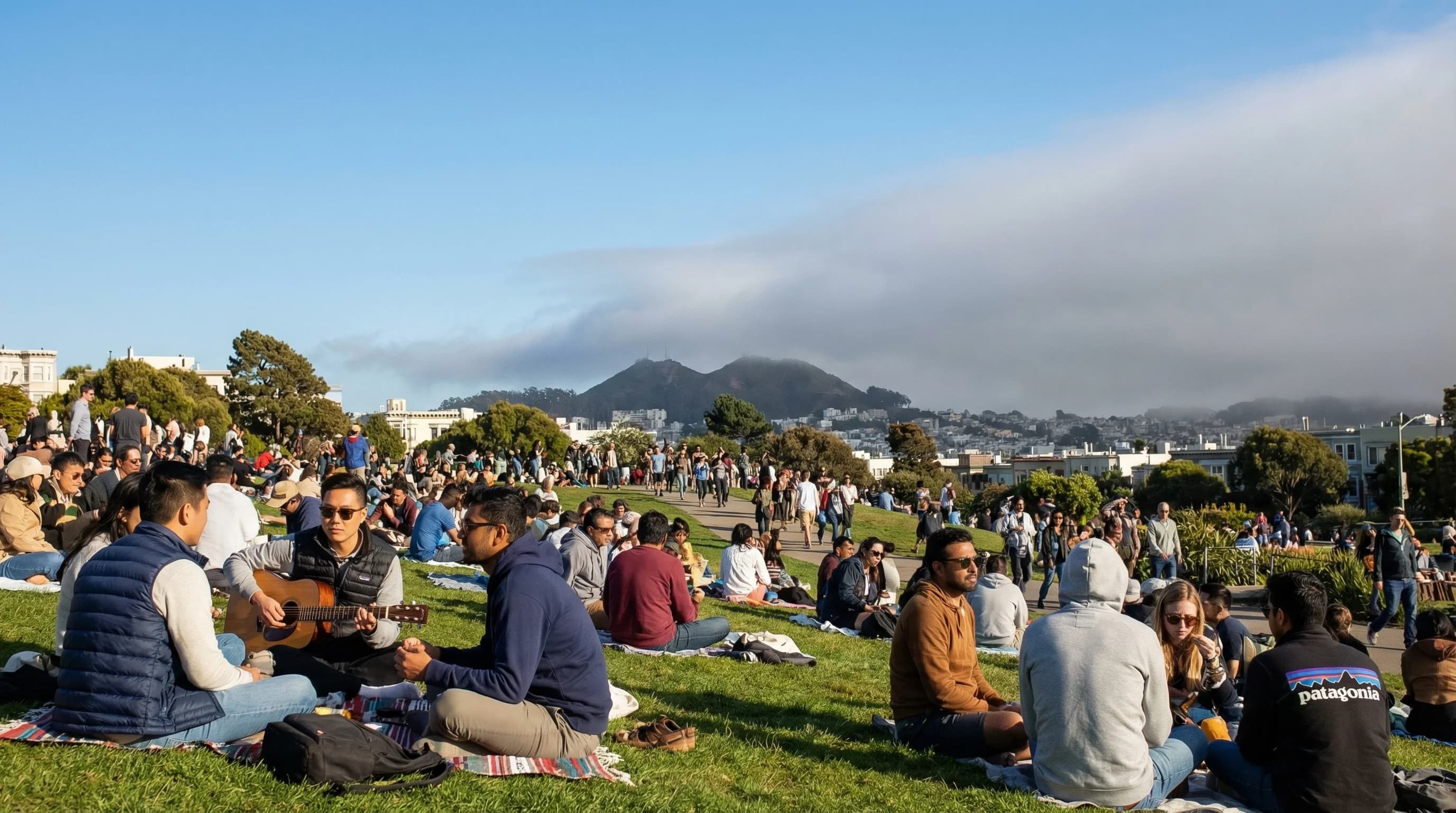
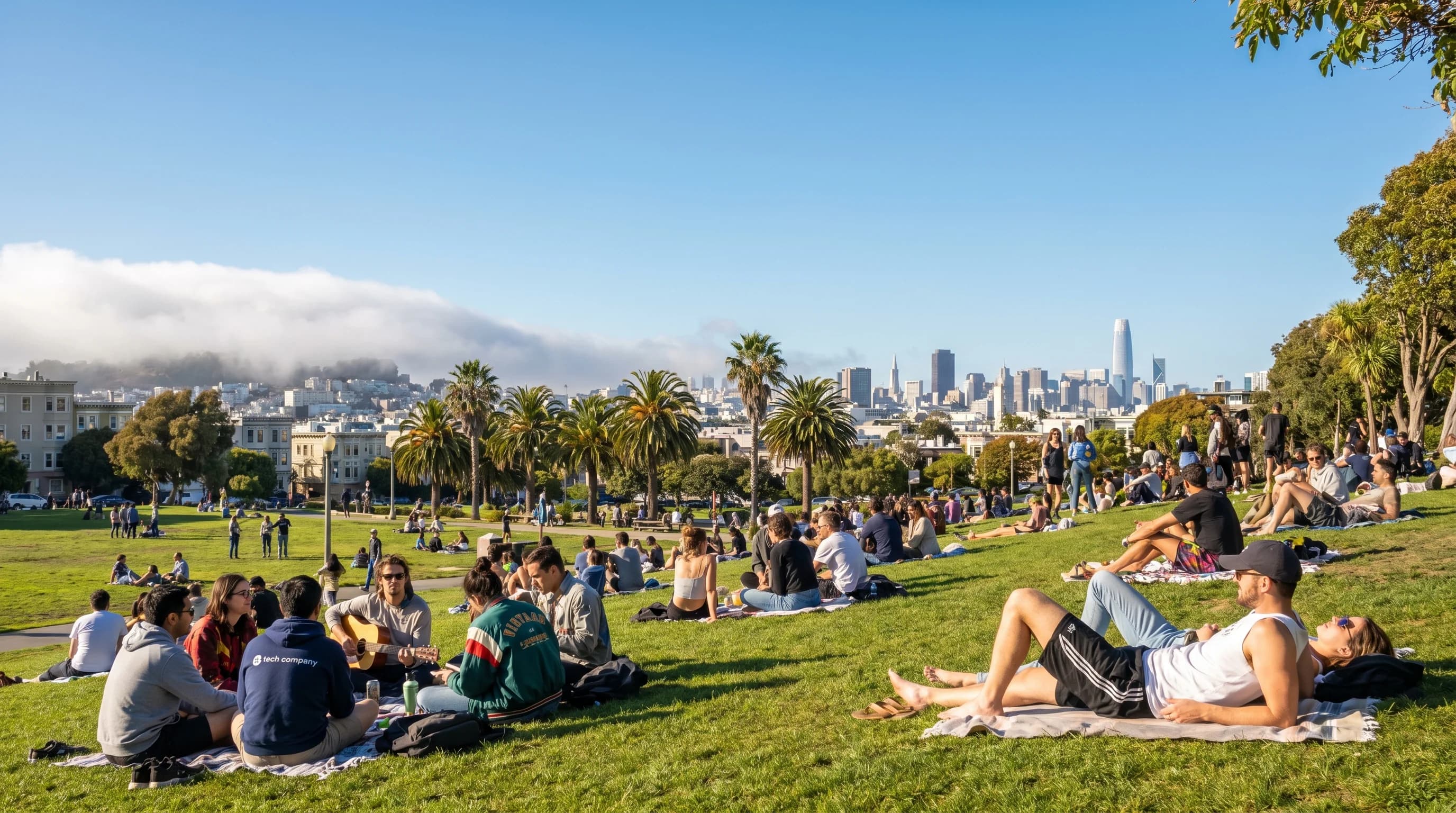
The practical consequence for San Francisco residents is that the Mission has a distinctly different outdoor culture than the western neighborhoods. Outdoor restaurants, parks, and sidewalk cafes in the Mission are routinely usable in weather that would make the same spaces in the Outer Sunset uncomfortably cold and windy. Dolores Park, on the Mission-Castro border, fills with sunbathers on summer days precisely because it is in the microclimate warm zone. Fog rolls in from the west, but Dolores Park often stays sunny two to three hours longer than the city's western parks.

Other San Francisco Warm Zones

The Mission's warmth is part of a broader pattern of leeward warming in San Francisco. The neighborhoods east of the Twin Peaks and Noe Valley ridge system, the Castro, Noe Valley itself, and the lower Mission, all share this sheltered characteristic. Further east, the SoMa district and the Embarcadero waterfront are warmer and sunnier than the western neighborhoods because they face the bay rather than the Pacific, and the bay air is generally warmer than the ocean air on summer afternoons.

Neighborhoods that are on elevated ground with clear sky exposure and eastward orientation, like Potrero Hill and the slopes of Bernal Heights, also capture more afternoon sun than the western neighborhoods, for a combination of lee-side sheltering and sun angle reasons. The map of San Francisco neighborhood weather is a detailed one, and it runs counter to intuition: the city's inland neighborhoods are sunnier than its coastal ones, because "coastal" here means Pacific-facing and marine-exposed, not bay-facing and sheltered.

Frequently Asked Questions

Why is the Mission District warmer than the Outer Sunset?

The Twin Peaks ridge rises to 922 feet at the center of San Francisco and acts as a geographic barrier for marine air flowing inland from the Pacific. The Outer Sunset, on the ocean-facing side of the ridge, receives the full force of the marine push; cool, moist air at sea level flowing directly off the ocean. The Mission District sits on the leeward eastern side of Twin Peaks. Marine air that flows over the ridge descends and warms slightly through adiabatic compression, arriving in the Mission as a modified, less dense version of the ocean air. The result is a consistent 8-15°F temperature difference across 2.5 miles on summer afternoons.

Is Dolores Park sunny in summer?

Dolores Park is one of San Francisco's sunniest parks in summer because it sits in the Mission District's lee-side microclimate, sheltered from the worst marine push by the Twin Peaks ridge. On typical foggy July afternoons, the park often stays sunny while the western neighborhoods are fogged in, and it tends to stay sunny 2-3 hours longer than Golden Gate Park. That said, on the foggiest marine push days, even Dolores Park eventually clouds over; the marine layer is not always blocked entirely, just diminished.

Which San Francisco neighborhoods are warmest in summer?

The warmest San Francisco neighborhoods in summer are those on the leeward (eastern) side of the central ridge system: the Mission District, Castro, Noe Valley, Potrero Hill, and Bernal Heights. SoMa and the Embarcadero are also warmer because they face the bay rather than the Pacific. The coldest and foggiest neighborhoods are the Outer Sunset, Outer Richmond, and areas near Ocean Beach, which face the Pacific and receive the marine layer at full intensity. The temperature difference between the warmest and coldest San Francisco neighborhoods can reach 15°F on the same afternoon.

Does the Mission District fog up at all in summer?

Yes, on strong marine push days the fog overtops Twin Peaks and fills the Mission. When the marine layer is deep and the pressure gradient driving it is strong, even the leeward neighborhoods lose their shelter. The Mission typically sees fewer foggy days than western neighborhoods and the fog burns off earlier in the morning, but it is not immune. The clearest signal is the June Gloom pattern: even the Mission can stay overcast until noon for days at a stretch in June when the marine layer is at its deepest.

Why is Noe Valley called a "sunny spot" in San Francisco?

Noe Valley sits in a sheltered bowl on the eastern side of Twin Peaks and the Corona Heights ridge, giving it the same leeward protection as the Mission but with additional surrounding hills that further reduce wind. On days when the Outer Sunset is at 55°F with dense fog and 20 mph wind, Noe Valley can be 68°F and calm with partial sun. The neighborhood's bowl shape traps warmth and blocks the direct marine wind. Local real estate listings routinely cite "sunny Noe Valley" as a selling point for this exact microclimate reason.

Live Bay Area Conditions

Compare fog, temperature, wind, and comfort across the map.

See which microclimates are clear, cool, windy, or warming up right now.

Open the Weather Map
🔒Privacy Policy📄Terms of Service