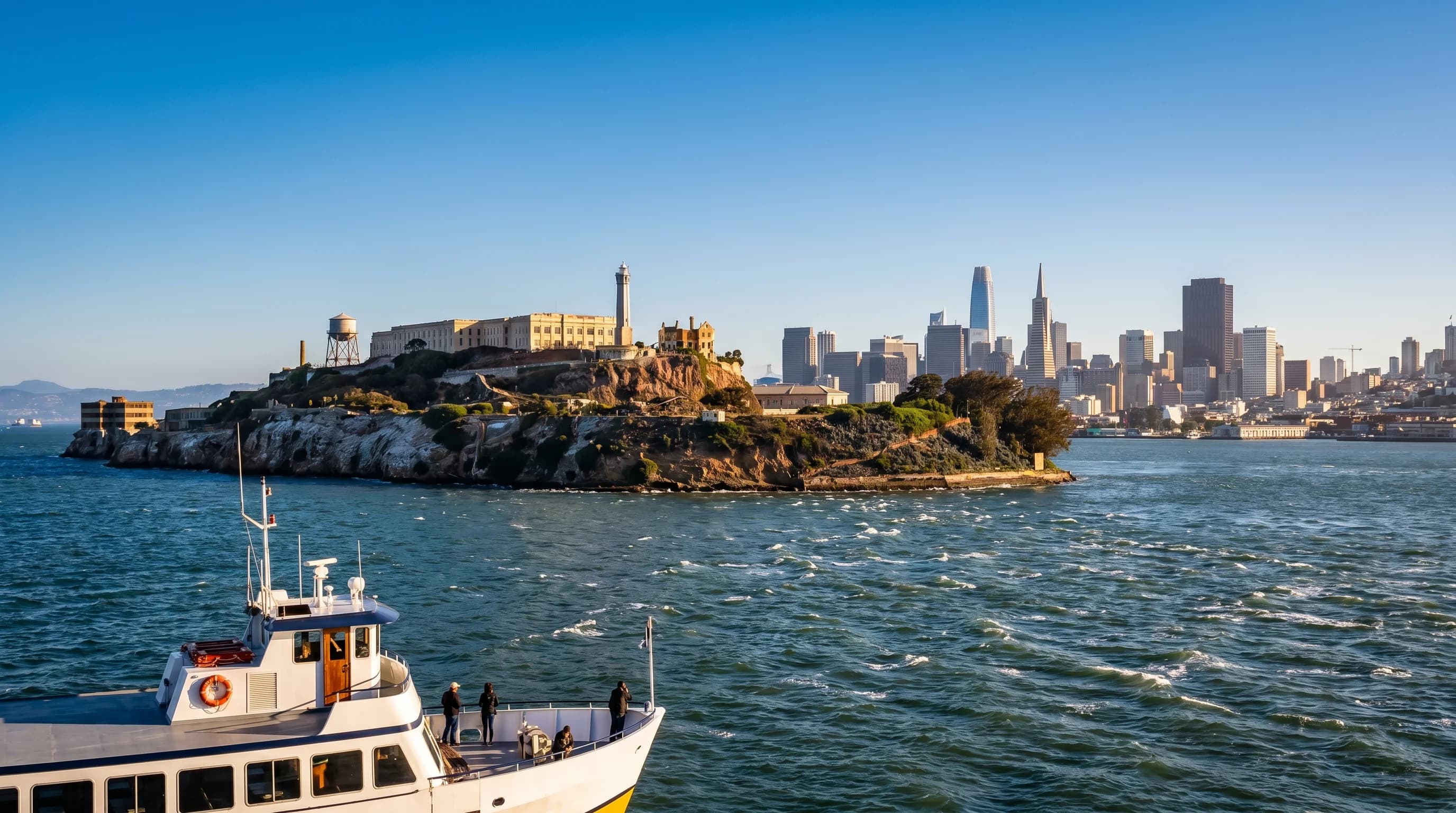
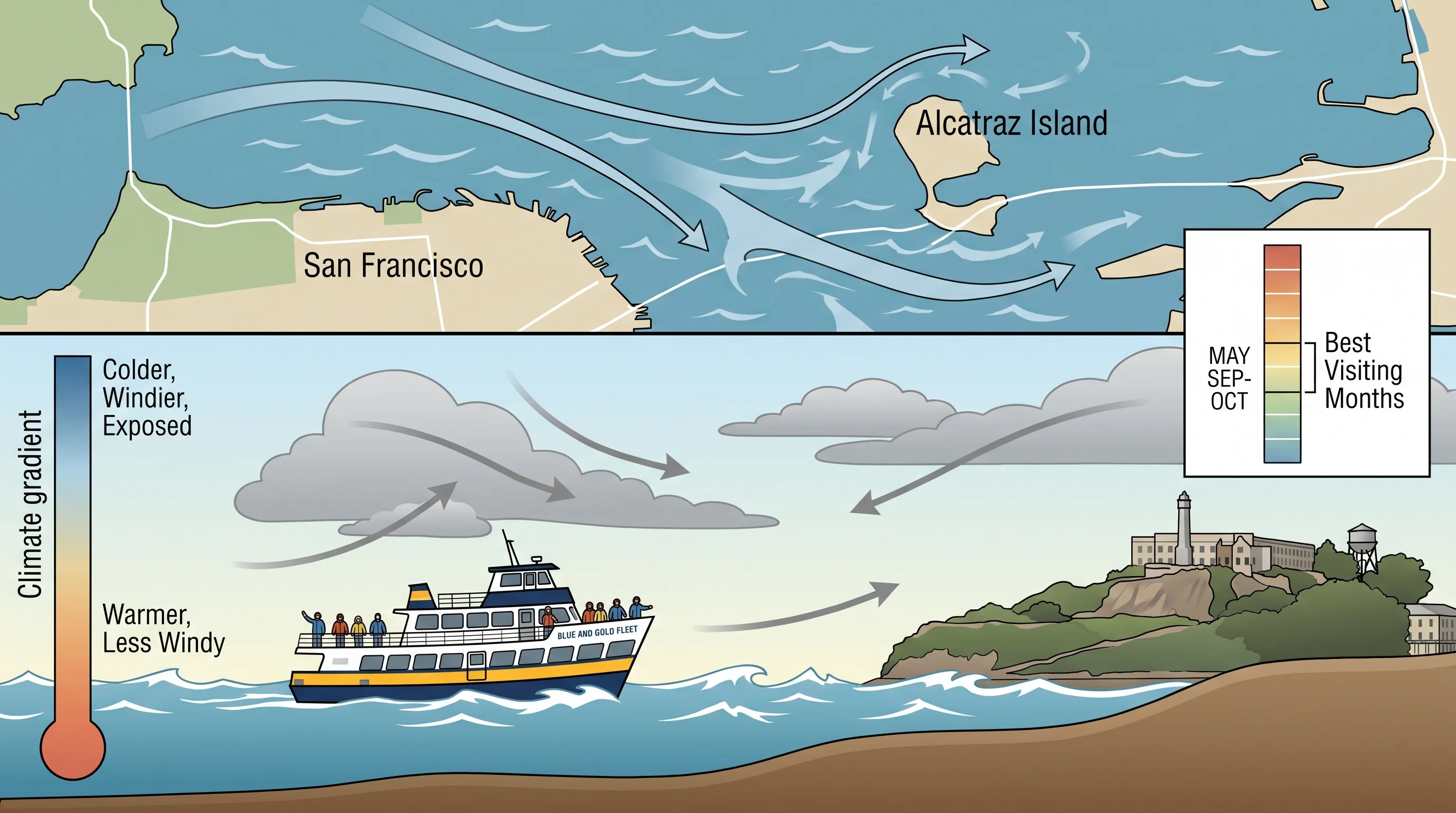
Alcatraz Island sits in the middle of San Francisco Bay, 1.25 miles from the northern waterfront, and its weather is determined by this position more than almost any other factor. The island is fully exposed to the bay's wind and the marine air flowing through the Golden Gate, and it is surrounded by cold water on all sides. On a summer afternoon when the sea breeze is pumping through the Golden Gate and across the bay, Alcatraz can be noticeably windier and colder than the San Francisco waterfront itself. The experience of touring Alcatraz, walking exposed paths, standing on the roof of the cellblock, waiting at the dock for the return ferry, is significantly affected by weather, and knowing what to expect makes the visit more enjoyable.
Summer Fog and Wind on Alcatraz
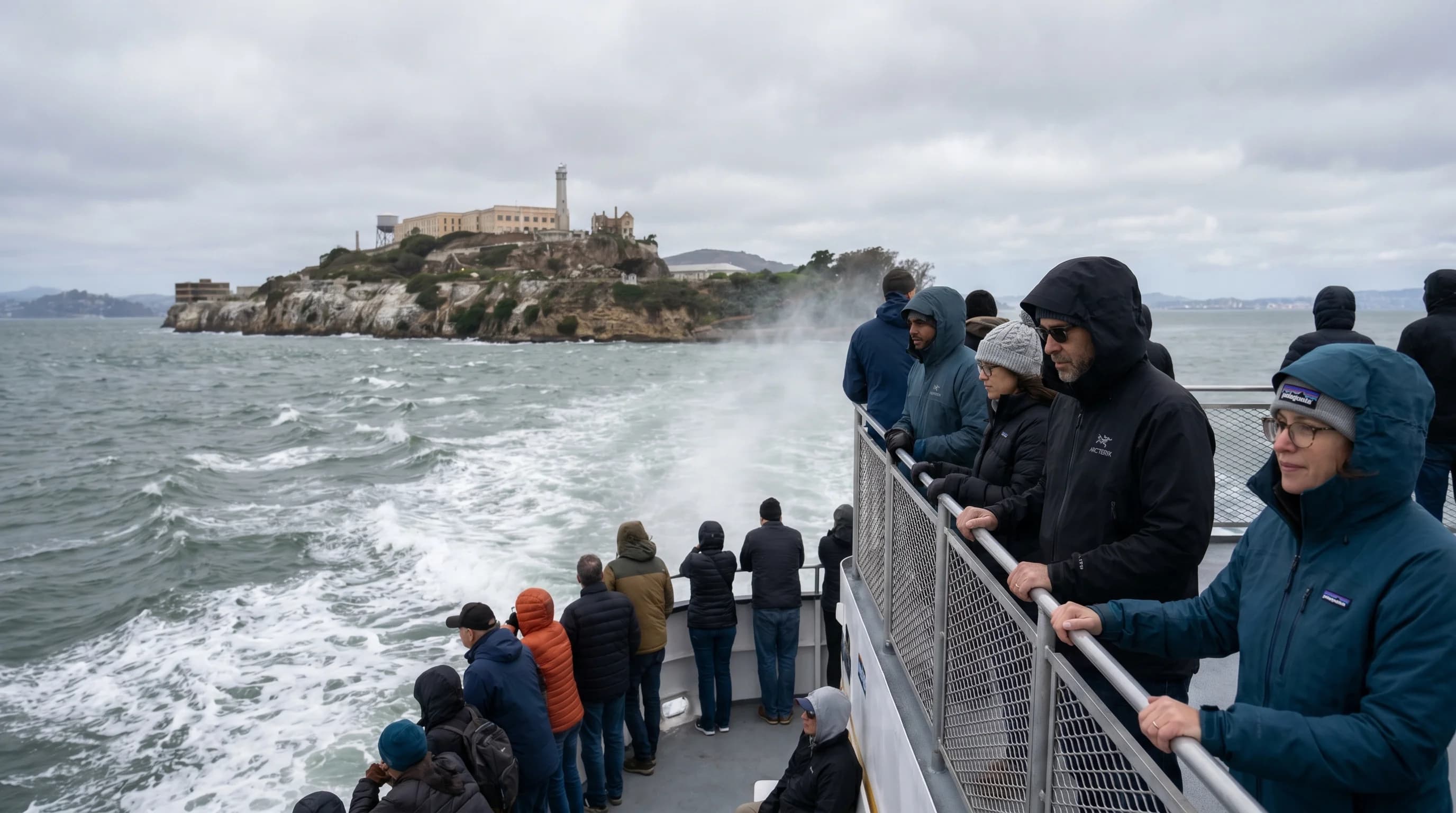
Summer, June through August, is both the most popular visiting season and the most weather-challenging. The marine layer that blankets San Francisco in summer reaches Alcatraz at full intensity, and the island's exposure to the bay means there is nothing to block the wind. Typical summer afternoon conditions on Alcatraz are 58 to 65 degrees Fahrenheit with wind at 15 to 25 miles per hour from the west-northwest. The combination produces a chill factor that can make a 62-degree day feel more like 52 degrees on the exposed upper areas of the island.
The ferry crossing itself, about 15 minutes each way, is a good preview of the wind conditions. On strong marine push days, the ferry ride is brisk and spray-filled, and passengers arrive at the island already understanding that this is not a warm-weather experience. The cellhouse interior, while drafty, is somewhat protected from the wind, and the audio tour inside the main building is one of the few comfortable spots on the island during a windy summer visit. The outdoor paths, the ruins of the warden's house, and the recreation yard are all fully exposed.
Best Time to Visit for Weather
May and September through October are the best months to visit Alcatraz for weather. May sits before the summer fog season fully establishes, and on clear May days the island is spectacular: the bay sparkles in the morning light, the views of San Francisco and Marin are at their clearest, and the temperature is mild (60 to 68 degrees) with moderate wind. The island's wild gardens, which bloom in spring, are at their most colorful in April and May.
September and October bring Indian summer conditions: the marine layer retreats, temperatures warm to 65 to 72 degrees, the wind lightens from the summer peaks, and the bay views include the soft golden light of early fall. October in particular tends to have some of the clearest days of the year in the Bay Area, and an October visit to Alcatraz can feel like a completely different experience from a foggy July visit. The same exposed paths and recreation yard that feel brutally cold in July wind feel pleasant and sun-warmed in October.
Winter and Spring Visits
Winter visits to Alcatraz are less common but have their own appeal. December through February can bring clear, cold days with excellent visibility: the bay and the city skyline are crisp and sharp under winter high-pressure conditions in a way that summer fog does not allow. The island is much less crowded in winter, and the experience of walking the prison grounds in cold, clear, quiet conditions has a particular atmosphere. Rain days do occur, and a winter storm visit is not recommended, but the period between storms can offer some of the bay's most beautiful days.
Spring, from March through May, sees the island's gardens recovering from winter. The National Park Service has restored significant sections of the original gardens, and spring wildflowers and blooming succulents are one of Alcatraz's most unexpected features. The light rains of March and April keep the vegetation green, and as the wet season ends in late April and May, the island transitions into its most accessible season. Booking well in advance is necessary year-round: Alcatraz tours sell out days or weeks ahead, and weather conditions are not a reason for last-minute availability to open up.
Practical Packing Advice
The single most consistent piece of advice for Alcatraz visitors is to bring a windproof jacket, regardless of the mainland weather or the season. A 75-degree day in downtown San Francisco can still mean wind and chill on Alcatraz, because the island's exposure is independent of city conditions. The ferry terminal at Pier 33 on the Embarcadero is one of the warmer, more sheltered parts of San Francisco in summer: it is possible to be comfortable in a t-shirt at the pier and then find the island itself significantly colder and windier. Layering with a packable jacket or fleece that can be stowed if conditions are milder than expected is the reliable approach.