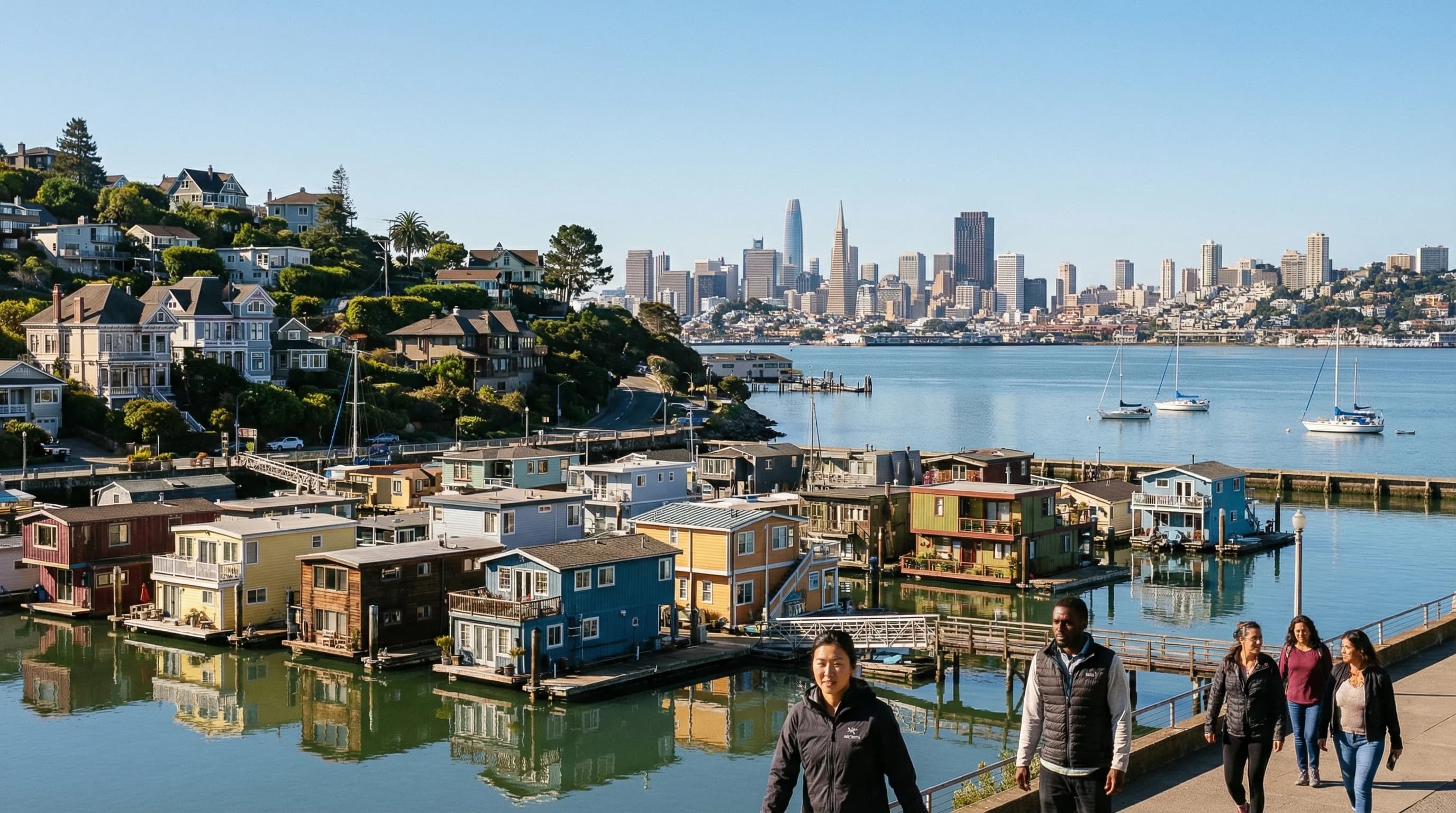
Sausalito sits directly across the Golden Gate from San Francisco, close enough that you can see the city from the waterfront, separated by just over a mile of bay water. That short distance, combined with a different orientation to the marine layer, produces weather that is often meaningfully different from what San Francisco is experiencing at the same moment. When summer fog rolls through the Golden Gate, Sausalito can be in the middle of it, around the edge of it, or entirely clear depending on how far the marine layer extends and how the Marin Headlands' topography channels the flow. Sausalito is not dramatically different from San Francisco in climate, but the differences matter to anyone spending time there.
How the Marin Headlands Shape Sausalito's Weather
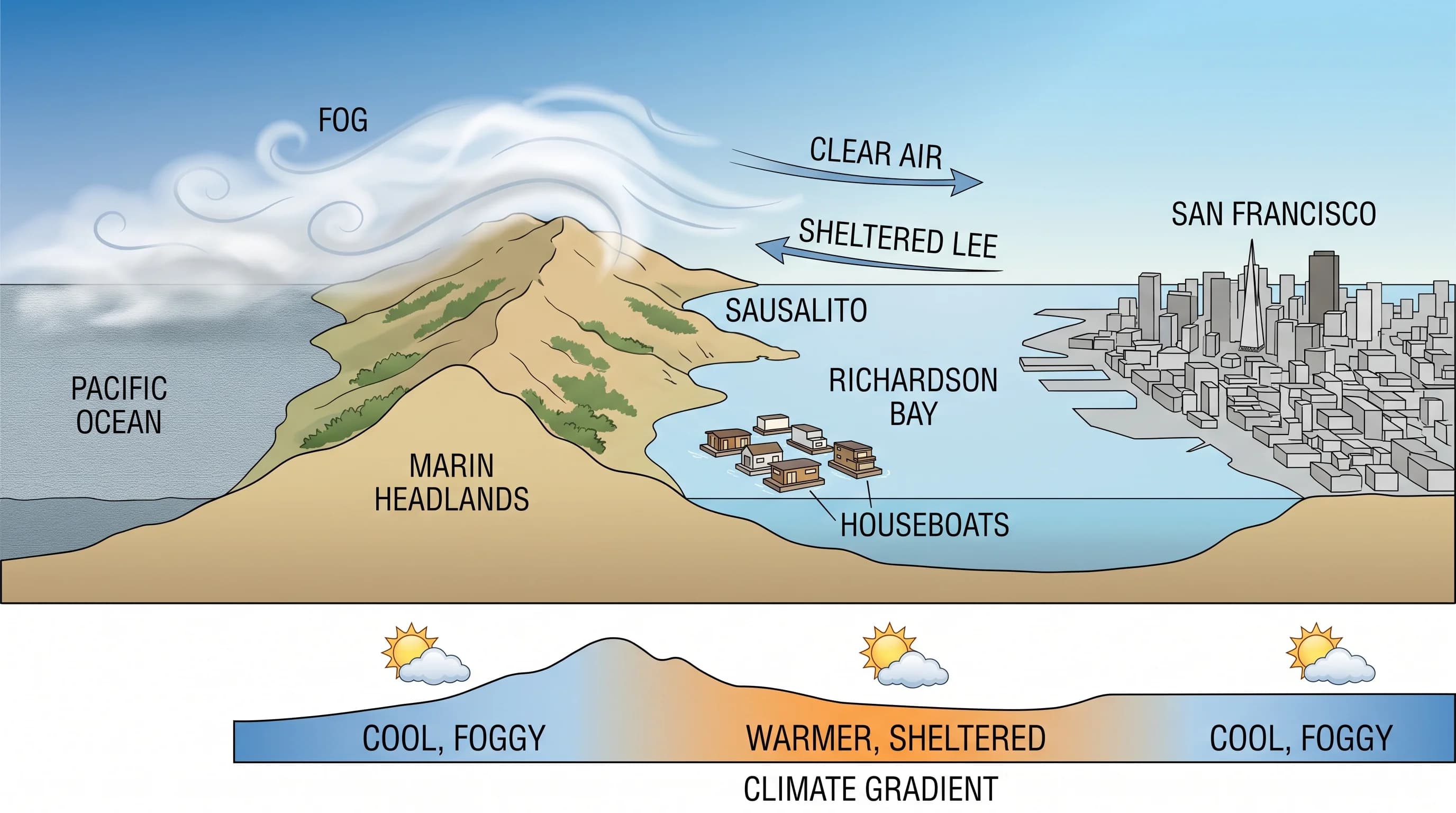
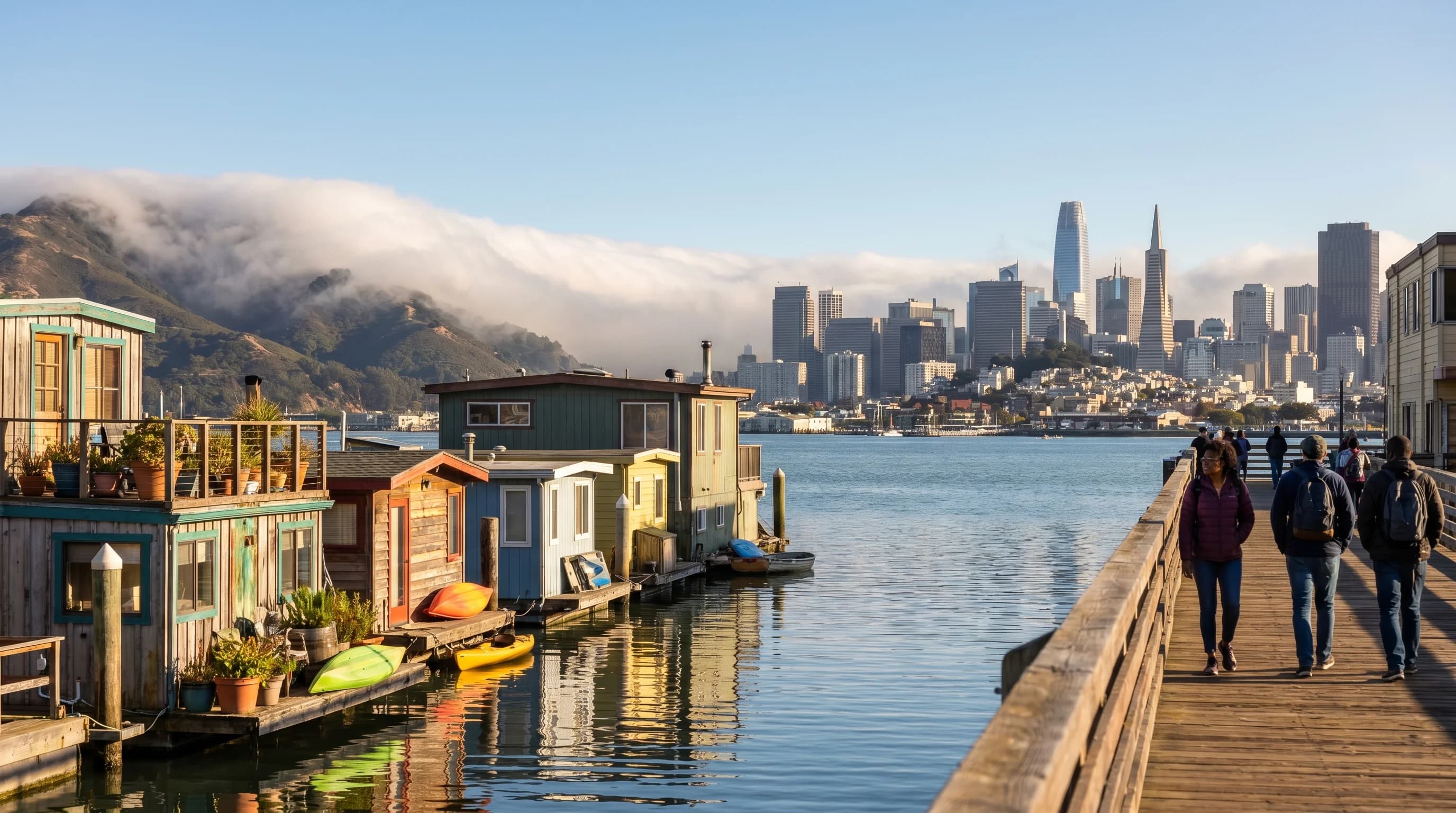
The Marin Headlands rise steeply to nearly 1,000 feet immediately west of Sausalito, forming a partial barrier between the town and the direct marine flow through the Golden Gate. When the marine layer pushes through the Gate, much of the fog hugs the ridgeline and flows inland along the 101 corridor rather than descending directly into Sausalito's waterfront. The town's position in the lee of the Headlands gives it more protection from the densest marine fog than locations more directly in the fog's path, like the Sunset District or Ocean Beach in San Francisco.
In practice, this means Sausalito tends to have clearer mornings than the western San Francisco neighborhoods on days of moderate marine push. When the Sunset and Richmond districts are fully fogged in, the Sausalito waterfront may be sitting in sunshine or with only a thin marine layer. On days of strong marine push, however, the fog overtops the Headlands and descends on Sausalito just as thoroughly as anywhere else in the region. The protection is real but not absolute.
Temperature Differences Across the Gate
Summer temperatures in Sausalito typically run a few degrees warmer than in San Francisco's western neighborhoods. While the Sunset District averages around 61 to 63 degrees Fahrenheit in July, Sausalito often sits in the mid-60s. The warmer temperatures reflect both the partial fog shadow provided by the Headlands and Sausalito's east-facing orientation, which receives afternoon sun that bounces off the bay rather than the direct west-facing onshore wind that cools coastal San Francisco.
The comparison to San Francisco's sunnier neighborhoods is closer. The Mission District, which also sits in a fog shadow from Twin Peaks and the hills to the west, runs similarly warm to Sausalito in summer. What Sausalito offers that the Mission cannot is the combination of bay views, waterfront access, and that slightly warmer, clearer microclimate without being far enough inland to sacrifice the bay breeze entirely.
Wind: The Defining Characteristic
Wind is arguably more relevant to Sausalito's weather experience than temperature. The bay in front of Sausalito is one of the windiest stretches of open water in the Bay Area in summer. The Golden Gate acts as a nozzle, concentrating the marine flow as it pushes through the narrow strait, and the wind accelerates as it fans out into Richardson Bay and the main bay in front of Sausalito. Summer afternoons routinely bring 15 to 25 mile-per-hour winds on the waterfront, and the marinas rock with the chop.
For sailors, this makes Sausalito one of the premier small-boat sailing environments in the world, with reliable summer afternoon winds that are strong enough to be exciting and predictable enough to be safe for experienced sailors. For visitors simply hoping to sit on a restaurant deck and enjoy the view, the wind can be a significant deterrent. Sausalito's outdoor dining scene is best enjoyed in the morning before the afternoon wind builds, or in fall when the marine push weakens.
Fall and the Shoulder Season
September and October are Sausalito's most reliably pleasant months. The afternoon wind drops as the North Pacific High weakens and the temperature differential between coast and inland diminishes. Mornings are often clear and calm, the bay is glassy, and the light on the water has the warm golden quality of California fall that makes the entire region feel like it's operating at its best. The houseboats at the north end of town and the hillside Victorian houses above the commercial waterfront look especially good in fall light.
Spring is the secondary pleasant season, with green hills behind the town, moderate temperatures, and manageable wind. Winter brings rain and occasional fog, but the town is relatively mild, rarely dropping below 40 degrees even on the coldest nights. The ferry from San Francisco's Ferry Building runs year-round, making Sausalito one of the most accessible day trips from the city regardless of season. The 30-minute ferry ride is itself a weather experience worth noting: you leave one microclimate and arrive in another, and on summer days the change from fog to sun or sun to fog during the crossing makes the difference between the two cities viscerally obvious.