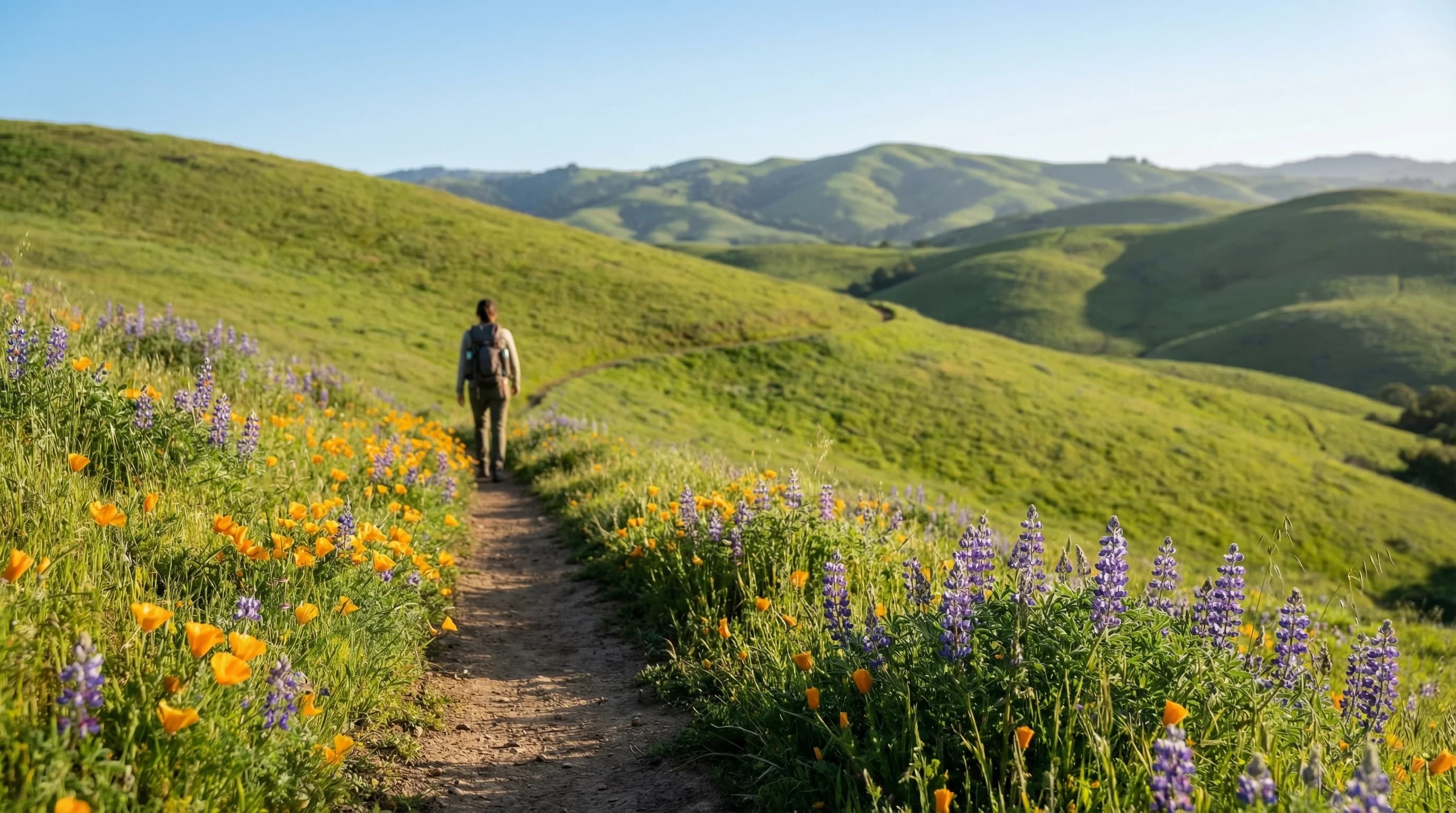
The Bay Area has some of the most accessible hiking in the country, with trailheads in every corner of the region and conditions that allow year-round use. But not all months are created equal. The two best windows are April through May and September through October. Miss those windows and you are hiking in the marine layer, through ankle-deep mud, or on trails baked dry under fire-risk conditions. The difference between the peak seasons and everything else is significant enough to plan around.
The Two Best Hiking Windows: Spring and Fall
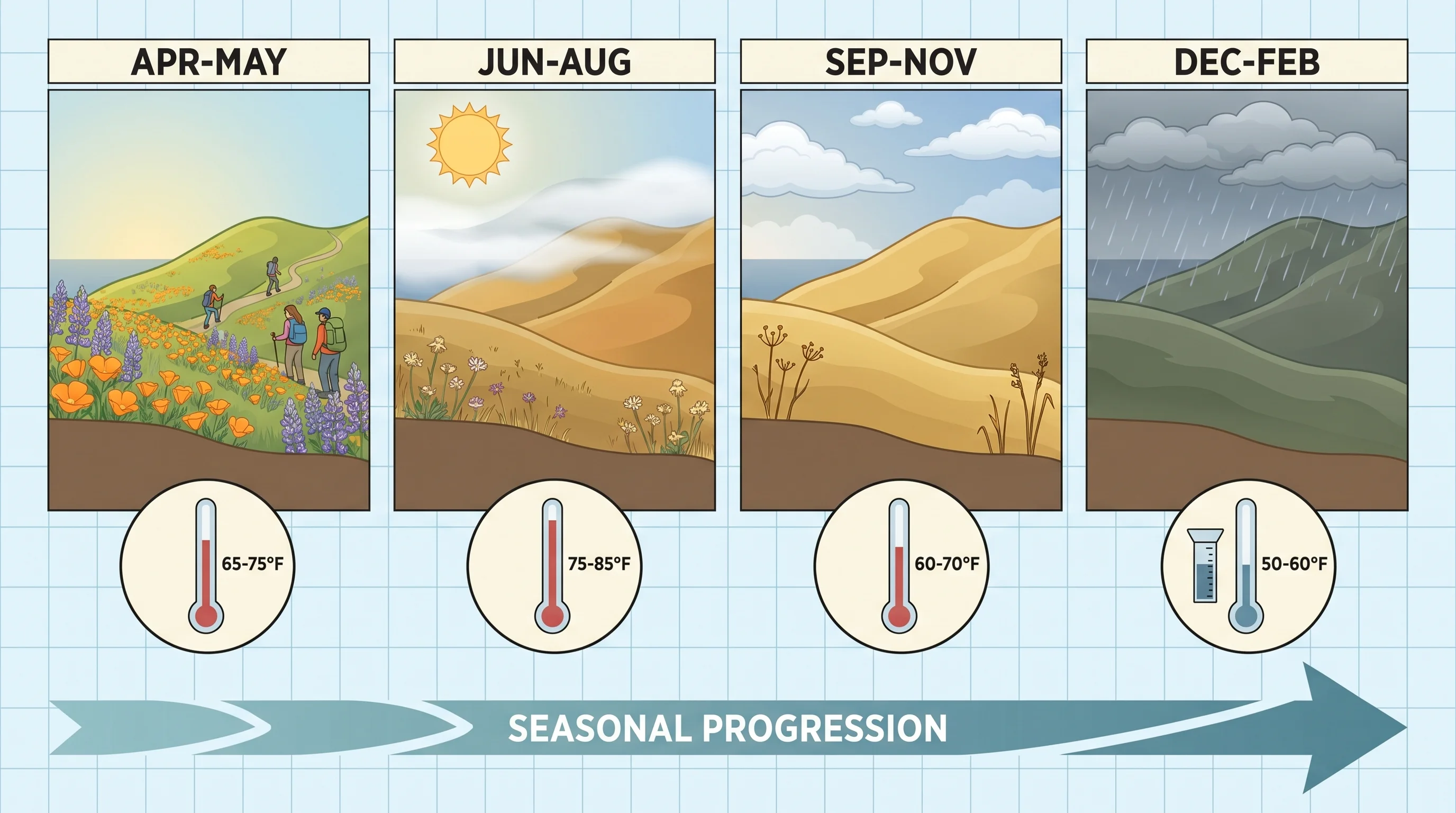
Bay Area hiking conditions follow the regional climate pattern, which runs about two months behind the calendar. The best conditions arrive not in summer and winter as you might expect, but in spring and fall. April and May bring mild temperatures (60 to 75°F), dry trails after the rainy season tapers off, and wildflower blankets across the East Bay hills and Marin. September and October deliver the warmest, clearest conditions the region produces: 70 to 80°F, blue skies, excellent visibility, and dry trails throughout.
Both windows are reliable and predictable. If you have a choice about when to visit for hiking, book around these months. The rest of the year still works, but requires more planning, more tolerance for less-than-ideal conditions, or both.
Spring Hiking (April and May): Wildflowers and Mild Conditions
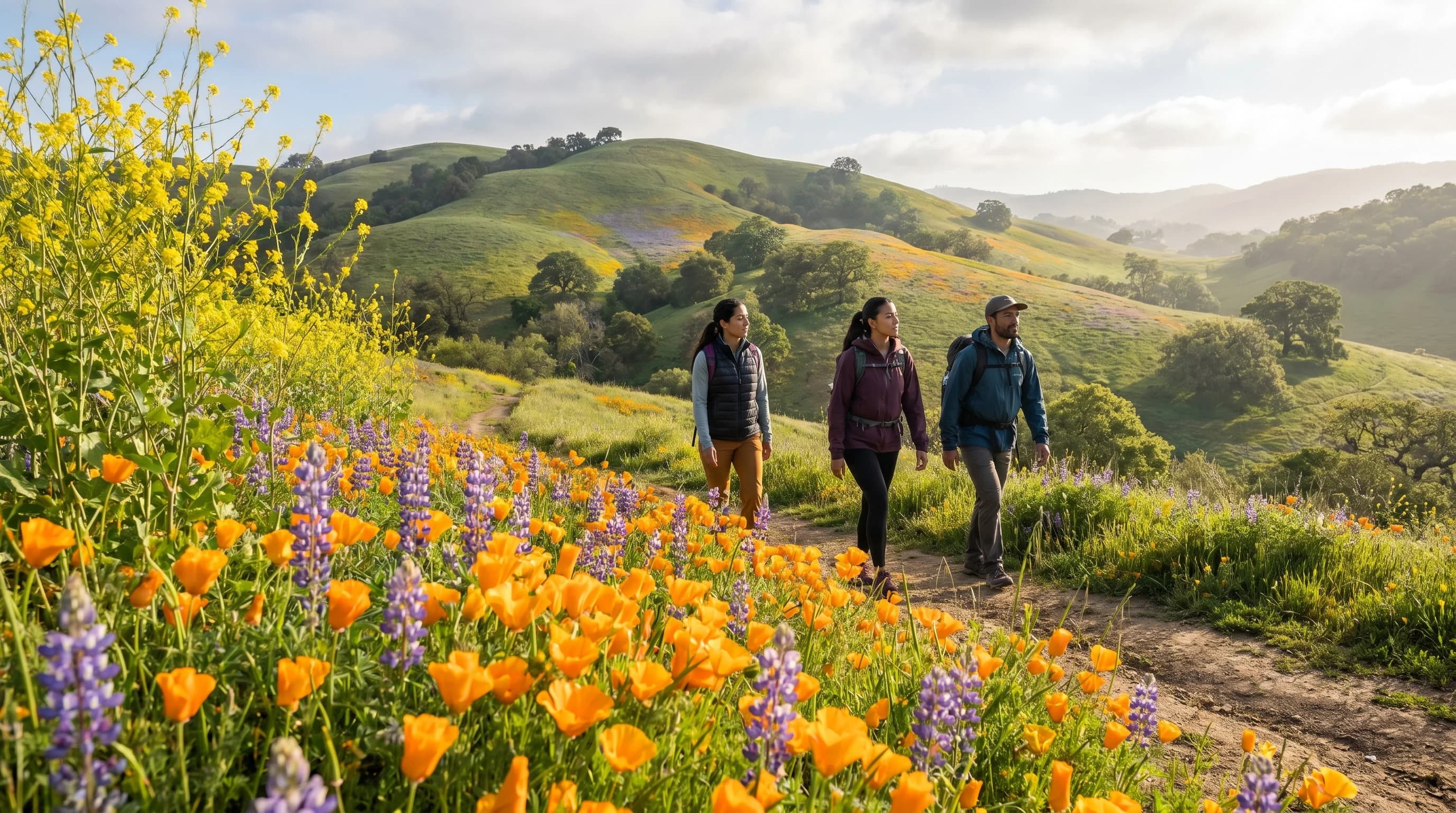
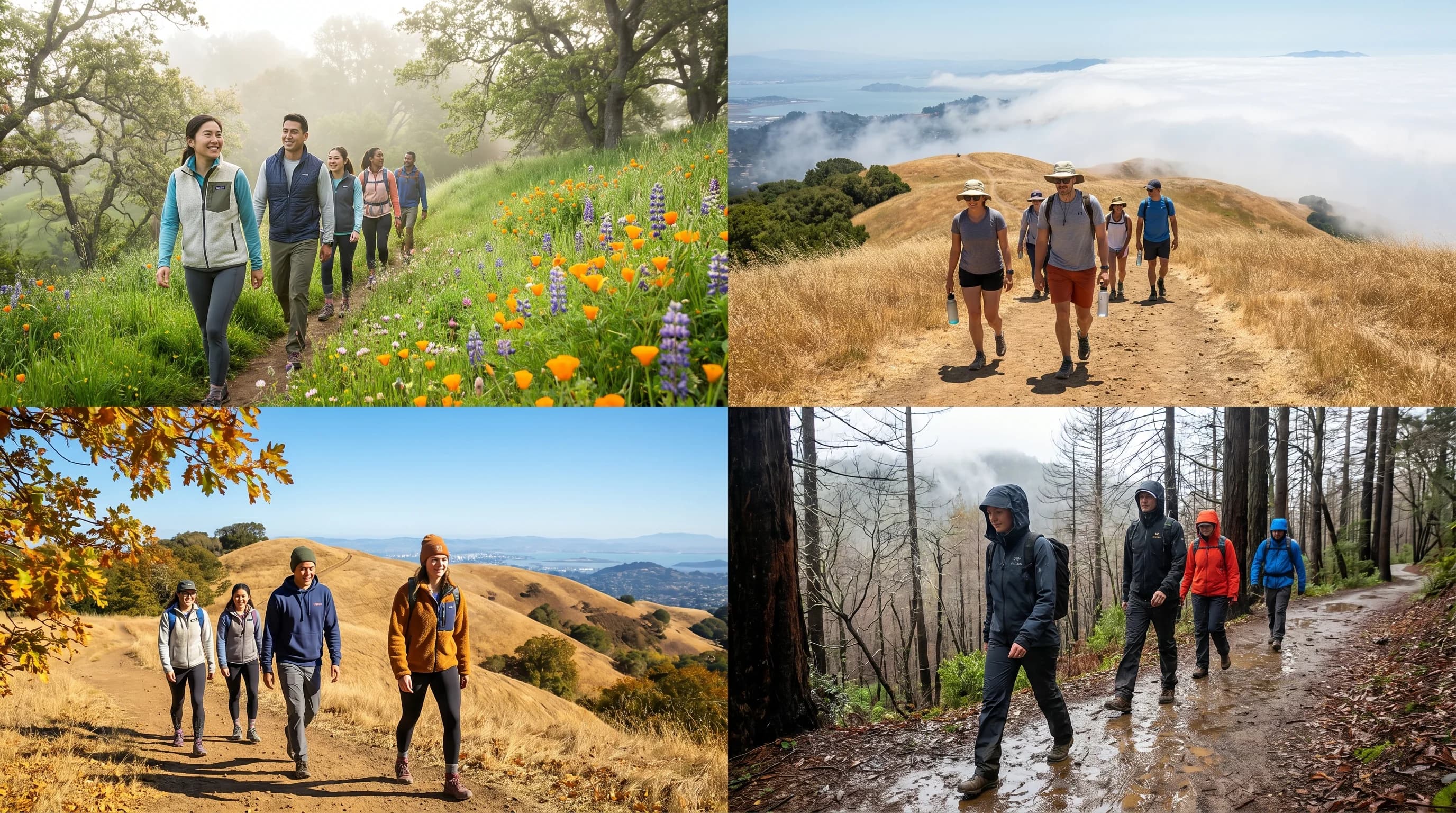
April is the month that many serious Bay Area hikers consider the best of the year. Rain has tapered from its February and March peaks but the hills are still green, full, and alive. Temperatures in the 60s and low 70s mean comfortable exertion without overheating. And for roughly two to three weeks in mid-April, the hillsides across the region explode with California poppies, lupine, and brodiaea in concentrations that stop hikers mid-trail.
The wildflower areas to target in spring include Mission Peak in Fremont, Sunol Regional Wilderness, the Livermore hill trails around Del Valle, and the Marin headlands above Rodeo Beach. These spots see wildflower density that is genuinely worth a special trip. May extends the spring window into cleaner conditions: trails drier, fog less frequent, days longer. It is slightly less dramatic than April but more reliably comfortable for longer hikes.
Fall Hiking (September and October): The Single Best Season
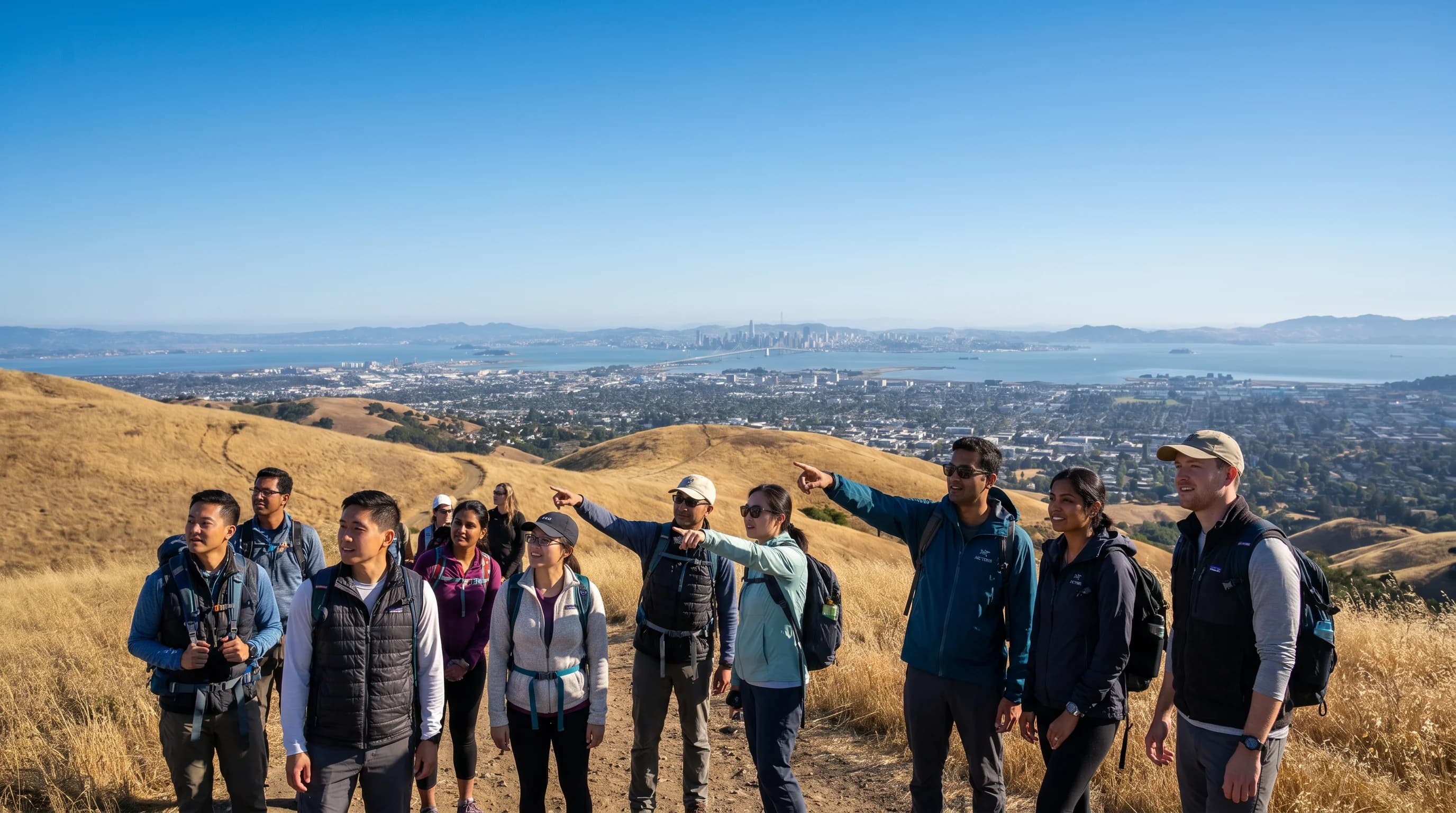
If you had to pick one month for Bay Area hiking, October would win the argument. The marine layer that dominated the coast all summer has retreated significantly. The ocean surface has warmed a few degrees from months of accumulated summer sun, reducing the pressure gradient that drives fog inland. The result is clear skies from morning to evening, temperatures in the low to mid 70s at most elevations, and visibility that extends to the Sierra Nevada on the clearest days from high East Bay peaks.
September sits slightly earlier in the transition and still has some marine layer days, particularly near the coast, but conditions improve markedly from August. By October the pattern has shifted definitively. Trail surfaces are typically dry and firm from months without significant rain. The fire season is winding down (though not over until the first fall rains arrive, typically in November). Crowds are lighter than the summer peak. Everything about fall hiking in the Bay Area works in your favor.
Summer Hiking (June through August): The Complicated Season
Summer hiking in the Bay Area divides sharply along a geographic line. Coastal and near-coast hikes, including trails in Marin, the Peninsula, and the hills above San Francisco, are frequently shrouded in the marine layer through midday. Temperatures can stay in the upper 50s and low 60s well into the afternoon. Trails themselves are fine, but the experience of hiking in persistent fog is not what most visitors picture when they think of Bay Area hiking.
Inland hikes tell a different story. Trails in the Diablo Range, the Livermore area, and the East Bay hills east of the coastal range get real summer sun. Temperatures are warmer (80 to 90°F inland) but skies are clear and views are genuine. The tradeoff is fire danger. By mid-July, most inland Bay Area hillsides are dry golden-brown. Trail closures happen at local parks when fire conditions are extreme. Always check park alerts before heading out in August, when conditions peak.
Winter Hiking (December through March): Mud and Solitude
Winter hiking in the Bay Area is not impossible, but it is honest work. The rainy season runs from November through March, with December and January seeing the heaviest precipitation. Most trails remain technically open, but they become genuinely muddy after rain events. Some fire roads become impassable. Lower-elevation trails near creeks and drainages can close temporarily after major storms.
What winter hiking offers in exchange for the difficulty is solitude. Trailhead parking lots that overflow on spring weekends sit half-empty on a January weekday. The hills are intensely green after rains. Waterfalls that run dry by June are at full volume. And on clear winter days, which occur frequently between storm systems, the air is sharp and the views are remarkable. Experienced hikers who check conditions and come prepared with waterproof footwear find winter underrated. First-time visitors who show up in tennis shoes after a week of rain find it a different experience.
Planning Your Bay Area Hike Around the Calendar
The practical guide is simple. For wildflowers and pleasant spring conditions, target April, especially mid-April. For maximum comfort, clearest views, and the easiest planning, target September or October. For coastal hikes with reliable sun, avoid June and July and come back in fall. For inland hikes in summer, go early (start by 7am) to beat the heat and check fire conditions the morning of. For winter, choose moderate trails, bring waterproof boots, and check park websites for closures.
The Bay Area trail network is extensive enough that the right hike exists for every season. The key is knowing which season delivers what kind of experience and planning accordingly rather than assuming that summer means ideal outdoor conditions. Here, the calendar is misleading. The best hiking weather arrives in April and October, and the hikers who know that come home satisfied every time.