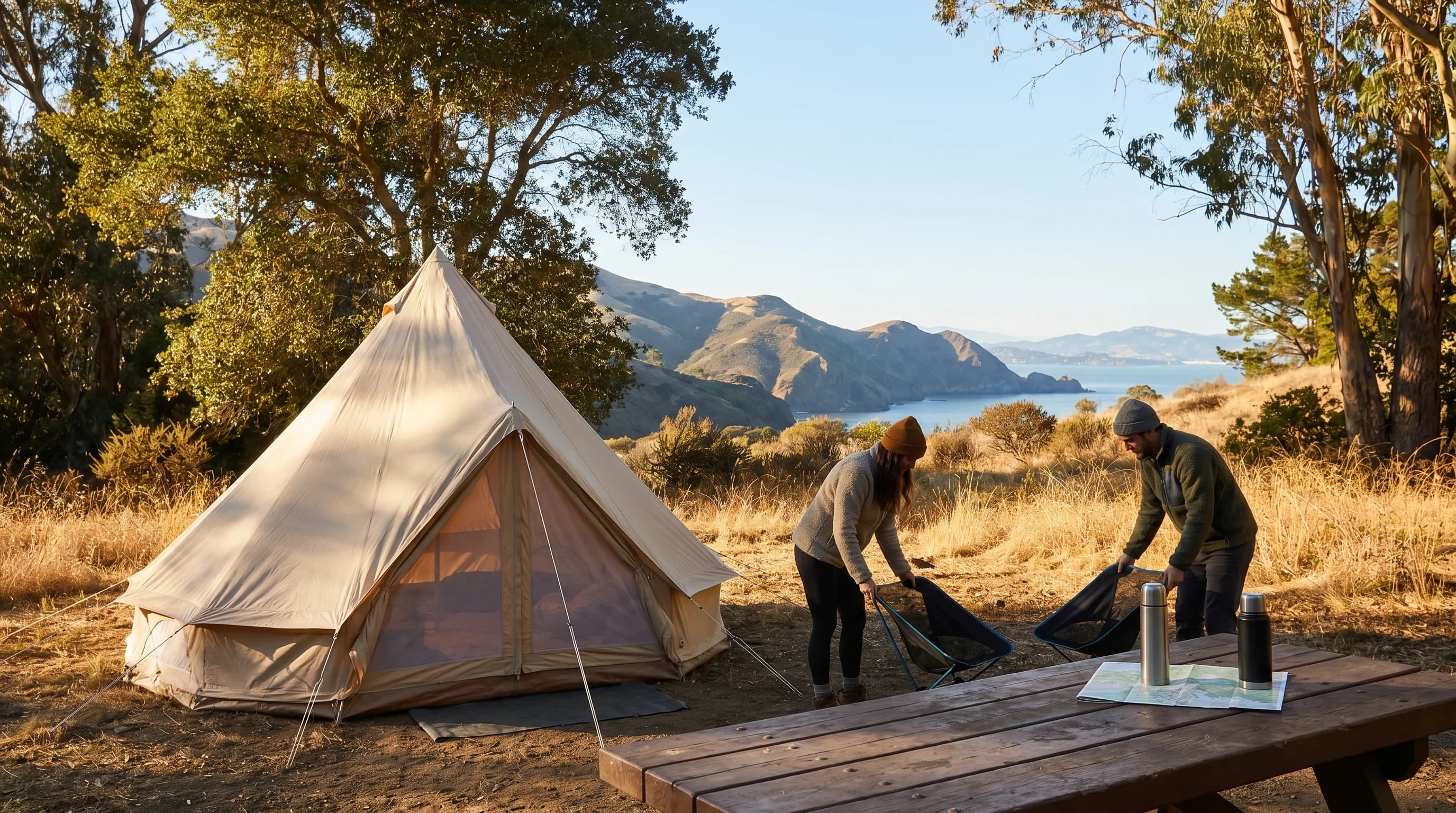
The Bay Area has more accessible campgrounds within driving distance of a major metropolitan area than almost anywhere in the continental United States, and the camping experience varies dramatically by where you go and when. The same marine layer that keeps San Francisco foggy in July makes coastal campgrounds in Marin cool and dramatic, while the same inland heat that drives East Bay residents to the coast also makes Delta campgrounds in July an extreme heat experience. Getting camping weather right in the Bay Area is partly about matching your preferred conditions to the right time of year, and partly about understanding that the same weekend can bring very different weather at campgrounds just 20 miles apart.
Coastal Camping: Marin to Big Sur
Coastal campgrounds in Marin County, including Point Reyes National Seashore and the coast camps accessible from Highway 1, experience the full Bay Area fog season from June through August. These camps are cool, often overcast, and breezy during summer days, with temperatures in the 55 to 65 degree range at night. The appeal is the dramatic coastal scenery, the proximity to tide pools and beaches, and the genuine wilderness feel within 45 minutes of San Francisco. The best weather at these coastal camps is in September and October, when the fog retreats, temperatures moderate to the upper 60s in the afternoon, and clear nights make for excellent stargazing.
The coastal campgrounds between Pacifica and Santa Cruz along Highway 1 follow a similar pattern. Half Moon Bay State Beach campgrounds are popular with coastal campers who accept the summer fog in exchange for the dramatic beach setting. The campgrounds near Año Nuevo State Park are cooler and foggier but excellent for the elephant seal rookery visits. September through November is the best season for all of these coastal locations: clearer, warmer, drier, and still before the winter rains begin.
Inland Camping: Mount Diablo, Henry Coe, and the Delta
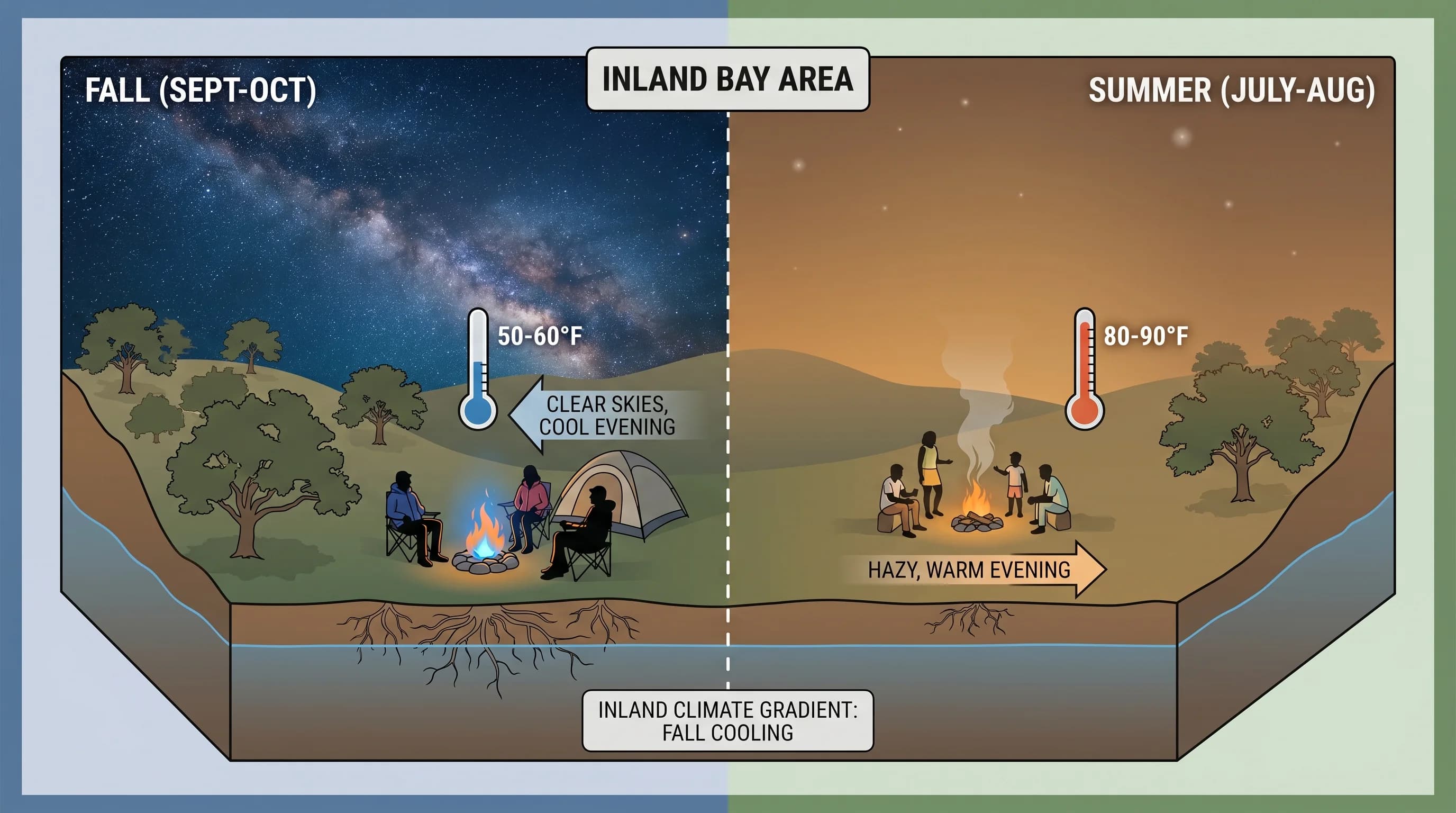
Mount Diablo State Park, in the East Bay hills, offers camping at elevations from 1,500 to 3,800 feet. Summer camping on Mount Diablo means hot days but dramatically cooler nights, especially at the higher elevations. The lower campgrounds are exposed to daytime heat but benefit from the afternoon sea breeze. Fall is the ideal camping season at Mount Diablo: comfortable daytime temperatures in the 65 to 75 degree range, clear views in every direction, and nights cool enough for a sleeping bag. The park is spectacular in spring as well, when the hillsides are green and wildflowers are at their peak.
Henry Coe State Park, the largest state park in Northern California and one of the most rugged backcountry camping destinations in the Bay Area, sits in the hot interior hills east of Morgan Hill. Summer camping at Henry Coe is for experienced, heat-adapted hikers only: daytime temperatures at the lower elevations can exceed 100 degrees in July and August. Spring (March through May) and fall (October through November) are the right seasons for Henry Coe, when the landscape is either green and blooming or golden and cooling. Winter camping at Henry Coe can also be excellent in dry years, with mild temperatures, green hills, and solitude in the backcountry.
Wine Country and North Bay Camping
The campgrounds in Sonoma and Napa counties, including those at Austin Creek State Recreation Area, Sugarloaf Ridge, and the coast redwoods of Armstrong Redwoods, offer a different camping experience from the Bay Area's immediate vicinity. The wine country valleys are warm in summer; Santa Rosa and Napa run 15 to 20 degrees warmer than San Francisco on summer afternoons. Coastal Sonoma near Bodega Bay brings the fog back. The sweet spot is the moderate inland valleys in fall, when harvest season brings warm afternoons, cool nights, and the dramatic colors of the vineyard landscape.
The redwood coast campgrounds at Prairie Creek, Humboldt Redwoods, and the parks of the Lost Coast, while technically outside the Bay Area proper, are reachable in a few hours of driving and represent some of the most spectacular camping in California. These campgrounds are cool and foggy all summer but dramatic in a way that coastal redwood forests uniquely are. If Bay Area coastal fog is a feature rather than a bug for your camping trip, the redwood coast in summer is an experience unlike any other.
Best Months to Camp by Location Type
For coastal Marin and Point Reyes, September and October offer the clearest skies and most comfortable temperatures of the year. For inland parks like Mount Diablo and the Diablo Range, spring and fall are the clear choices, with summer too hot for comfortable daytime hiking. For wine country and North Bay valleys, fall aligns with harvest season and the best overall weather. For the Santa Cruz Mountains and the coast south of the Bay Area, the summer fog is persistent but manageable with the right gear and expectations, and September brings a welcome clearing.
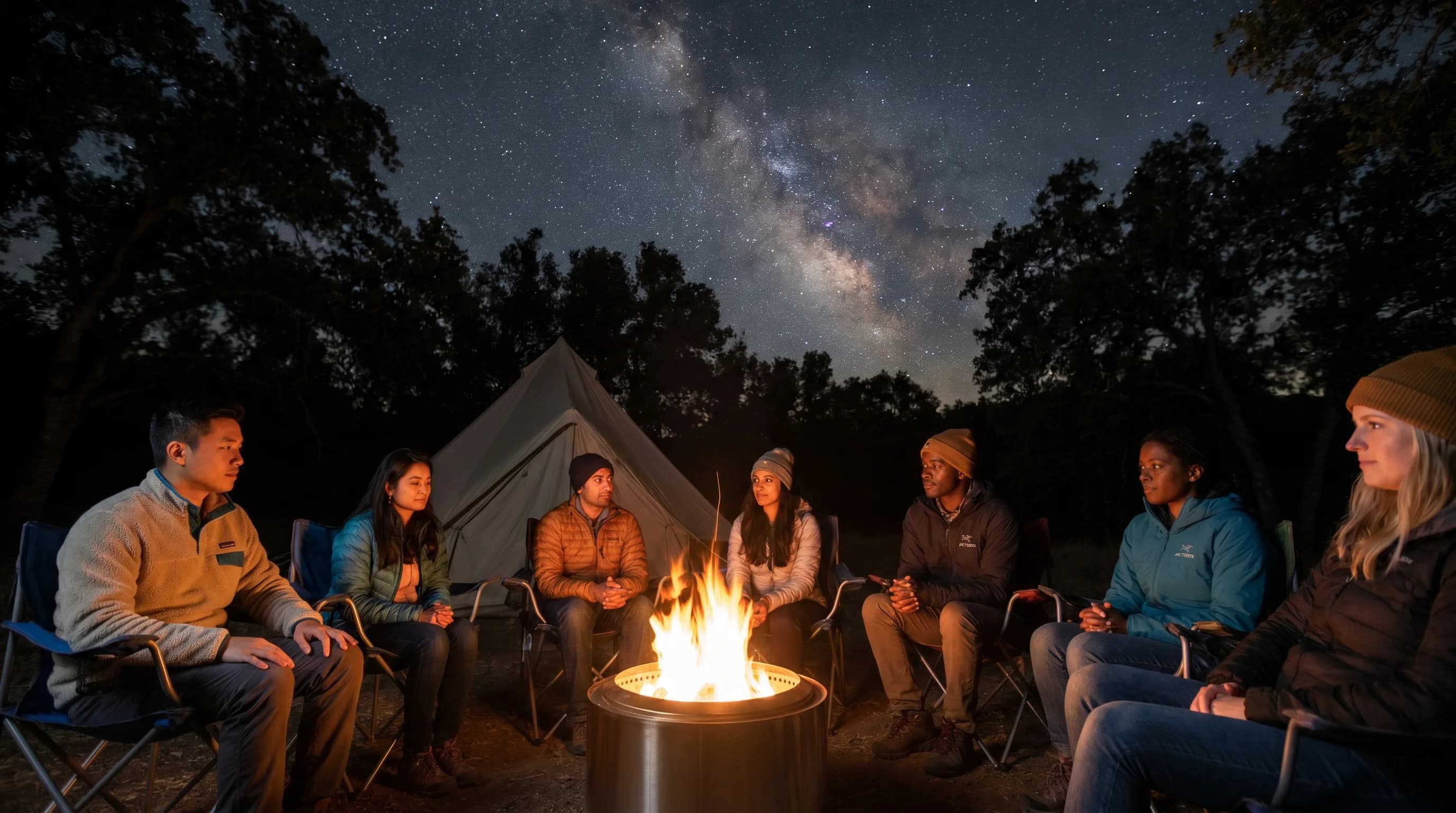
The universal Bay Area camping advice is to expect cold nights year-round: even in the hottest summer weeks, temperatures drop to the low to mid-50s overnight in most campgrounds, and coastal sites can drop into the upper 40s. Bringing a sleeping bag rated to 35 or 40 degrees is appropriate for Bay Area camping at any season. The combination of warm afternoons and cold, clear nights that defines Bay Area fall camping is one of the most pleasant camping conditions in the western United States.