
Stinson Beach is the closest thing the Bay Area has to a traditional beach town, and on the right day it fully delivers that promise: warm sand, blue sky, gentle waves, and the feeling that you've escaped the city entirely. The catch is that "the right day" arrives less reliably than beach visitors hope, and knowing how Stinson's particular microclimate works is the difference between a perfect beach afternoon and a cold, foggy disappointment. The beach is genuine, the sand is real, and the weather can be extraordinary. It just requires some timing knowledge to access reliably.
Why Stinson Can Be Warm When the Rest of the Coast Is Cold
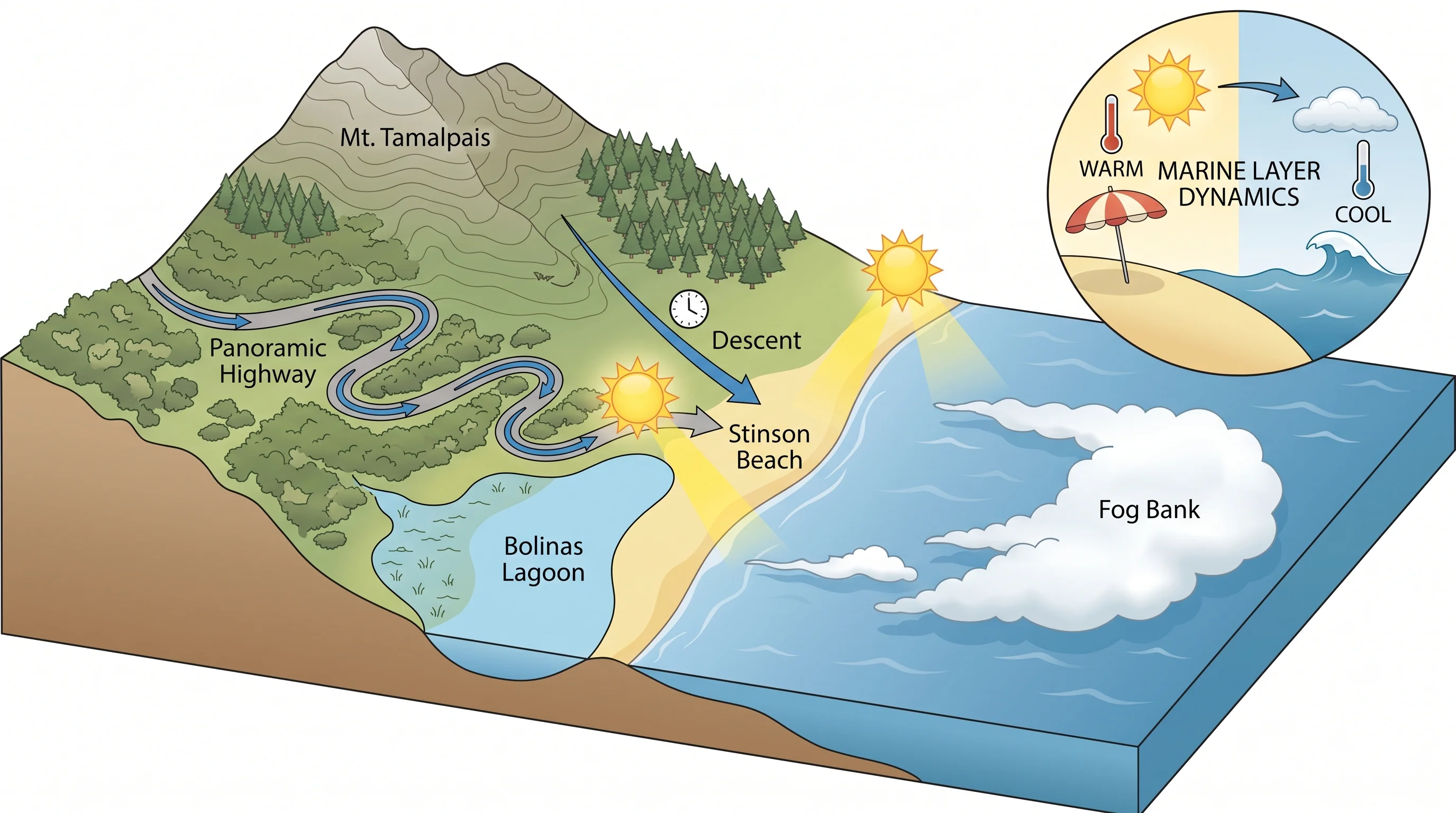
Stinson Beach sits on the south-facing arc of the Bolinas Lagoon, somewhat sheltered from the direct northwest marine flow by the Bolinas Ridge to its north and west. On days of moderate marine push, the fog may hug the ridge and stay north of the beach, leaving Stinson in sunshine while the Point Reyes peninsula is fully fogged in. The beach also faces south and southeast, which means it receives more direct sun during the middle of the day than a west-facing beach like Ocean Beach in San Francisco.
The result is a beach that can reach 75 to 80 degrees Fahrenheit on good summer days while Ocean Beach, 15 miles to the south, sits at 60 in fog. These are the days that fill the parking lots at the Panoramic Highway trailhead and back up traffic on Highway 1 from Mill Valley to Stinson Beach. Bay Area residents with local knowledge track the weather at Stinson specifically, knowing that a west wind in San Francisco often means Stinson is clear, while a northwest wind usually brings fog to both.
Reading the Stinson Forecast
The best predictor of Stinson weather is the wind direction at the Golden Gate. When onshore flow is from the west rather than the northwest, the marine layer enters through the Gate and spreads eastward into the Bay rather than pushing northwest along the coast toward Stinson. On these days, Stinson can be sunny while San Francisco is fogged in. When wind is from the northwest, the marine layer pushes directly toward the Marin coast and Stinson receives the full force of it.
The time of year matters too. Late spring (May-June) and mid-summer (July-August) are the peak fog months for the entire coast; Stinson is no exception. The most reliably clear window is September through October, when the marine layer retreats and Indian summer conditions produce the warmest, sunniest beach days of the year. An October Saturday at Stinson, with temps in the low 70s and the Bolinas Lagoon glittering to the north, is among the best weather experiences the Bay Area offers.
The Panoramic Highway Factor
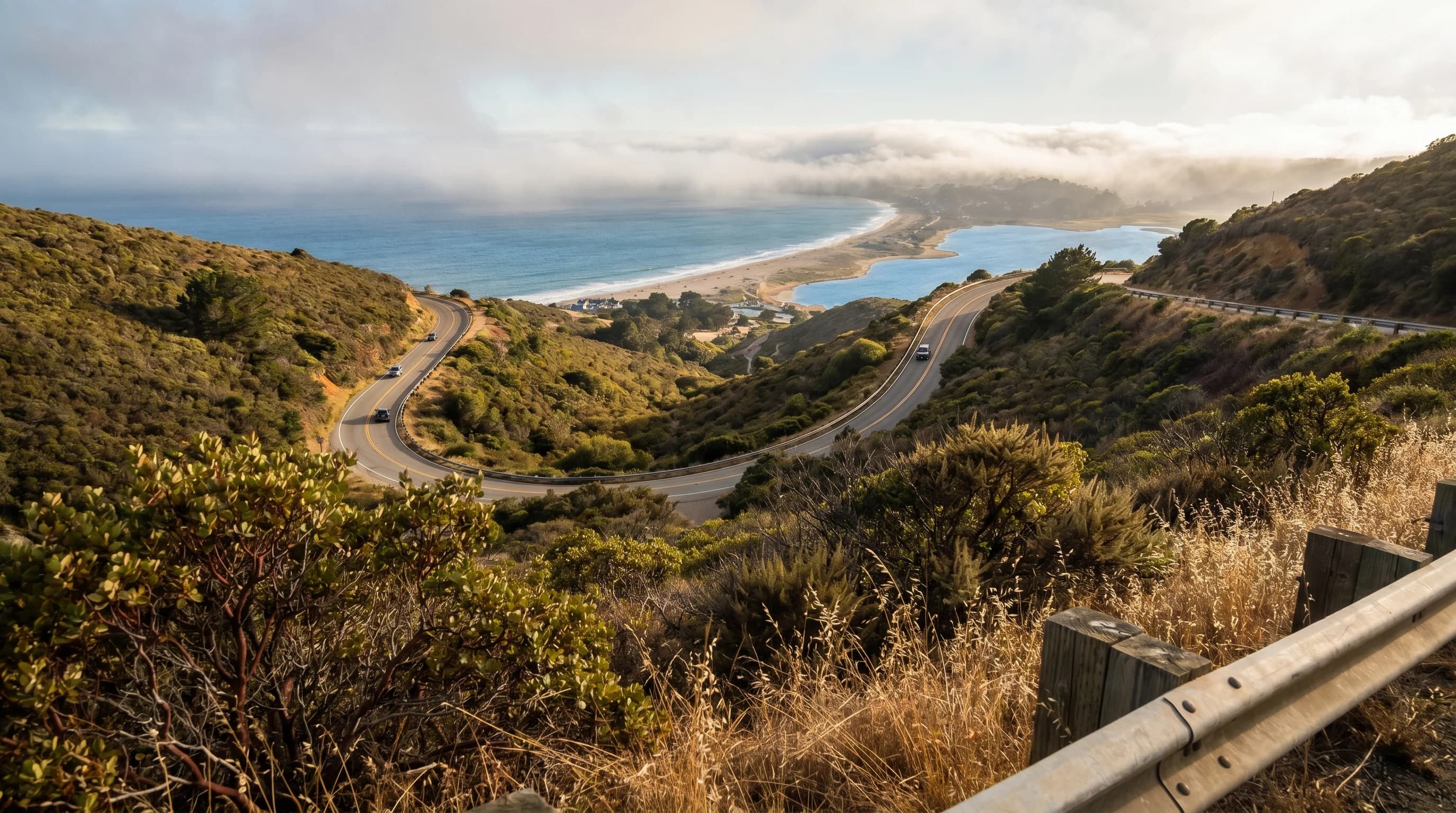
Getting to Stinson from the East Bay or San Francisco means driving over the Marin Headlands or Mount Tamalpais via the Panoramic Highway, which adds a weather variable that visitors often fail to account for. The road climbs to over 1,000 feet before descending to the coast, and the ridgeline frequently sits in the middle of the fog layer. It is entirely possible to drive over Mount Tamalpais in dense fog and arrive at a sunny Stinson Beach, or to leave San Francisco in sunshine and descend through fog on the Marin side. The ridge is a weather divide, and the experience of crossing it in summer can feel like driving between two different climates.
The water at Stinson is cold by any measure outside Northern California, typically in the high 50s in summer, occasionally reaching the low 60s in fall. The beach is more popular for sunbathing, sand play, and walking than for swimming, though a wetsuit makes the ocean entirely approachable for those who want to get in. The small village of Stinson Beach has a few restaurants and a grocery store; the beach itself is managed by the Golden Gate National Recreation Area and has parking, restrooms, and lifeguards during peak season.
Wind and Afternoon Conditions
Even on sunny days, Stinson Beach develops an afternoon sea breeze that can make the beach feel significantly cooler by 2 or 3pm than it did at noon. The temperature at 10am on a good day might be 72 degrees with no wind; by 3pm the same day it could be 65 with a persistent 15 mph onshore breeze that sends sand skittering across the flats. Experienced Stinson visitors bring layers and time their beach sessions for late morning to early afternoon, leaving before the afternoon wind peaks.
Winter brings a different Stinson entirely. The beach is nearly empty, the parking is free and plentiful, and the winter swell produces waves that are far more dramatic than summer's gentle conditions. The surrounding hills of Mount Tamalpais State Park and the Bolinas Ridge are vivid green from winter rain, and the lagoon fills with migratory shorebirds. For hikers, winter weekdays at Stinson and the adjacent trails can feel like having the entire coast to yourself, which in peak summer is absolutely impossible.