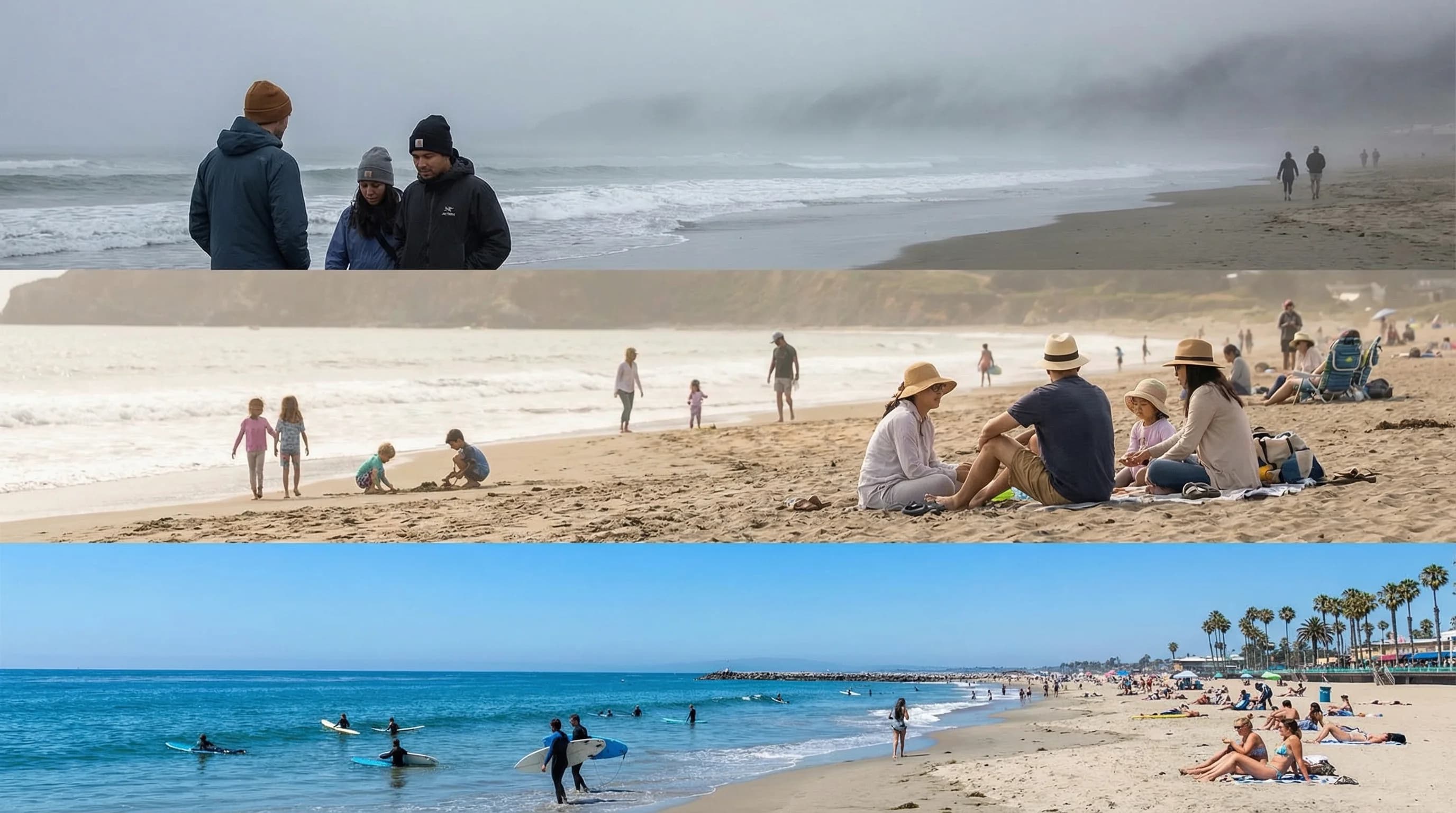
The Bay Area has coastline on three sides: the Pacific to the west, the Bay to the east, and the ocean-adjacent shores of Marin and the North Bay. But not all of that water offers the same beach experience. The Pacific beaches west of San Francisco are cold, foggy, and windswept in summer, beautiful for walking and watching the ocean but rarely warm enough for the classic California beach day. Bay shore beaches are calmer and occasionally warmer, but they face the Bay rather than the open ocean. And south of the Bay, the Santa Cruz coast offers the closest thing to a traditional warm beach within reach of Bay Area residents. Getting the beach day you want requires knowing which beach matches the weather you can actually expect to find.
Compare recent NOAA Bay and ocean water temperatures before choosing a beach; warm air and warm water are different conditions.
Pacific Ocean Beaches: What to Expect
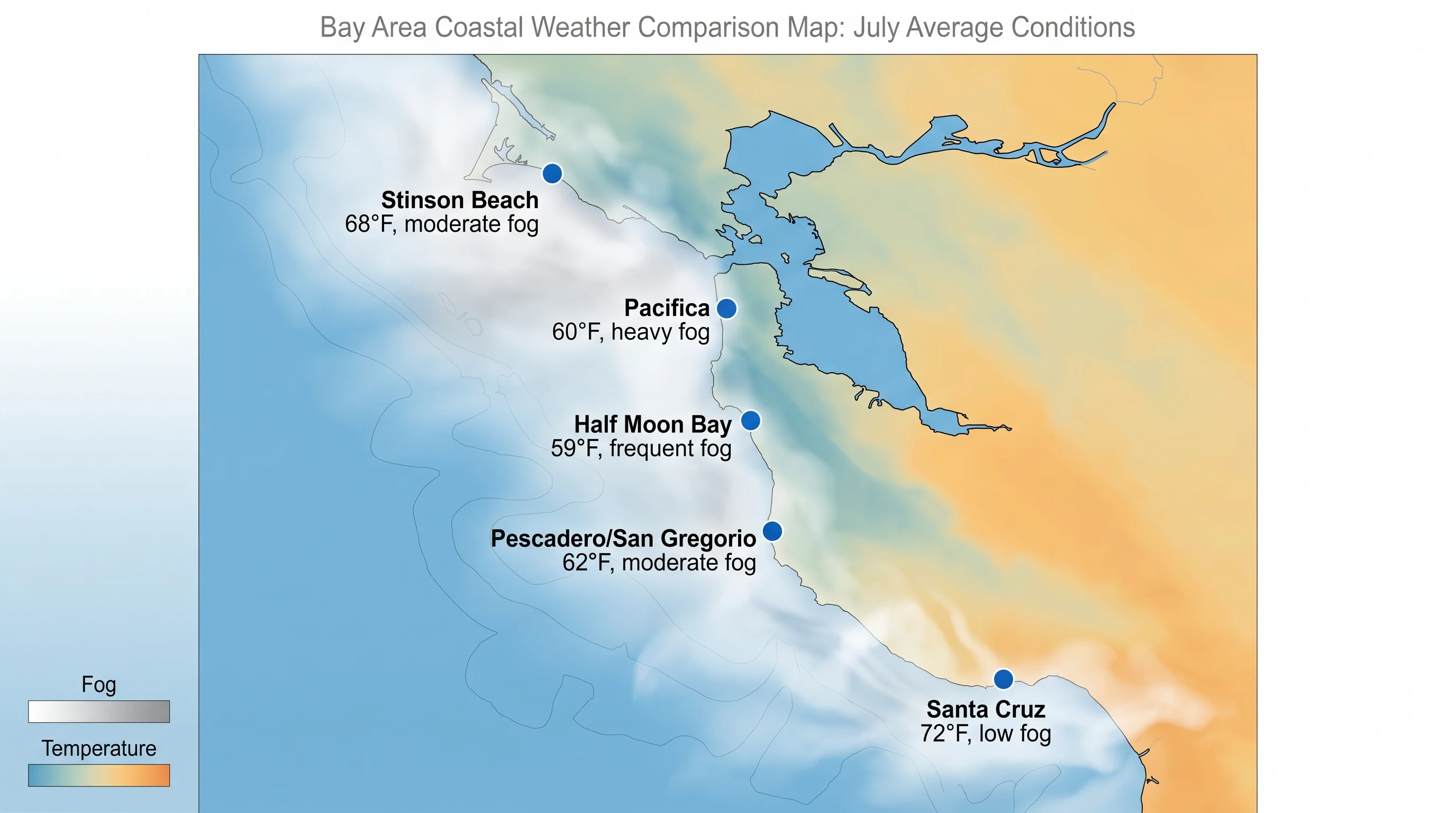
Ocean Beach in San Francisco, Stinson Beach in Marin, and the beaches of the San Mateo County coast all face the open Pacific and share the same cold-water, marine-layer climate. Summer water temperatures run in the low to mid-50s Fahrenheit, cold enough to cause hypothermia in non-wetsuit swimmers within 30 minutes. The air temperature on these beaches in July typically ranges from 55 to 63 degrees Fahrenheit, with persistent northwest wind that makes it feel colder. Morning fog is the rule, not the exception.
Stinson Beach in Marin County is the most popular ocean beach in the Bay Area, and it benefits from slight shelter from the direct northwest swell and some geographic protection from the full force of the marine layer. On summer days when the marine layer is moderate, Stinson can clear to pleasant conditions, 65 to 68 degrees, by noon. On heavy marine push days, it stays cold and foggy all day. The beach is most reliable in September and October, when Indian summer conditions bring genuine warmth and the fog retreats.
Bay Shore Beaches: A Different Experience
The Bay's eastern shore, from Crissy Field in San Francisco through Alameda, Berkeley, and down to Fremont, offers beaches that face the Bay rather than the ocean. The water is warmer than the Pacific (Bay water in summer reaches the low to mid-60s Fahrenheit) and the wave action is minimal. These are good beaches for children, calm-water swimming, and water sports like kayaking and windsurfing.
The East Bay shoreline, Crab Cove in Alameda, Crown Memorial State Beach, the Berkeley Marina area, can be significantly warmer on summer afternoons than the ocean beaches, because they sit on the sheltered Bay side and catch the afternoon sun without the full force of the Pacific marine push. On a day when Ocean Beach is 57 degrees and foggy, Crab Cove in Alameda can be 72 and sunny. The Bay water is not pristine (no kelp forests, no clear blue Pacific water), but for a warm-water swim or a calm beach afternoon, the East Bay shore is often the Bay Area's best option.
Santa Cruz: The Warm-Weather Option
For Bay Area residents willing to drive 75 miles, Santa Cruz offers the closest approximation to a Southern California beach day in Northern California. Summer afternoon temperatures at the Santa Cruz Beach Boardwalk and the surrounding beaches run in the low to mid-70s Fahrenheit, considerably warmer than the Bay Area's ocean beaches. Morning fog is common but clears by midday on most summer days. The water temperature is warmer than the Bay Area's Pacific coast, running in the high 50s to low 60s Fahrenheit, still cold by Southern California standards, but manageable for brief swimming without a wetsuit.
Highway 17 over the Santa Cruz Mountains is notorious for Friday afternoon traffic as Bay Area residents head to the beach, and Highway 1 south from Half Moon Bay is a scenic but slow alternative. The drive itself, through the redwood forests of the Santa Cruz Mountains, is part of the experience. The beach crowds at Santa Cruz peak in July and August on sunny weekends and thin considerably on weekdays and in September and October.
Best Months by Beach Type
For Pacific coast beaches (Ocean Beach, Stinson, Half Moon Bay), September and October are the best months. The fog retreats, temperatures warm to the mid-to-upper 60s, and the dramatic coastal scenery is visible rather than obscured. These are not warm swimming beaches even in October, but they are spectacular for walking, photography, and watching the surf.
For Bay shore beaches, the warmest conditions occur in June through August, when inland heating warms the Bay water and the East Bay's shelter from the marine layer keeps air temperatures in the 70s. Weekday visits avoid the crowds that fill these beaches on summer weekends.
For Santa Cruz, any summer weekend brings beach weather, but September and October offer the warmest, clearest conditions with the smallest crowds. If you want the closest the Bay Area gets to a Southern California beach experience, an October Saturday in Santa Cruz, 74 degrees, blue sky, minimal surf, is about as good as it gets.