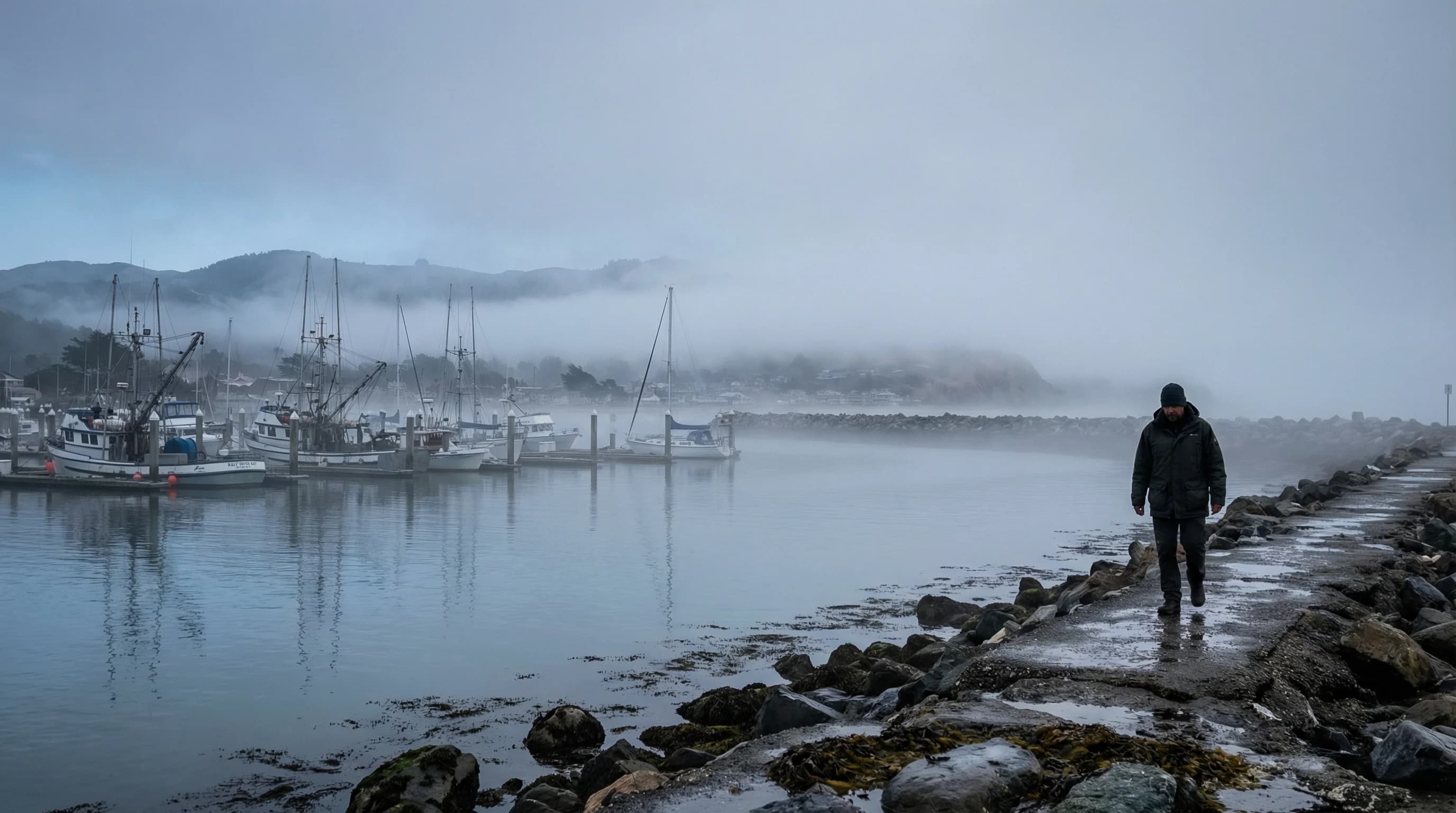
Half Moon Bay is the Bay Area's most reliably cool and foggy coastal destination. While the rest of the region swings between summer heat and winter storms, Half Moon Bay remains remarkably stable: foggy in summer, mild and occasionally sunny in fall, rainy in winter, and cool and green in spring. The Pacific Ocean, which Half Moon Bay faces directly from a stretch of unprotected coastline on San Mateo County's western shore, is both the source of its character and the reason most Bay Area residents know to bring a jacket regardless of what their phone's weather app says.
For water conditions, check recent NOAA offshore water temperatures. The Half Moon Bay offshore station is a regional reference, not a measurement at the harbor or surf line.
Summer Fog: The Baseline Condition
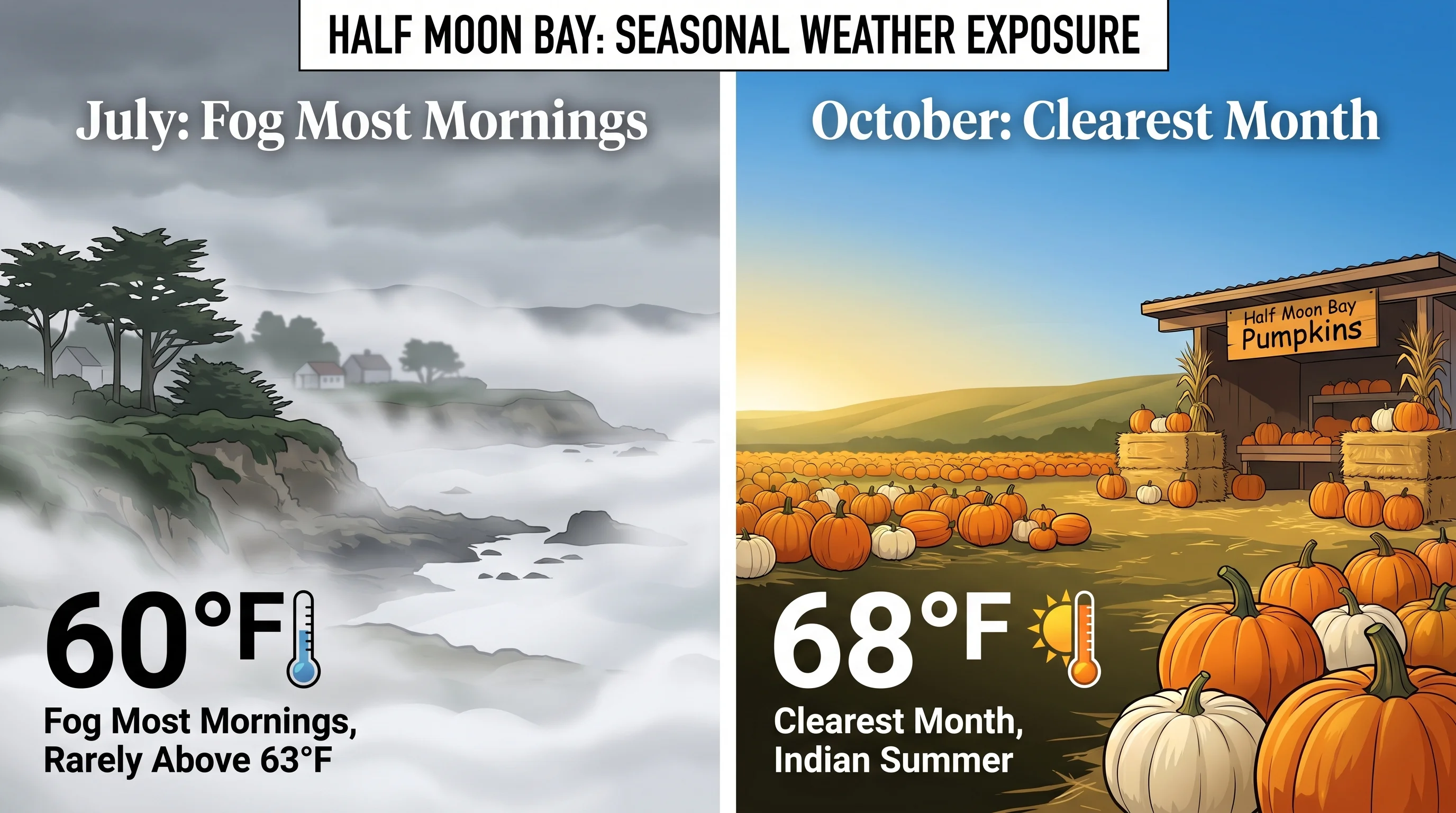
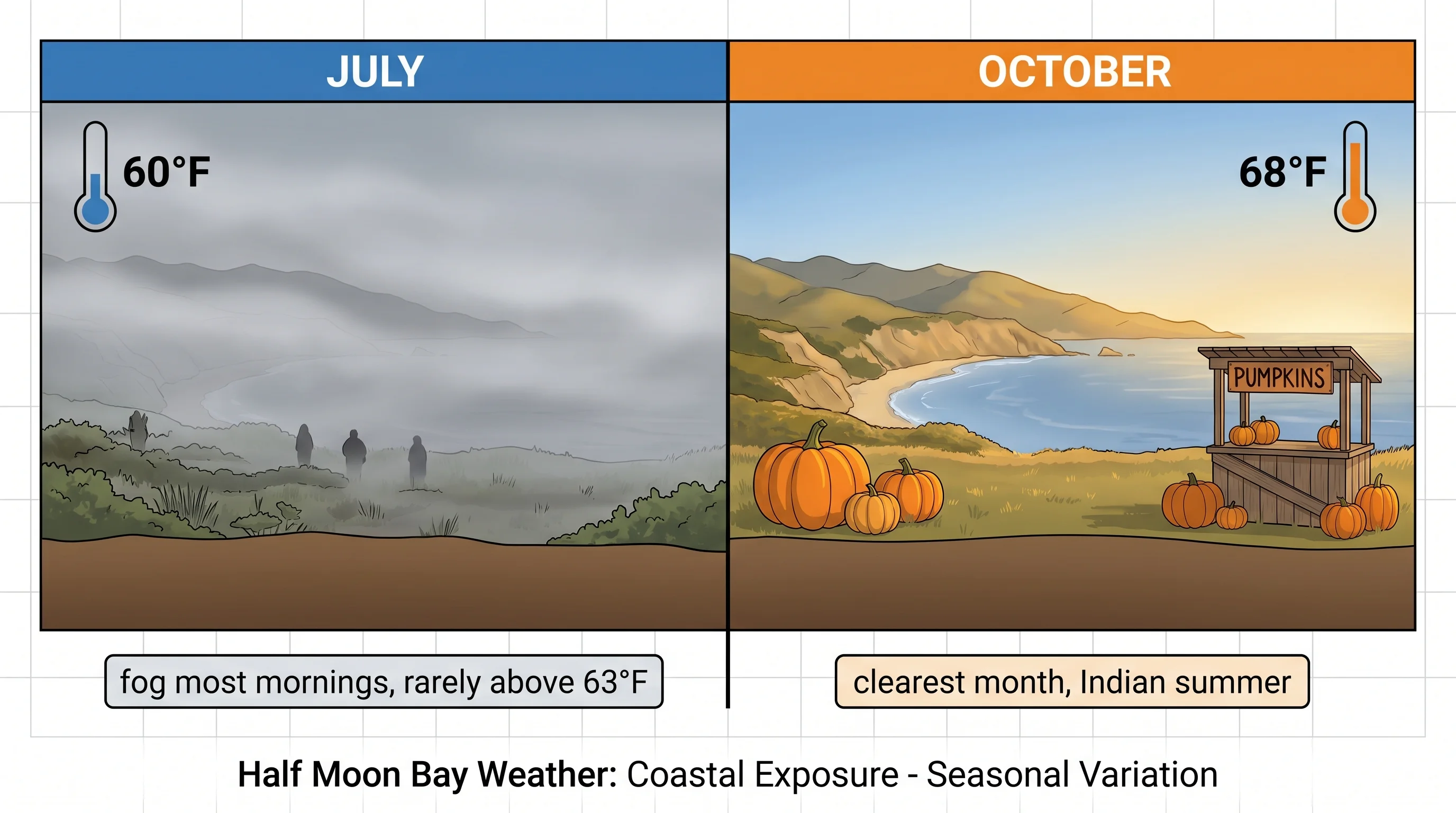
In Half Moon Bay, summer fog is not a weather event; it is the background state. The marine layer from the Pacific fills the coast each morning and, on most summer days, never fully burns off. July and August average high temperatures in Half Moon Bay run around 60 to 63 degrees Fahrenheit. The ocean off the coast sits in the low to mid-50s Fahrenheit, among the coldest ocean temperatures found anywhere on the California coast.
The prevailing wind is from the northwest, blowing straight off the cold California Current and keeping the temperature from building even on the rare occasions when the marine layer clears. On most summer mornings, you will find Half Moon Bay fogged in, the harbor barely visible through the gray, with a wind chill that puts the felt temperature well below the official reading. Locals and the fishing community who work the harbor have adapted completely; fleece and layers in July are not eccentric but sensible.
The fog pattern does clear on some summer days. The most reliable clearing window is during strong thermal low events inland, when the heating over the Central Valley is intense enough to pull the marine air inward and temporarily leave the coast in sunshine. These days tend to be the warmest Half Moon Bay sees all summer: mid-60s to low 70s Fahrenheit, calm winds, excellent beach weather by coastal California standards. The Half Moon Bay Pumpkin Festival in October regularly benefits from these more reliable fall clearing conditions.
Fall: The Best Season on the Coast
September and October are when Half Moon Bay shows its most comfortable face. The marine layer weakens as the North Pacific High retreats southward and the temperature differential between the coast and interior decreases. Clear days become more frequent. Afternoons can reach 65 to 70 degrees Fahrenheit with light winds, genuinely pleasant coastal weather that rarely appears in the July-August peak of summer fog.
The famous Half Moon Bay Art and Pumpkin Festival, held every October, owes something of its success to this seasonal shift. It is positioned to take advantage of the most reliable sunny weather the town sees all year. The Santa Cruz Mountains behind the town turn green from early fall rains, the pumpkin patches along Highway 92 fill with bright orange fruit, and the town gets an annual stretch of weather that reminds visitors what the California coast can look like when the fog retreats.
Winter Rain and the Storm Season
Half Moon Bay sits directly in the path of the Pacific storm track during winter. When atmospheric rivers and frontal systems make landfall on the California coast from November through March, Half Moon Bay takes the full brunt. Annual precipitation runs around 23 to 25 inches, with most falling between November and March. During active storm seasons, the town can receive several inches of rain in a single event, and the highway along the coast (Highway 1) occasionally floods or experiences landslides on the steep sections south of town.
Winter ocean conditions bring their own spectacle. Large northwest swells generated by Pacific storms travel hundreds or thousands of miles to reach the San Mateo County coast as powerful sets of waves. Mavericks, the legendary big-wave surf spot just north of Half Moon Bay, holds its invitation-only big wave competition in winter when these swells arrive. On significant swell days, the break can produce waves of 40 to 60 feet. This is not a place for swimming; winter ocean conditions on this stretch of coast are genuinely dangerous for anyone without specialized cold-water training and equipment.
What the Weather Means for Visitors
For visitors planning a day trip to Half Moon Bay from other Bay Area locations, the weather requires recalibration. The inland Bay Area forecast is essentially irrelevant to what you will find on the coast. A sunny 85-degree afternoon in San Jose is frequently accompanied by thick fog and 58-degree temperatures at Half Moon Bay, a 30-minute drive away. Always check the coastal forecast specifically, and always bring a layer regardless of what the rest of the Bay Area is doing.
The best times to visit for warm, sunny weather are the shoulder months: May for spring green hills (though fog is still common), September and October for fall clearing, and the occasional clear winter day that follows a storm system. If your goal is the classic Northern California beach experience, sitting in the sun on soft sand in shorts, Half Moon Bay will disappoint more often than not. If your goal is dramatic coastal scenery, tidepooling, watching elephant seals at Año Nuevo, or experiencing the raw force of the Pacific, the fog and cool temperatures are part of what makes it exactly right.