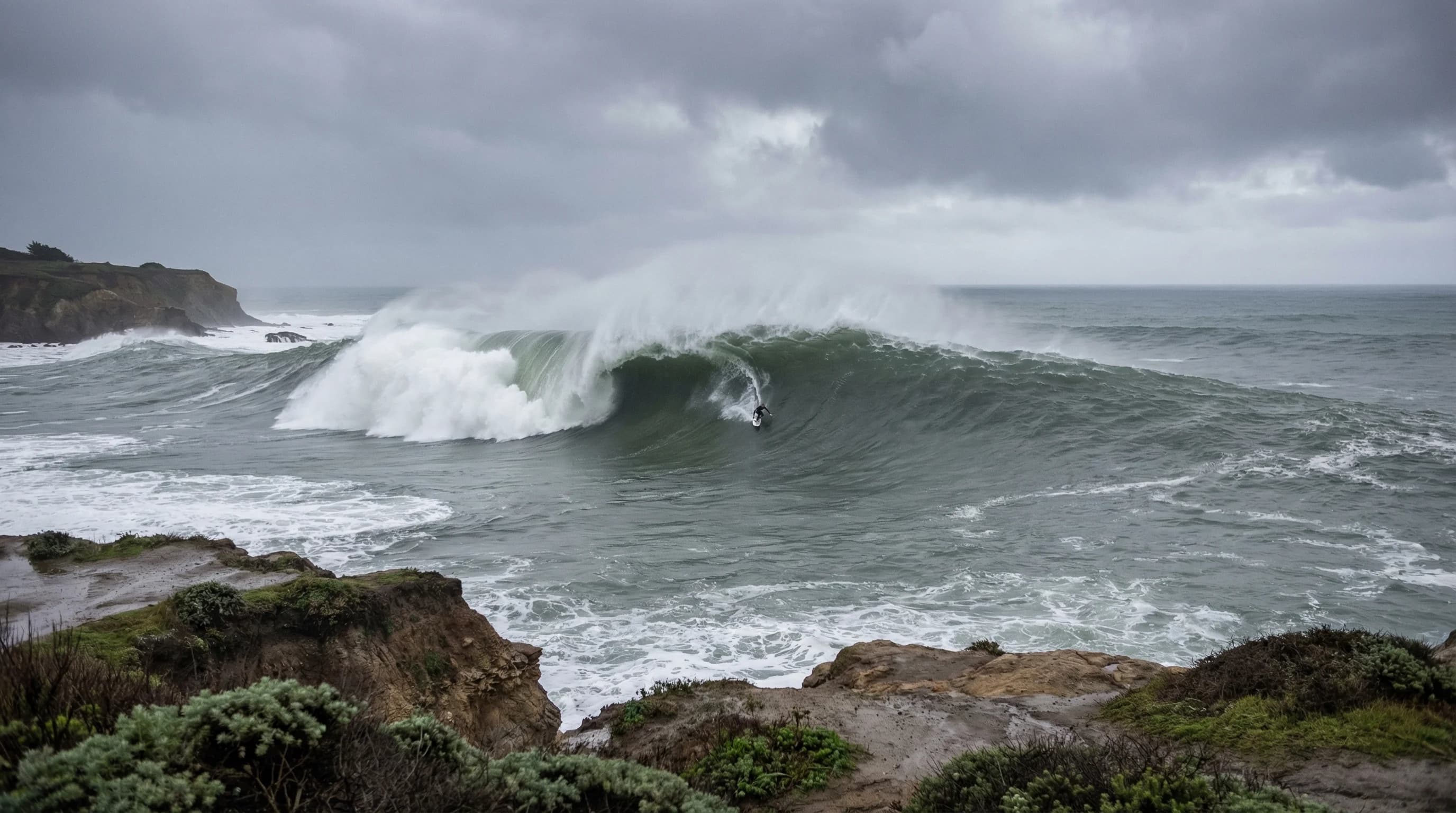
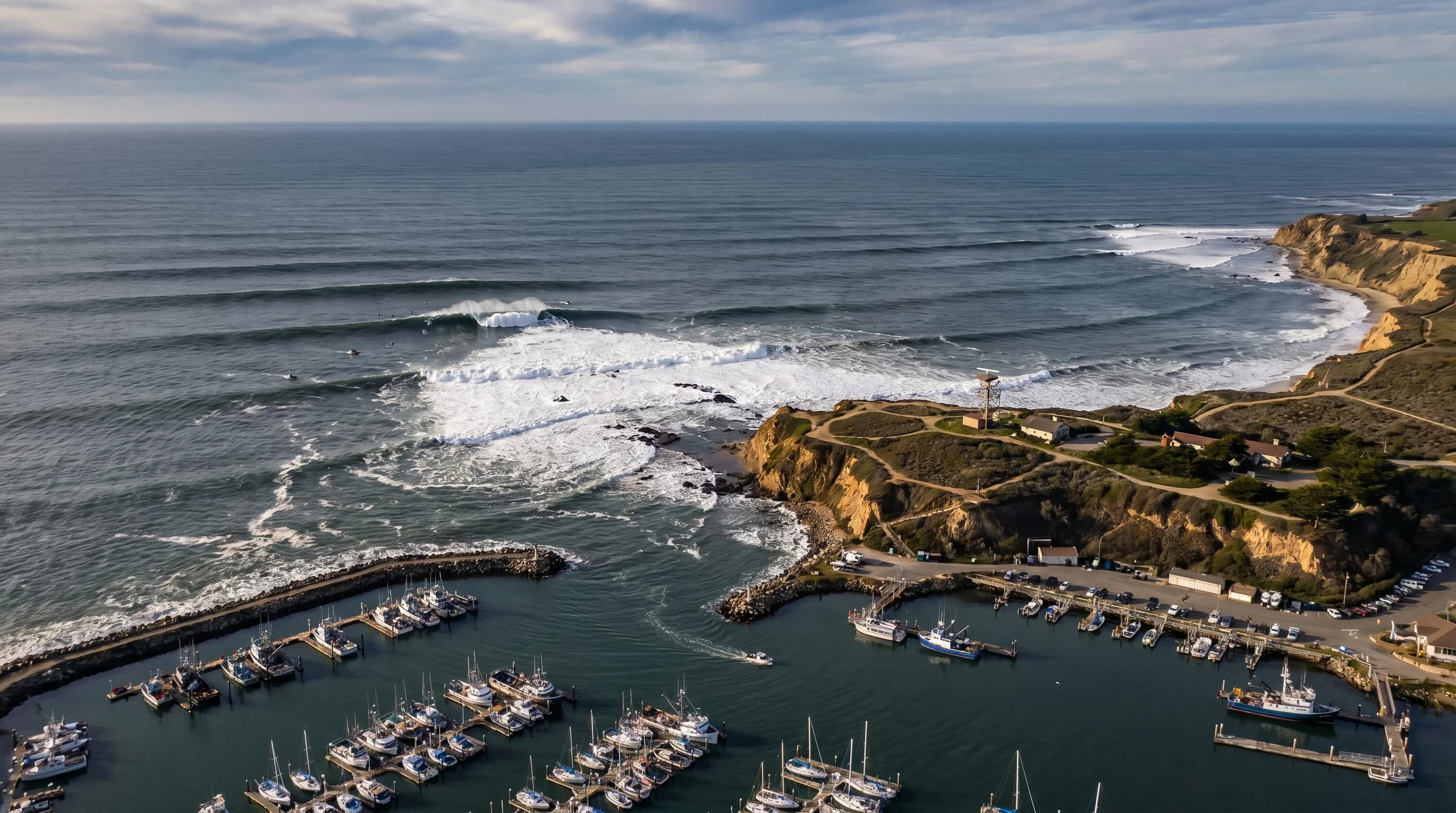
Mavericks breaks at a specific reef formation located about a half mile offshore from Pillar Point Harbor in Half Moon Bay, roughly 25 miles south of San Francisco. It produces some of the largest rideable waves in the world, with faces regularly reaching 40 to 60 feet during significant swells, and occasionally exceeding 80 feet during exceptional conditions. The wave is seasonal; it requires a specific type of swell from a specific direction that only the North Pacific generates in winter, combined with local bathymetry that focuses and amplifies that energy at the reef. The result is a wave that does not exist in summer and becomes one of the most powerful on the planet from November through March. When and why Mavericks peaks, and what conditions produce the biggest days, comes down to how Pacific storm systems interact with California's coastline.
Why Mavericks Exists Here
The Mavericks reef is a submerged rock shelf that rises abruptly from about 50 feet to 20 feet over a short distance. When a large swell hits this shelf, the wave energy is compressed and focused upward, producing a steep, fast, heavy breaking wave with a unique bowl shape. The location faces northwest, the direction from which North Pacific winter swells arrive after traveling thousands of miles from storms near Alaska, the Aleutian Islands, and the central Pacific. The geometry is specific: the reef orientation, the surrounding deep water, and the gap in the coastal shelf that allows deep-water swell energy to reach the reef without losing power are all necessary for the wave to function. There are few places on Earth where these elements align the way they do at Mavericks.
The wave is also notoriously dangerous. The cold water (54 to 58 degrees Fahrenheit in winter), the shallow reef, the powerful currents around the break, and the heavy closeout sets that can catch surfers inside make Mavericks one of the most consequential big wave spots in the world. Wipeouts at Mavericks are severe, and the consequences of a hold-down in heavy surf are life-threatening. The wave has killed experienced surfers. It is not accessible to recreational surfers; the lineup on big days consists of a small number of specialized big wave athletes.
Peak Season: November to March
The Mavericks season runs from approximately November through March, aligned with the North Pacific storm season. October occasionally produces early season swells, and April can see late-season energy, but the bulk of significant Mavericks days fall within the core winter months. January and February are statistically the most productive months for large swells because the North Pacific storm track is most active and the storm systems are often large and well-organized enough to generate the long-period swell energy that Mavericks needs.
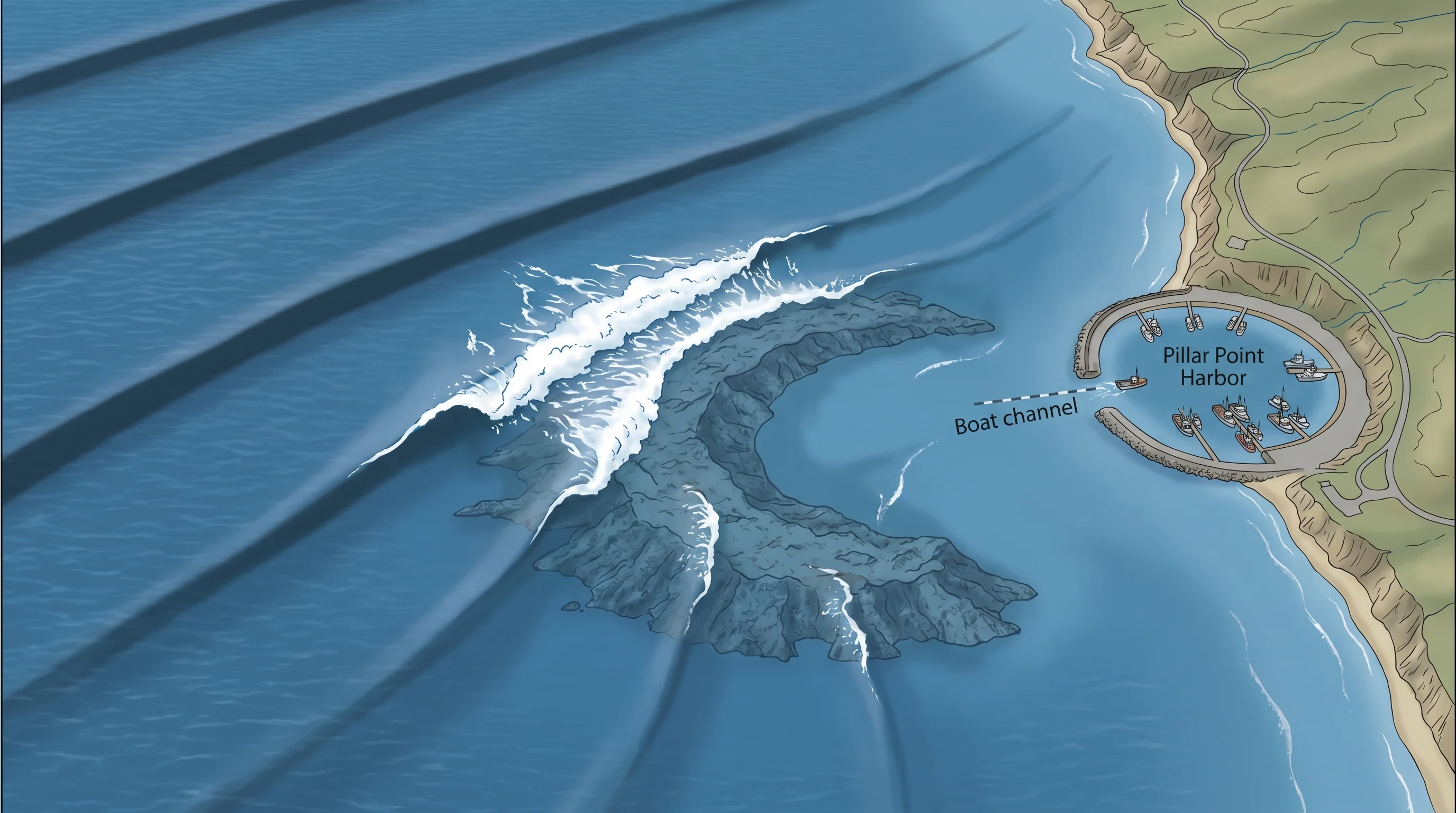
The specific swell direction that activates Mavericks is northwest, roughly 300 to 315 degrees. West swells produce rideable but less powerful waves. Northwest swells hit the reef at the angle that produces the wave's characteristic bowl shape and maximum face height. Swell period also matters: swells of 18 to 20 seconds or longer carry more deep-water energy than shorter-period swells and translate to larger faces at the reef. When conditions align, a solid northwest swell, long period, moderate offshore wind in the morning, the result is one of the most remarkable surf events in the world.
The Invitational and Viewing
The Mavericks Invitational, a big wave surf contest held when conditions reach sufficient size, historically operates on a waiting period format; organizers activate the contest on short notice when forecasts indicate a qualifying swell approaching. The 24 to 48 hour notice period means that watching the contest requires monitoring surf forecasts and being prepared to drive down to Half Moon Bay on short notice. Viewing from shore at Pillar Point is possible on non-contest days as well; the rocky shoreline at Pillar Point provides a view of the break, though the wave is half a mile offshore and binoculars are useful for watching surfers in the lineup.
The surrounding area of Half Moon Bay in winter is itself interesting for weather observation. The coast at this location is fully exposed to the Pacific, and winter swell days bring significant wave energy to the surrounding beaches as well. The dramatic combination of large surf, gray winter sky, and cold clear air that characterizes a Mavericks day is also a compelling coastal experience even for non-surf observers.
Summer at Mavericks
In summer, the Mavericks reef is essentially flat. The North Pacific High dominates the weather pattern, storm systems track far to the north, and the swells that reach California in summer come from the Southern Hemisphere at angles that do not activate the Mavericks reef effectively. The harbor at Pillar Point is calm and busy with fishing boats. The coastline is covered in fog much of the time. There is no visible indication, looking at the flat water above the reef in July, that the same spot becomes one of the most powerful wave environments on Earth just a few months later.