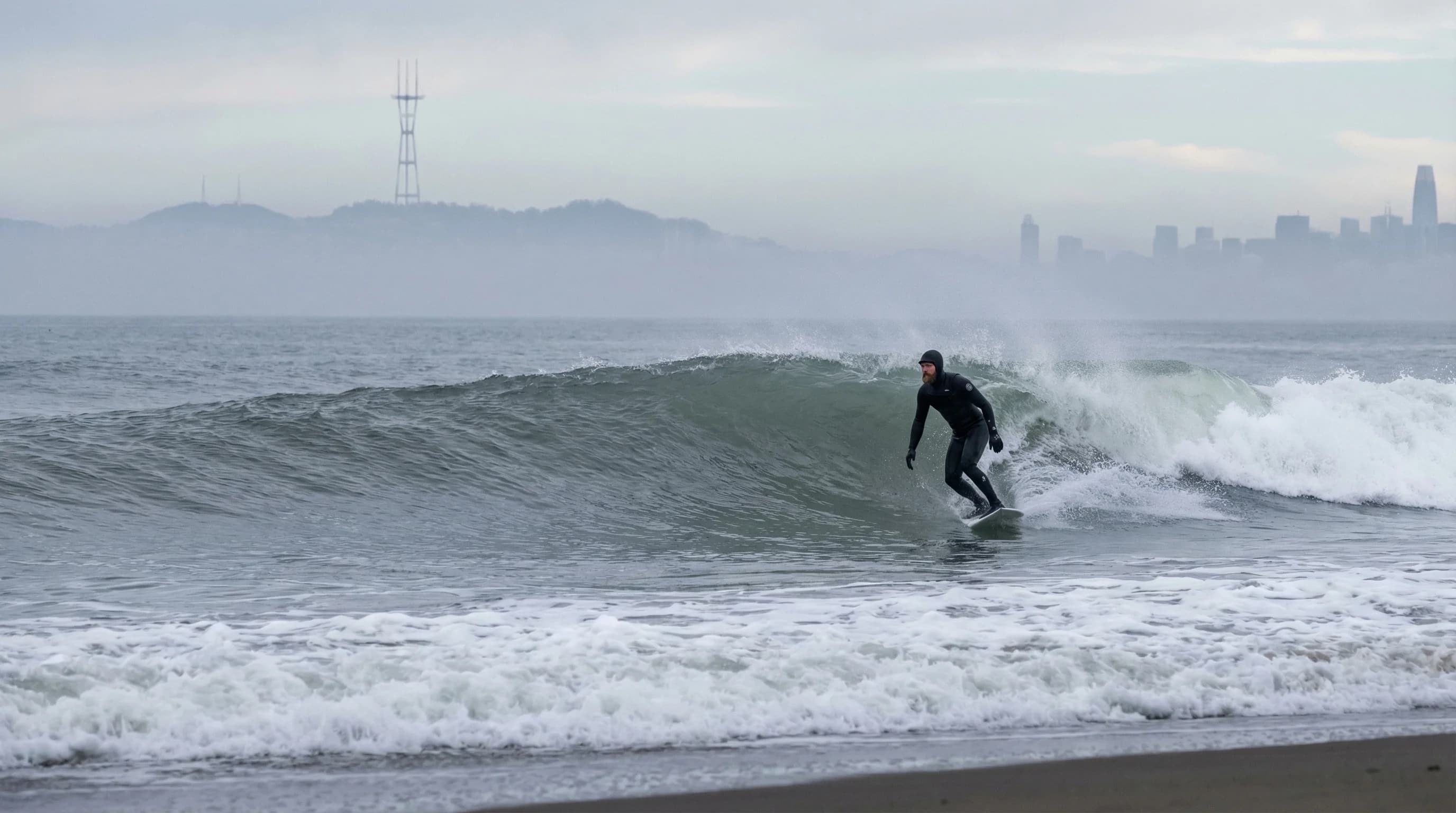
Surfing in the Bay Area means surfing in cold water and dealing with coastal fog, persistent wind, and seasonal swell patterns that are very different from what Southern California surfers experience. The tradeoff for all of that is uncrowded lineups, powerful waves, and some of the most scenically dramatic surf spots on the Pacific Coast. The best surfing conditions in the Bay Area vary significantly by season, spot, and what you are looking for: a beginner wants consistent small waves in light wind, a more experienced surfer wants swell size with manageable wind, and a big wave specialist targets the same winter storms everyone else wants to stay inside to avoid. The seasonal pattern determines where and when to go.
Fall: The Peak Season
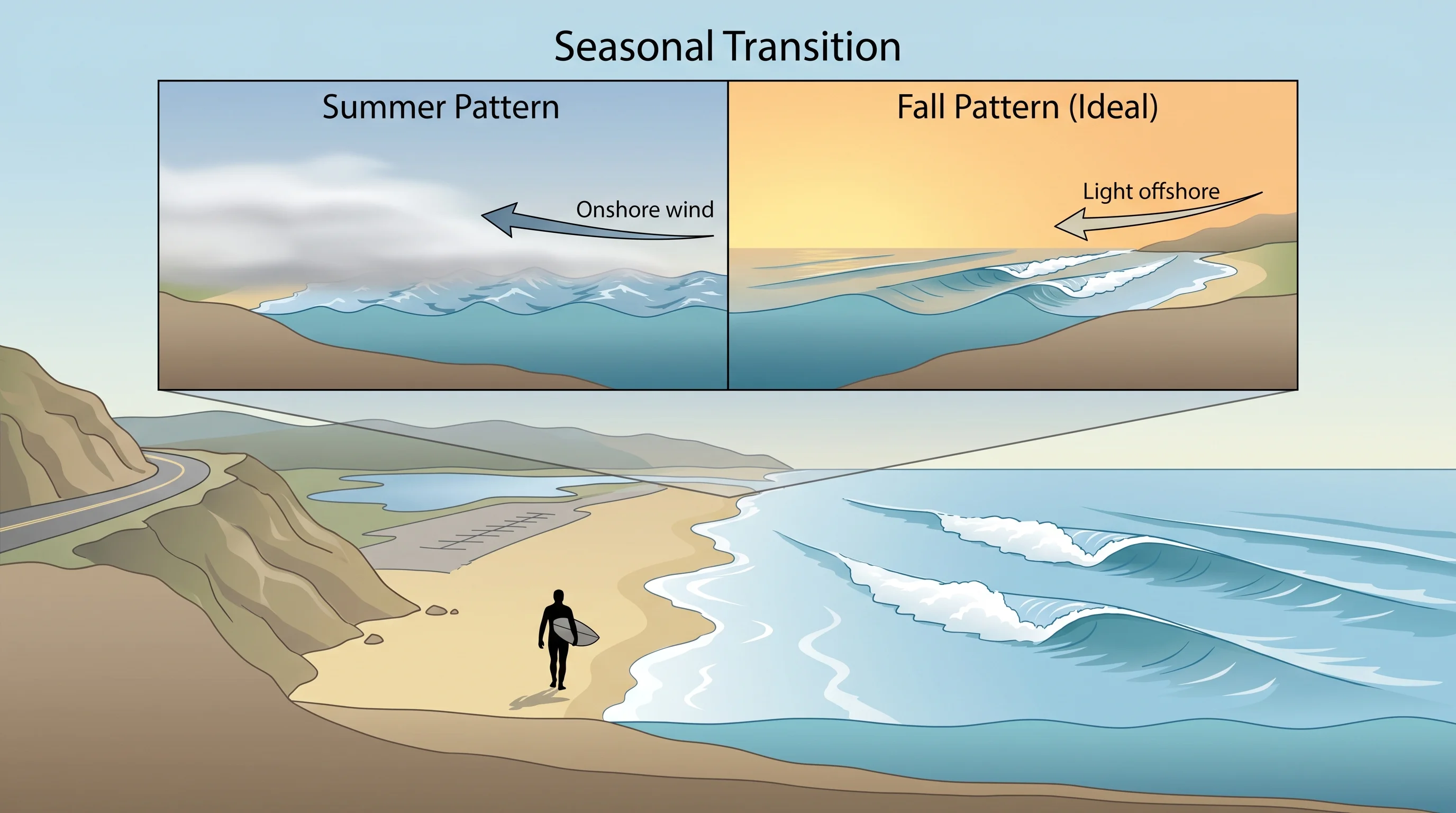
September through November is the best all-around surfing season for the Bay Area. The summer's persistent northwest wind has begun to ease, early season North Pacific swells start arriving in September and October, the crowds are smaller than summer, and the weather is often clearer and warmer than the fog-heavy summer months. The combination of moderate swell sizes (6 to 12 feet on good days), offshore or light variable winds in the morning, and drier weather makes fall the season that Bay Area surfers most look forward to. Ocean Beach in San Francisco, Pacifica, and the Half Moon Bay coastline all see their most consistent and best-shaped waves in fall.
The water temperature in fall ranges from 54 to 59 degrees Fahrenheit, cold enough to require a 4/3mm wetsuit (4mm thickness at the chest and back, 3mm on the arms) for most surfers. Experienced Bay Area surfers in fall also wear boots and hoods on the coldest days. This is not Northern California hyperbole; the California Current brings cold upwelled water from depth year-round, and the Bay Area coast is consistently colder than Southern California at the same latitude.
Winter: Big Swell Season
Winter, from November through March, brings the largest swells of the year as North Pacific storm systems generate powerful, long-period energy that travels south to California. The trade-off is that winter also brings the most onshore wind, the most rain, and the most challenging wave conditions. Expert surfers target the powerful beachbreaks and reefs during winter, but the same swells that produce world-class waves at Mavericks also close out Ocean Beach and make many Bay Area spots unsurfable. Picking the right swell and conditions window in winter is the key skill.
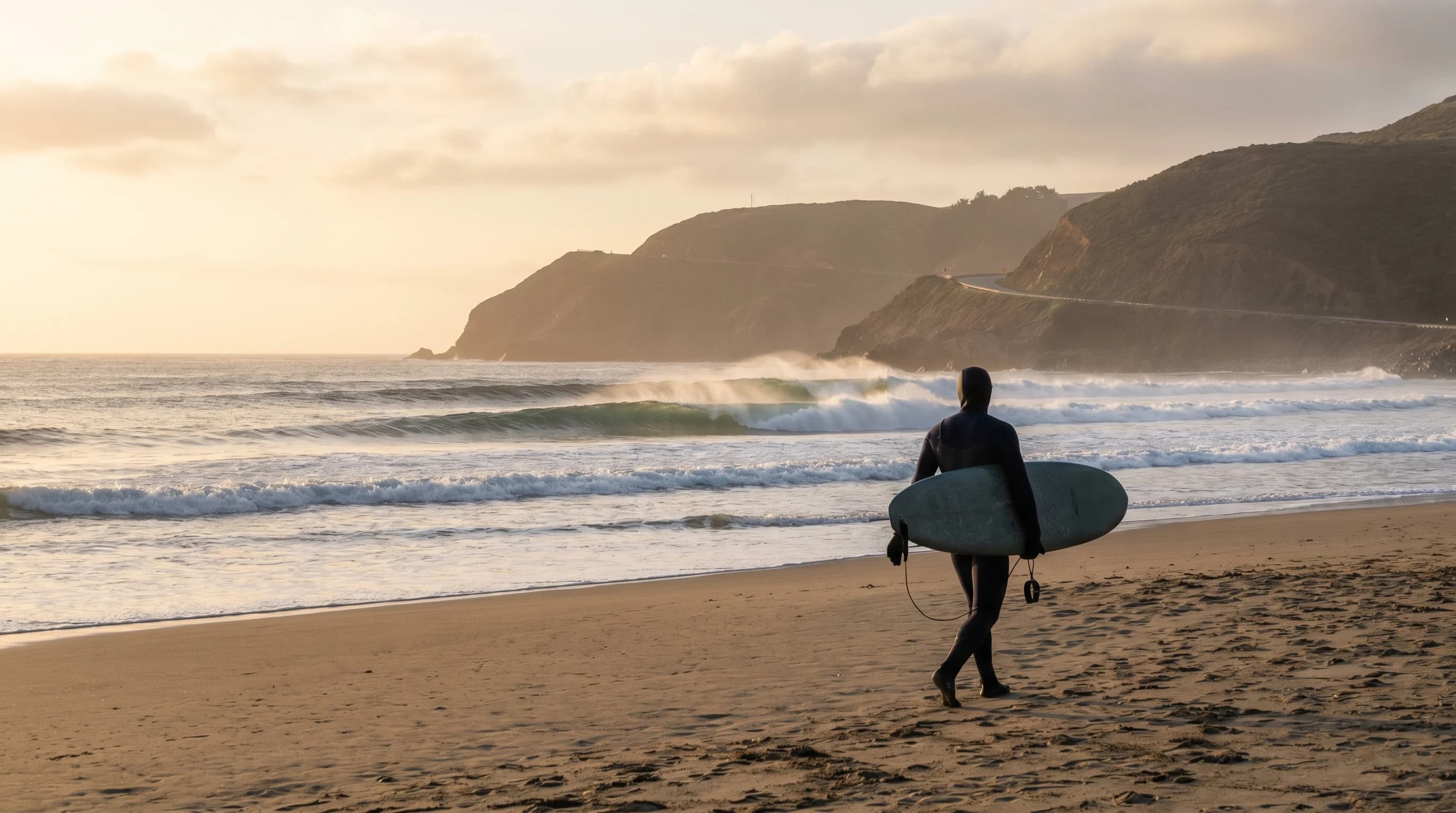
The best winter surf days are when a swell arrives but the wind has gone light or offshore, typically in the morning before the sea breeze builds, or on days when the pressure gradient is such that winds are calm or northeast. These conditions can produce spectacular surf at Ocean Beach, Linda Mar in Pacifica, and the exposed points along the San Mateo County coast. Cold rain and onshore gales during an active storm are not surfable at most spots; the window between storms, when swell remains but wind has dropped, is the target.
Summer and Spring
Summer is the off-season for Bay Area surf in terms of swell quality and size. The North Pacific swell machine has shut down, and the waves that reach Bay Area breaks come from Southern Hemisphere swells, smaller in size and less consistent, arriving from the south and southwest rather than northwest. Beginners and intermediate surfers often find summer waves more accessible: smaller, less powerful, easier to manage. The persistent afternoon northwest wind is the main obstacle in summer, making morning sessions from 7 to 10 a.m. significantly better than afternoon sessions when the sea breeze has built to 20 miles per hour or more.
Spring is transitional. March and April can see remnants of winter swell with improving weather, and the fog has not yet fully established. The water is coldest in spring, 52 to 56 degrees, because the upwelling driven by the northwest wind is intensifying. May can have excellent surf windows when north swells remain and the wind allows morning glass. For intermediate surfers, late May can be one of the more rewarding periods: swell is declining from winter but still present, crowds are minimal, and the winter storms have passed.
Best Spots for Beginners and Intermediates
Linda Mar State Beach in Pacifica is the most accessible Bay Area surf spot for beginners: gentle slope, consistent small waves, and a forgiving beach break. The parking lot is adjacent to the beach, the town of Pacifica has surf shops and rental boards, and the wave breaks in the same direction as most learned-to-surf waves. Ocean Beach in San Francisco is the iconic Bay Area break but is not appropriate for beginners on most days; it is powerful, the currents are strong, and the shape can be unpredictable. Bolinas Lagoon mouth, Stinson Beach, and the beaches around Bodega Bay to the north offer additional options for surfers at all levels. The Bay Area surf scene is spread over a long stretch of coast, and local knowledge about which spot is working on a given swell is invaluable.