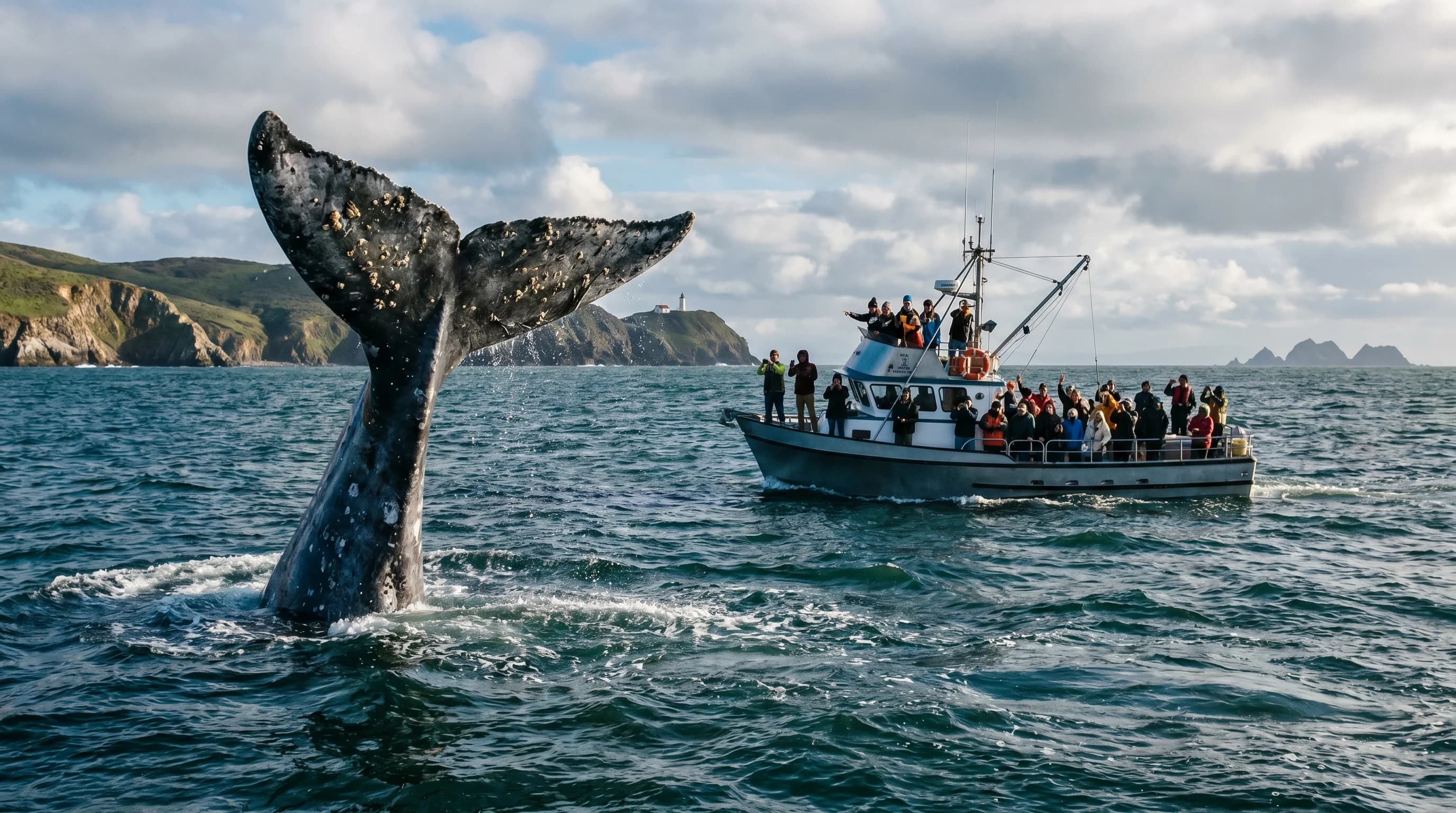
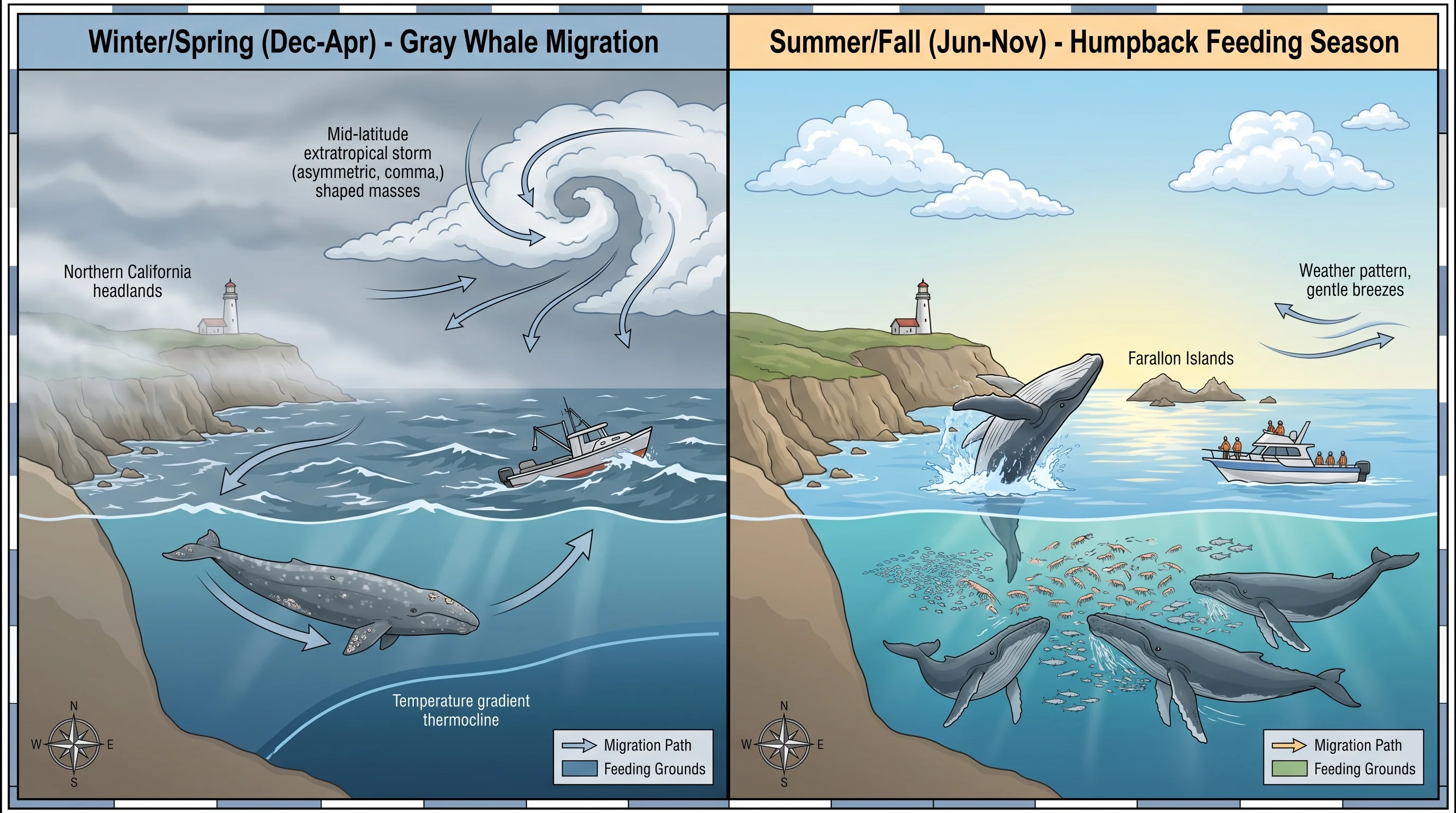
The Bay Area offers two distinct whale watching seasons, each with different species and different weather conditions. Gray whales migrate south from December through February and return north from March through May, passing close to shore along the Marin Headlands, Point Reyes, and the San Mateo coast. Humpback whales feed in the waters just outside the Golden Gate from June through November, drawn by upwelling-driven krill and anchovy concentrations. The weather you will encounter depends entirely on which season you choose, and understanding the conditions makes the difference between a spectacular outing and a cold, foggy, nauseating one.
What Is the Weather Like During Gray Whale Season?
Gray whale season runs from December through May, with peak southbound migration in January and peak northbound in March and April. Winter whale watching means cool temperatures (50-58°F), a chance of rain, and swells of 4-8 feet on typical days. The best shore-based viewing spots, like Point Reyes Lighthouse and the Marin Headlands, are exposed to wind that can exceed 20 mph. Dress in warm, wind-resistant layers and bring binoculars.
The ideal conditions for spotting gray whales are calm seas and clear skies, which happen most reliably during dry spells between winter storms. After a storm passes and before the next one arrives, the ocean often calms to 2-4 foot swells with excellent visibility. These windows typically last two to five days and are the prime time for both boat-based and shore-based whale watching. Check the forecast for at least two consecutive dry days before booking a boat trip.
What Is the Weather Like During Humpback Season?
Humpback whales are present in the waters off San Francisco from roughly June through November, with peak activity in August through October. This overlaps with the Bay Area's dry season, so rain is not a concern. However, summer marine layer fog is a significant factor. Morning boat trips in June and July frequently depart into thick fog with visibility under a quarter mile. The fog usually burns off by early afternoon, making late-morning and afternoon departures the better bet for visibility.
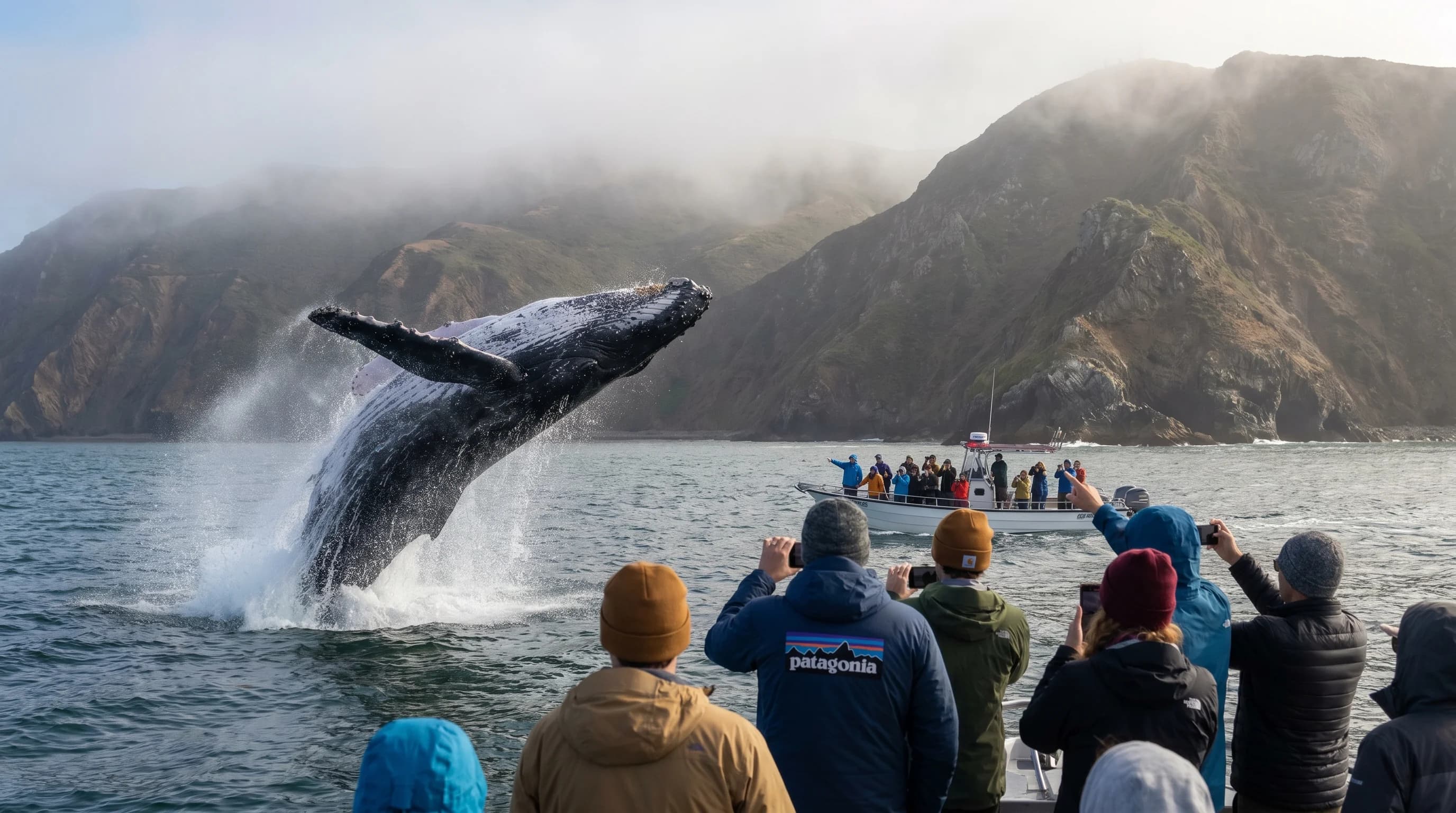
September and October are the sweet spot for humpback watching. The warm fall pattern means less fog, warmer coastal temperatures (60-68°F), and calmer seas than summer. Swells are typically 2-4 feet, wind is light in the morning, and visibility is often excellent. October in particular combines peak humpback feeding activity with the best weather conditions of the year for being on the water outside the Golden Gate.
What Are the Best Weather Conditions for Whale Watching?
Ideal whale watching weather means wind under 15 mph, swells under 5 feet, visibility above 5 miles, and no rain. Seasickness is the number one weather-related concern for boat trips, and it correlates directly with swell height and wind chop. A glassy 2-foot swell is comfortable for almost everyone. A 6-foot swell with 15 mph wind chop will make 30-40% of passengers uncomfortable.
For shore-based viewing at Point Reyes or the Marin Headlands, wind is the main adversary. Winter northwest winds of 20-30 mph make sustained viewing through binoculars difficult and turn a pleasant coastal walk into an endurance test. The calmest shore-viewing days are during high-pressure systems between storms, when winds drop below 10 mph and the ocean surface becomes smooth enough to spot whale spouts from a mile away.
How Does Location Affect Whale Watching Weather?
Half Moon Bay is partially sheltered by Pillar Point, making it slightly calmer for boat departures than trips leaving from San Francisco or Bodega Bay. The Farallon Islands, 27 miles west of the Golden Gate, offer the best humpback concentrations but the roughest conditions, with open-ocean swells and frequent afternoon wind. These trips are best reserved for calm days and strong stomachs.
The whale watching season in the Bay Area is long enough that patience pays off. If winter storms make January conditions rough, the northbound gray whale migration continues through April. If summer fog ruins a June humpback trip, September and October bring clearer skies and better viewing. The key is matching your trip timing to weather windows rather than forcing an outing into bad conditions. A whale watching trip in ideal weather is one of the best nature experiences the Bay Area offers. A trip in 8-foot swells and fog is miserable regardless of how many whales are out there.