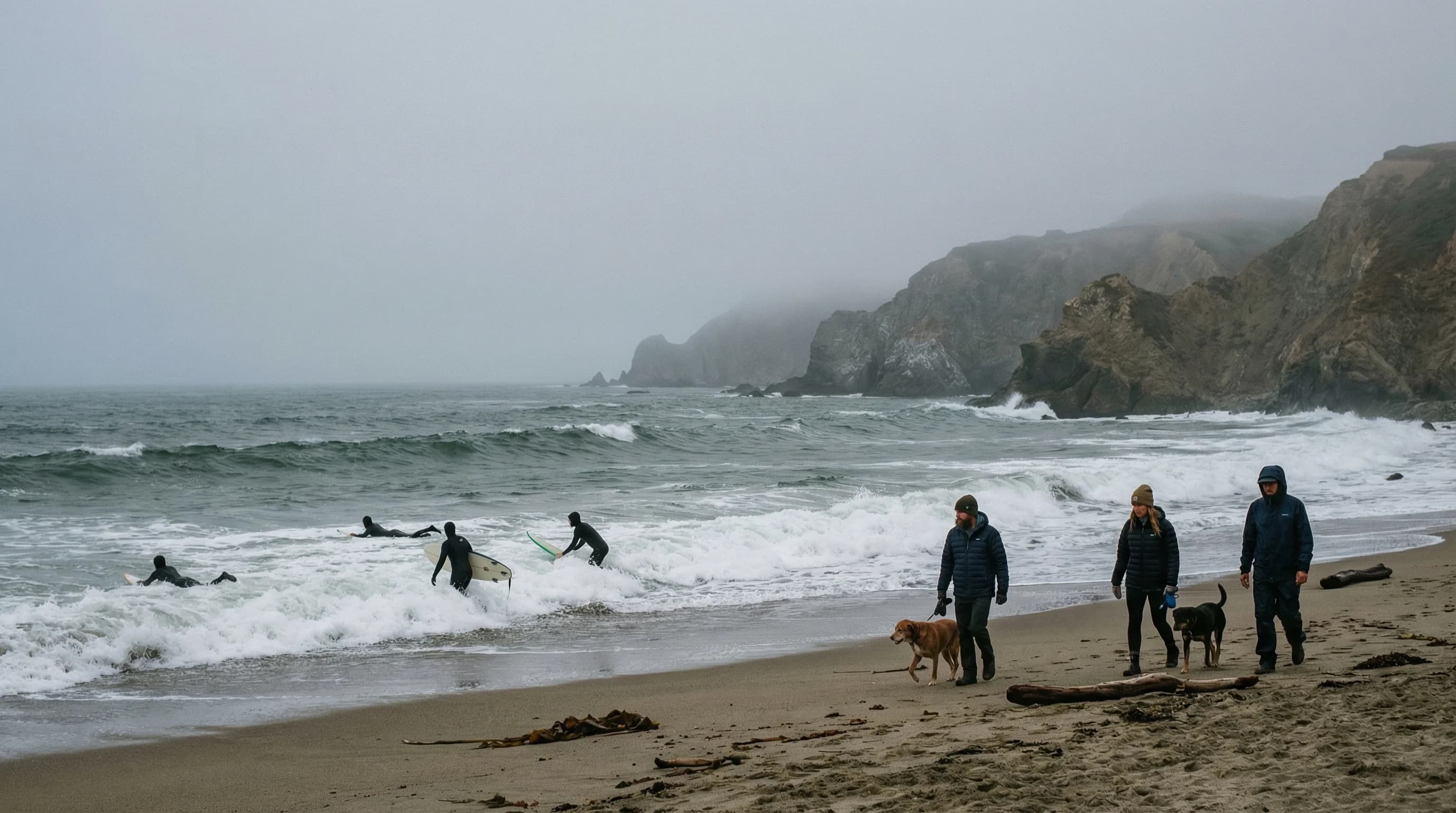
Pacifica is the Bay Area city that most fully surrenders to the marine layer. Wedged between the Pacific Ocean and the San Francisco Peninsula hills, open to the direct northwest marine flow through a series of coastal valleys, Pacifica earns its reputation as one of the foggiest inhabited places in the United States. July temperatures here average in the mid-50s Fahrenheit, and afternoon highs in the low 60s represent a good summer day. The Pacifica beach is real and the Pacific is genuinely dramatic, but visitors who come expecting warmth find something closer to a Scottish seaside town: beautiful, bracing, and utterly indifferent to the concept of beach weather.
Why Pacifica Is So Foggy
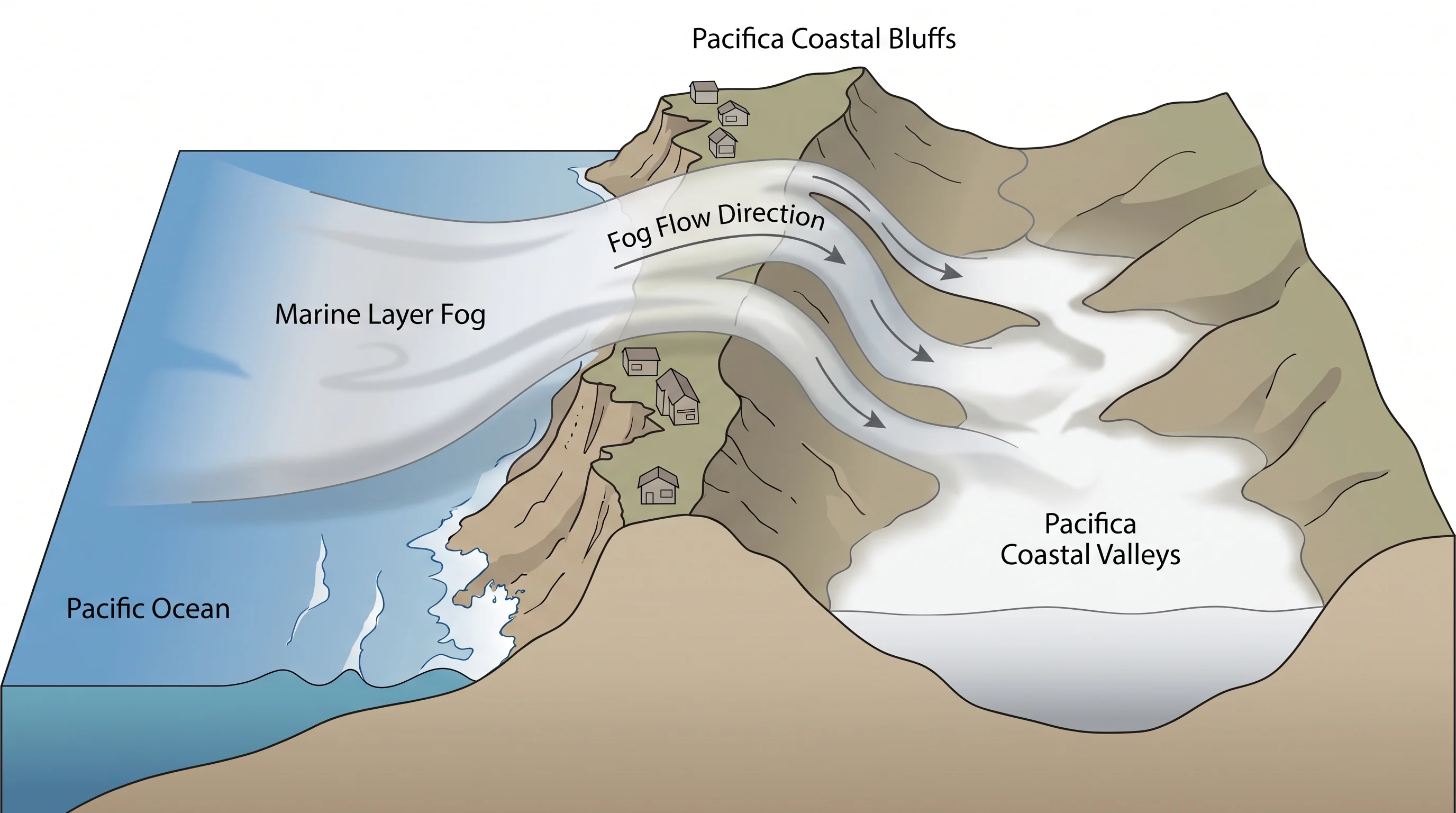
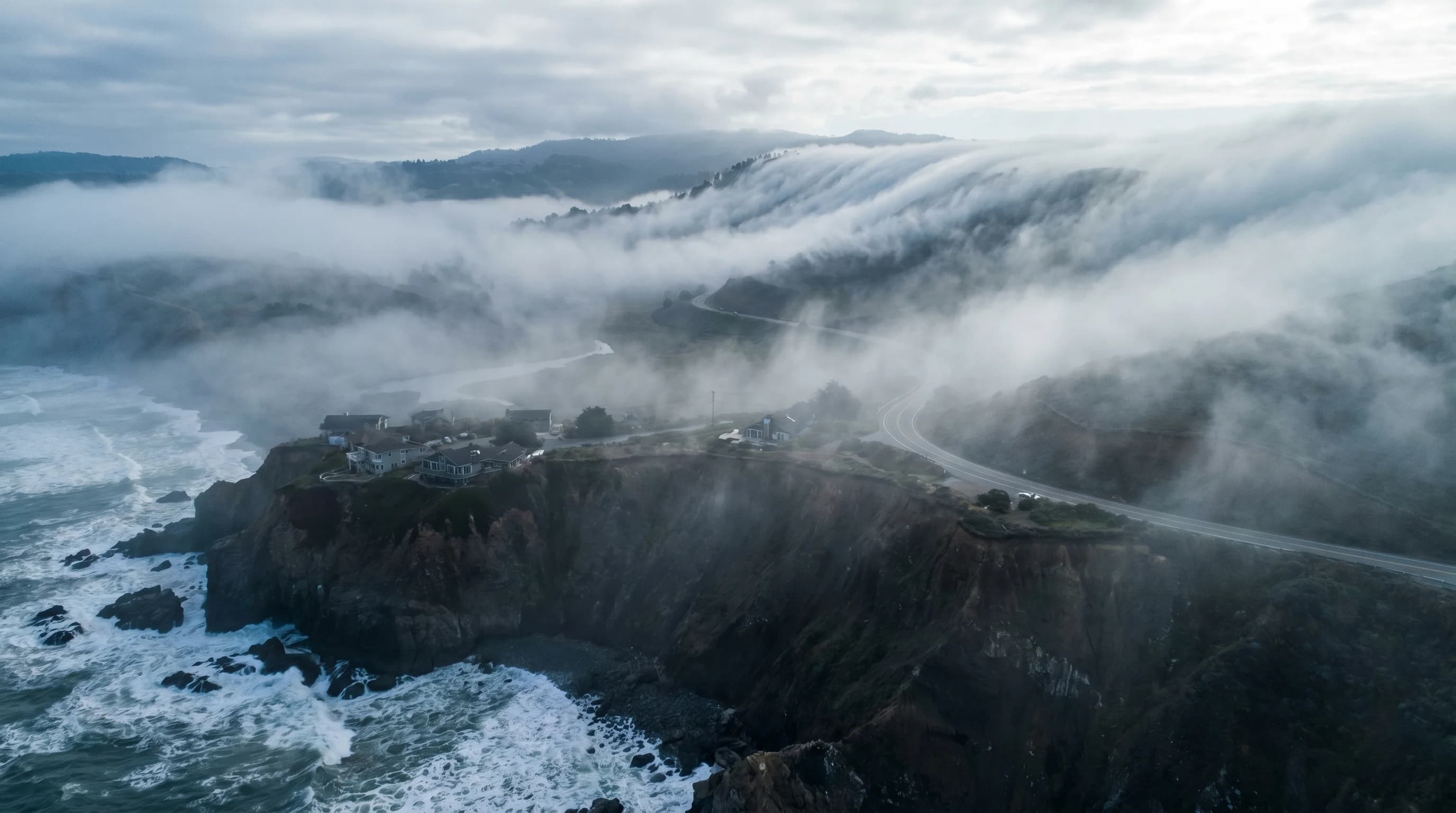
Pacifica's fog problem, or, from another perspective, its atmospheric character, comes from pure geographic exposure. The city occupies a stretch of coast south of San Francisco where the Santa Cruz Mountains meet the ocean at a low angle, creating a series of coastal valleys (Linda Mar, San Pedro Valley, Calera Creek) that open directly to the northwest. When the dominant summer wind blows from the northwest, those valleys act as marine fog funnels, channeling the marine layer directly into the inhabited areas rather than forcing it to rise over a coastal ridge.
The result is a city where the marine layer doesn't just hang off the coast; it actively infiltrates the valleys and neighborhoods. On a typical summer morning, Pacifica can be in dense fog when San Francisco's downtown is already clearing. On strong marine push days, the fog never really lifts; it just transitions from dense morning fog to thick afternoon overcast, with the temperature never climbing out of the upper 50s. Residents refer to these days as "Pacifog" days, a term that combines resignation and affection in roughly equal measure.
The Pacifica Surfing Culture
Pacifica's cold, foggy climate has produced an unexpectedly robust surfing culture. Linda Mar Beach, the main beach accessed from Highway 1, is one of the most popular beginner surf spots in Northern California. The waves are consistent, the beach is wide and accessible, and the town has a surfing infrastructure, multiple surf shops, lessons, wetsuit rentals, that has grown up around the surf break over decades. Surfers here wear 4/3mm wetsuits as standard equipment year-round, and the water rarely climbs above 56 degrees even in fall.
The appeal is the consistency. San Francisco's Ocean Beach, just north, produces excellent surf but with powerful shore break and strong rip currents that make it dangerous for beginners. Linda Mar's gentler break and beach conditions make it the Peninsula coast's surf introduction point, and on a good northwest swell in fall, the quality of the waves justifies the wetsuit and the cold.
The Surprising September-October Window
Pacifica has its own version of Indian summer, though visitors expecting Bay Area Indian summer warmth will be recalibrating expectations. When the North Pacific High weakens in late September and October, the marine layer retreats and Pacifica can have stretches of genuinely clear weather with afternoon temperatures reaching the mid-60s. This is warm for Pacifica: locals break out shorts and eat on restaurant decks in conditions that would seem chilly elsewhere. The fall swell season produces the year's best surf conditions, and the combination of warm-for-Pacifica weather and excellent waves draws surfers from throughout the Bay Area.
The broader lesson of Pacifica's climate is that Bay Area coastal weather spans an enormous range within a small geographic area. Drive a few miles north to Daly City (already warmer), another few miles to San Francisco's Mission District (warmer still), and another 20 miles over the Berkeley Hills to Walnut Creek, and you have experienced 35 degrees of summer temperature difference: from Pacifica's 57 to Walnut Creek's 92. Pacifica represents one end of that spectrum, the pure coastal version of Bay Area weather that most residents never experience because they live far enough inland to escape the marine layer's full force.