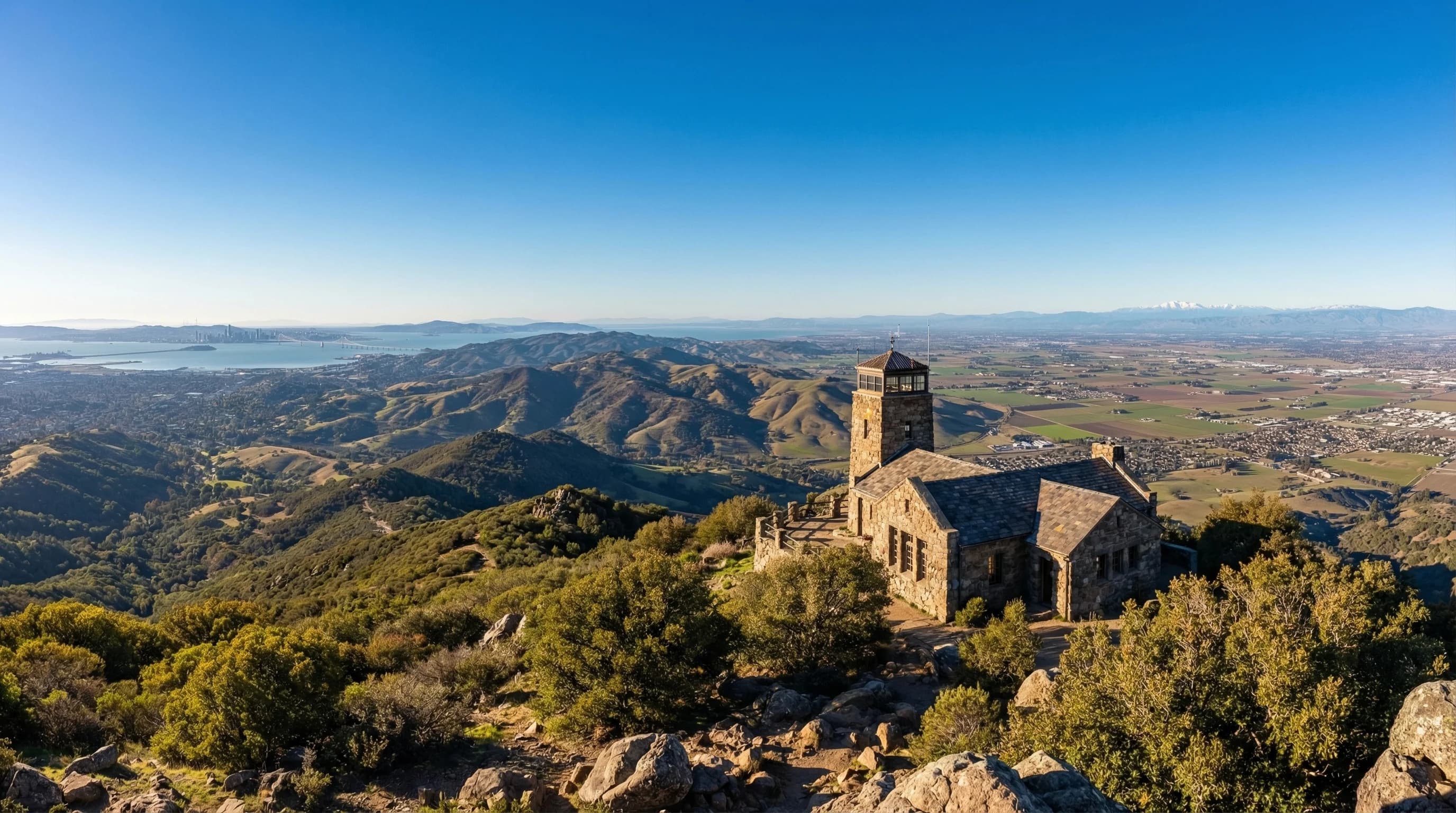
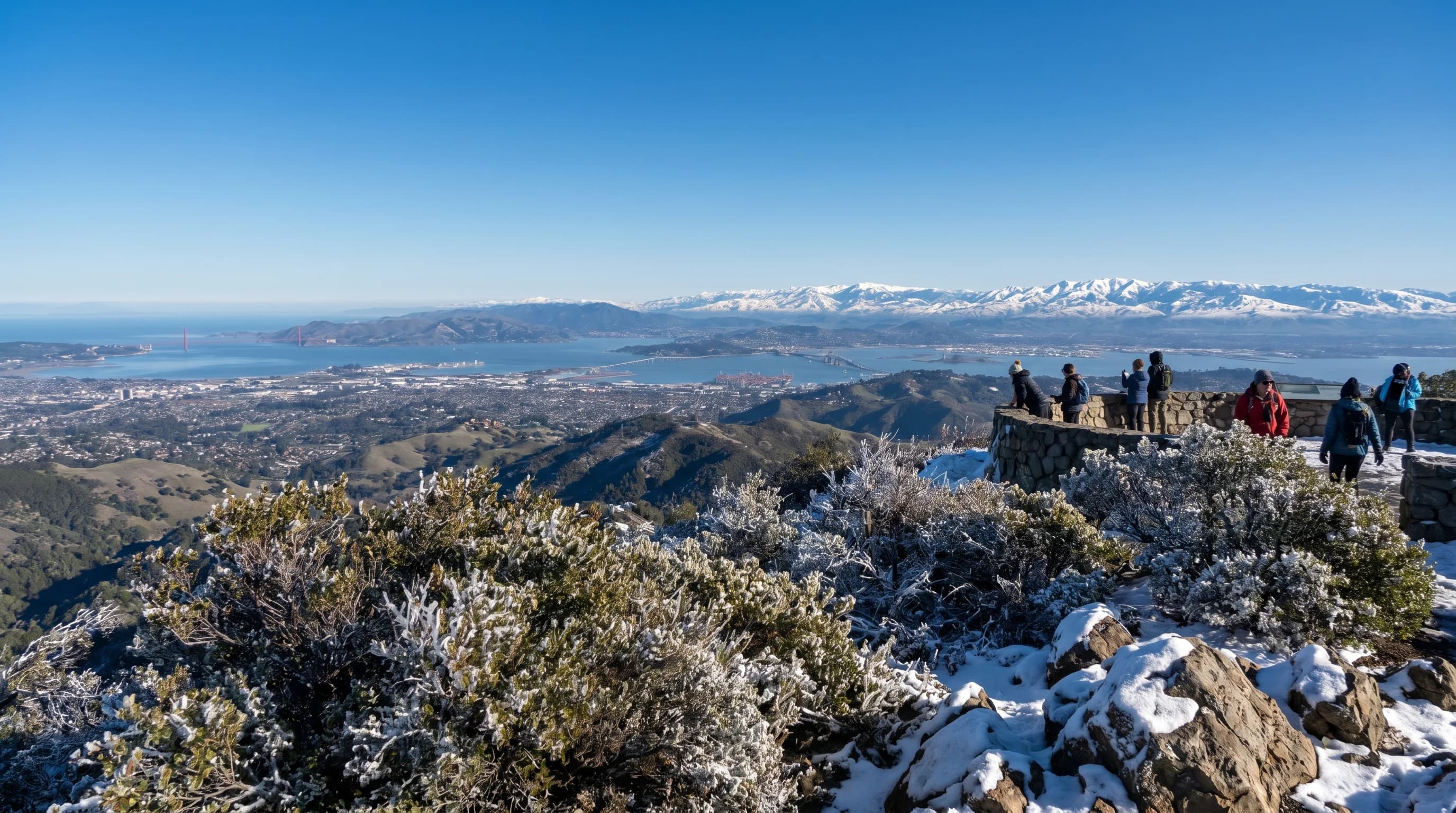
Mount Diablo rises to 3,849 feet at the center of the East Bay, visible from most of the Bay Area on clear days and visible from the Sierra Nevada on exceptional ones. The mountain is the Bay Area's dominant geographic reference point, the peak against which distances and elevations are implicitly measured, and its weather is as distinctive as its appearance. The summit occupies a climate zone entirely different from the surrounding lowlands: cooler in summer, colder in winter, frequently above the marine layer that suppresses coastal temperatures, and occasionally dusted with snow when the rest of the Bay Area is merely cold and wet. A day on Mount Diablo's summit can be among the most dramatic weather experiences the region offers.
Summit Weather vs. the Lowlands
The temperature at Mount Diablo's summit runs approximately 18 to 20 degrees Fahrenheit cooler than at the base, following the standard atmospheric lapse rate. On a July afternoon when Walnut Creek at the mountain's base reaches 92 degrees, the summit is around 72, pleasant and cool, with a breeze. On the hottest days, when Walnut Creek and Concord are suffering at 105, the summit sits in the mid-80s, warm but manageable.
In winter the inversion works the other direction. When cold air pools in the valley floor and the surrounding lowlands are locked in tule fog, the summit often rises into sunshine above the fog layer. This inversion phenomenon, warm summit, cold foggy valley, produces some of the mountain's most striking visual conditions: standing in full sunshine on the summit while looking down at a flat white sea of fog covering the East Bay cities below. The effect is more dramatic on Mount Diablo than on lower peaks because its summit rises high enough above the typical fog ceiling to be fully clear.
Wind and Fire Weather
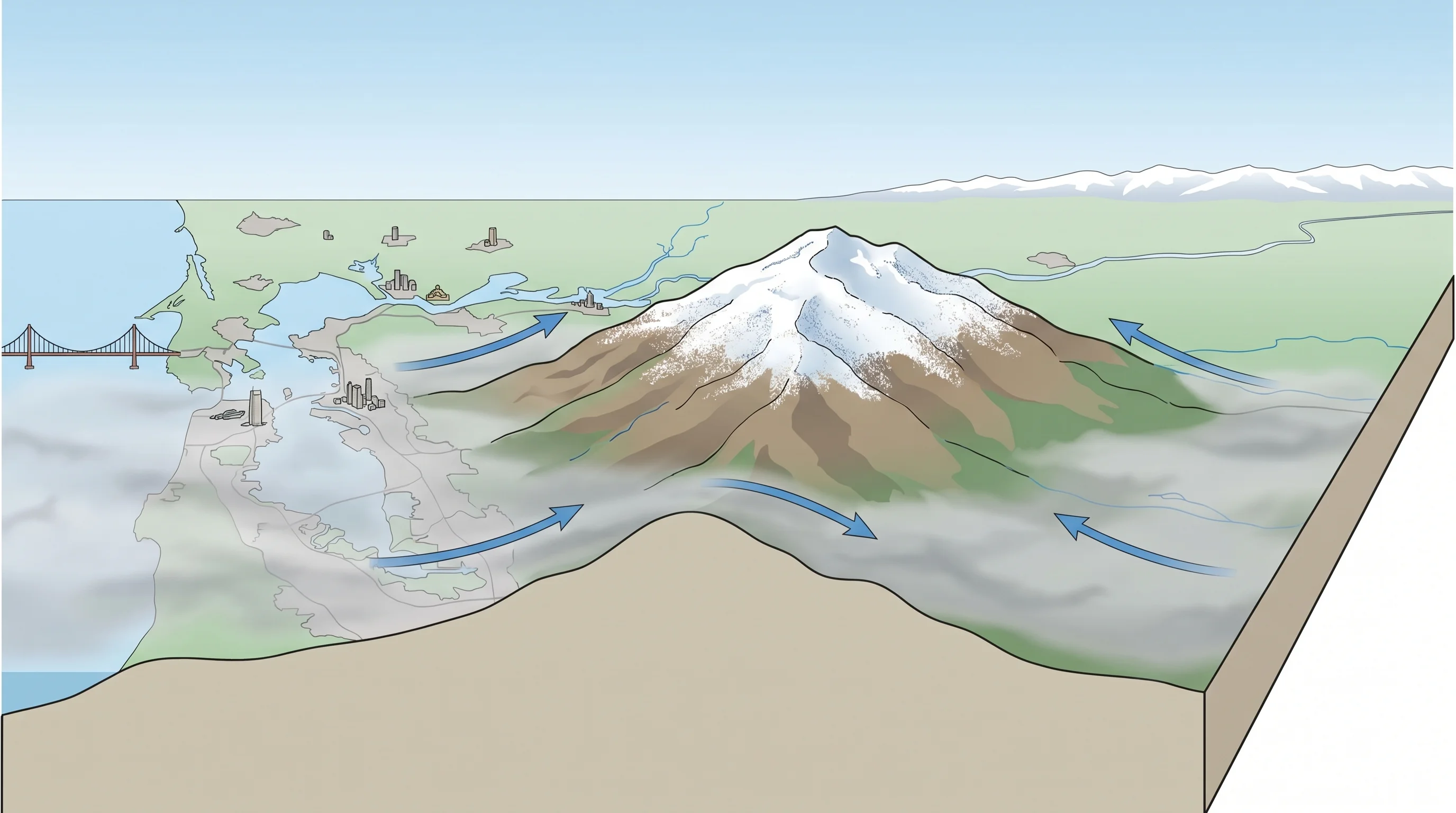
Mount Diablo is the Bay Area's most important weather generator from a fire risk perspective. The Diablo winds that drive the region's most dangerous wildfire conditions originate as offshore flow, hot, dry air from the Great Basin moving toward the coast, but they accelerate dramatically as they move over and around the mountain's flanks. The passes and canyons around Mount Diablo are among the windiest terrain in the East Bay, and the hot, dry Diablo winds that funnel through them in fall can reach 60 to 80 mph during major events.
The combination of summer drought, which cures the mountain's extensive vegetation to low moisture content, and fall Diablo winds creates one of the Bay Area's highest fire risk environments. Mount Diablo State Park has burned repeatedly in major fires, and the areas around the mountain, Clayton, Danville, Blackhawk, maintain year-round fire awareness that residents of more coastal communities find intense until they've lived through a Diablo wind event.
The Views and When to See Them
Mount Diablo is famous for the extent of its summit views. On the clearest days, typically in winter after a cold front has swept through, or in fall before the marine layer reasserts itself, the summit view encompasses the entire Bay Area, the Sacramento-San Joaquin Delta, the Central Valley, and the Sierra Nevada from Lassen Peak in the north to beyond Fresno in the south. The summit view on exceptional days can encompass 40,000 square miles of California, one of the most extensive views from any non-volcanic summit in the lower 48 states.
The best months for clear summit views are November, December, and March, after frontal systems have cleared the atmosphere of haze and smoke. October is excellent in years with early rainfall. The worst months for views are July and August, when Central Valley agricultural dust and summer haze reduce visibility significantly even on days with no cloud cover. The summit is also the Bay Area's best vantage point for watching the marine layer push inland in the late afternoon; the fog's progress through the Bay and its penetration of the various passes is visible in real time from 3,849 feet, a perspective that makes the Bay Area's complex microclimate geography immediately comprehensible.