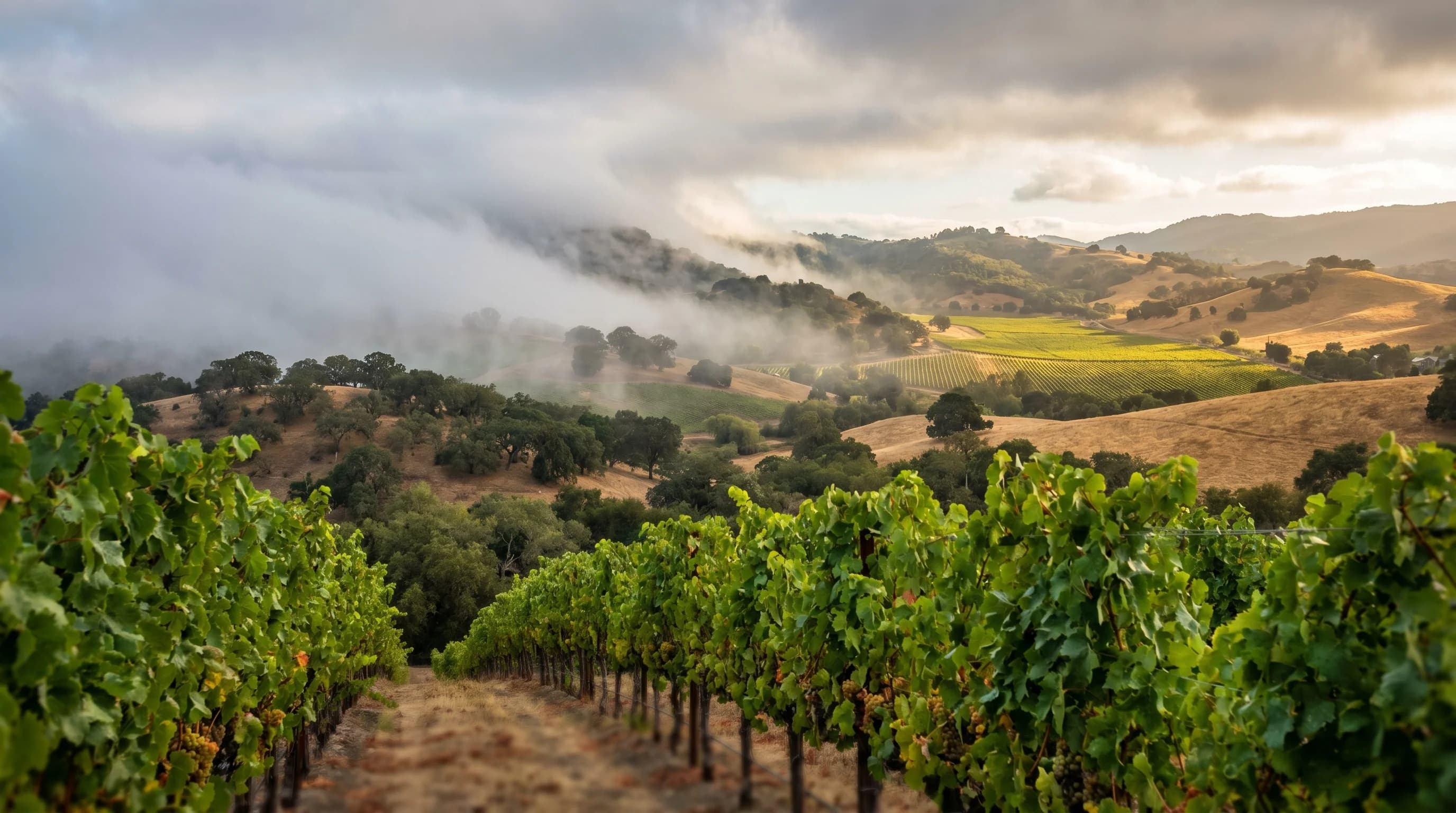
Sonoma County is the most climatically diverse wine region in California. It stretches from the fog-shrouded coast at Bodega Bay to the warm inland valleys of Healdsburg and Cloverdale, covering a range of climates that would take 200 miles of latitude to replicate in a straight line. The coastal edge averages 60 degrees F in summer, while the inland valleys hit 90-95 degrees on the same afternoon. Sonoma town itself, in the southern part of the county, sits in the moderate middle: warm enough for excellent wine grapes, cool enough that summer evenings require a jacket. This diversity is why Sonoma grows everything from cool-climate Pinot Noir along the coast to warm-climate Zinfandel inland, and why understanding the weather geography is essential for planning a visit.
How Does Sonoma's Climate Differ from Napa?
The fundamental difference is the ocean. Napa Valley is an inland valley oriented north-south, open to San Pablo Bay at its southern end but walled by mountains on its east and west sides. Sonoma County is much larger and has direct Pacific Ocean exposure along its entire western edge. The marine layer pushes through the Petaluma Gap, a low saddle in the coastal hills, and through the Russian River corridor, carrying cool, moist air deep into wine country.
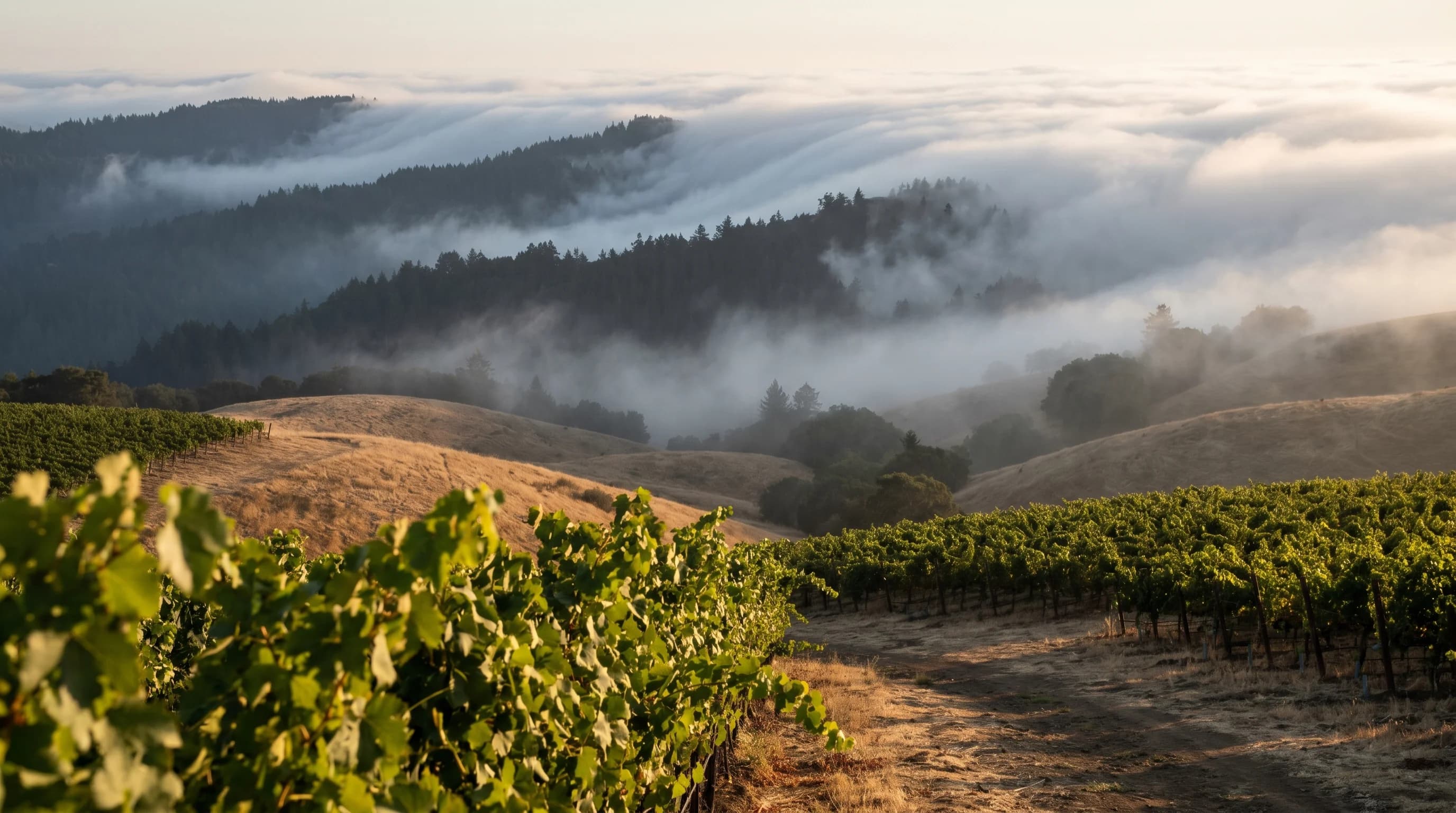
This means Sonoma has more fog, more wind, and more temperature variation within its borders than Napa. The western Sonoma Coast AVA (American Viticultural Area) is one of the coolest wine-growing regions in California, with daytime temperatures averaging just 65-72 degrees F in summer. Meanwhile, Alexander Valley in the northeast corner of the county is fully protected from marine influence and runs 90-95 degrees on summer afternoons, comparable to upper Napa Valley. Downtown Sonoma and the adjacent Carneros region occupy a middle ground, with summer highs of 80-85 degrees tempered by afternoon breezes from San Pablo Bay.
Sonoma Weather by Season
Summer in Sonoma County (June through September) is dry and warm inland, cool and foggy at the coast. Healdsburg and the Dry Creek Valley average highs of 90 degrees, while the Sonoma Coast sits at 65 degrees with persistent fog in the morning. The Petaluma Gap funnels marine air into the southern county, keeping Petaluma and Rohnert Park noticeably cooler than Santa Rosa, which is sheltered from the gap by terrain.
Winter (November through March) brings 30-40 inches of rain to most of Sonoma County, significantly more than Napa Valley's 25-30 inches. The Russian River corridor is particularly flood-prone during heavy atmospheric river events, with the river flooding Guerneville and Monte Rio several times in the past two decades. Temperatures in winter average 55-58 degrees F for highs and 38-42 degrees for lows, with frost common in the valleys.
Spring (March through May) is Sonoma's most beautiful season. Green hills, wildflowers, comfortable temperatures of 65-75 degrees, and the vineyards coming to life after dormancy. Fall (September through November) brings harvest, warm temperatures, and fire risk. The 2017 Tubbs Fire devastated parts of Santa Rosa, and the 2019 Kincade Fire forced the evacuation of nearly 200,000 Sonoma County residents.
When Is the Best Time to Visit Sonoma?
September and October are the best months for weather and wine. Temperatures are warm, harvest is underway, and the landscape is golden. Spring (April and May) is the best alternative: comfortable temperatures, green scenery, fewer crowds. The coast is best visited on clear fall afternoons, when the fog has burned off and the views from the Sonoma Coast headlands stretch for miles. Planning a Sonoma trip means deciding what part of the county you want to experience, because the weather at the coast and the weather in Healdsburg are genuinely different climates on the same day.