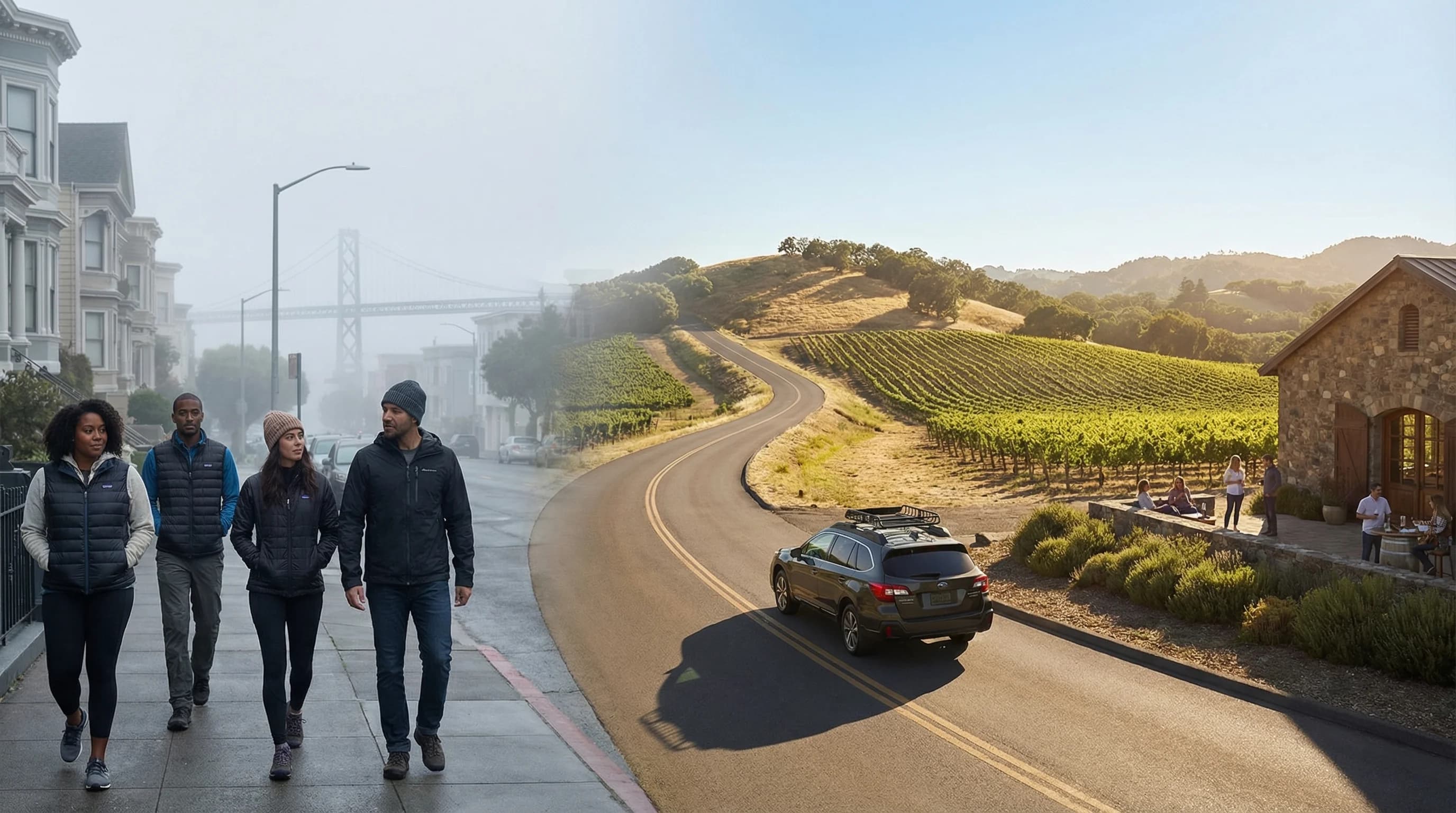
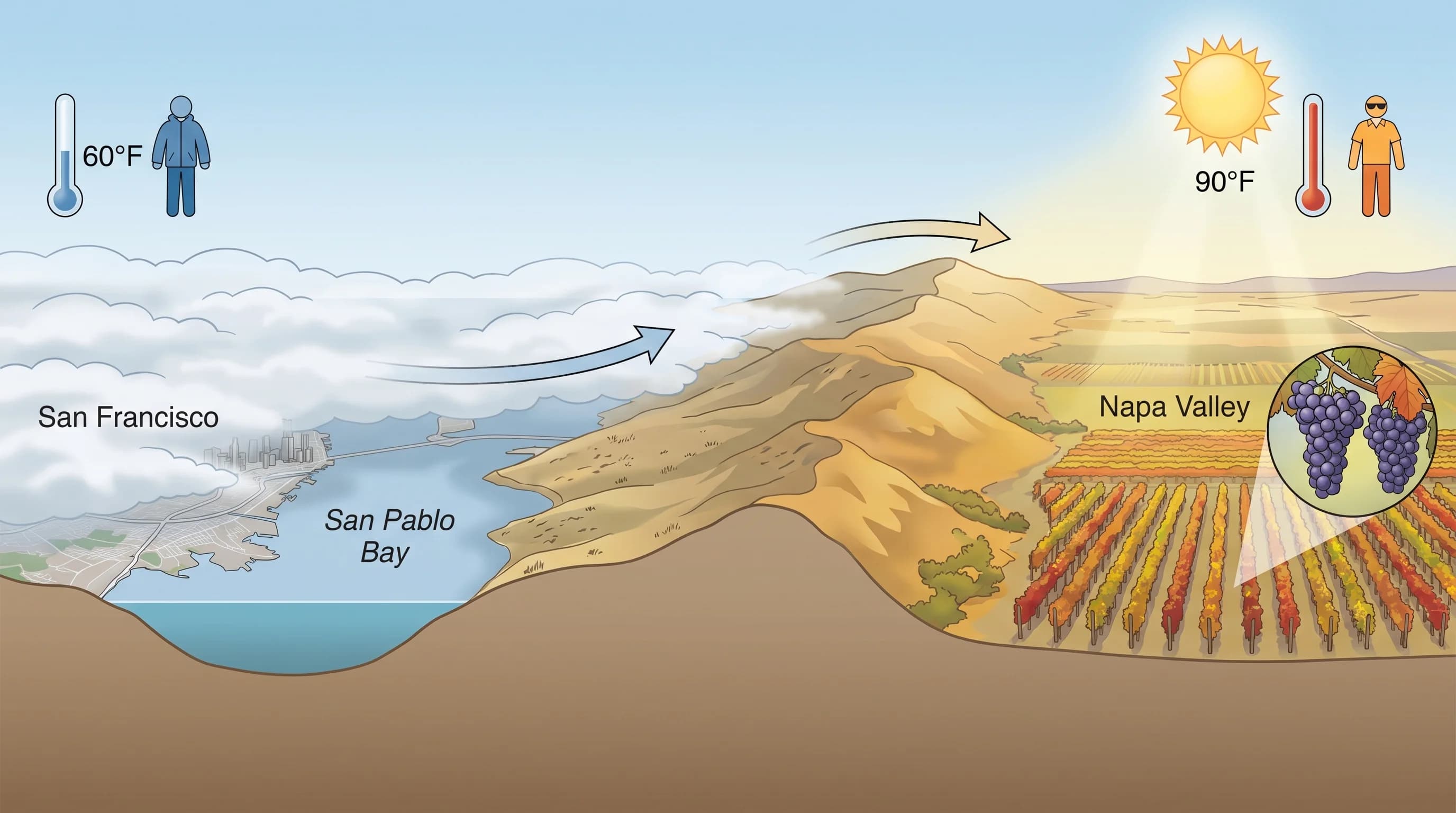
A day trip to Napa or Sonoma from San Francisco means driving into a different climate. The same atmospheric forces that keep San Francisco foggy and cool in summer turn the wine country warm and sunny. On a summer day when the city is 55 degrees under marine layer, the Napa Valley is 92 degrees under blue sky. In October, when fog retreats and Indian summer arrives, both destinations are at their best simultaneously. The weather question is not whether wine country is nicer than the city, it almost always is in summer, but which month gives you the specific combination of weather, scenery, and access that makes the visit most worthwhile.
Best Months for a Napa or Sonoma Day Trip
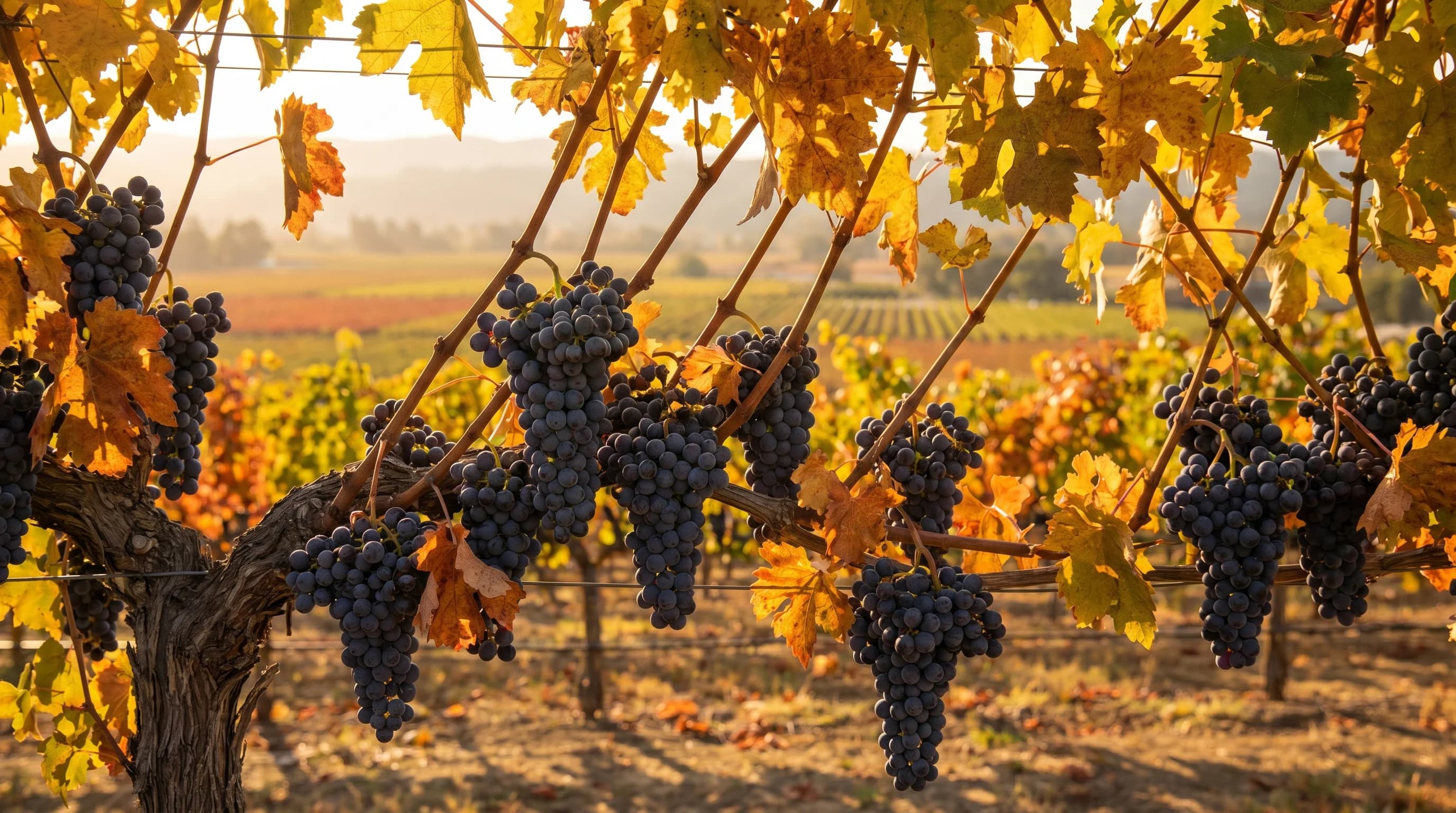
October is the single best month for a wine country day trip. The harvest is underway or just completing, Indian summer warmth keeps afternoons in the low to mid-80s Fahrenheit, morning fog clears early, and the vine foliage turns gold before the leaves drop. Tasting rooms are busy but the pace slows from the peak summer rush. The agricultural character of the valley is most visible: grapes being picked and processed, the smell of fermenting juice, trucks moving between vineyards. It is the experience that people imagine when they think of Napa.
September is nearly as good and often less crowded than October. The harvest is just beginning or about to begin for the later-ripening red varieties, and the weather is warm and reliably clear. Prices at lodging and tasting room experiences are sometimes lower in September than at the October peak.
Spring, April and May, is the second-best window. The valley is green, temperatures are mild in the 70s Fahrenheit, the vines are leafing out and flowering, and the crowds are far thinner than fall. Rain is possible in April but usually clears within a day, and between spring storms the valley is spectacularly vivid. May is particularly reliable: the rainy season is nearly over, the hillsides are still green, and summer heat has not yet arrived.
What to Expect in Summer
Summer day trips to wine country are popular but come with a weather caveat: it is hot. Napa Valley in July and August regularly reaches 90 to 95 degrees Fahrenheit, and during heat waves it exceeds 100. Many tasting rooms and wineries have adapted with shaded patios, air-conditioned barrel rooms, and rosé by the glass for the visitors who want to spend time outdoors. The heat is manageable if you plan around it: tasting room visits in the morning and early afternoon, shaded lunch, and reliance on air-conditioned spaces in the peak afternoon hours.
The wine country summer also has something that is easy to overlook: the dramatic afternoon cooling. When the Bay's marine push arrives by late afternoon, temperatures in Napa drop 15 to 20 degrees in under an hour. A 95-degree afternoon becomes a 65-degree evening rapidly. This diurnal swing is one of the wine region's most distinctive weather features and one of the more pleasant surprises for visitors who arrive braced for sustained heat.
Napa vs. Sonoma: Weather Differences
Napa Valley and Sonoma Valley are geographically close but have distinct climates that matter for a day trip. Napa is a more contained valley with a sharper temperature range, hotter at the northern end (Calistoga) and cooler at the southern end (Carneros near the Bay). Sonoma Valley is wider and more open to the Bay's influence, generally running a few degrees cooler than comparable parts of Napa on hot days.
The Russian River Valley in Sonoma County is a distinctly cooler destination than either Napa Valley or Sonoma Valley proper. The fog from the Sonoma Coast pushes into the Russian River Valley through the river gap, keeping morning fog common through most of summer. A Russian River Valley day trip in July means a cool, foggy morning drive through Guerneville and Healdsburg, with the fog burning off by noon for a warm afternoon of wine tasting. It is a different experience from the hot, clear Napa day, not better or worse, but distinctly different.
For the weather-optimized wine country day trip, October Napa or September Sonoma Valley offer the clearest, warmest, most photogenic conditions. For those who prefer cooler temperatures and are happy with morning fog, the Russian River Valley or southern Carneros AVA provide relief even in midsummer. The Bay Area's microclimate geography ensures that wine country visitors can find their preferred temperature range somewhere within reach, whatever time of year they visit.