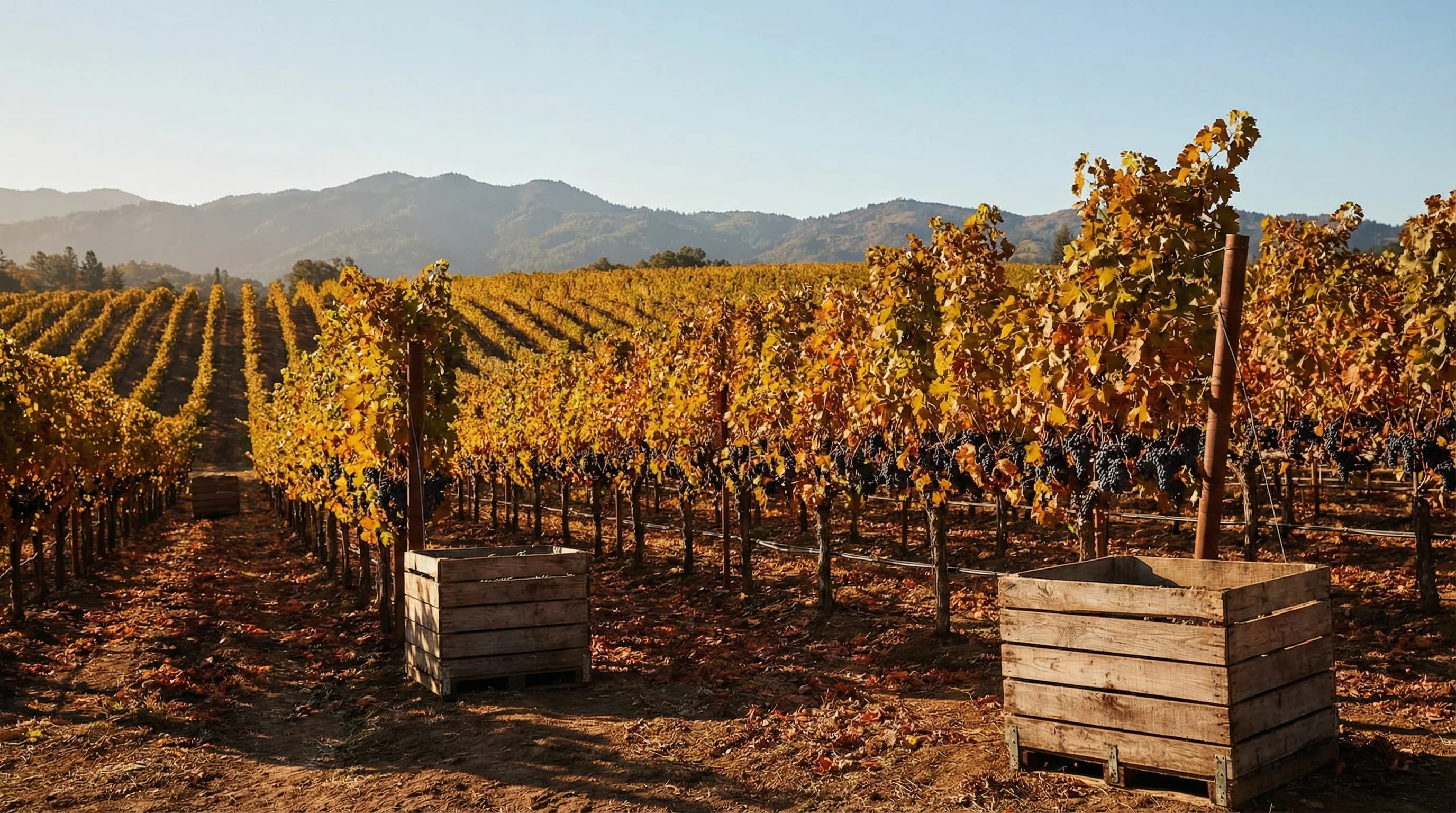
Napa Valley has a wine-country climate that operates on its own seasonal logic, distinct from both the coast and the inland Bay Area. The valley's weather shapes everything from harvest timing to tourist crowds, and every month brings a genuinely different experience. The short version: winter is cool, rainy, and quiet; spring is green, mild, and beautiful; summer is hot, dry, and busy; fall brings the harvest heat and crowds that define Napa's peak season. Each month has its particular character, and knowing what to expect turns a Napa visit from a weather lottery into a deliberate choice.
Winter: December Through February
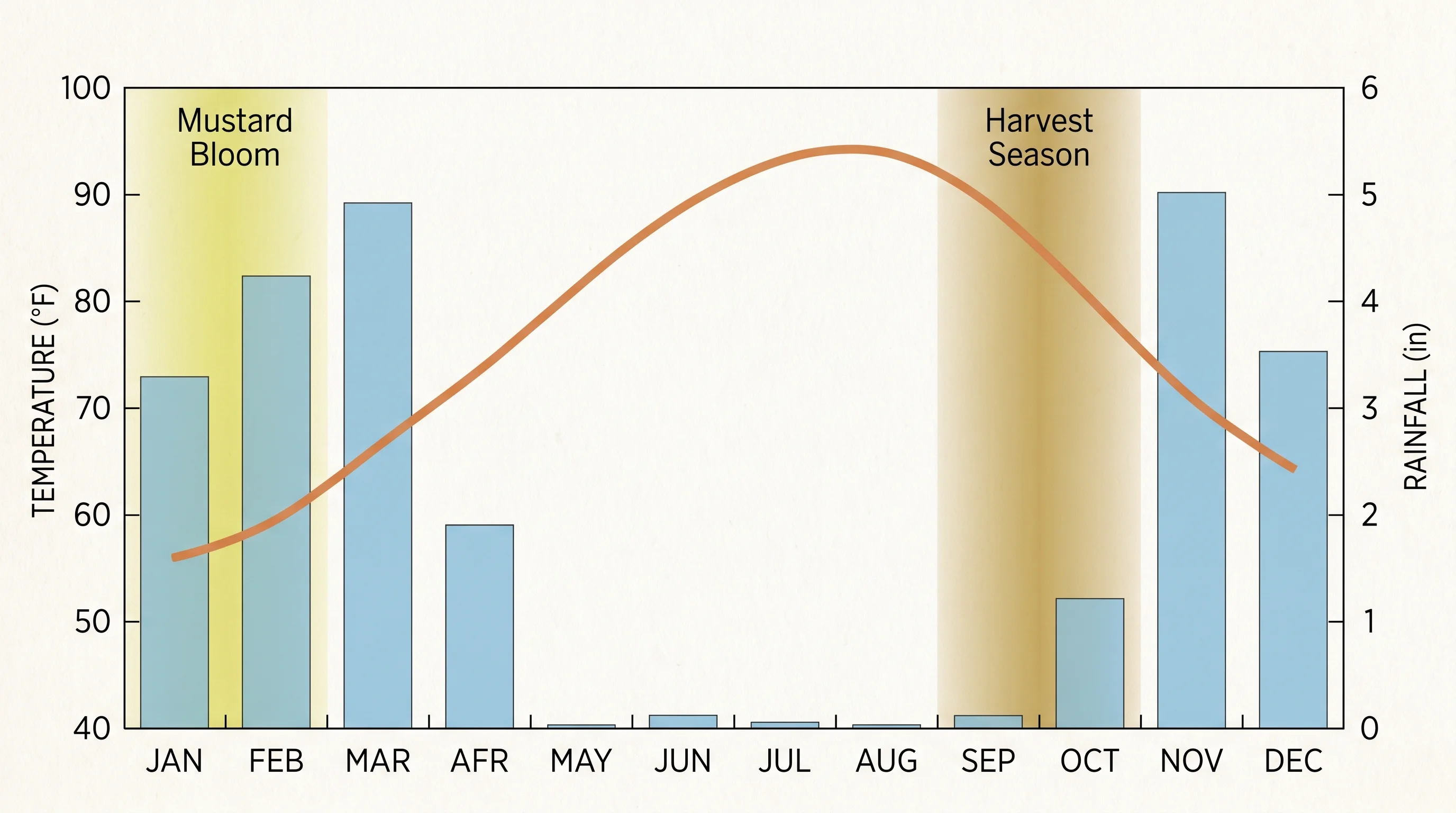
Napa Valley winters are mild by most standards but genuinely rainy. December, January, and February are the three wettest months, accounting for roughly half the valley's annual precipitation of around 25 inches. Storms arrive from the Pacific on an irregular schedule: sometimes a week of steady rain, sometimes two weeks of clear mild weather. Daytime highs in the valley run in the mid-50s to low 60s Fahrenheit, with overnight lows that can drop into the upper 20s on the valley floor during cold air pooling events.
The vines are dormant in winter and the valley is at its quietest for tourism. Tasting rooms are less crowded, prices are often lower, and the valley has a stripped-down, working-agricultural character that peak-season visitors rarely see. The surrounding hills are green from the early winter rains, and on clear days between storms, the light has a golden winter quality that is genuinely beautiful. Mustard, planted as a cover crop between vine rows, blooms yellow across the valley in January and February, making it one of the most visually distinctive times to visit.
Spring: March Through May
Spring is Napa Valley's most beautiful season and one of its most overlooked. The rains taper off in March and April, the vines begin to bud and leaf out, and the hills are still green from winter moisture before the summer dry season turns them gold. Wildflowers appear on the surrounding slopes. Daytime temperatures climb through the 60s and into the 70s Fahrenheit as the season progresses.
Bud break, the moment when the vine shoots emerge in spring, is one of the most anxiety-producing events in the vineyard calendar. It marks the beginning of the growing season and the point when the vines become vulnerable to frost. Late frost events in April can be devastating, which is why frost protection infrastructure (wind machines, helicopters, overhead sprinklers) is standard equipment in valley floor vineyards. The valley floor is frost-prone in ways that hillside sites above the fog line are not, which is one reason hillside vineyards command premium prices.
Summer: June Through August
Summer is hot and dry in Napa Valley. Daily temperatures in the mid-valley climb to 90 to 95 degrees Fahrenheit most afternoons, with occasional heat spikes above 100 during inland heat events. The Bay's marine push arrives each afternoon, dropping temperatures dramatically, sometimes 20 to 25 degrees in an hour, and making summer evenings in Napa genuinely pleasant after the day's heat.
Rainfall is essentially zero from June through September. The valley turns golden as the green spring grasses dry out, and the landscape takes on the iconic California summer look: brown hills, green vine rows, blue sky. Tourism is at its highest through the summer, and the combination of heat and crowds makes afternoon tasting room visits less pleasant than spring or fall. The best summer strategy is to visit tasting rooms in the morning before the day heats up and retreat to air-conditioned restaurants and shaded outdoor spaces in the afternoon.
Fall: September Through November: Harvest Season
Fall is the season Napa Valley was made for. September and October bring Indian summer conditions: warm, clear days in the 80s and 90s Fahrenheit, cool nights, low humidity, and the accumulated fruit of the growing season ready for harvest. The harvest begins with sparkling wine varieties in August and ends with the last Cabernet Sauvignon clusters picked in October or early November, depending on the year.
October is the peak month for tourism as well as harvest, and the valley is busy. Crush, the period when grapes are being picked and processed, fills the air with the sweet fermentation smell of new wine. The combination of golden vineyard light, active harvests, and perfect weather makes October Napa's most photographed month. The marine layer has retreated enough that mornings are often clear rather than foggy, and the afternoons are warm without the intense heat of summer.
November marks the transition back toward winter. The first rains usually arrive in November, the harvest is complete, and the vines lose their leaves and return to dormancy. It can be a spectacular time in the valley: vivid vine foliage, dramatic storm light, and the post-harvest quiet settling over the wine country. The weather becomes unpredictable as the storm season begins, but between storms, November days in Napa can be among the year's most beautiful.