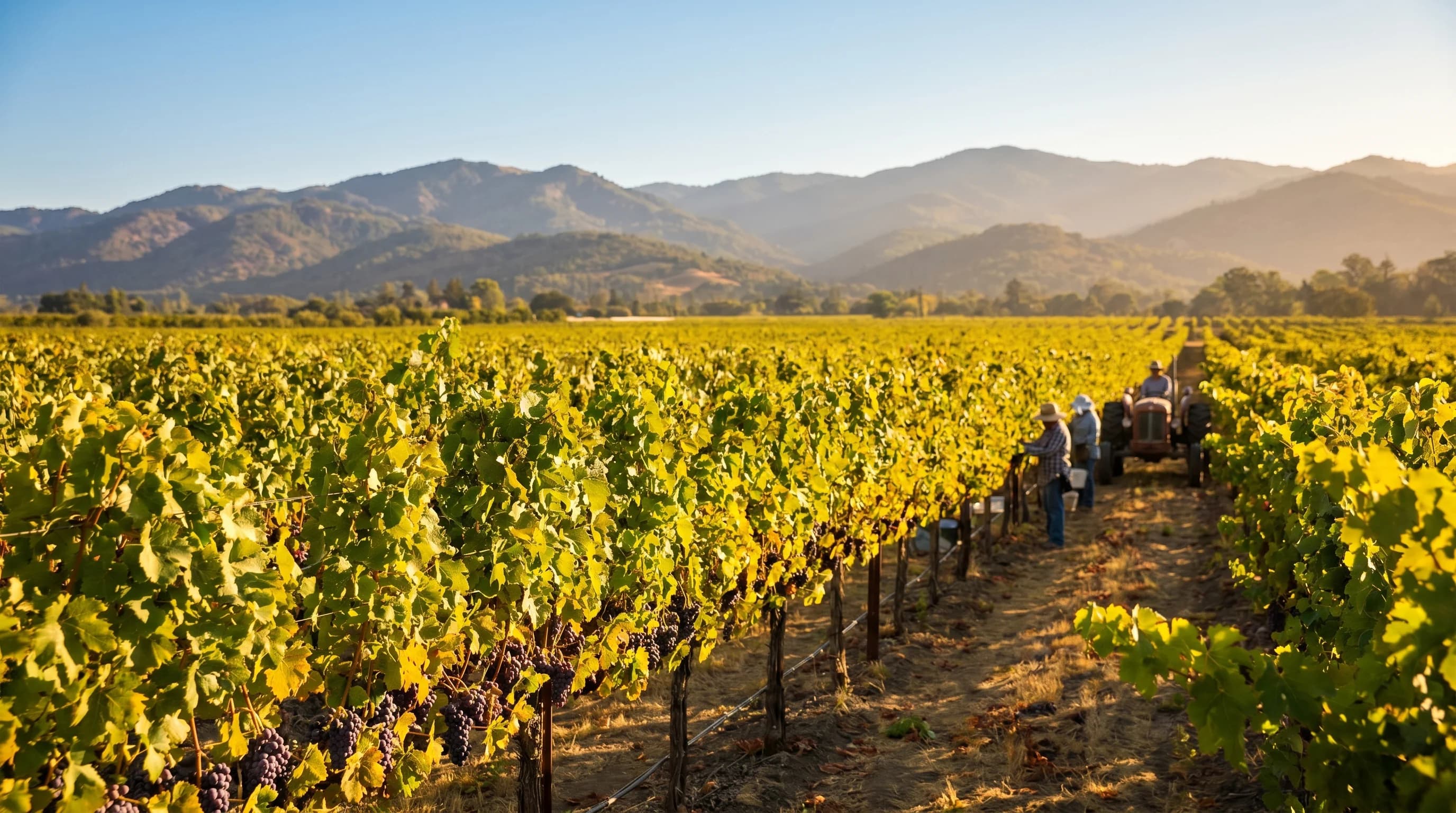
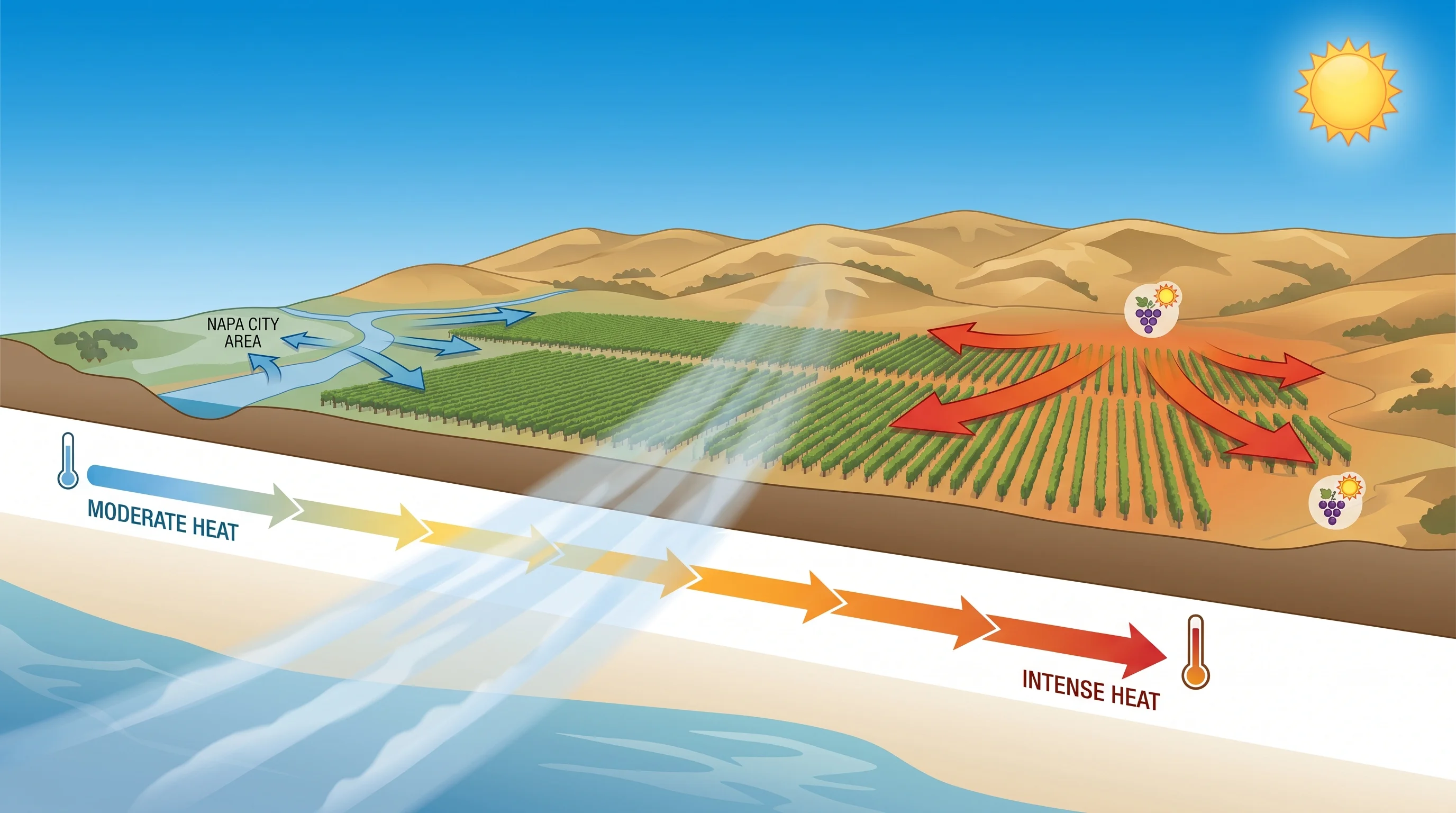
Napa Valley has a Mediterranean climate with hot, dry summers and mild, wet winters, but it is also a region of sharp microclimatic gradients driven by its narrow valley geography. Downtown Napa averages 78 degrees F in July while Calistoga at the valley's northern end routinely hits 95 degrees on the same afternoon. The valley runs roughly 30 miles from south to north, gaining elevation and distance from the cooling influence of San Pablo Bay with each mile. Understanding Napa's weather patterns is essential for planning vineyard visits, outdoor tasting, and the harvest season experiences that draw millions of visitors each year.
What Is Napa Valley Weather Like in Summer?
Summer in Napa Valley is hot and dry. Average highs from June through August range from 82 degrees F in downtown Napa to 93 degrees in Calistoga. Rain is essentially nonexistent from May through October, and humidity is low enough that even hot days feel less oppressive than equivalent temperatures in the eastern United States. The delta breeze reaches the southern end of the valley on most summer evenings, dropping temperatures 15 to 20 degrees after sunset. This diurnal temperature swing, hot days and cool nights, is one of the features that makes Napa one of the world's great wine-growing regions: grapes develop flavor complexity from warm afternoon sun while retaining acidity from cool nights.
The marine influence fades as you travel north up the valley. Southern Napa sits closer to San Pablo Bay and receives more fog and cool air, keeping temperatures moderate. By Calistoga, the valley is fully inland, surrounded by mountains, and temperatures can exceed 100 degrees on the hottest days. The monthly weather pattern reflects this: Calistoga's September average is 92 degrees while downtown Napa's is 83 degrees.
What Is Napa Valley Weather Like in Winter?
Winter in Napa is mild and rainy. Average highs from December through February are 55-58 degrees F, with lows around 38-42 degrees F. Frost is common in the valley floor during clear, calm winter nights, and occasional hard freezes can damage young vines. Annual rainfall averages about 25-30 inches, concentrated almost entirely between November and March. The Napa River, which runs through the center of the valley, floods periodically during heavy atmospheric river events, with downtown Napa historically susceptible to flooding before the city completed its flood control project.
When Is the Best Time to Visit Napa Valley?
The best weather months for Napa Valley visits are September and October, which combine warm temperatures (80-90 degrees), minimal rain, golden light, and harvest season activity at the wineries. September is the busiest harvest month, when the valley is alive with grape picking, crush operations, and the sweet smell of fermenting juice. October offers similar temperatures with thinner crowds and the first hints of fall color in the vineyard leaves.
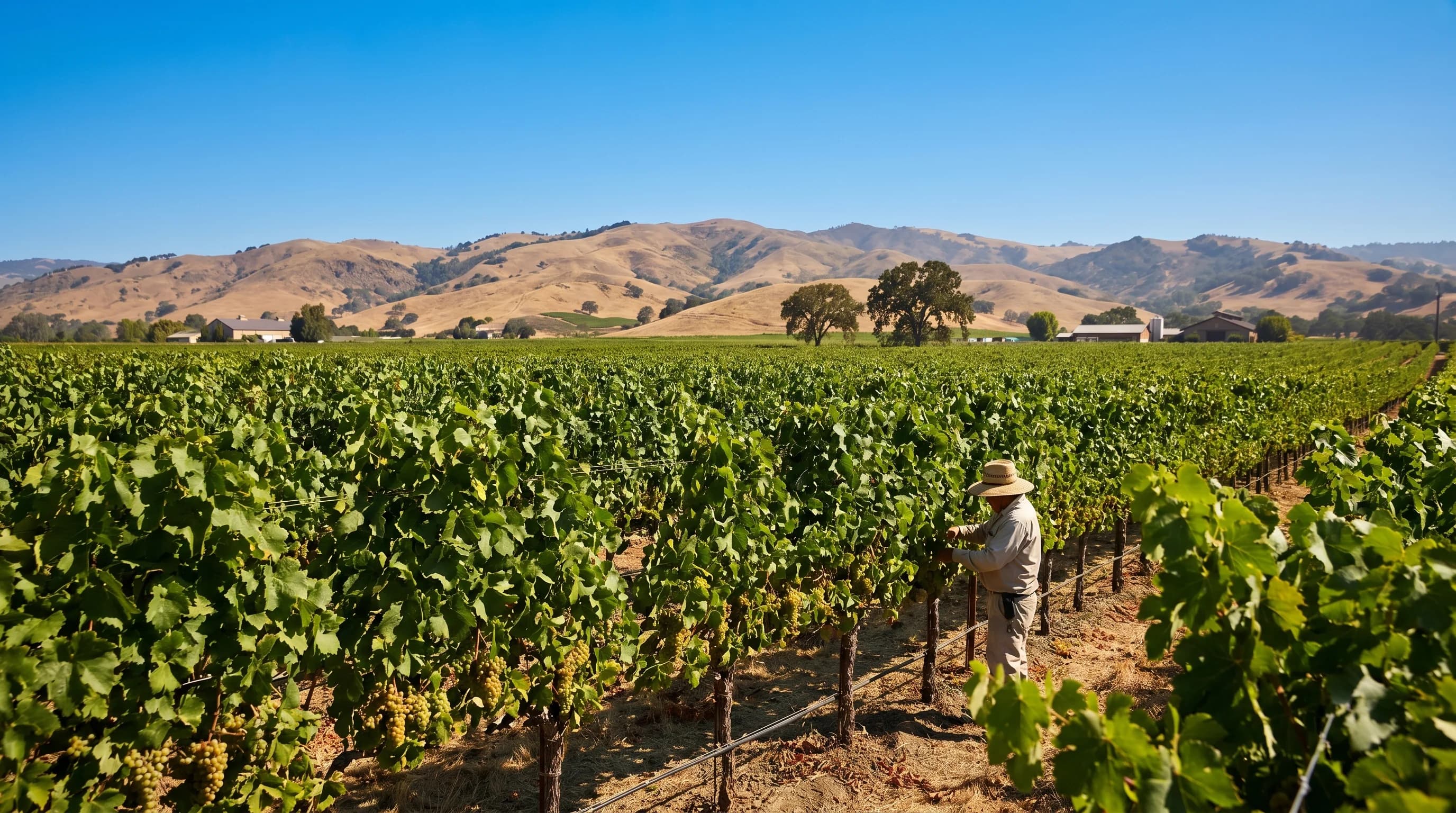
Spring (March through May) is the second-best window. Temperatures are comfortable at 65-78 degrees, the hills are green from winter rain, and mustard flowers bloom between the vine rows in a display of yellow that has become a Napa Valley signature. Rain is possible through April, so flexibility helps. Summer (June through August) is hot, especially in the upper valley, but mornings and evenings are pleasant for outdoor tasting. Winter visits offer the fewest crowds and the best rates, but expect rain on roughly one out of three days.
Fire Weather in Napa Valley
Napa Valley is in the heart of the Bay Area's fire weather zone. The 2017 Tubbs Fire burned through the Santa Rosa corridor just west of the valley. The 2020 Glass Fire burned directly in the hills above the valley floor, forcing evacuations of Calistoga and damaging several wineries. The 2020 LNU Lightning Complex fires also affected western Napa County. Diablo wind events in fall create the most dangerous fire conditions, and wildfire smoke from regional fires can affect wine grape quality, a growing concern for the wine industry known as "smoke taint." Visiting during October and November means being aware of fire weather conditions and checking air quality before planning outdoor activities.