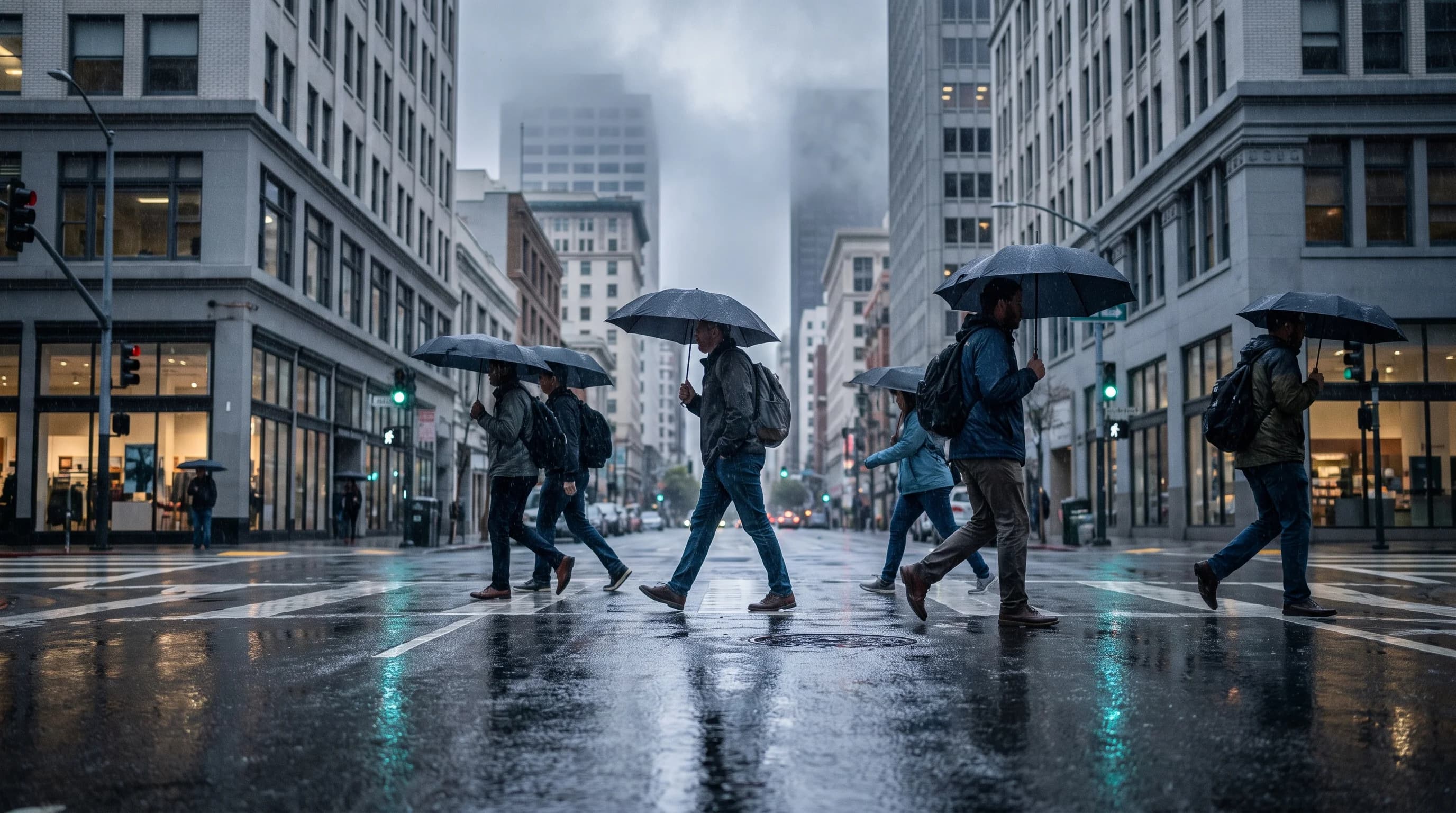
January is San Francisco's coldest month, with an average high of 57.8°F (14.3°C) and a low of 46.6°F (8.1°C) at the downtown station. It averages 4.40 inches of rain on about 11 days, but totals swing wildly, from no rain at all in 2015 to 9.42 inches in 2017.
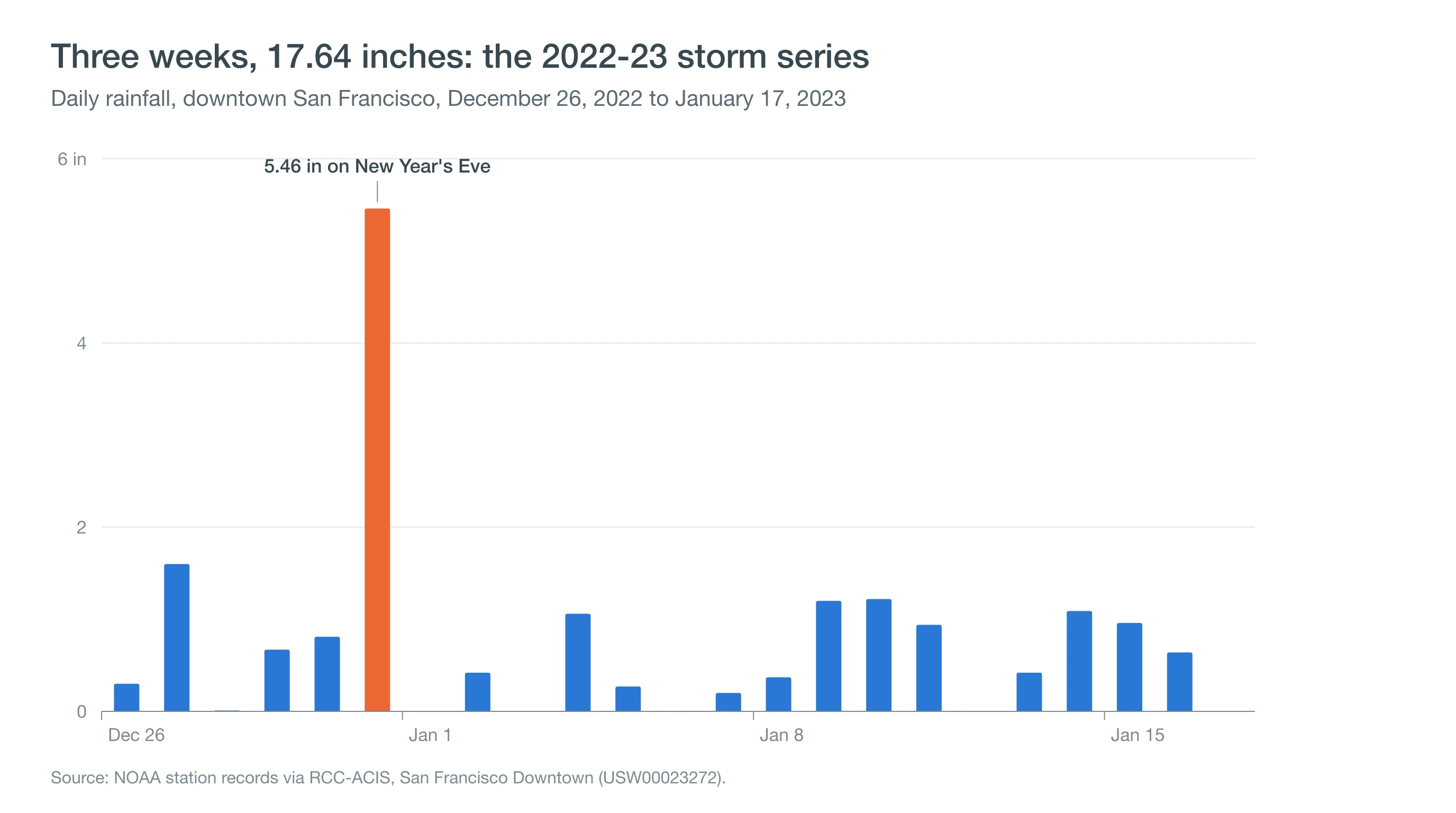
January is San Francisco's wild-card month. From December 26, 2022 to January 17, 2023, downtown recorded 17.64 inches of rain in 23 days, about three-quarters of a normal year. In strong El Niño winters, January is often when the storms finally arrive.
What Is January Weather Like in San Francisco?
January weather in San Francisco is cold by local standards, with highs in the upper 50s, nights in the mid-40s and rain on about one day in three. Between storms, January brings some of the crispest, clearest days of the year.
| Average high / low | 57.8°F (14.3°C) / 46.6°F (8.1°C), the coldest month |
|---|---|
| Average rain | 4.40 in (112 mm) |
| Days with rain | About 11 |
| Recent range | 0.50 in (2025) to 9.42 in (2017) |
| Chance of rain on New Year's Day | 37% (1991-2020) |
| Sunset | About 5:00 PM on Jan 1, 5:30 PM on Jan 31 |
| Ocean temperature | About 54°F offshore |
San Francisco Downtown station (USW00023272), NOAA 1991-2020 normals and daily records via RCC-ACIS. Ocean temperature from NOAA buoy 46026.
Why Is January San Francisco's Wild-Card Month?
January rain swings from nothing to a deluge in San Francisco. January 2015 brought no measurable rain at all, and January 2025 brought just 0.50 inch, while January 2017 brought 9.42 inches and January 2023 brought 8.89 inches. The 1991-2020 normal of 4.40 inches hides that spread.
The 2022-23 winter shows how fast a stormy January builds. A parade of atmospheric rivers dropped 17.64 inches downtown in 23 days, with rain on 18 of them. On January 4, 2023, a bomb cyclone brought damaging wind, toppled trees and left many Bay Area homes without power.
Will El Niño Make This January Wetter?
El Niño has tilted San Francisco Januaries wet. In each of the four strong El Niño winters since 1982, January rain beat the 4.40-inch normal: 5.77 inches in 1983, 12.08 inches in 1998, 6.94 inches in 2016 and 6.57 inches in 2024. In 1982 and 1997, the December before ran dry, and the storms waited until January.
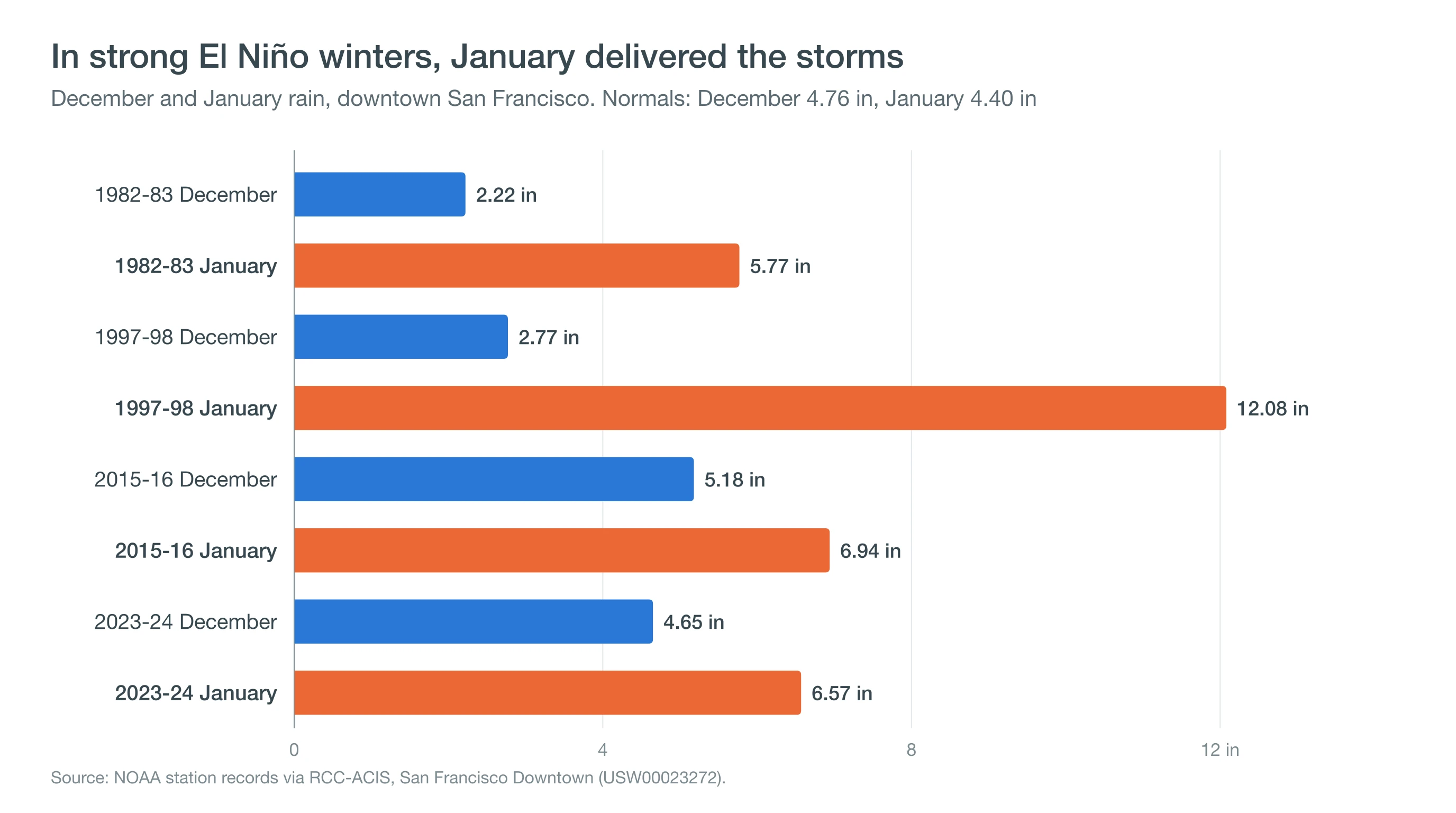
Four winters are a pattern, not a promise. A very strong El Niño is forming for 2026-27, and NOAA's seasonal outlook favors above-normal Bay Area rain for December through February. Follow the latest monthly update in the El Niño guide.
How Cold Do January Nights Get?
January nights in San Francisco average 46.6°F downtown, and about 1.6 nights a month drop to 40°F or colder. The record January low is 29°F, set in 1888. Downtown has not dropped to freezing since December 1990, but the inland valleys freeze on clear nights: during the January 2007 cold snap, Carmel Valley hit 20°F on January 13.
January is also the foggiest month in the Central Valley, where Stockton averages about 8.6 mornings of dense tule fog, and the heart of Spare the Air season, when calm, cold days bring wood-burning bans. See the Spare the Air rules and the coldest temperatures on record.
Why Is January Big-Wave and Whale Season on the Coast?
January brings the biggest swells of the year. At NOAA buoy 46026 off San Francisco, the median wave height in January is 7.4 feet, and 30% of January days from 2015 to 2025 brought a swell of 15 seconds or longer and 10 feet or higher, more than any other month. That is Mavericks season, and the peak month for sneaker waves on steep beaches.
January is also the peak of the gray whale migration south, and king tides return January 20 to 23, 2027, peaking at 7.11 feet at 9:39 AM on January 21 at the San Francisco gauge. See whale-watching weather and the king tide schedule.
What Is New Year's Day Weather Like in San Francisco?
New Year's Day in San Francisco averages a high of 57.9°F and a low of 46.2°F, and it is the rainiest of the winter holidays: measurable rain fell on 37% of New Year's Days from 1991 to 2020, compared with 27% of Christmas Days. The warmest reached 71°F in 1996, and the wettest brought 1.84 inches in 2004.
Is January a Good Time to Visit San Francisco?
January is a good time to visit San Francisco for lower prices, green hills, big surf and the sharpest views of the year, as long as you plan around storm days. Pack a waterproof jacket, a warm layer and shoes that handle rain.
Watch the San Francisco forecast three to five days ahead for atmospheric rivers, and check National Weather Service Bay Area flood and wind advisories before driving the coast or the hills. A wet January can arrive all at once, and so can the clear days after it.