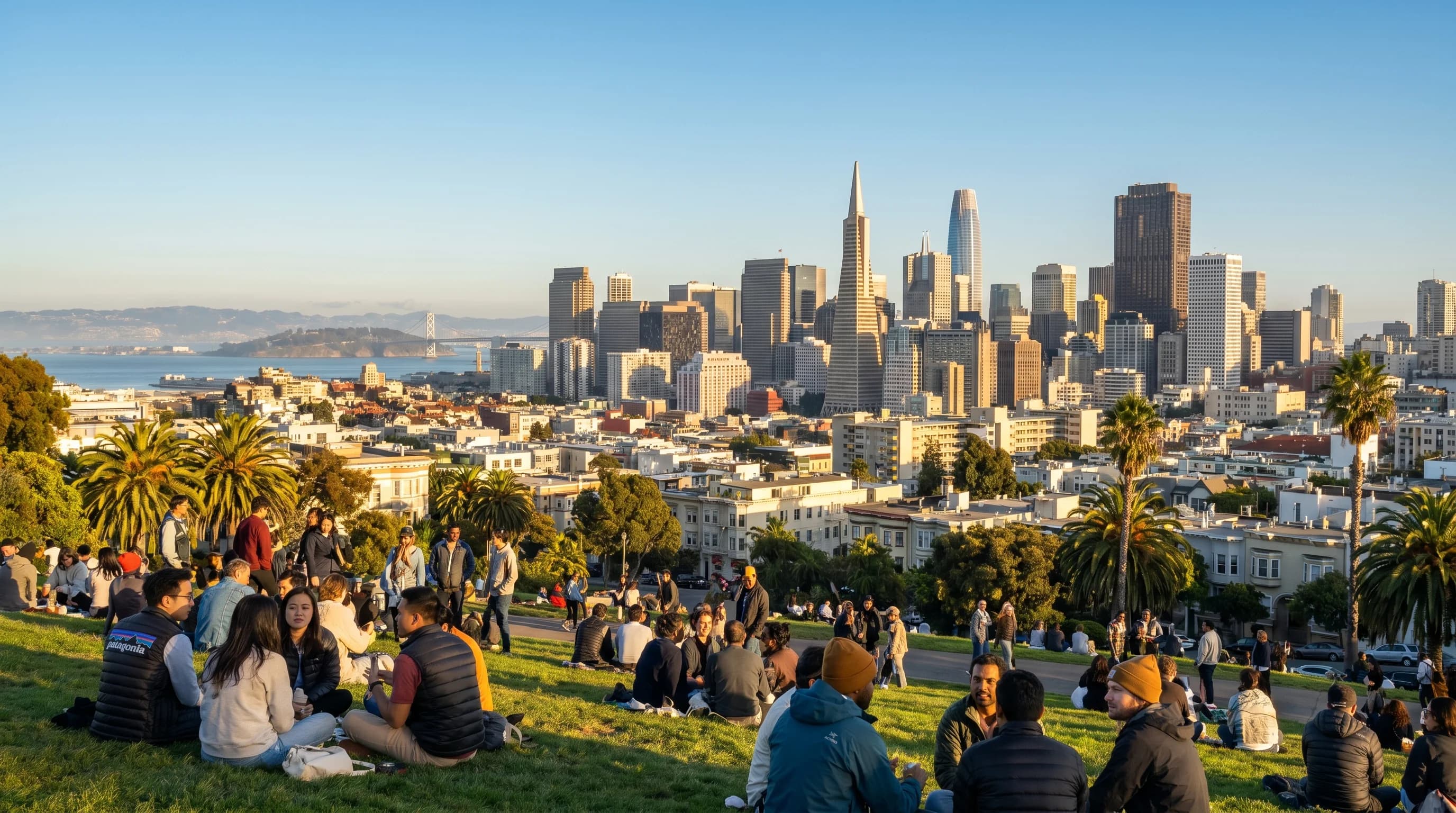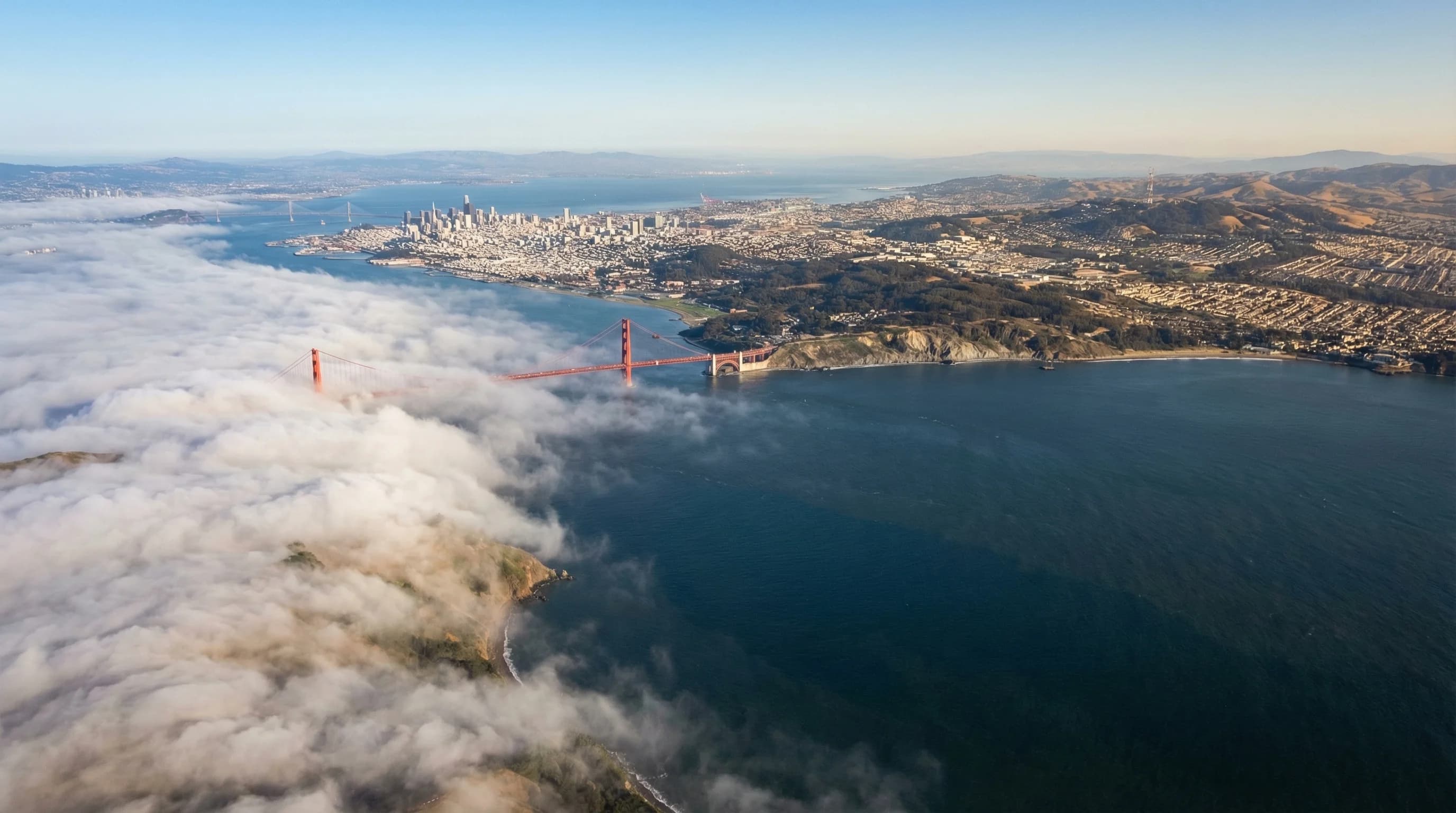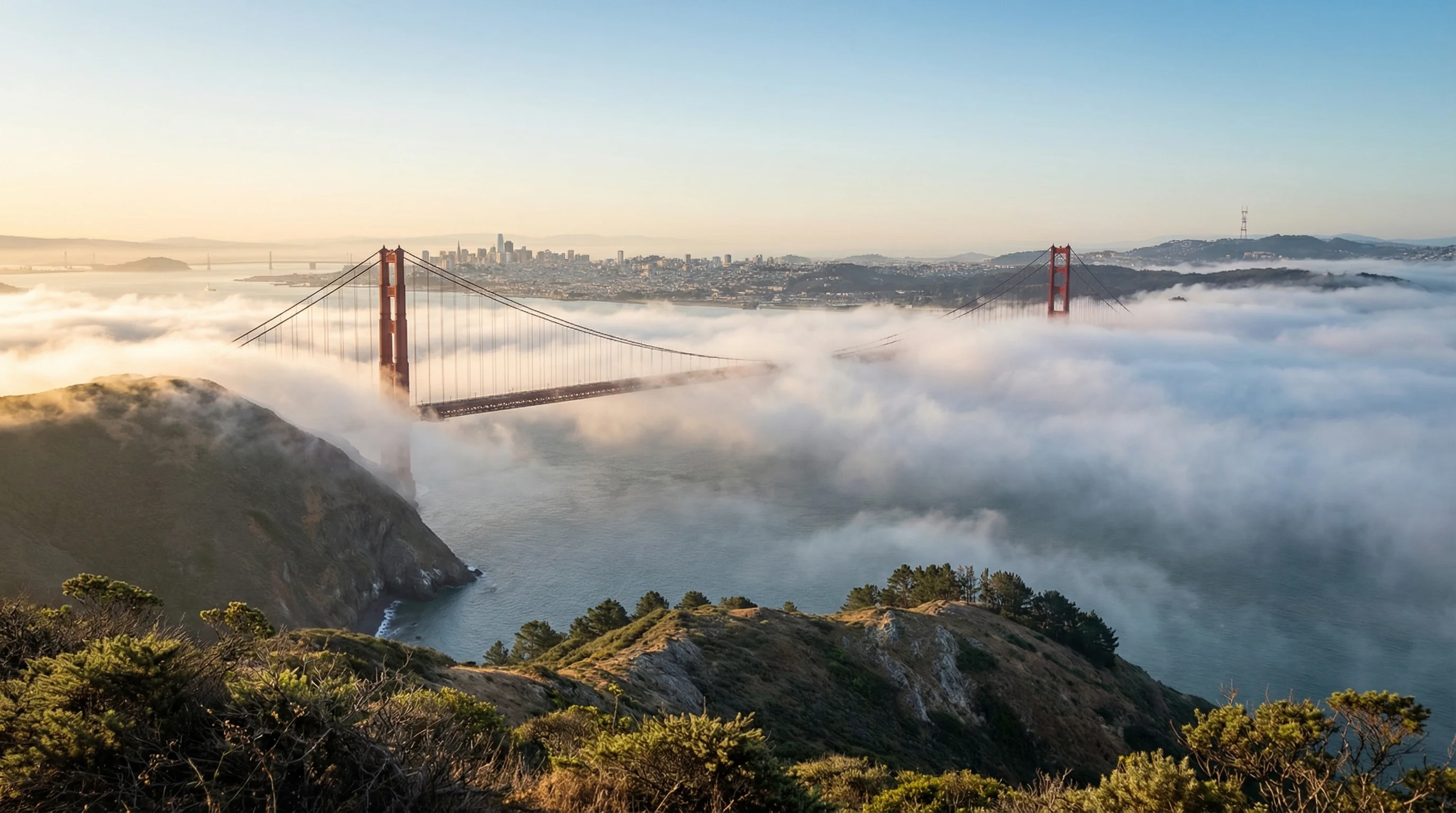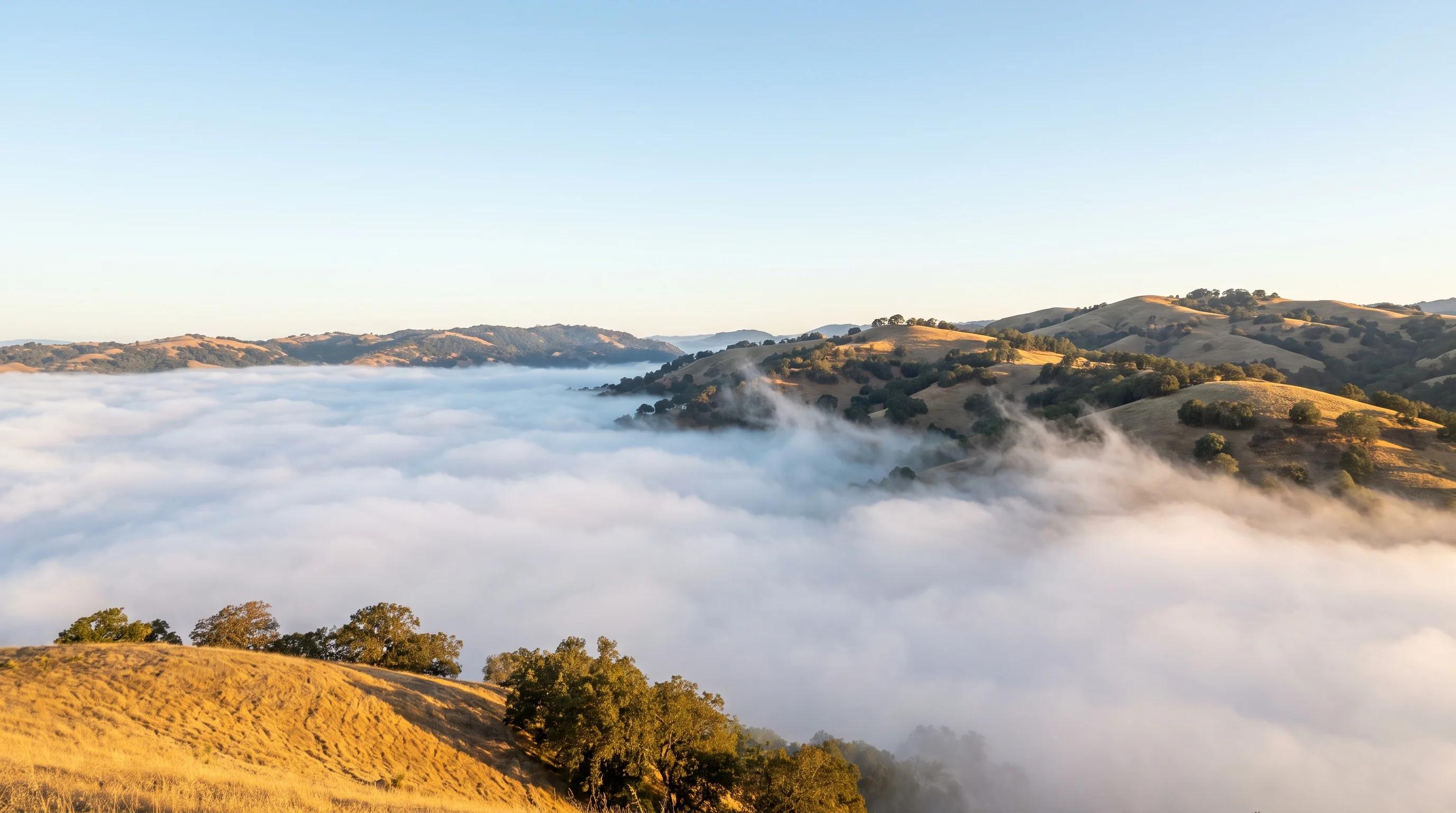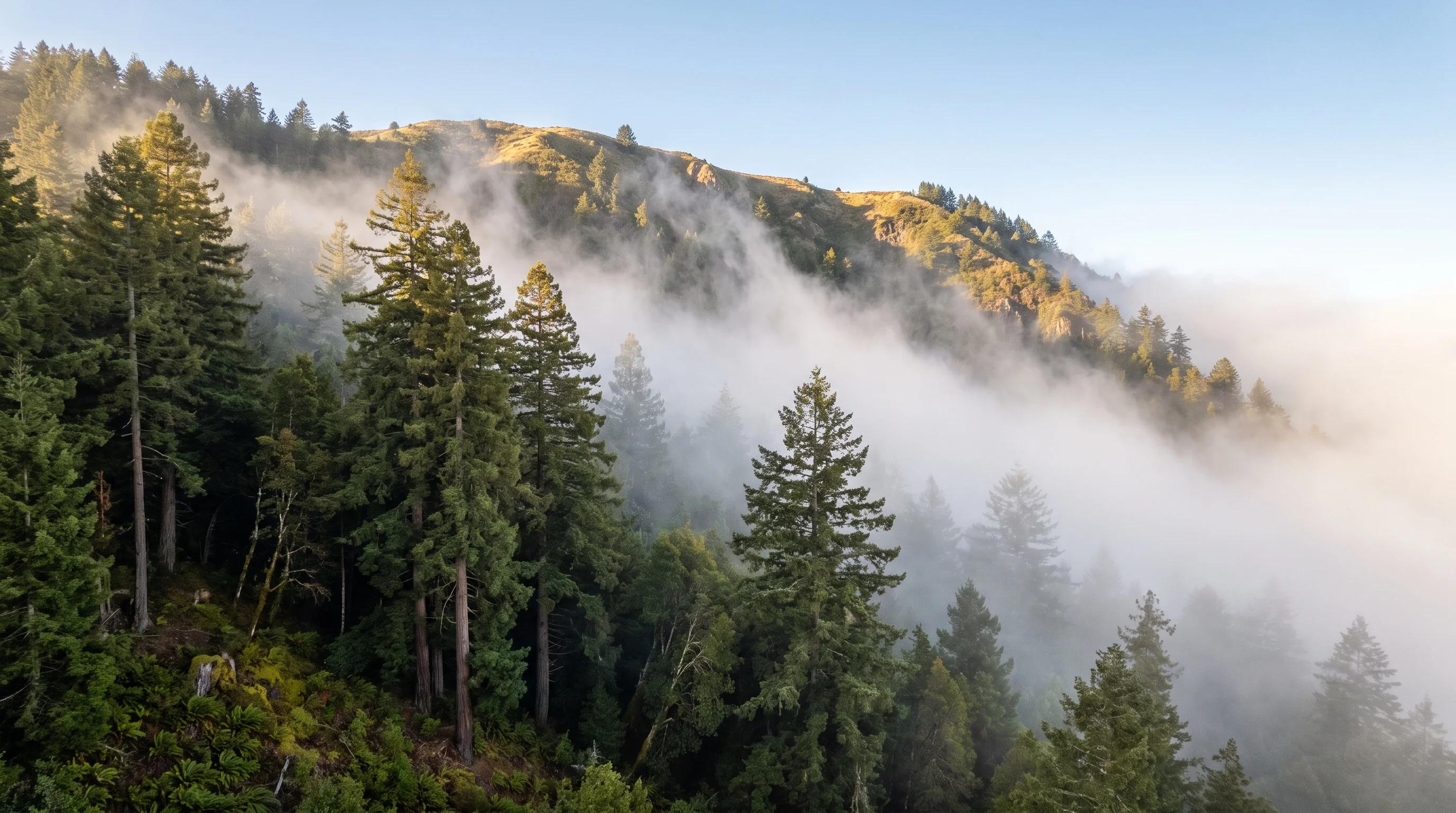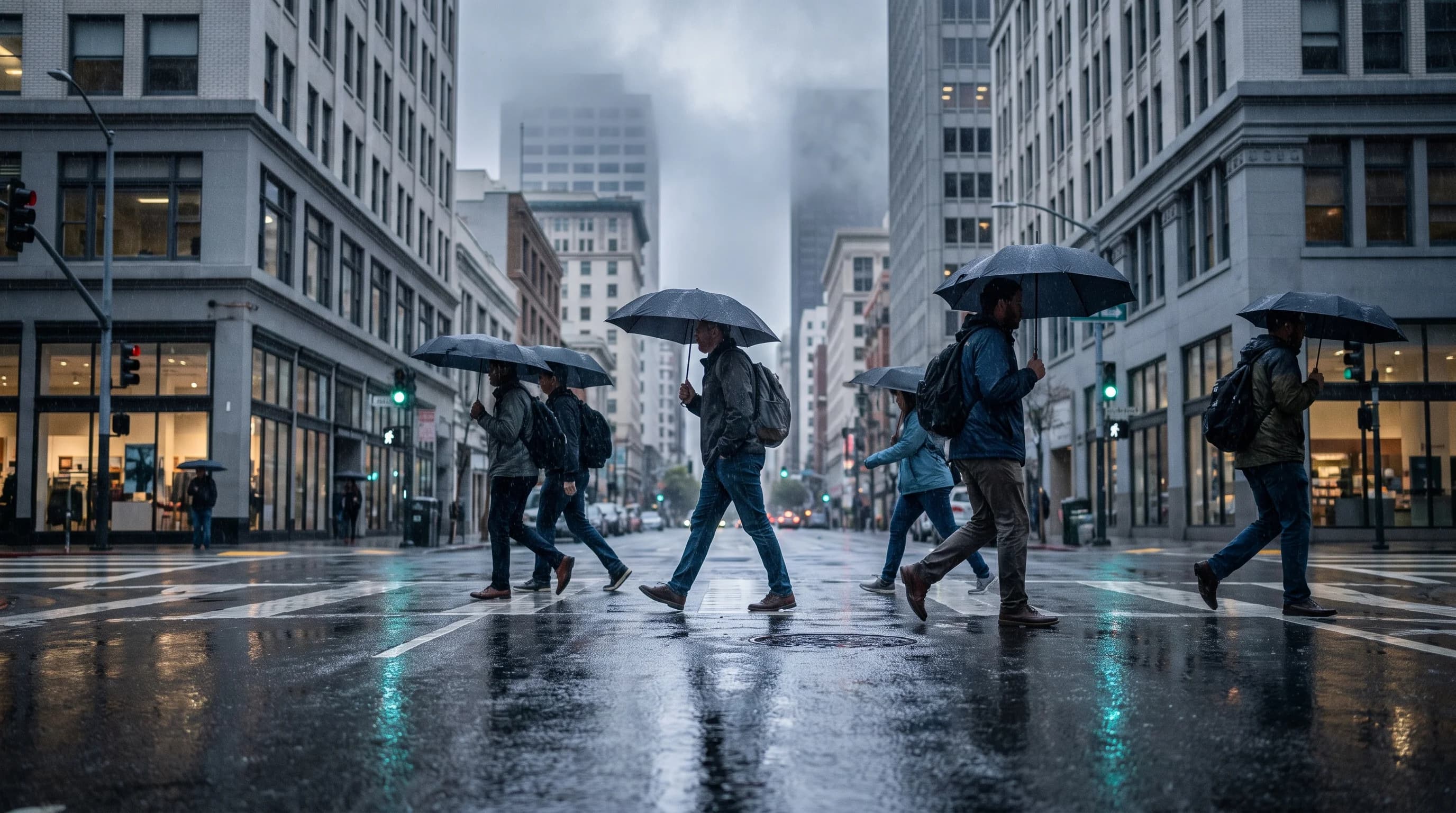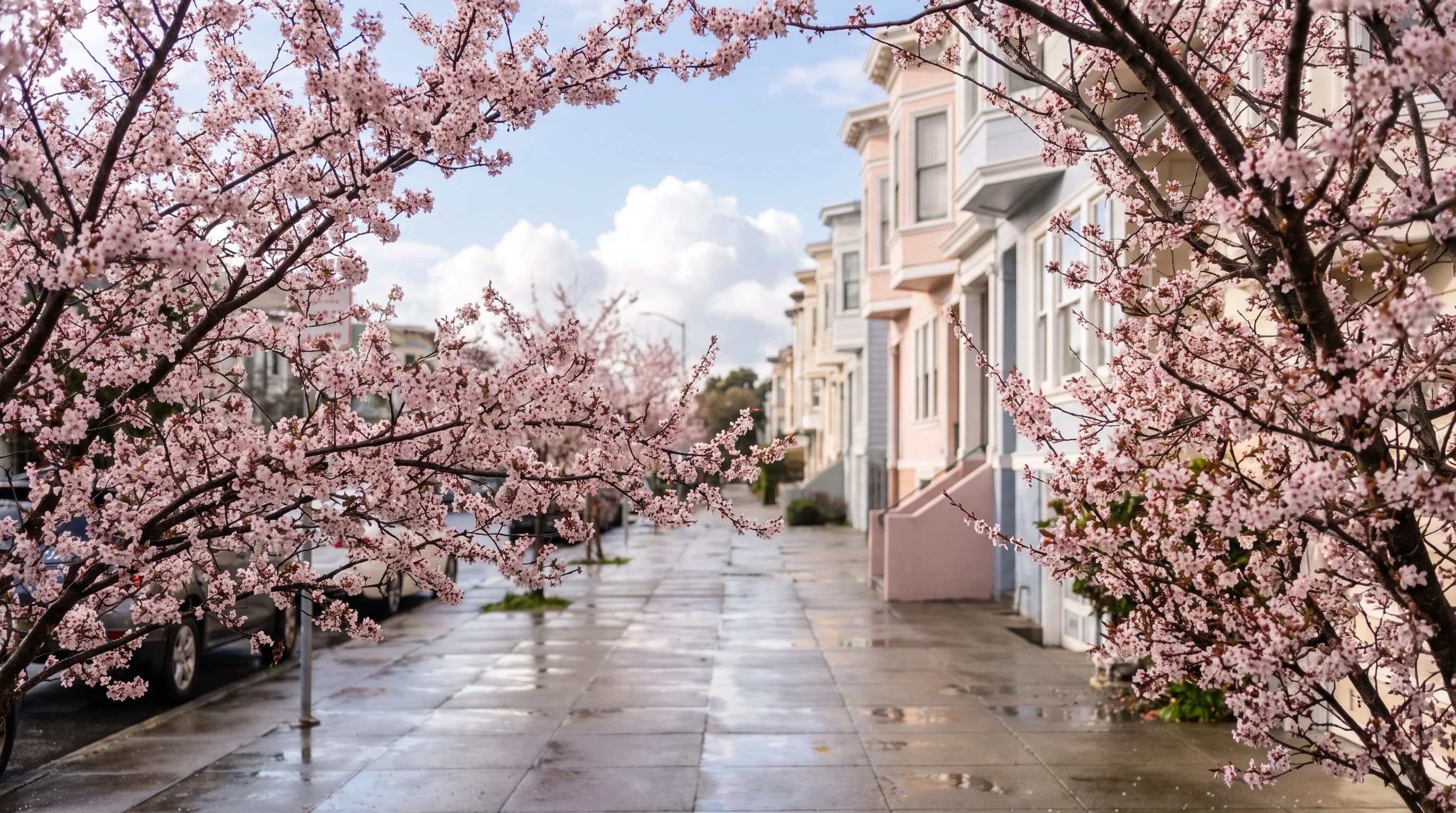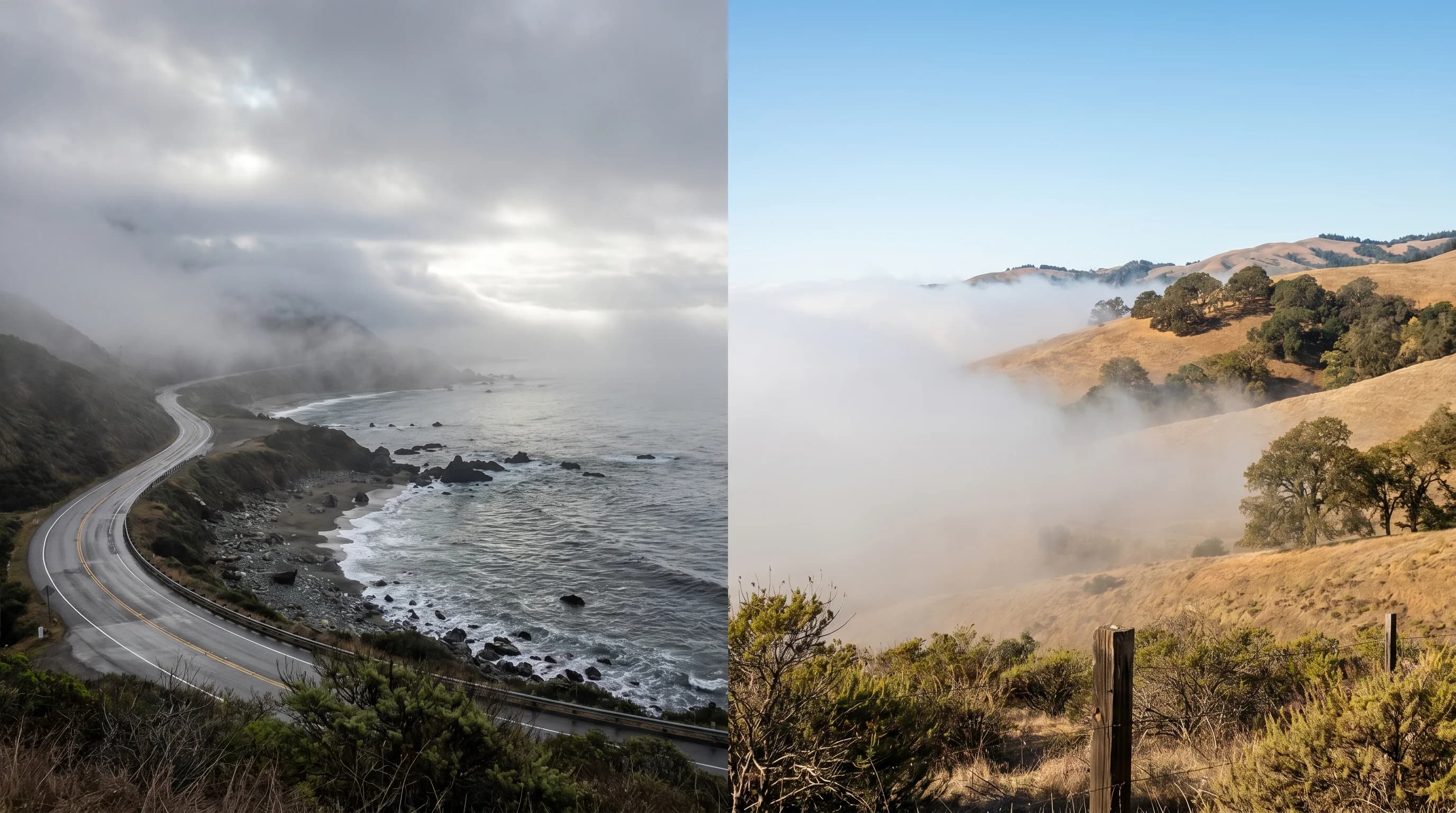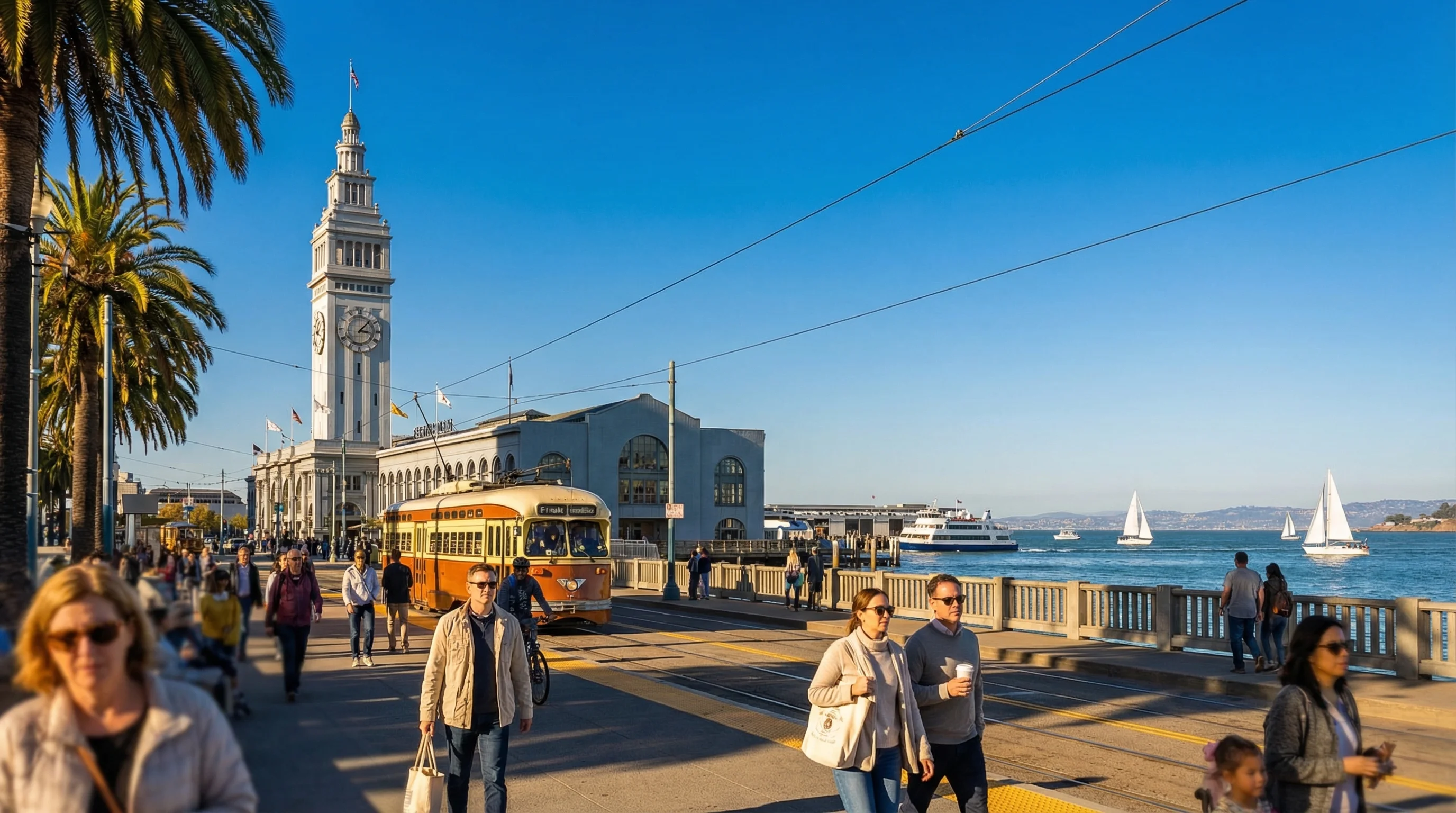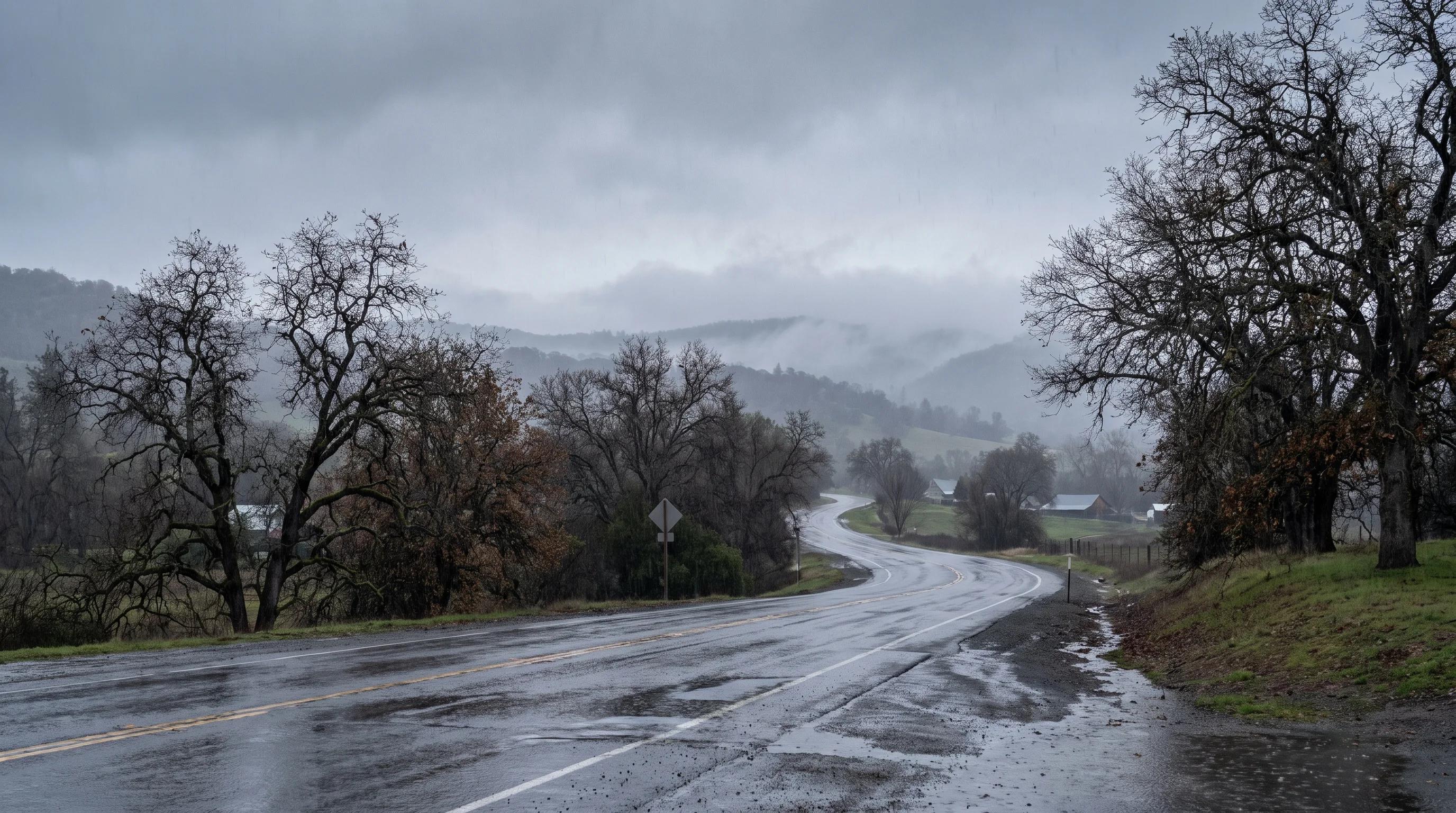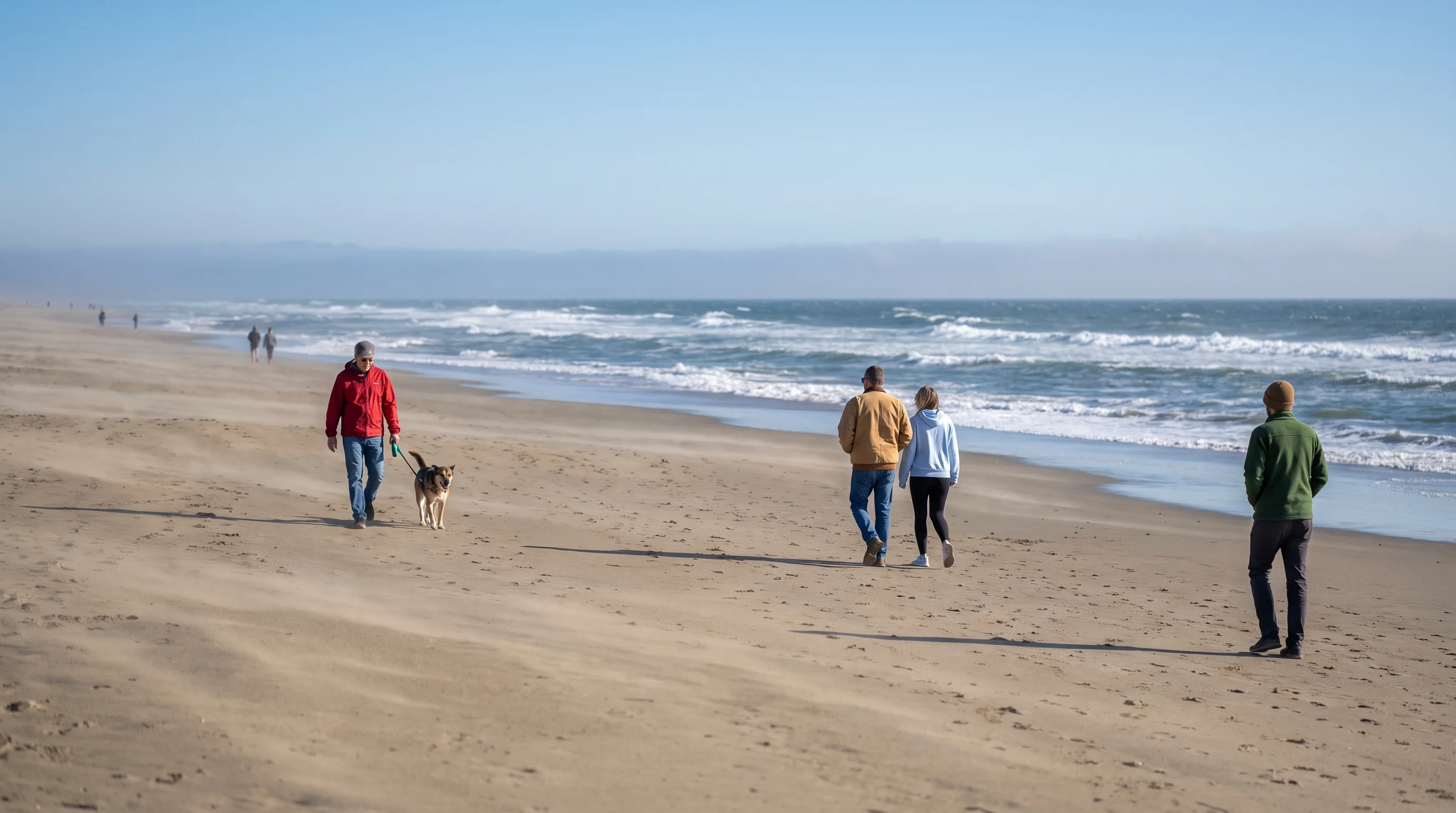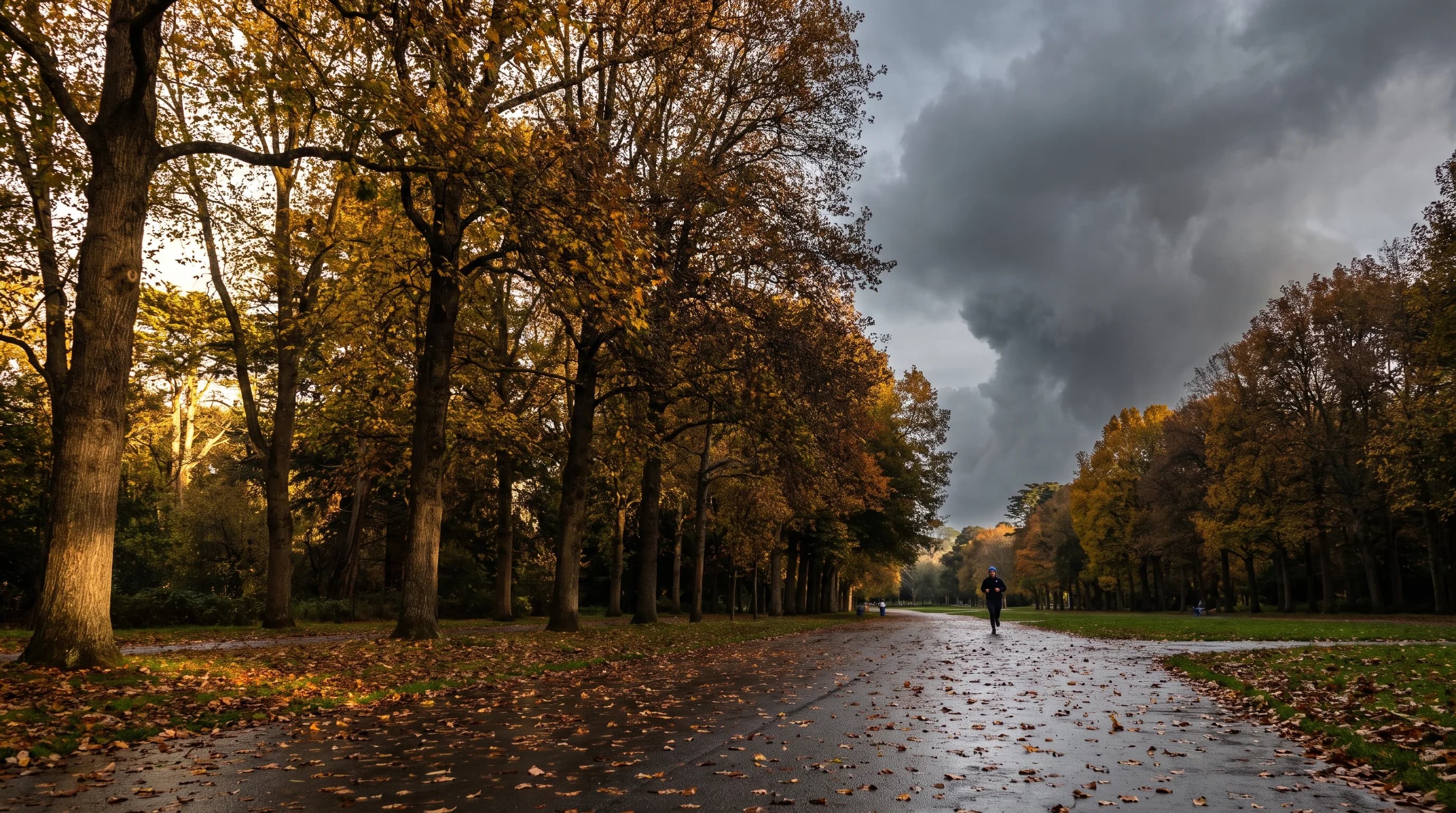
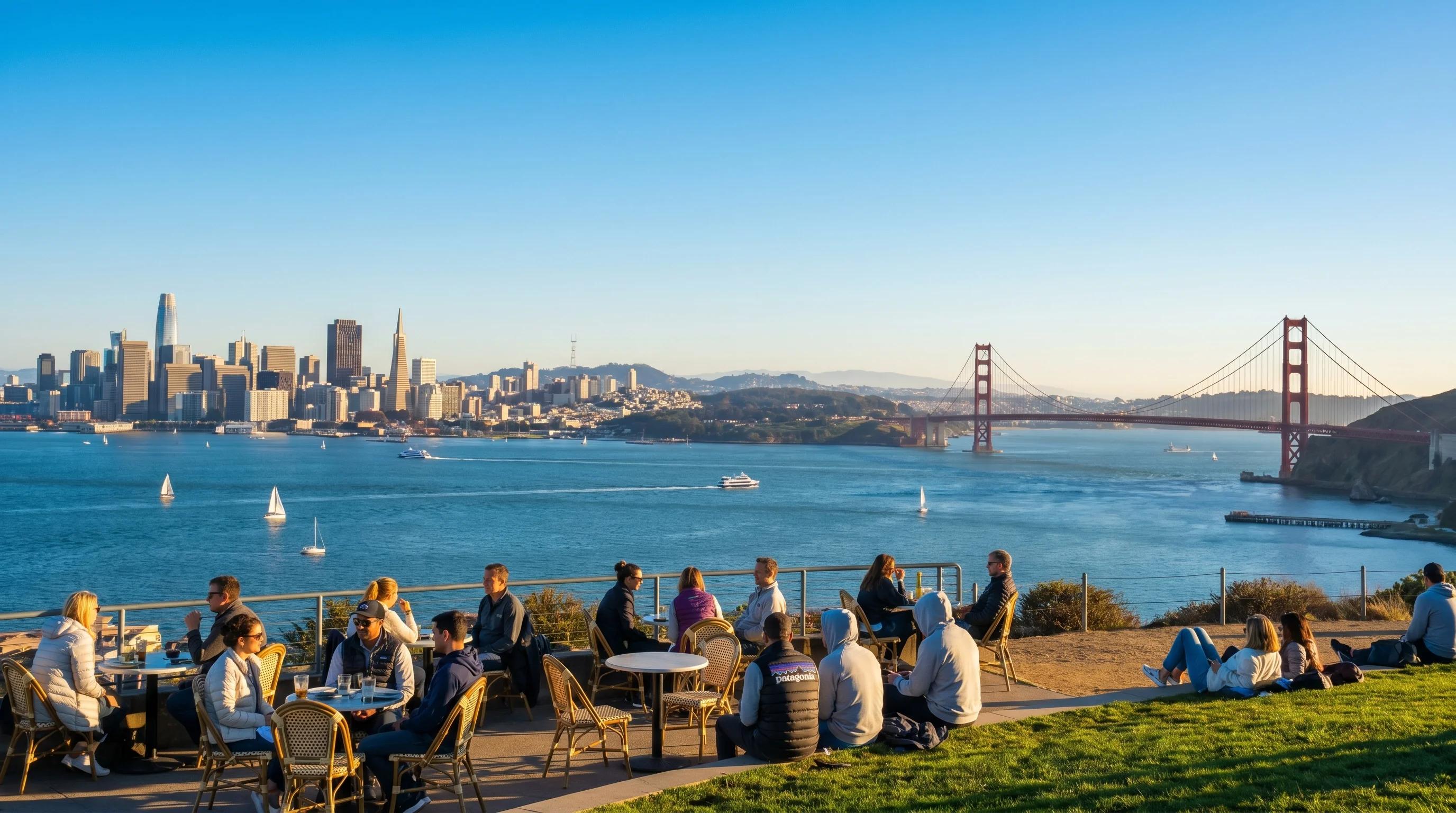
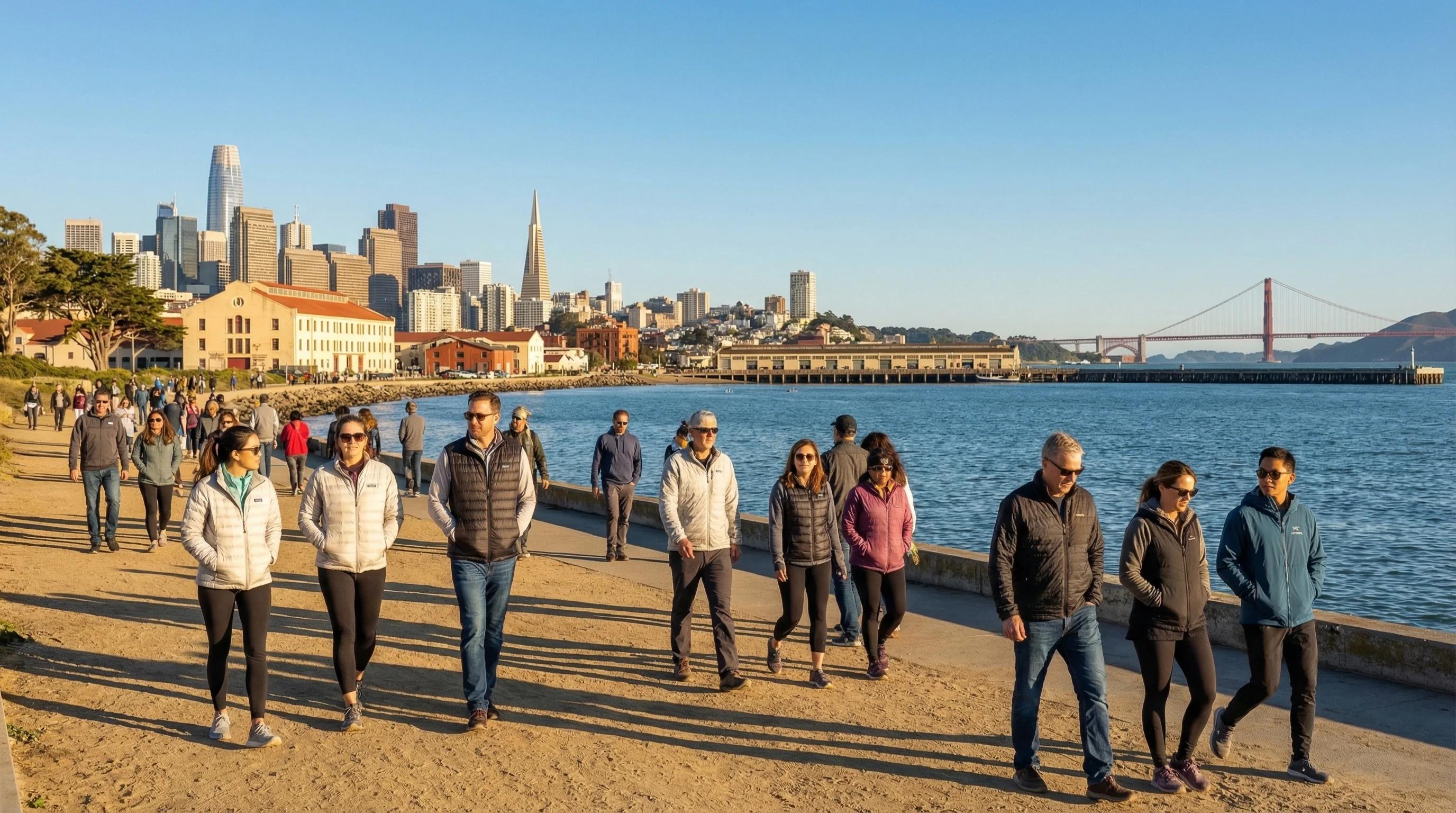
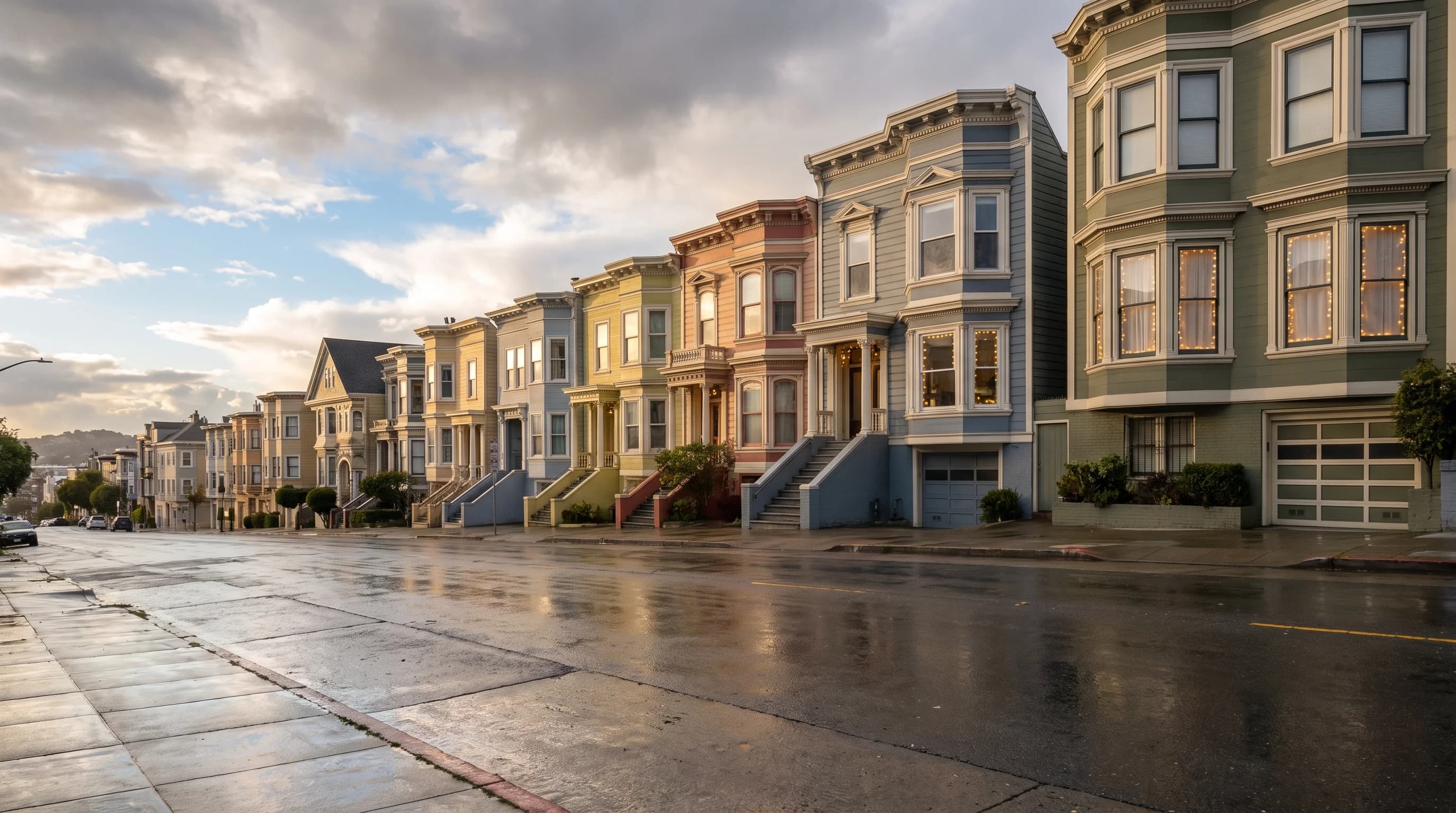
November in San Francisco is mild and turning wet, with an average downtown high near 64°F and rain on about eight days. Most of that rain comes in the first storms of the season. Early November can still bring afternoons in the 70s.
November is the month when San Francisco's seasons flip. It starts with the last of the fall warm spells and ends feeling like winter, with the clocks changing and the first big storm arriving in between. San Francisco's wettest day on record also fell in November, when 5.54 inches of rain fell on November 5, 1994.
What Is November Weather Like in San Francisco?
November weather in San Francisco is a mix of warm, clear days and the first winter storms. About three of every four November days stay dry, but evenings get dark early and cool quickly, so pack for both kinds of day.
| Average high / low | 63.7°F (17.6°C) / 50.7°F (10.4°C) |
|---|---|
| Average rain | 2.60 in (66 mm) |
| Days with rain | About 8 (0.01 in or more) |
| First soaking storm | Around November 3 in a typical year |
| Chance of rain on Thanksgiving | 27% (1991-2020) |
| Sunset | About 5:13 PM on Nov 1, 4:52 PM on Nov 30 |
| Ocean temperature | About 56°F offshore |
| Record high | 86°F (Nov 1, 1966) |
| Wettest day on record (any month) | 5.54 in (Nov 5, 1994) |
San Francisco Downtown station (USW00023272), NOAA 1991-2020 normals and daily records via RCC-ACIS. Ocean temperature from NOAA buoy 46026.
Why Can Early November Still Feel Like Summer?
Early November can still feel like summer because the Bay Area's warm season runs late. A typical November brings about five days of 70°F or warmer, mostly in the first week or two. These late warm spells are the tail end of San Francisco's Indian summer.
The same dry winds from inland that bring warm, clear days also bring fire weather. The 2018 Camp Fire, which started November 8 in Butte County, sent smoke over the Bay Area for about two weeks. On November 16, the air quality index reached 239 in San Francisco and 246 in Oakland. That was the worst in about 20 years of local air-quality records.
Schools across the region closed, and Muni pulled the cable cars off the streets. The smoke cleared only when rain arrived on November 21, the day before Thanksgiving. For how smoke travels and how to protect yourself, see wildfire smoke and Bay Area air quality.
What Changes When the Clocks Fall Back?
When daylight saving time ends on Sunday, November 1, 2026, sunset in San Francisco jumps an hour earlier, to about 5:13 PM. By the end of the month the sun sets before 5 PM, and the day is almost an hour shorter than at the start. Evenings cool fast after dark, so outdoor dinners need a jacket.
| Measure | October | November |
|---|---|---|
| Average high | 69.8°F | 63.7°F |
| Days at 70°F or warmer | 13.9 | 5.5 |
| Average rain | 0.94 in | 2.60 in |
| Days with rain | 3.5 | 7.9 |
| Sunset on the 1st | About 6:55 PM | About 5:13 PM |
San Francisco Downtown, 1991-2020 averages computed from NOAA records via RCC-ACIS. Sunset times are computed for downtown San Francisco.
When Does the First Big Storm of the Season Arrive?
The first soaking storm of the season, with half an inch of rain or more, arrives around November 3 in a typical year. The timing varies a lot from year to year, and in half of the years from 1991 to 2020 it came between late October and late November. That is why some Novembers are stormy from the start and others barely get wet.
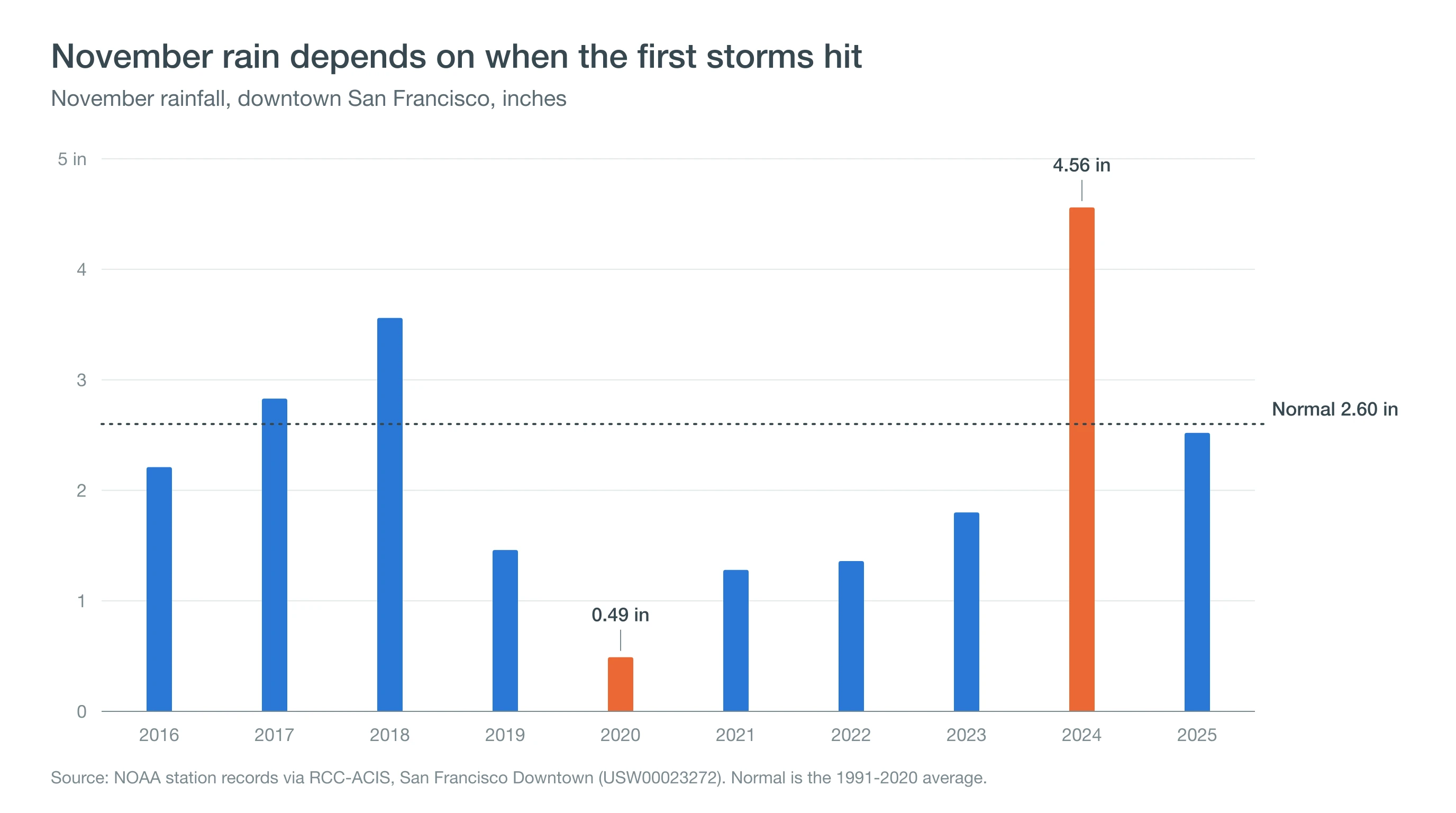
The first rain is also the most dangerous for drivers. Oil builds up on the roads over the dry months, so the first wet commute is slick, and fallen leaves clog storm drains. Strong El Niño years, when the tropical Pacific runs warm, have often started the rainy season early, as in 1982 and 1997. For the full calendar, see when the rainy season starts and ends.
What Is Thanksgiving Weather Like in San Francisco?
Thanksgiving in San Francisco is usually mild and dry, with a high in the low 60s and a low near 49°F. Measurable rain fell on about one Thanksgiving in four from 1991 to 2020. The warmest on record reached 77°F in 1959, and the wettest brought just over an inch in 1983.
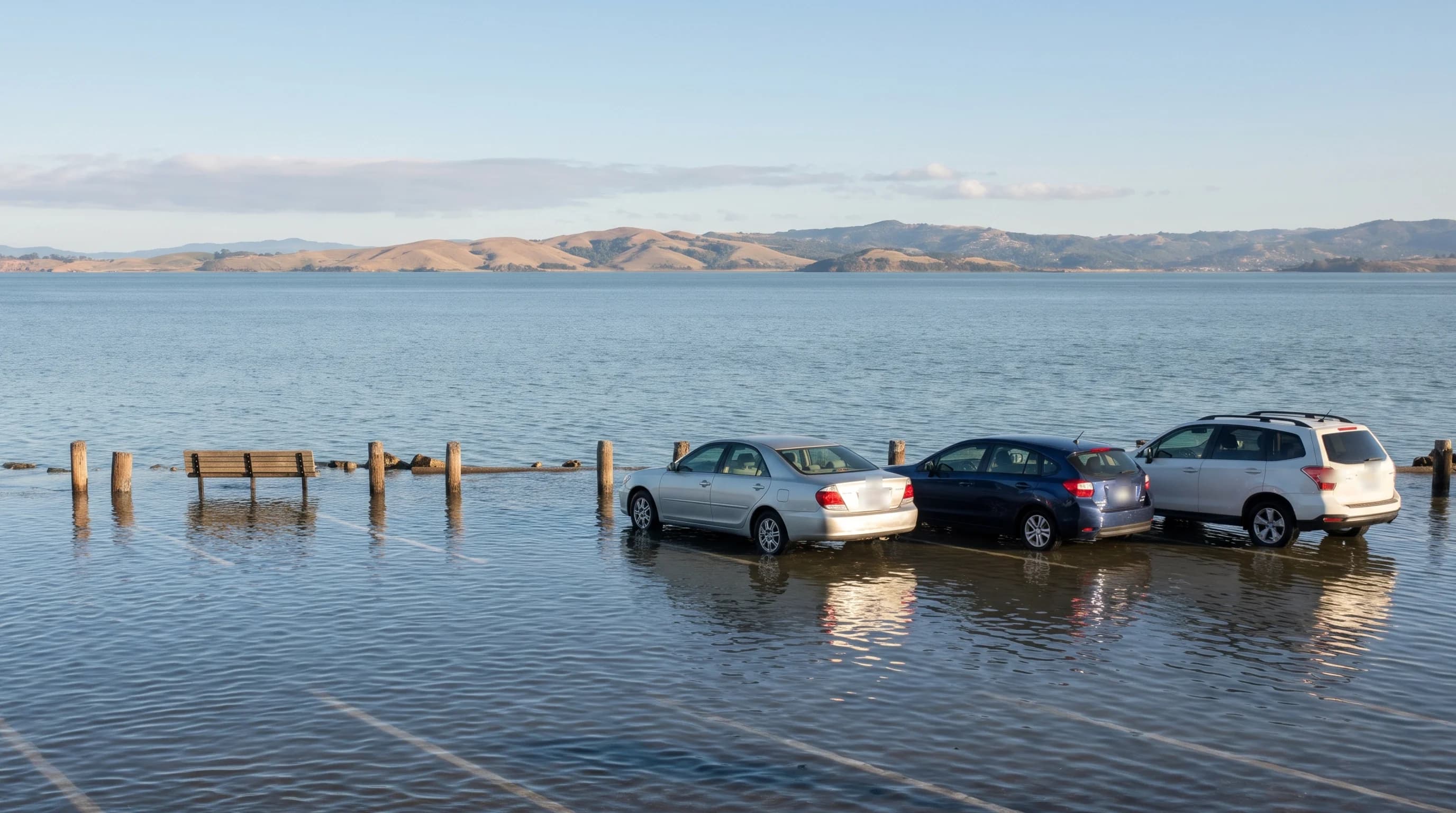
Thanksgiving week 2026 also brings king tides, the highest tides of the year. NOAA predicts high tides of about 7 feet at the San Francisco gauge on November 25 and on Thanksgiving morning. That is high enough to wet low spots along the Embarcadero. For the dates and the full forecast, see the 2026-27 king tide dates and the Thanksgiving weather guide.
When Do Burn Bans and Tule Fog Season Begin?
Burn-ban season begins November 1 and runs through February. During that time, the Air District can call Winter Spare the Air alerts on calm, cold days, when smoke gets trapped near the ground. On those days, burning wood indoors or outdoors is illegal. Check the Spare the Air rules before lighting a fire.
Tule fog, the thick ground fog of the Central Valley, also starts in November. Based on airport visibility records from 2005 to 2025, Stockton averages about five dense-fog mornings in November and about seven in December. Tule fog rarely reaches San Francisco, but it matters for Thanksgiving drives to Sacramento or Tahoe.
Is November a Good Time to Visit San Francisco?
November is a good time to visit San Francisco, especially in the first half of the month. Mild, dry days are still common then, and crowds are smaller than in summer. The hills start to turn green after the first rains. Plan an indoor backup for storm days, and pack for both warm afternoons and early, cool evenings.
For a trip in the next week, check the San Francisco forecast for the first big storm. Before a fireplace evening, check Spare the Air for a burn ban. During Thanksgiving week, compare the forecast with the predicted king tide times.