seasonalsafetyclimate science

Most Rain in a Single Day in the Bay Area

By SFBayWeather||Updated |5 min read
Most Rain in a Single Day in the Bay Area

Key Takeaways

  • The Bay Area's single-day rainfall records are held by orographic rain producers: the Marin watershed has recorded 10+ inches in 24 hours, and the Santa Cruz Mountains 8-10 inches.
  • San Francisco at sea level has exceeded 5 inches in a single day, the January 4, 1982 storm delivered more than 5 inches and triggered the Marin County debris flows that killed 25 people.
  • Extreme single-day rainfall comes from intense atmospheric rivers, not the extended moderate rainstorms typical of the wet season.
  • Creek systems downstream of orographic rain areas can flood even when local rainfall is moderate, because the extreme rainfall upstream concentrates as it drains.
  • The January 2023 atmospheric river sequence set monthly records at multiple Bay Area stations, with individual peak days contributing 3-4 inches at sea level.

The Bay Area's wettest single days are not produced by the typical steady winter rains that define the wet season from November through March. They are produced by atmospheric rivers, concentrated corridors of moisture that can deliver tropical-quality rainfall totals in 24 hours. When an intense atmospheric river strikes the Bay Area at the right angle, with the right orographic terrain to wring out the moisture, the rainfall records that result can seem implausible for a Mediterranean climate. Yet they happen, and the flood damage they cause is proportional to the water volume; several inches of rain in 24 hours overwhelm creek channels, saturate hillsides, and exceed the capacity of storm drains designed for much more moderate events.

Bay Area Single-Day Rainfall Records

The wettest single days in Bay Area history belong to the high-elevation orographic rain producers, the Santa Cruz Mountains and the Marin watershed, rather than the flatlands. The Marin watershed above Mount Tamalpais has recorded more than 10 inches of rain in a single day during extreme atmospheric river events. The Santa Cruz Mountains around La Honda and Pescadero have similarly recorded 8 to 10 inches in 24 hours during the most intense storms.

San Francisco at sea level has recorded single-day totals above 5 inches during extreme events. The January 4, 1982 storm delivered more than 5 inches in 24 hours to San Francisco and triggered the Marin County debris flows that killed 25 people. The February 1998 El Niño storms delivered more than 4 inches to San Francisco in a single day. More recently, the atmospheric river events of January 2023 produced multi-day totals across the Bay Area that broke monthly records at many stations, with individual days contributing 3 to 4 inches at sea level.
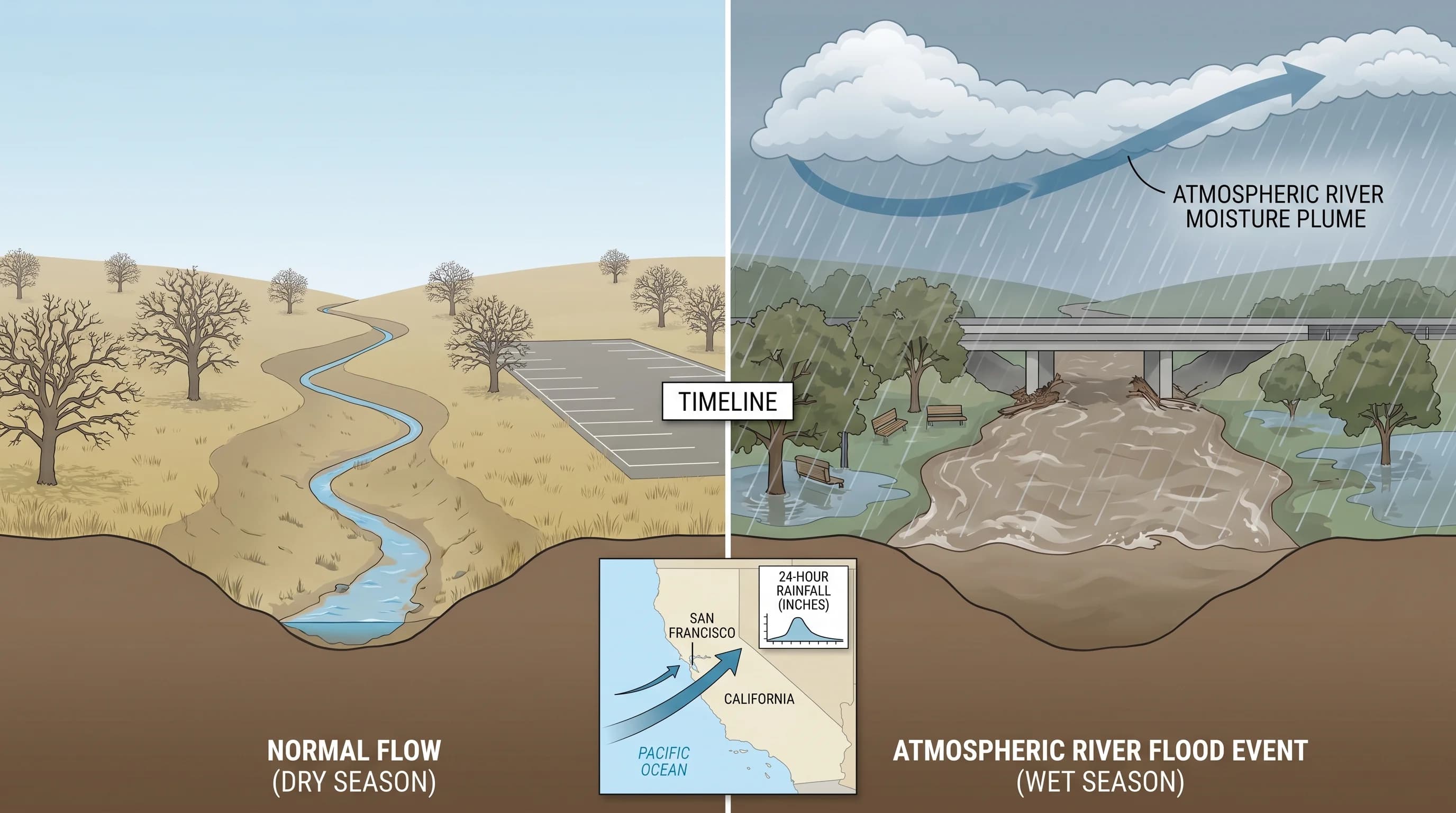
Bay Area atmospheric river storm: heavy rain falling on a Bay Area street, flooded gutters, cars driving through standing water, dark storm clouds overhead
Extreme Bay Area rainfall is produced by atmospheric rivers, concentrated moisture corridors that can deliver 5+ inches in 24 hours at sea level and 8-10 inches in the orographic zones above the Santa Cruz Mountains and Marin watershed. These events overwhelm flood control infrastructure designed for more moderate rainfall.

What Extreme Rainfall Does to the Bay Area

The Bay Area's creek and storm drain systems are generally designed to handle the kind of moderate, multi-day rainfall typical of a wet season storm, not the concentrated bursts that atmospheric rivers deliver. When 3 to 5 inches falls in 24 hours, creeks that are normally a few feet deep can rise by 10 to 15 feet in a matter of hours. Hillsides that have been saturated by weeks of preceding rainfall can fail catastrophically with a final heavy rain event.
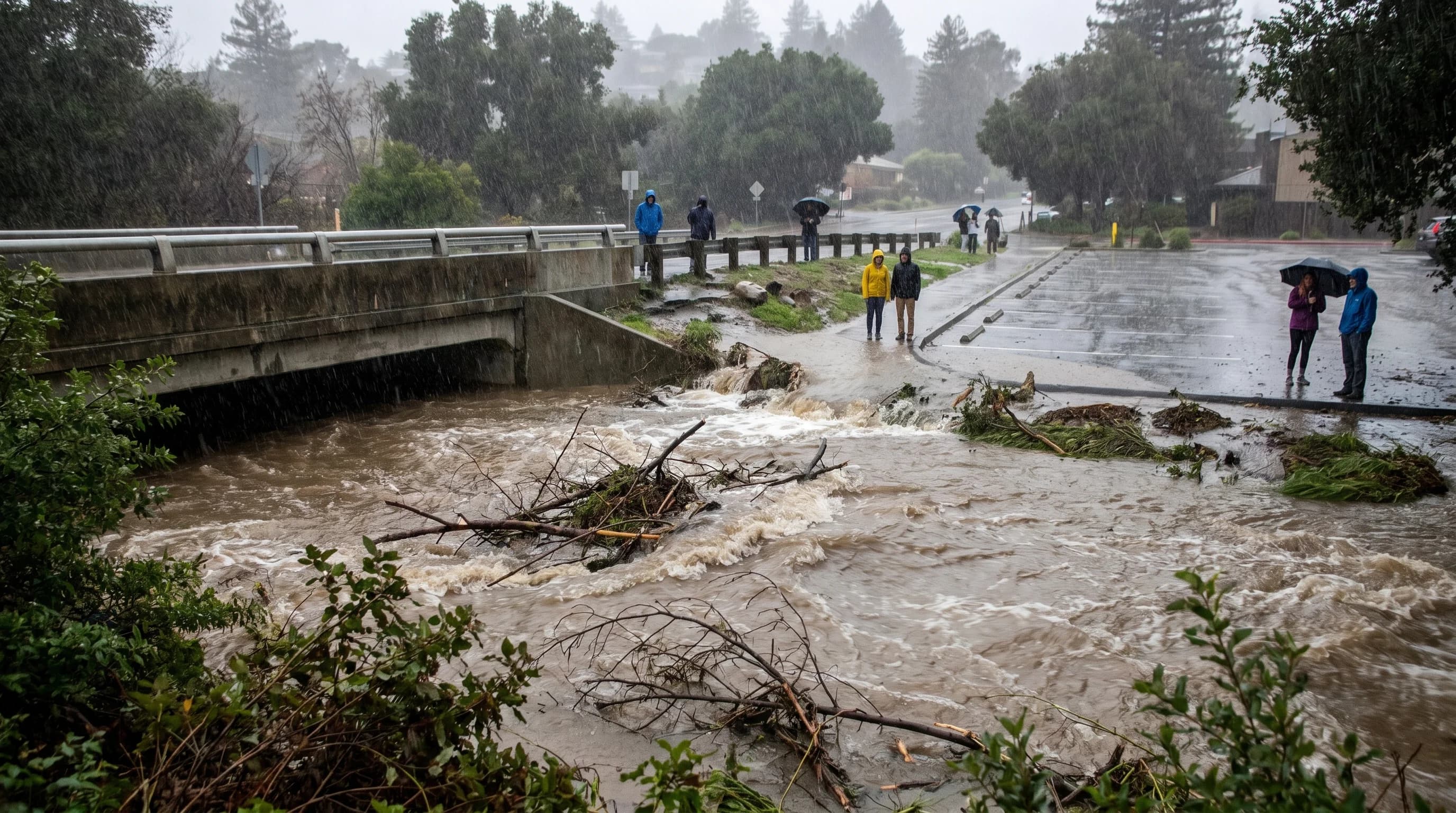
Scientific illustration explaining Most Rain in a Single Day in the Bay Area

The geography of where extreme rainfall falls matters as much as the total. Rainfall in the headwaters of creek systems, in the Santa Cruz Mountains draining to the South Bay, in the Marin Hills draining to the bay's northern shores, in the Diablo Range draining through creeks like Alameda Creek, concentrates and amplifies in the downstream reaches. A community at the base of a steep watershed can experience flooding even if local rainfall is moderate, because the extreme rainfall upstream has all drained toward that point.

Preparing for Extreme Bay Area Rainfall

The atmospheric river events that produce Bay Area record rainfall days are increasingly well-forecast in the 1-to-5-day range. The National Weather Service issues atmospheric river watches and warnings for the Bay Area when forecast conditions meet thresholds for significant precipitation. For residents in flood-prone areas, near creek channels, in low-lying flatlands, on steep hillsides, these forecasts are the most actionable early warning available. The time between a storm landfall and the flooding of a downstream neighborhood can be as little as a few hours, making advance preparation essential for those in vulnerable locations.

Frequently Asked Questions

What is the most rain ever recorded in a single day in San Francisco?

San Francisco has recorded more than 5 inches in a single day during extreme atmospheric river events. The January 4, 1982 storm is among the most significant single-day totals in the city's record, coinciding with the Marin County debris flows that killed 25 people. The February 1998 El Niño storms also delivered multiple days above 4 inches.

What Bay Area location gets the most rain in a single storm?

The upper Marin watershed above Mount Tamalpais and the Santa Cruz Mountains above the rain shadow zones are the Bay Area's highest single-storm rainfall areas. Both locations benefit from strong orographic enhancement; moist Pacific air is forced upward by steep terrain, dropping most of its moisture on the windward slopes. The Marin watershed above 1,500 feet has recorded more than 10 inches in a 24-hour period during the most intense atmospheric river events.

What happens to Bay Area flood control during extreme rainfall events?

Bay Area flood control infrastructure is generally designed for moderate, multi-day wet season rain rather than concentrated atmospheric river bursts. When 3-5 inches falls in 24 hours, creek channels designed for lower flow rates overflow, storm drains back up, and hillsides saturated by preceding weeks of rain can fail. The most dangerous situations arise when an intense atmospheric river arrives after an already wet season; when soils are fully saturated and reservoirs are near capacity, leaving no buffer for additional water.

What caused the 1982 Marin County debris flows?

The January 3-4, 1982 storm brought more than 5 inches of rain to San Francisco and even higher totals in Marin County during a 24-hour period; a record for both areas at the time. The extreme rainfall, falling on already saturated hillsides, triggered dozens of debris flows and landslides in the Marin hills. Twenty-five people were killed, making it one of the deadliest storm events in Bay Area history. The storm, now considered a benchmark event for extreme Bay Area rainfall, was driven by an intense atmospheric river.

How do you prepare for extreme single-day rainfall in the Bay Area?

Monitor National Weather Service forecasts during the wet season; a watch or warning for heavy rain signals the kind of intense event that can produce single-day record rainfall. If you live near a creek, know your flood risk and evacuation routes before the wet season begins. During extreme events, avoid low-water crossings, stay off flood-prone roads, and do not drive through standing water. The NWS issues Flash Flood Watches and Warnings when the combination of rainfall intensity and saturated soil creates landslide and flood risk.

Live Bay Area Conditions

Compare fog, temperature, wind, and comfort across the map.

See which microclimates are clear, cool, windy, or warming up right now.

Open the Weather Map
🔒Privacy Policy📄Terms of Service