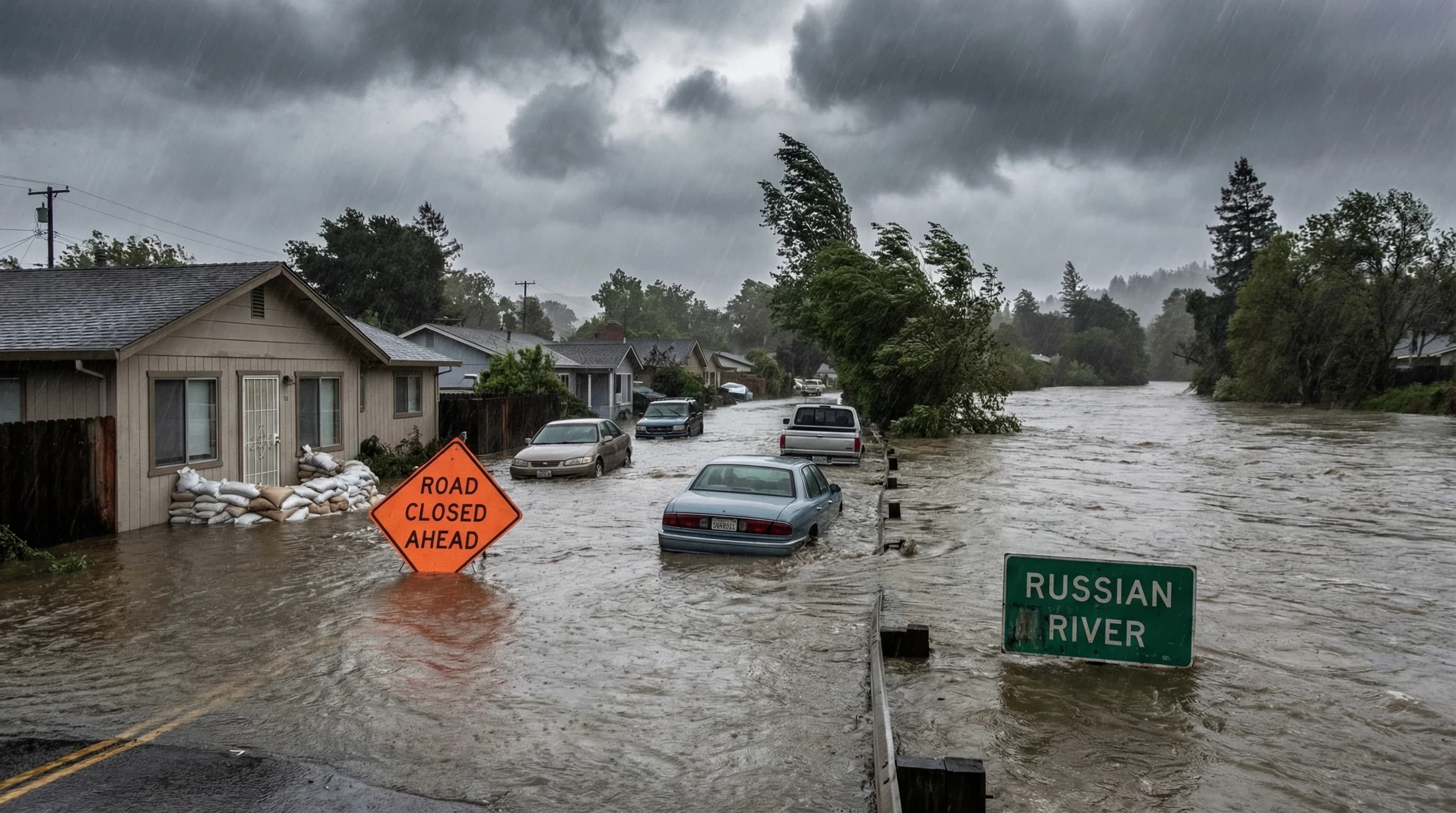
El Niño is one of the biggest seasonal clues Bay Area forecasters watch before winter. It does not guarantee a wet year in San Francisco, Oakland, San Jose, Marin, Sonoma, or the Santa Cruz Mountains, but it can tilt the odds toward a more active Pacific storm track, more atmospheric-river windows, bigger surf, and higher flood and landslide risk once soils are wet. The 1997-98 El Niño is the Bay Area's clearest modern example of what can happen when a strong El Niño lines up with repeated winter storms.
That history matters again because El Niño is strengthening for 2026-27. NOAA's latest outlook says El Niño will likely persist into early spring 2027, with very strong conditions favored in late 2026. For the Bay Area, the practical takeaway is not panic and not certainty. It is preparation: watch the November-March storm window, keep drainage clear, understand local flood routes, and treat seasonal forecasts as a shift in odds rather than a promise of exactly how much rain will fall.
How El Niño Affects Bay Area Weather
El Niño is a periodic warming of the central and eastern tropical Pacific Ocean. That warm water changes tropical thunderstorms, which then influence the jet stream over the Pacific. In many El Niño winters, the storm track is more favorable for California than it is in a neutral or La Niña pattern. For the Bay Area, that can mean more frequent wet-season storm opportunities and a higher ceiling on seasonal rainfall.
The most important local signal is not steady drizzle. Strong El Niño winters can bring rain concentrated in intense storm sequences, especially when the jet stream steers moisture-rich systems into Central and Northern California. Those storms can arrive as atmospheric rivers, producing quick creek rises, urban flooding, saturated hillsides, power outages, and travel problems. The risk usually peaks after the first few storms have already soaked the ground.
Current 2026-27 El Niño Forecast
NOAA's Climate Prediction Center issued its July 9, 2026 ENSO Diagnostic Discussion with an El Niño Advisory in effect. The update says El Niño strengthened over the past month, with above-normal sea surface temperatures across much of the central and eastern equatorial Pacific and atmospheric patterns that show the ocean and atmosphere are coupled. NOAA gives El Niño a 97% chance of lasting through early spring 2027.
NOAA's strength probabilities also lean high for the core winter setup: October-December 2026 has an 81% chance of very strong El Niño conditions. That is a meaningful seasonal signal, but it still describes the tropical Pacific, not a guaranteed rainfall total for the Bay Area. The storm track has to aim at Northern California at the right moments for local rain, flood, and slide impacts to become severe.
What El Niño Does Not Guarantee
El Niño does not mean every Bay Area neighborhood will be wet, stormy, or dangerous all winter. The region sits near the transition zone between Northern California storm tracks and Southern California storm tracks, so even a powerful El Niño can focus the wettest anomalies south of the Bay Area. The 2015-16 El Niño is the cautionary example: it was very strong in the tropical Pacific, but Northern California did not get a repeat of 1997-98.
A better way to read El Niño is as a risk multiplier. It increases the odds that the wet season has a higher ceiling, especially from November through March. It does not replace daily forecasts, watershed conditions, reservoir operations, snow levels, or the exact placement of individual atmospheric rivers. For local decisions, use El Niño for seasonal readiness and National Weather Service forecasts for specific storms.
The 1997-98 Case Study
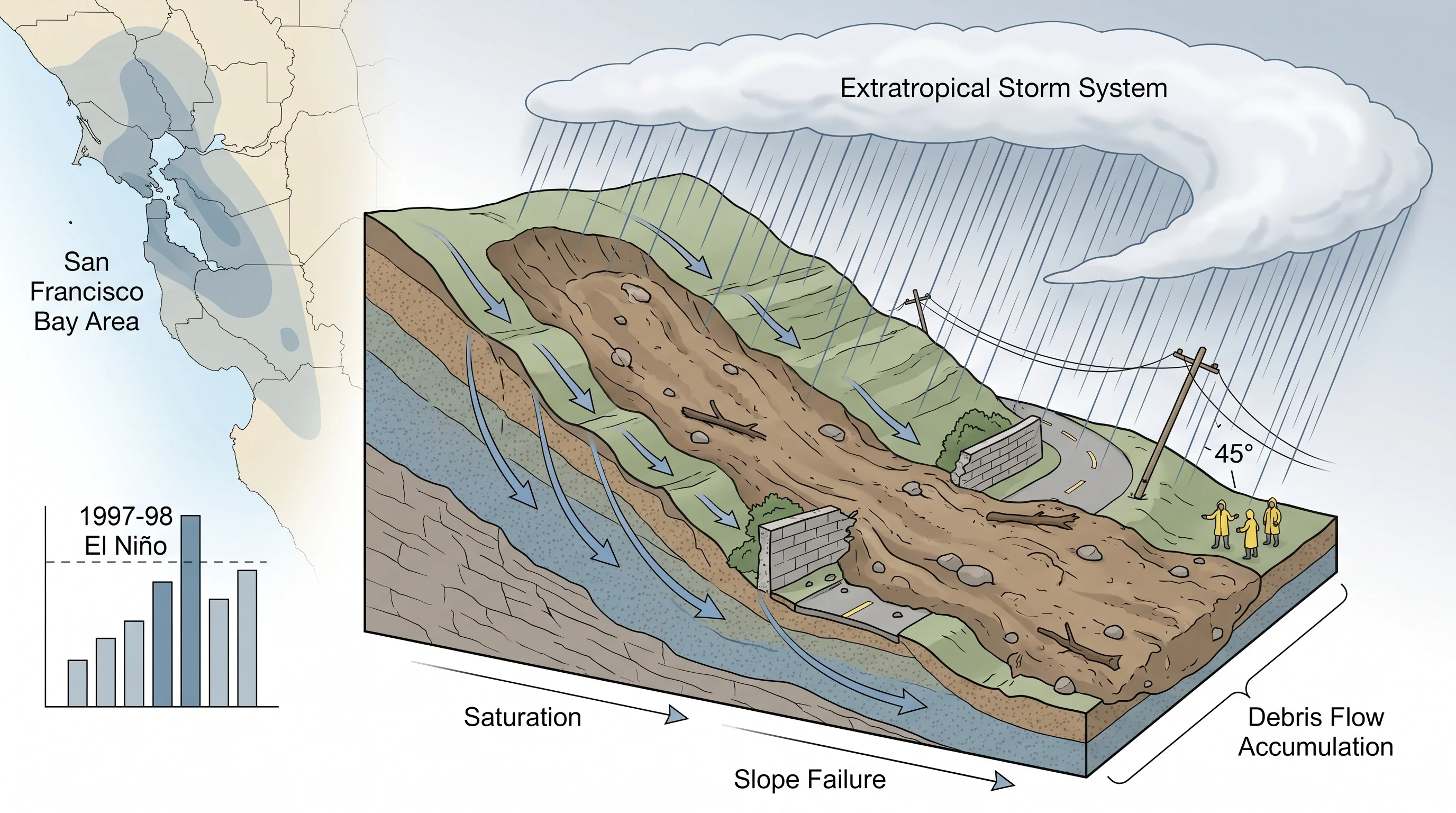
The 1997-98 El Niño was the strongest such event recorded in the 20th century, and California experienced it at full force. The Bay Area was hit by a series of storms between January and March 1998 that were among the most intense in the region's modern weather history. Atmospheric rivers arrived in waves. Hillsides failed. Rivers flooded. Tens of thousands of people were evacuated. Infrastructure across the region was damaged or destroyed.
The worst storms hit in January and February 1998. The Russian River in Sonoma County, which routinely floods in wet years, rose to levels that inundated Guerneville and required evacuations across river communities. Smaller creeks and urban drainage systems also struggled as repeated rain fell on already saturated ground.
Why 1997-98 Was So Damaging
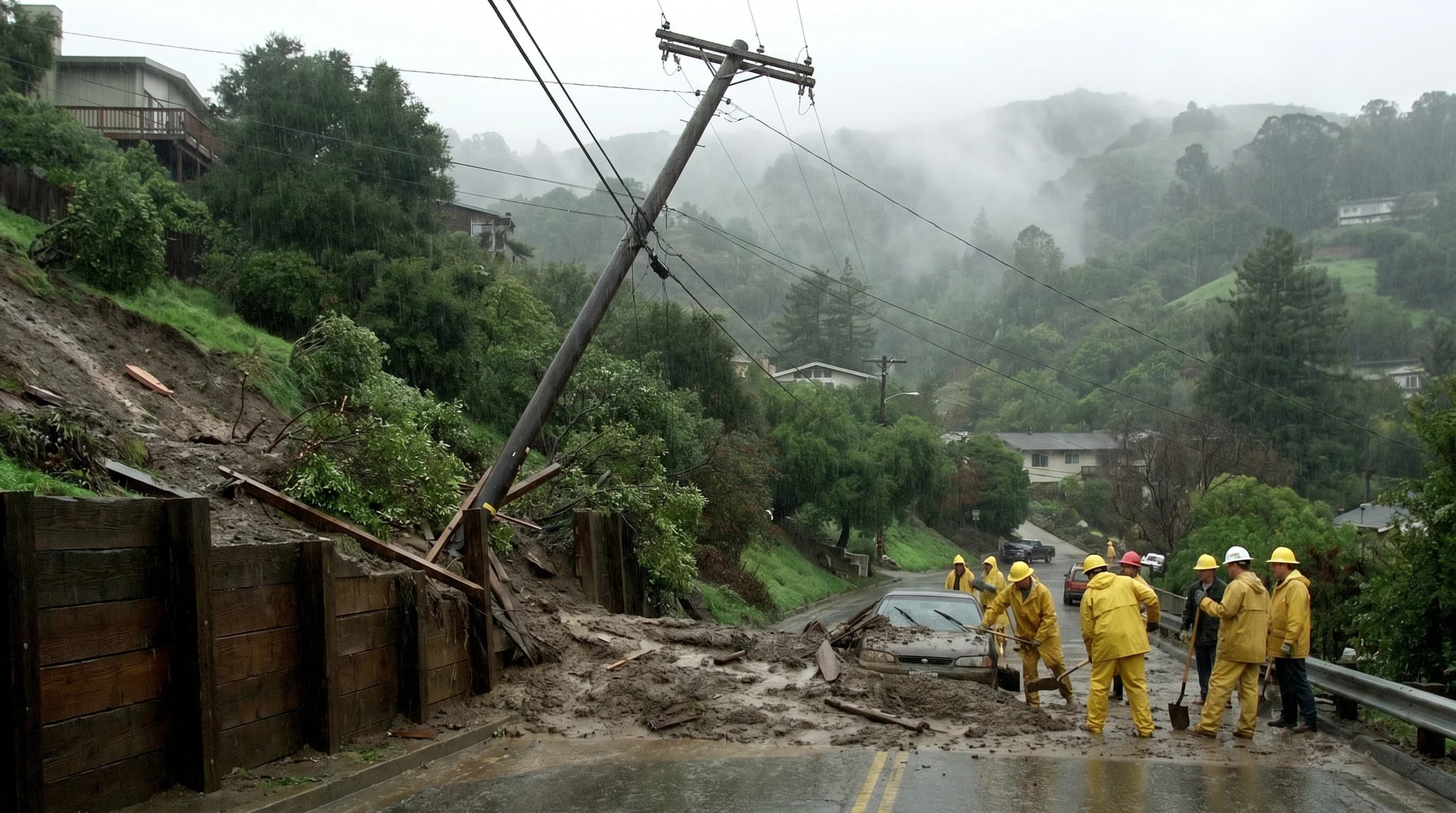
The damage came from sequence and saturation as much as from seasonal totals. Once soils were wet, each additional storm had less room to soak in. Hillside failures spread across the Berkeley Hills, the Marin Headlands, the Santa Cruz Mountains, and the Marin Coast. Highway 1 along the Marin and San Mateo coasts was closed multiple times by slide debris, and portions of Highway 17 through the Santa Cruz Mountains were blocked.
The 1997-98 winter became a stress test for flood control, hillside development, emergency response, and transportation routes. It also shaped how the Bay Area talks about El Niño today: not as a single storm, but as a season when repeated storms can stack impacts faster than infrastructure and landscapes can recover.
How to Prepare for an El Niño Winter
The best El Niño preparation is boring and early. Clear gutters before the first major storm. Check drains, sump pumps, retaining walls, and slope drainage. Trim risky limbs before saturated ground and wind make tree failures more likely. Know whether your commute crosses low spots, creeks, coastal flood zones, or slide-prone roads. If you live near a creek or in a known flood zone, review local alerts and sandbag locations before the first atmospheric river is in the forecast.
For the latest ENSO status, use NOAA's monthly ENSO Diagnostic Discussion. For a broader explainer on El Niño, La Niña, and Bay Area weather, see our El Niño and La Niña guide. Then, as storms approach, shift from seasonal outlooks to specific forecasts, watches, and warnings.