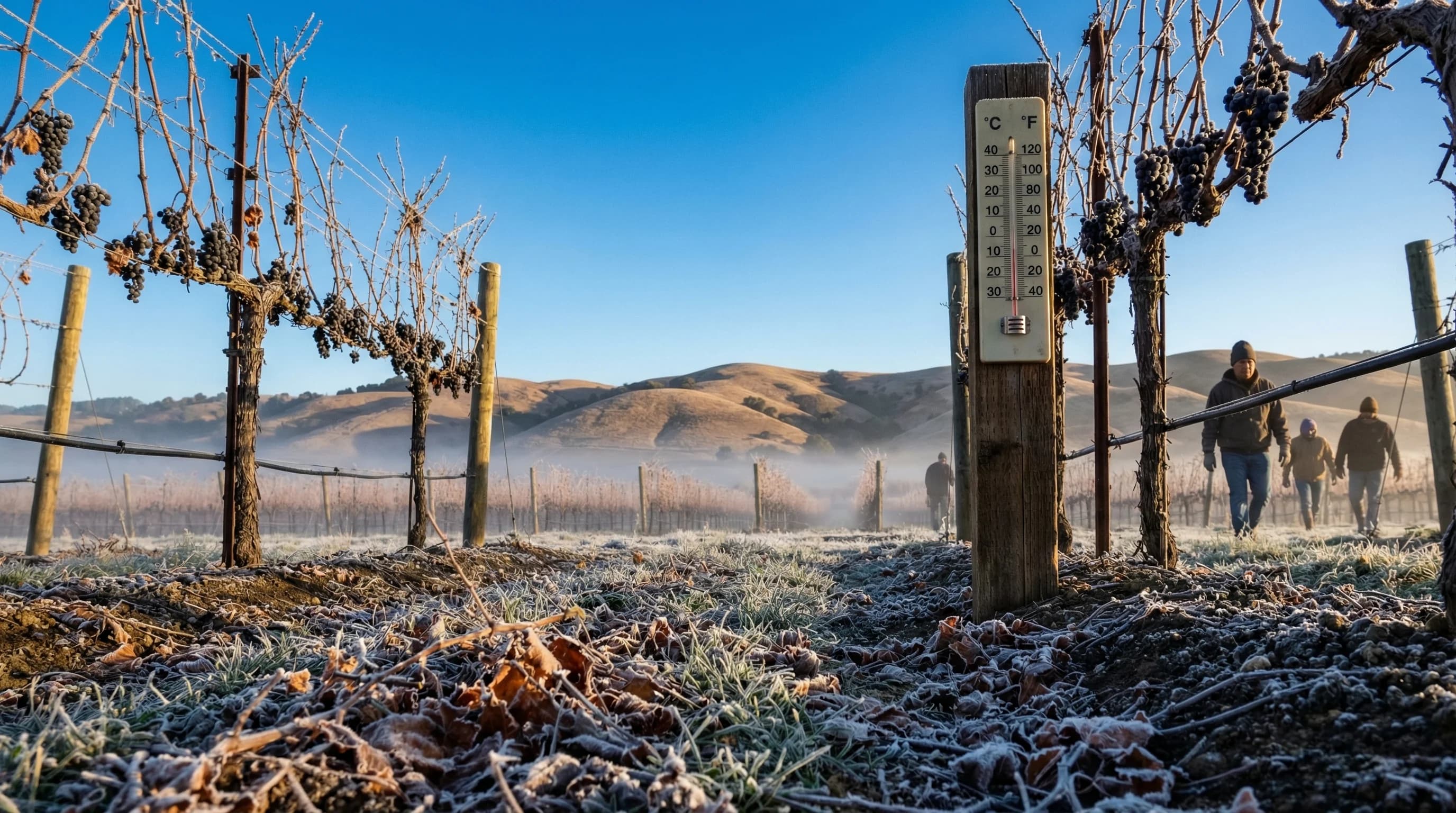
The Bay Area is not known for cold, and the region's minimum temperature records confirm this. Even in the coldest recorded winters, Bay Area lowland temperatures have rarely reached the teens, and frost is uncommon at sea level. But the pattern of cold extremes in the region reveals something interesting about how Bay Area geography shapes temperature minimums, just as it shapes maximums. Inland valleys are colder at night than the coast. Sheltered, low-lying basins are colder than hilltops. And the combination of cold, calm, clear nights with elevated terrain is what produces the Bay Area's most extreme cold events, not the harsh Arctic outbreaks that bring cold records to the interior of the country.
San Francisco: Cold Records
San Francisco's all-time low temperature is 27 degrees Fahrenheit, recorded on December 11, 1932. The city's maritime exposure means that ocean water temperature, which rarely drops below 50 degrees Fahrenheit even in winter, provides a significant thermal buffer against extreme cold. Cold air masses moving through the region lose much of their bite before reaching the peninsula. Temperatures below freezing at sea level in San Francisco are unusual, occurring perhaps a few times per decade, and they almost never persist through the morning.
The coastal hills and the Marin Peninsula experience slightly colder minimum temperatures than downtown San Francisco, because radiation cooling on clear nights draws cold air into the low-lying areas and away from the peninsula's exposed tip. But the difference is modest. The true cold outliers in the Bay Area are inland.
Inland Bay Area: Where the Real Cold Lives
The inland valleys and basins of the Bay Area experience significantly lower minimum temperatures than the coast. Livermore, the Napa Valley floor, the Santa Clara Valley around Morgan Hill and Gilroy, and the interior Sonoma County valleys all regularly record temperatures in the mid-20s Fahrenheit in hard freeze events. The coldest locations are those with the most radiation cooling opportunity: flat valley floors, away from the marine layer's moisture and the bay's thermal mass, under clear skies on calm winter nights.
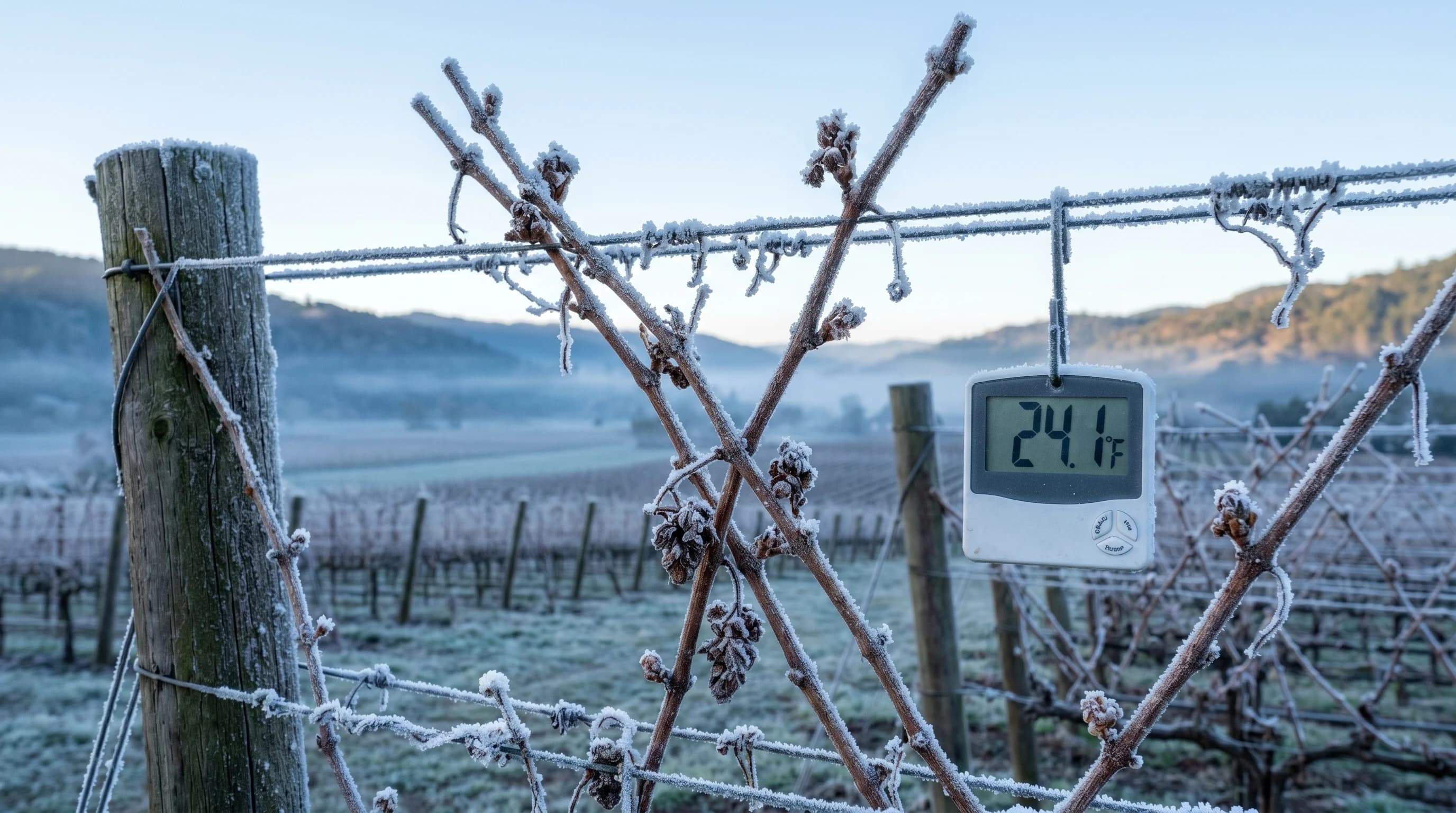
The Livermore Valley has recorded temperatures below 20 degrees Fahrenheit on the coldest nights of severe winter cold snaps. The Napa Valley, which sits inland and away from direct marine influence, regularly reaches the mid-20s during hard frost events that damage vineyards. Winemakers in the Napa and Sonoma valleys track minimum temperatures closely, because freeze damage during bud break in spring can destroy an entire year's crop in a single night.
Radiation Cooling and Bay Area Cold
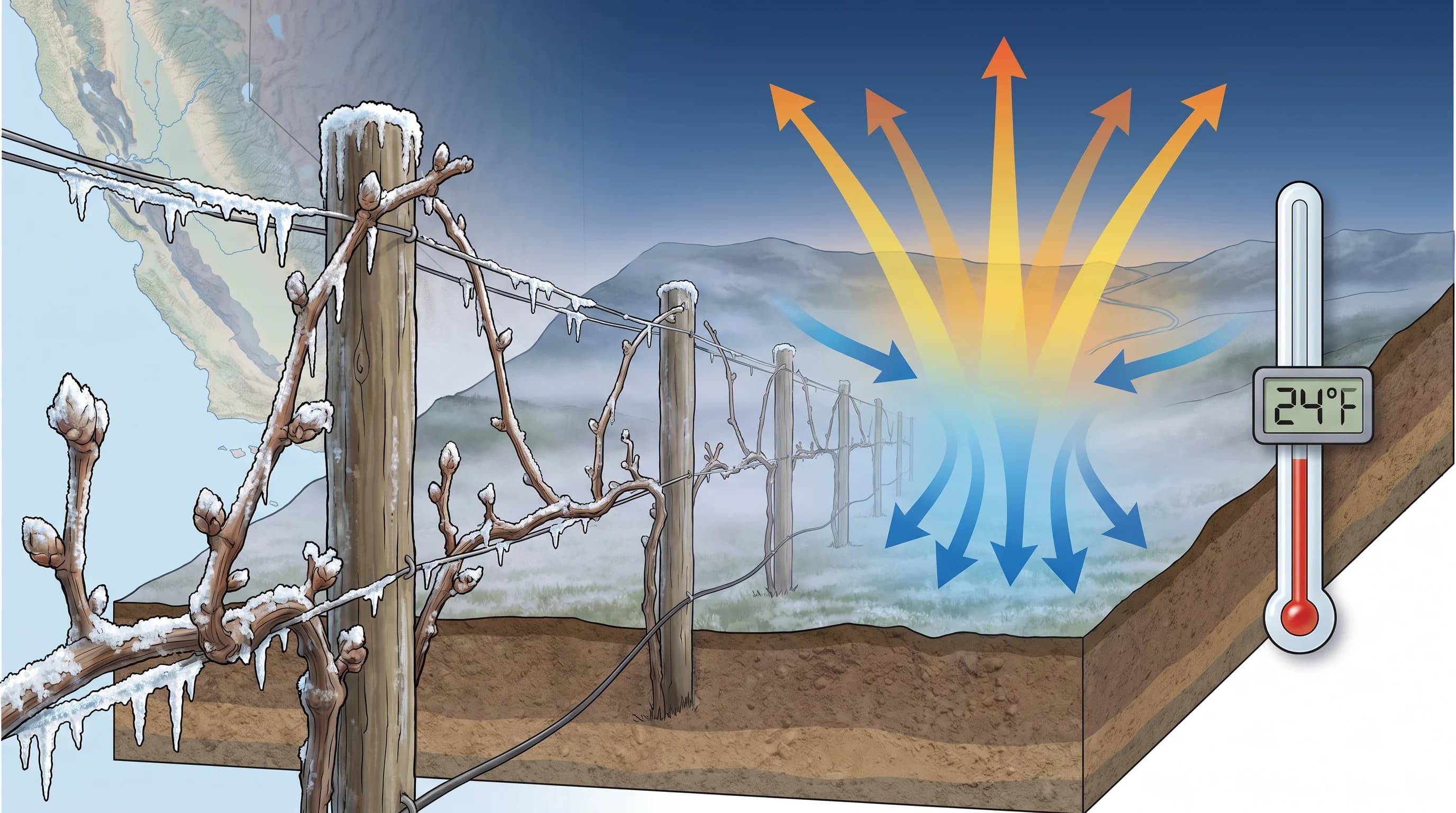
The Bay Area's coldest temperatures are products of radiation cooling rather than Arctic air intrusions. On clear, calm winter nights, the ground radiates heat to space and the surface air cools. This process is most effective in sheltered valleys where the cold air pools and cannot mix with warmer air above. The result is a temperature pattern that appears counterintuitive: the floor of the Livermore Valley or the Napa Valley floor at 20 degrees, while the hilltops above are at 35 degrees. The inversion that holds the cold air in the valley is the same mechanism that creates tule fog; the fog forms when the valley air cools to its dew point.
This is why Bay Area cold events are fundamentally different from the cold extremes of the country's interior. The coldest nights in Chicago or Denver are driven by Arctic air masses that bring cold throughout the atmosphere. Bay Area cold nights are thin, near-surface events: a shallow pool of cold air in low-lying terrain, a few hundred feet deep, under a temperature inversion. Step uphill a few hundred feet and temperatures are 10 to 15 degrees warmer. This vertical structure is why Bay Area farmers can protect crops from frost with wind machines that mix the warm air from above with the cold air at the surface, a strategy that would be futile against a genuine Arctic air mass.