seasonaldestinationsclimate science

Rare Snow Events in the Bay Area

By SFBayWeather||Updated |6 min read
Rare Snow Events in the Bay Area

Key Takeaways

  • Snow at Bay Area sea level is a generational event: San Francisco last recorded measurable accumulation in February 1976.
  • East Bay hills above 1,500 feet see occasional snow a few times per decade, and Mount Diablo at 3,849 feet is the Bay Area's most reliable snow location.
  • Snow requires the unusual combination of cold air and precipitation occurring simultaneously. The Bay Area's maritime climate usually produces one or the other but rarely both.
  • When Bay Area snow is forecast, go immediately. Temperatures typically rise within 12-24 hours and the snow melts before most people can reach it.
  • The January 2021 and February 2011 events brought the most recent visible snow to East Bay hills, including light dustings seen from San Francisco.

Snow falls somewhere in the Bay Area most years, but seeing it at sea level is a generational event. The mountain ridgelines above 2,000 feet receive a dusting once or twice a decade. The East Bay hills above 1,500 feet see snow perhaps once every several years. San Francisco proper at sea level last recorded measurable snow in February 1976. And yet when snow does appear, even a trace on the hilltops, even a few flakes in the air over downtown, Bay Area residents respond with something approaching wonder. Snow is genuinely rare here, which is why every occurrence makes news and why understanding the conditions required to produce it reveals a great deal about the Bay Area's climate limits.

Why Snow Is Rare in the Bay Area

Snow in the Bay Area requires two things happening simultaneously: cold enough air at lower elevations and precipitation. The challenge is that the Bay Area's maritime climate tends to produce one or the other but rarely both at once. Winter storms bring moisture from the Pacific, but Pacific air is usually too warm to produce snow at sea level even in January. Cold Arctic air masses can push temperatures below freezing in the Bay Area, but Arctic air is typically dry and produces no precipitation. The overlap, cold and wet simultaneously, is uncommon.

When cold Arctic air does push into Northern California, it usually arrives from the northeast, through the Sacramento Valley and over the Diablo Range or Sierra Nevada. By the time this air reaches the Bay Area, it has either dried out or moderated in temperature. For snow to fall at Bay Area lowland elevations, you typically need the cold Arctic air already in place and then a Pacific storm moving in on top of it, a cold-air damming scenario where the cold surface layer is deep enough to persist while the warm storm system moves over it, keeping the lower atmosphere below freezing.
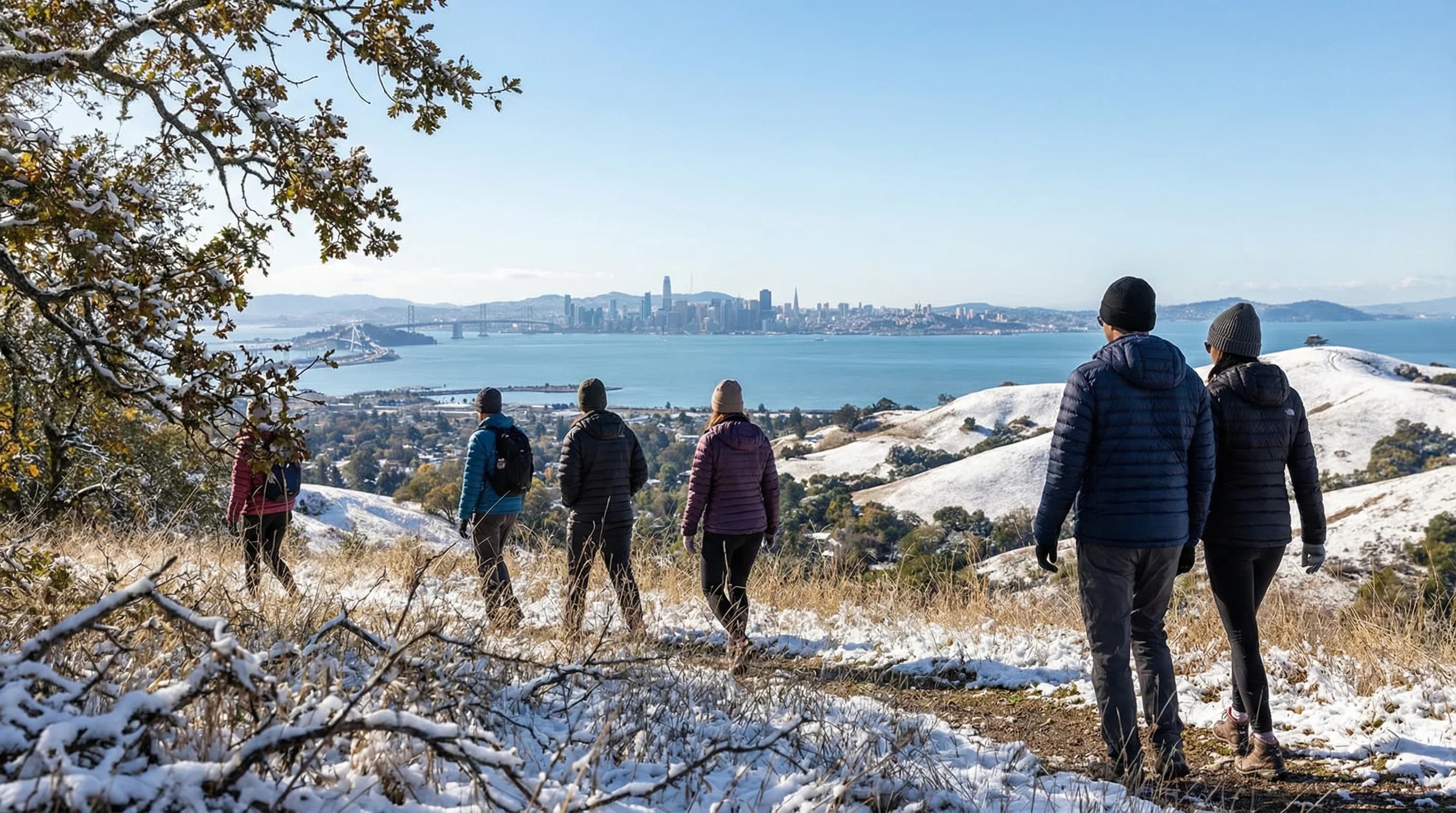
Snow dusting the hills above the Bay Area, East Bay hills with a light snow cover visible from San Francisco Bay, a rare occurrence that captivates Bay Area residents
Snow in the Bay Area is a generational event at sea level, though the higher ridgelines above 1,500-2,000 feet see occasional dustings. The 2011 snow event brought accumulating snow to East Bay hills visible from San Francisco, something that happens only a few times per century.

Notable Bay Area Snow Events

The most dramatic Bay Area snow events of the modern era include February 5, 1976, when measurable snow fell in San Francisco, the last time the city has recorded measurable accumulation at its official weather station. Parts of the Bay Area floor received half an inch that day, and photos from the event show snow on the streets of the Sunset and Richmond districts. The event lasted only a few hours before warming temperatures converted it back to rain.
Scientific illustration explaining Rare Snow Events in the Bay Area

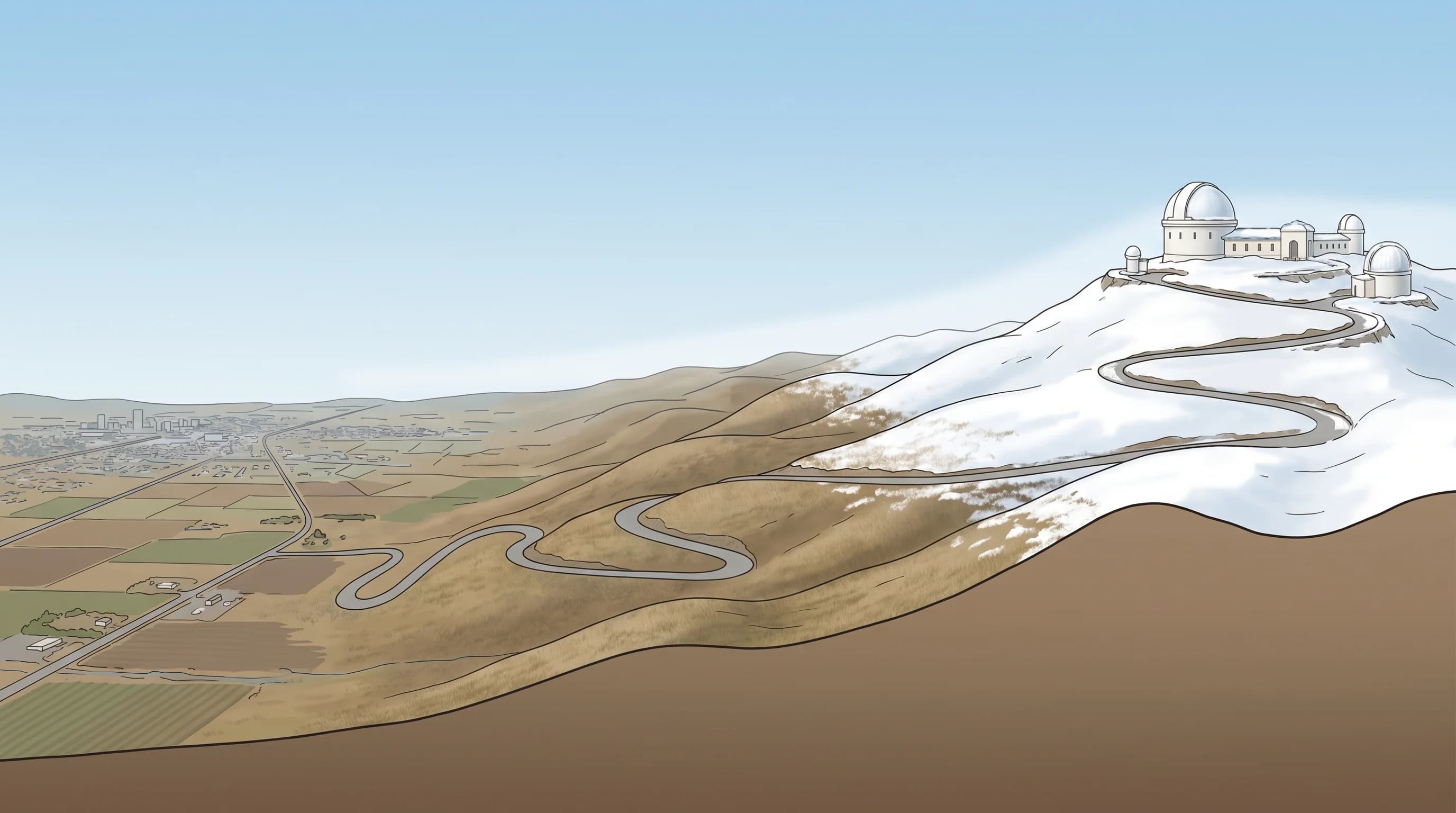
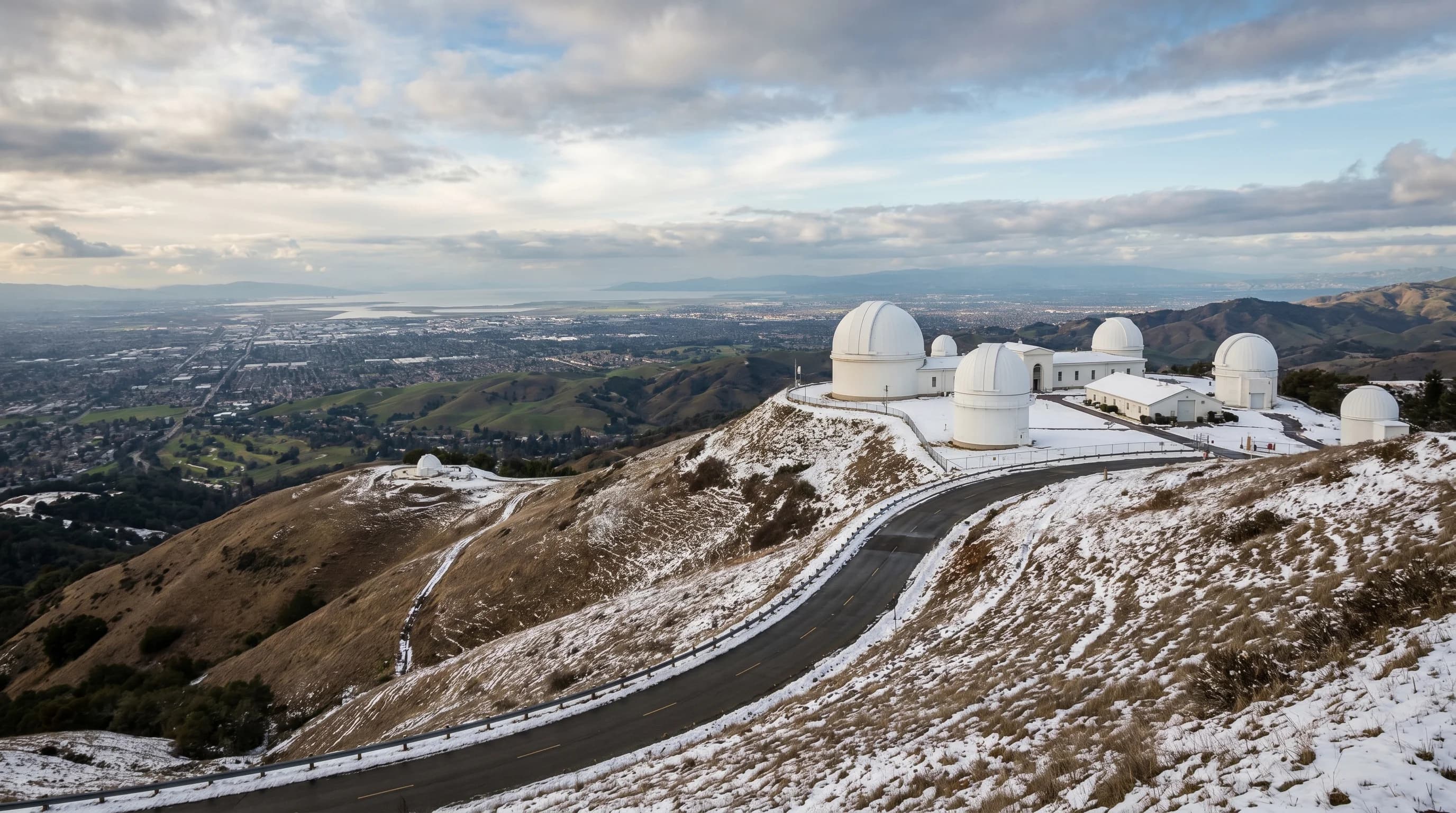
The January 2021 winter storm brought the most visible recent snow to the Bay Area, depositing several inches on the East Bay hills and a dusting visible from San Francisco. Mount Diablo, at 3,849 feet, received several inches, and the snow line descended to around 1,500 feet in the East Bay, low enough to dust some residential neighborhoods in the hills above Oakland and Berkeley. The February 2011 storm was similarly dramatic, bringing snow down to lower elevations in the East Bay hills and briefly producing snow flurries in parts of San Francisco before temperatures rose.

Where to See Snow in the Bay Area

Mount Diablo is the most reliable place in the greater Bay Area to see snow, receiving accumulation perhaps once or twice a decade and occasional dustings more frequently. The summit at 3,849 feet sits high enough to experience snow during moderate cold events that produce only rain at lower elevations. When snow falls on Mount Diablo, it is visible from much of the Bay Area on the day it falls, a striking sight for residents who otherwise associate the peak with hot, dry East Bay summers.

Mount Tamalpais in Marin, at 2,574 feet, also receives occasional snow, though less frequently than Diablo due to its coastal exposure and slightly warmer maritime influence. The ridge of the Santa Cruz Mountains above Skyline Boulevard receives snow perhaps once a decade. In all cases, Bay Area snow is a transient event: temperatures rise within 24 hours, and the snow melts before most people can get to see it. The correct response to a Bay Area snow forecast is to go look immediately, because it will likely be gone by afternoon.

Frequently Asked Questions

When did it last snow in San Francisco?

San Francisco last recorded measurable snow on February 5, 1976, when parts of the city received about half an inch. The event lasted only a few hours before warming temperatures converted the snow to rain. Trace amounts have been reported occasionally in the decades since, but no officially measured accumulation has occurred at the San Francisco weather station since 1976.

Where is the best place to see snow in the Bay Area?

Mount Diablo at 3,849 feet is the most reliable location, receiving accumulating snow perhaps once or twice a decade and occasional dustings more frequently. When snow does fall on Mount Diablo, it is visible from much of the East Bay and can be reached by car. The East Bay hills above 1,500 feet in the Oakland-Berkeley area also occasionally receive dustings during cold winter storms. Mount Tamalpais in Marin at 2,574 feet is a secondary option.

What conditions are needed for Bay Area snow?

Snow requires two things simultaneously: cold enough air and precipitation. The Bay Area's maritime climate usually produces one but not both. For snow at lower elevations, you need Arctic air already in place from the northeast, then a Pacific storm moving in on top; cold-air damming where the cold surface layer is deep enough to persist while the warm storm system provides moisture. This combination is uncommon enough that sea-level Bay Area snow happens only a few times per century at most.

How often does it snow on Mount Diablo?

Mount Diablo at 3,849 feet receives light snow accumulation perhaps one to three times per decade, and dustings more frequently. The most reliable snow years are those with cold, wet winters; particularly La Niña years when Arctic air masses occasionally reach California. When snow does fall on Mount Diablo, it creates a remarkable scene visible from most of the East Bay, and the mountain roads can be closed by ice or snow. The summit's lower parking areas (around 2,000 feet) occasionally see snow when the higher elevations get significant accumulation.

Is Bay Area snow dangerous?

For the mountains and hills where snow is most likely, yes, primarily the road hazards. Black ice and snow-covered roads on steep mountain terrain can cause accidents before road crews have time to respond. Mount Diablo's summit road and the narrow roads in the Berkeley Hills and Santa Cruz Mountains are particularly hazardous after snow. At sea level, the rare light dustings pose little danger. During genuine Bay Area snow events, residents who are unfamiliar with winter driving should avoid mountain roads entirely until conditions are assessed.

Live Bay Area Conditions

Compare fog, temperature, wind, and comfort across the map.

See which microclimates are clear, cool, windy, or warming up right now.

Open the Weather Map
🔒Privacy Policy📄Terms of Service