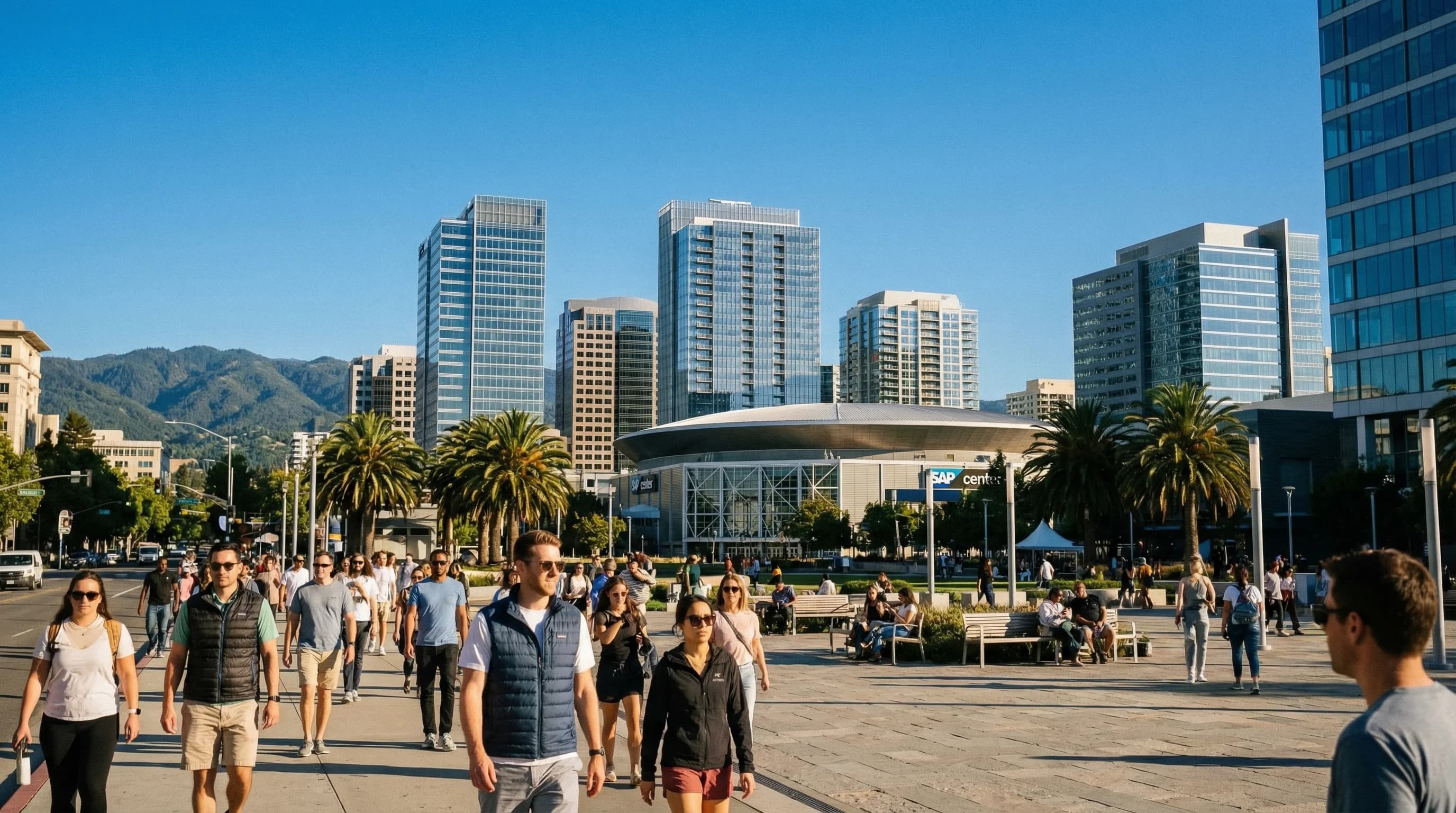
San Jose is the Bay Area's largest city and its warmest major one, sitting at the south end of San Francisco Bay where the marine layer has traveled 40 miles from the Pacific before arriving and lost much of its cooling intensity. The city averages July highs around 82 degrees Fahrenheit, warm enough to feel like genuine summer, and its winter lows rarely approach freezing. San Jose is the Bay Area at its most California-like: consistently warm, sunny, and dry, with a climate that matches the state's postcard reputation far better than fog-shrouded San Francisco or cold Half Moon Bay ever will. For visitors and residents who came to California expecting warmth, San Jose delivers it.
Why San Jose Is Warmer Than the Rest of the Bay Area
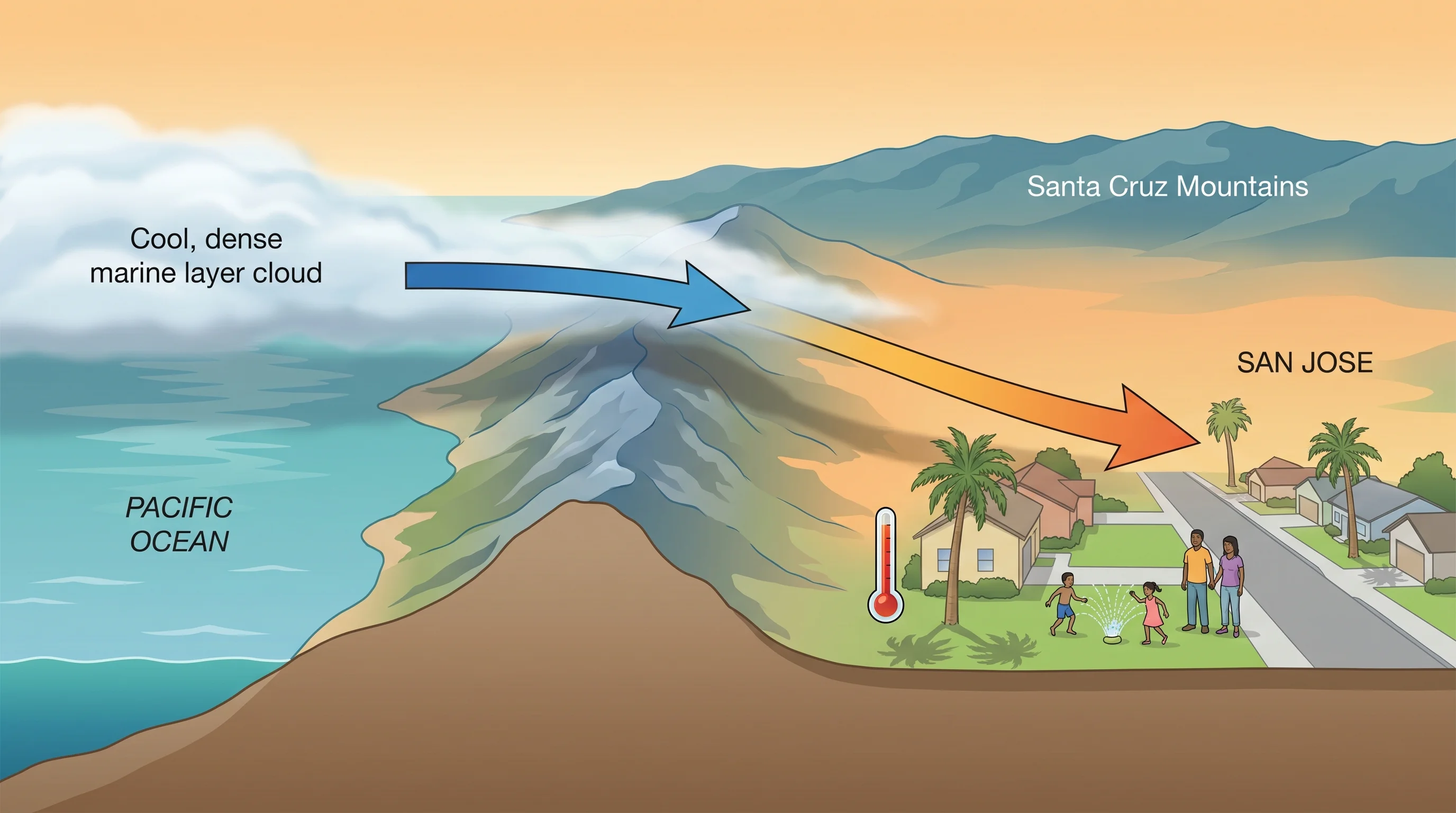
San Jose's warmth comes from its position at the southern end of the Bay, far from the Golden Gate through which the marine layer enters the region. The Pacific fog and cool air that suppress San Francisco temperatures in summer has to travel the full length of the bay, through the Central Bay, past the San Mateo Bridge, and into the South Bay, before reaching San Jose. By the time it arrives, the marine air has warmed significantly through mixing with the heated inland air above the bay surface.
The South Bay itself acts as a heat reservoir. The shallow water at the bay's southern end warms more readily than the open Central Bay, and the surrounding flatlands of Silicon Valley heat up during the day and radiate that heat back toward the city at night. The result is a city that is consistently 15 to 20 degrees warmer than coastal San Francisco on summer afternoons and has warmer nights as well.
Summer: The Reliable Warm Season
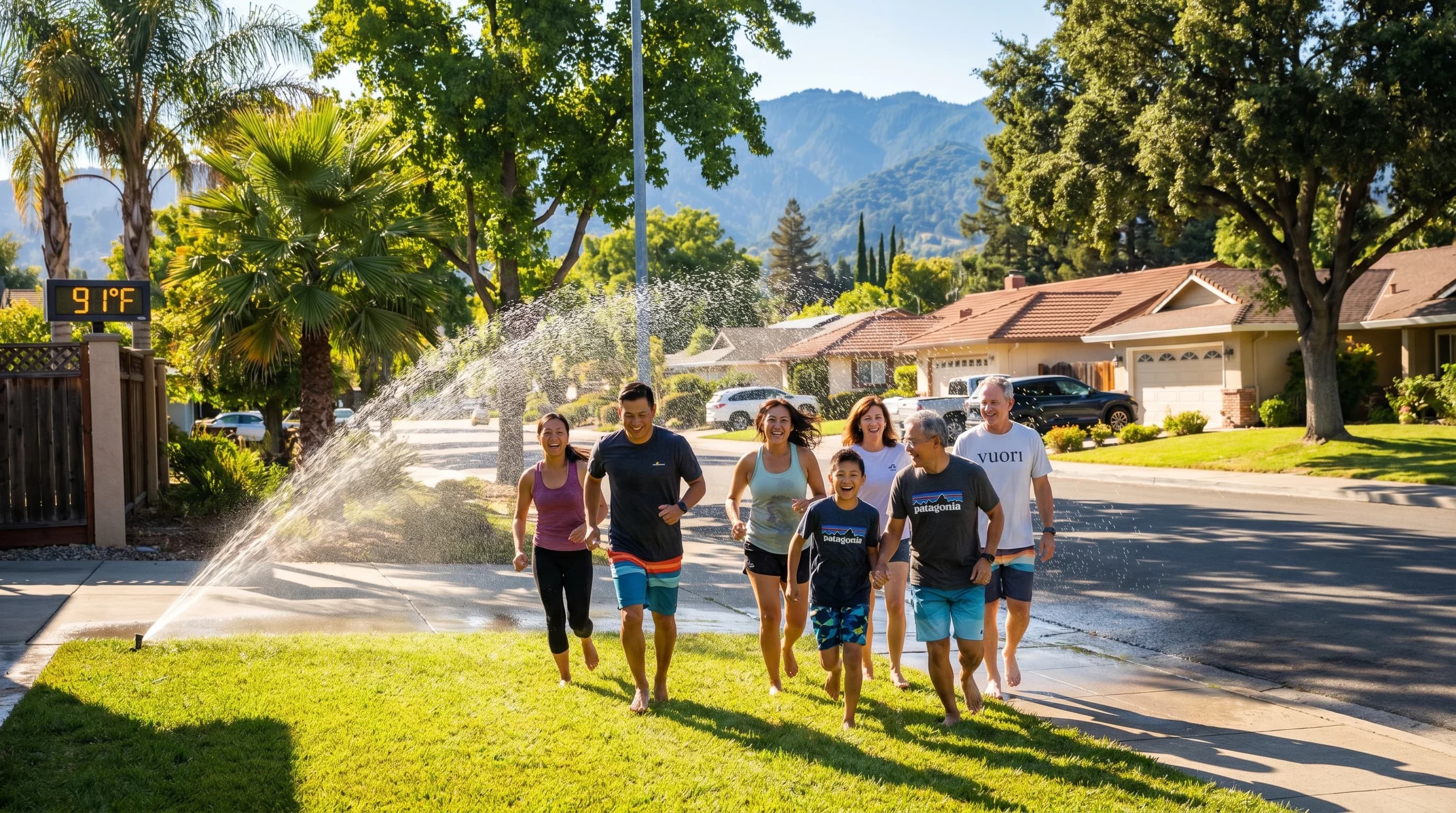
San Jose summers are genuine: warm, sunny, and dry. July and August highs average around 82 to 84 degrees Fahrenheit, with frequent warm spells pushing temperatures into the upper 80s and occasional heat waves bringing 100-plus temperatures. Unlike the coastal Bay Area, where July can feel more like spring than summer, San Jose delivers summer weather that residents and visitors from other warm-climate regions will recognize.
Morning fog occasionally reaches the South Bay on strong marine push days. The marine layer can penetrate 40+ miles inland when the pressure gradient is strong, but it is less persistent and burns off earlier than in the northern Bay Area. A typical San Jose summer day starts clear or with high clouds, warms quickly through the morning, and peaks in the early afternoon before an afternoon breeze brings modest cooling. The breeze is real but gentler than in San Francisco, and outdoor dining and activity are comfortable into the evening on most days.
The Urban Heat Island Effect
San Jose shows the Bay Area's clearest urban heat island signal. The city has converted large areas of former orchard and farmland to impervious urban surfaces over the past 50 years, measurably increasing overnight low temperatures in the urban core relative to surrounding areas. During heat waves, San Jose's urban heat island amplifies already dangerous temperatures, with downtown and East San Jose areas remaining significantly warmer overnight than the agricultural and open space areas at the city's edges.
The contrast is sharpest on calm, clear nights. The airport weather station, surrounded by concrete and asphalt, often records overnight lows 5 to 8 degrees higher than the stations in the hillside communities to the west or the agricultural areas to the south. This urban heat island effect is the main reason San Jose's climate statistics run slightly warmer than the surrounding region, and it has measurable health impacts during summer heat events.
Fall and the Best Outdoor Weather
September and October are San Jose's most balanced months. The summer heat moderates into the 80s and eventually the 70s, the air is clear and dry, and the Santa Cruz Mountains to the west turn golden brown in the dry fall light. This is the window when outdoor farmers markets, sports events, and hiking in the hills feel truly pleasant rather than either too hot or too cold. Hiking at Alum Rock Park and the Santa Cruz Mountains parks is at its best in early fall when the air is warm enough to hike in a T-shirt but cool enough to feel refreshing.
Winter in San Jose is mild but brings the region's entire year of rainfall in a compressed window. Average annual precipitation is around 15 inches, lower than most Bay Area cities because the South Bay sits in a partial rain shadow from the Santa Cruz Mountains. January highs average around 57 degrees, cold enough to require a jacket but rarely cold enough to frost at sea level. The hills to the west green up brilliantly after the first rains, and the clear winter days between storms offer some of the best views of the Santa Cruz Mountains that the city gets all year.