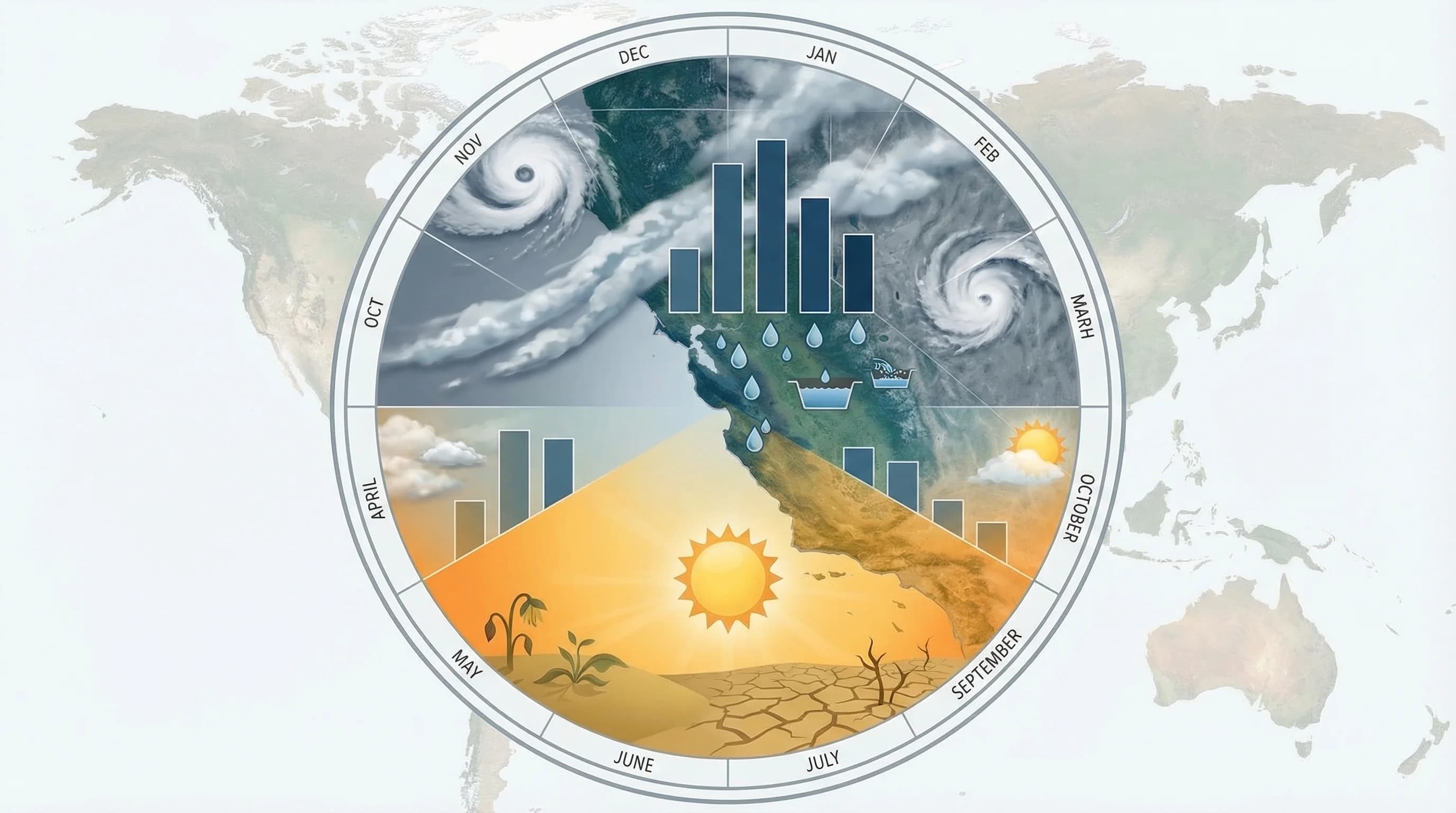
In the Bay Area, when it rains is almost as predictable as whether it rains. The region has a classic Mediterranean climate: a wet season and a dry season, with little ambiguity about which is which. The wet season runs from approximately November through March, and the dry season runs from April through October. This pattern is so consistent that Bay Area residents develop strong intuitions about it: planning outdoor events in summer without checking the forecast, pulling out rain gear in December, and scheduling painting or construction projects for June through August. The specifics matter: which months are wettest, which carry some risk, and when the first fall rains typically arrive.
When Is Rainy Season in the Bay Area?
Rainy season in the Bay Area usually runs from November through March. December, January, and February are the core wet months, while October and April are transition months that can be dry or occasionally stormy. By June, July, August, and September, meaningful rain is rare across the region, even when coastal fog is common.
The Bay Area Wet Season: November Through March
The heart of the Bay Area's wet season is December through February, when the North Pacific High weakens and retreats, allowing storms from the Pacific to reach California. December and January are statistically the wettest months in San Francisco, each averaging around 4.5 inches of rainfall. February is close behind at around 4 inches. These three months together account for about half the city's annual rainfall total of roughly 23 inches.
November is the transition month. It is the first month when rain becomes a realistic expectation after the completely dry summer, but November is not guaranteed to be wet. Many years, the first significant storm of the season doesn't arrive until late November or even December. In dry years, storms come late and stay short. In wet years, storms can start in October and continue aggressively through March. The timing of the first fall storm is one of the most variable aspects of Bay Area climate.
When Is It Too Early to Expect Rain?
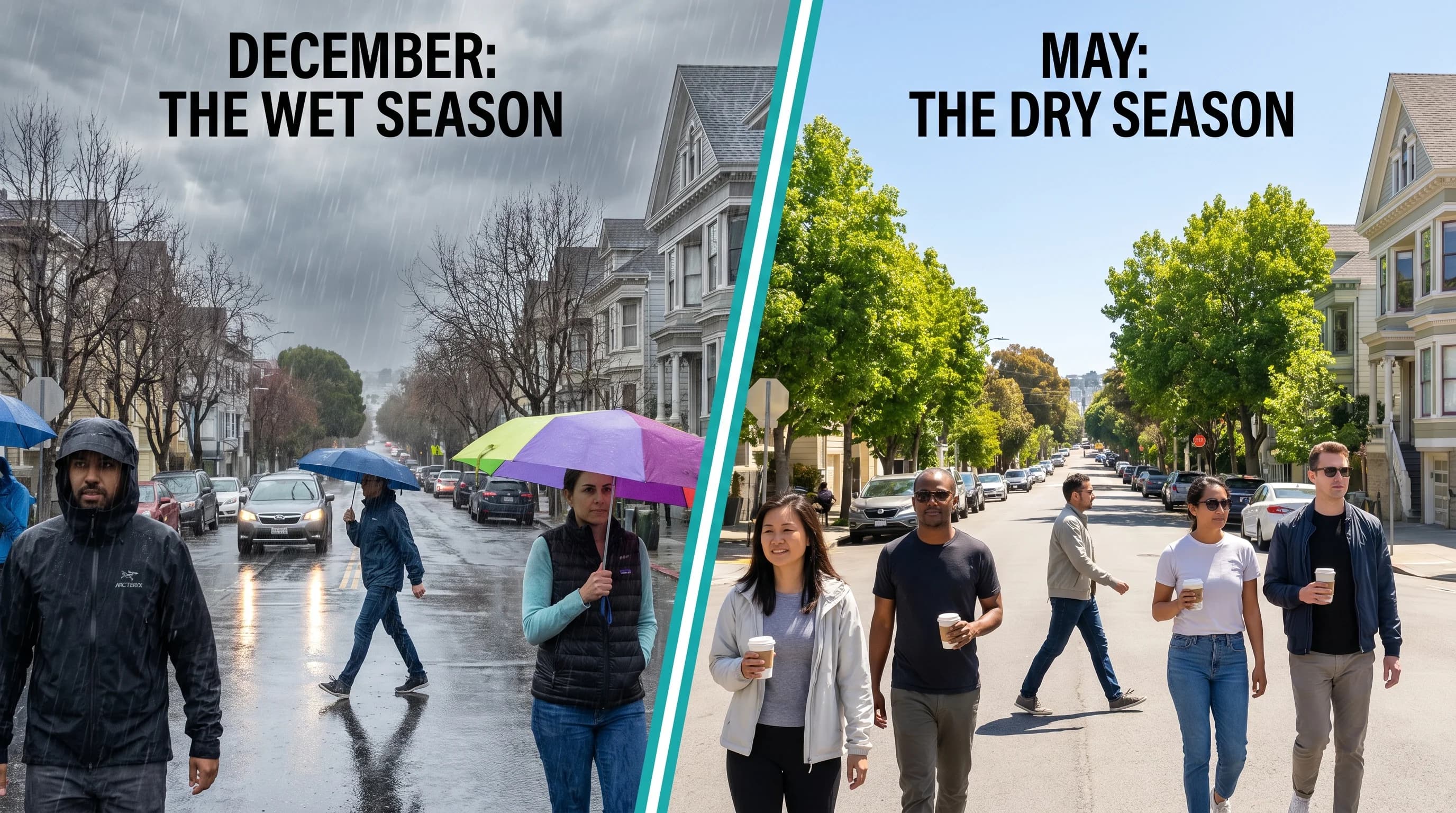
June, July, August, and September are essentially rainless across the Bay Area. San Francisco averages less than 0.1 inches in each of these months, occasionally recording a trace from a stray marine layer drizzle event, but effectively zero for planning purposes. If you are visiting the Bay Area anytime from mid-May through early October, you can leave your umbrella at home. This is not merely a weather forecast. It is the climate of the region: a dry season that is so consistently dry that "June gloom" and "August fog" are recognized phenomena, but summer rain is not.
April is the first dry-season month, but the transition is gradual. April averages about 1.5 inches in San Francisco, less than half of March's 3 to 3.5 inches. In April, the typical Bay Area pattern is for the wet season to have mostly concluded, with occasional late storms still possible. May drops to under an inch, and by June the dry season is fully established. In some years, the transition happens earlier. March can be very dry. In wet years, meaningful rain can arrive as late as early May.
Year-to-Year Variability
The monthly averages describe the climate, but the year-to-year variability of Bay Area rainfall is enormous. In wet El Niño years, annual totals can double the long-term average. In dry La Niña years or persistent drought years, annual totals can fall to half the average. San Francisco's annual rainfall has ranged from about 9 inches in drought years to over 47 inches in exceptional wet years, a five-to-one range around an average of 23 inches.
This variability is one of the defining features of Bay Area weather, and it has significant practical consequences. A drought year's soil remains dry through the summer, reducing vegetation moisture and increasing fire risk. A wet year's saturated soils increase hillside failure risk. The wine country's grape growing season, the fire season's severity, and the state's reservoir levels all depend heavily on which end of the variability spectrum any given year falls.