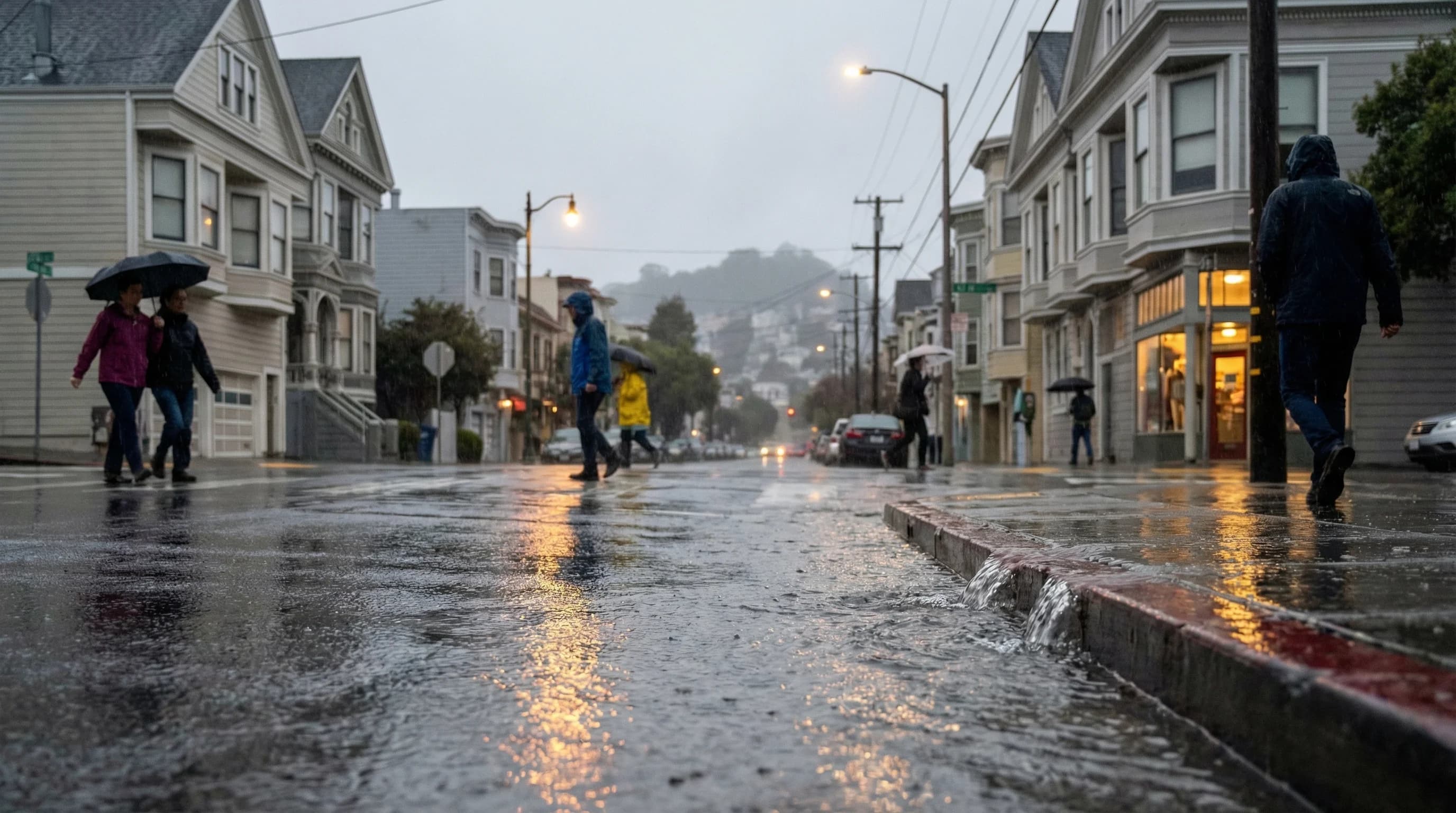
December and January compete for the title of the Bay Area's rainiest month, and the contest is close enough that it varies by location and by year. In San Francisco, January edges December in most years by a fraction of an inch. In the Santa Cruz Mountains and the Marin watershed, where orographic enhancement amplifies rainfall, the numbers are higher in absolute terms but the December-January competition still holds. February is close behind. The reason it is not November, when the rainy season begins, or March, when the last storms arrive, says a lot about how Bay Area storms work and when to expect the most intense rainfall of the wet season.
December and January: The Peak Months
San Francisco's historical monthly rainfall averages place December and January as the wettest months, each averaging approximately 4.5 inches. The close competition between the two reflects the randomness of when individual atmospheric river events arrive. December gets the most rainfall in some years, January in others, and the difference over many years is small.
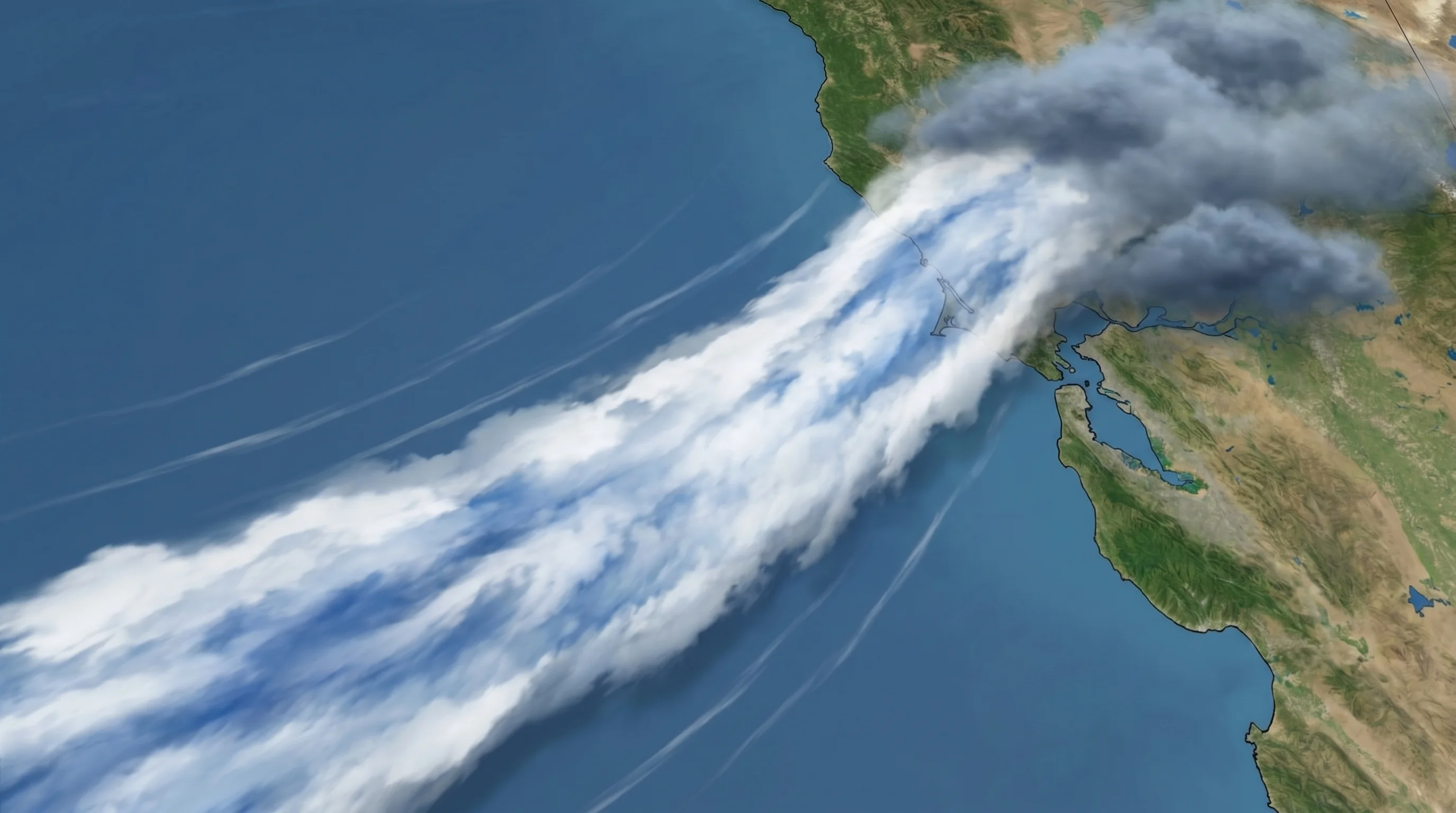
The reason December and January are the wettest, rather than November, which is earlier in the wet season, is that the Pacific storm track takes time to fully develop and shift toward California after the summer. November marks the beginning of the wet season, but the North Pacific High has not yet fully weakened and retreated. The storm track that delivers the most intense systems to California is typically most active and positioned most favorably for Bay Area storms in December and January. By February, the storm track begins to shift again.
Location Matters: Orographic Amplification
The rainiest months in absolute terms belong not to San Francisco but to the orographic hot spots of the Bay Area. The Marin watershed above Mount Tamalpais and the Santa Cruz Mountains around La Honda and Skylonda can receive 15 to 20 inches in a single December or January in wet years, totals that dwarf the flatland records and reflect the terrain's ability to wring out moisture from atmospheric river events.
In the inland valleys, the same months are the wettest in relative terms. December and January receive the most rainfall, but the absolute totals are lower. San Jose in the sheltered Santa Clara Valley averages around 2 inches in January, about half of San Francisco's total, because the Santa Cruz Mountains intercept most of the orographic moisture before it reaches the valley floor. The flattest parts of the South Bay are in the rain shadow of both the Santa Cruz Mountains and the Diablo Range.
Year-to-Year Variability in Wet Months
The monthly averages describe a pattern, but any given December or January can deviate dramatically from the average. In a drought year, December may deliver half an inch when the average is 4.5 inches. In an El Niño year or a sequence of atmospheric river storms, January can deliver 10 or 12 inches, more than half the annual average in a single month. The Bay Area's wet season is driven by episodic atmospheric river events, not continuous moderate rain, which means monthly totals are highly variable and dependent on how many major storm events hit in a given month.
This variability is one of the defining characteristics of a Mediterranean climate. The "average" December or January doesn't really exist as a typical experience. You get either a wet month or a dry month, and the averages are the statistical product of many extreme events averaged with many dry ones. The month that feels rainiest and most winter-like in any given year may be November, January, or February depending on which month's atmospheric rivers are most active.