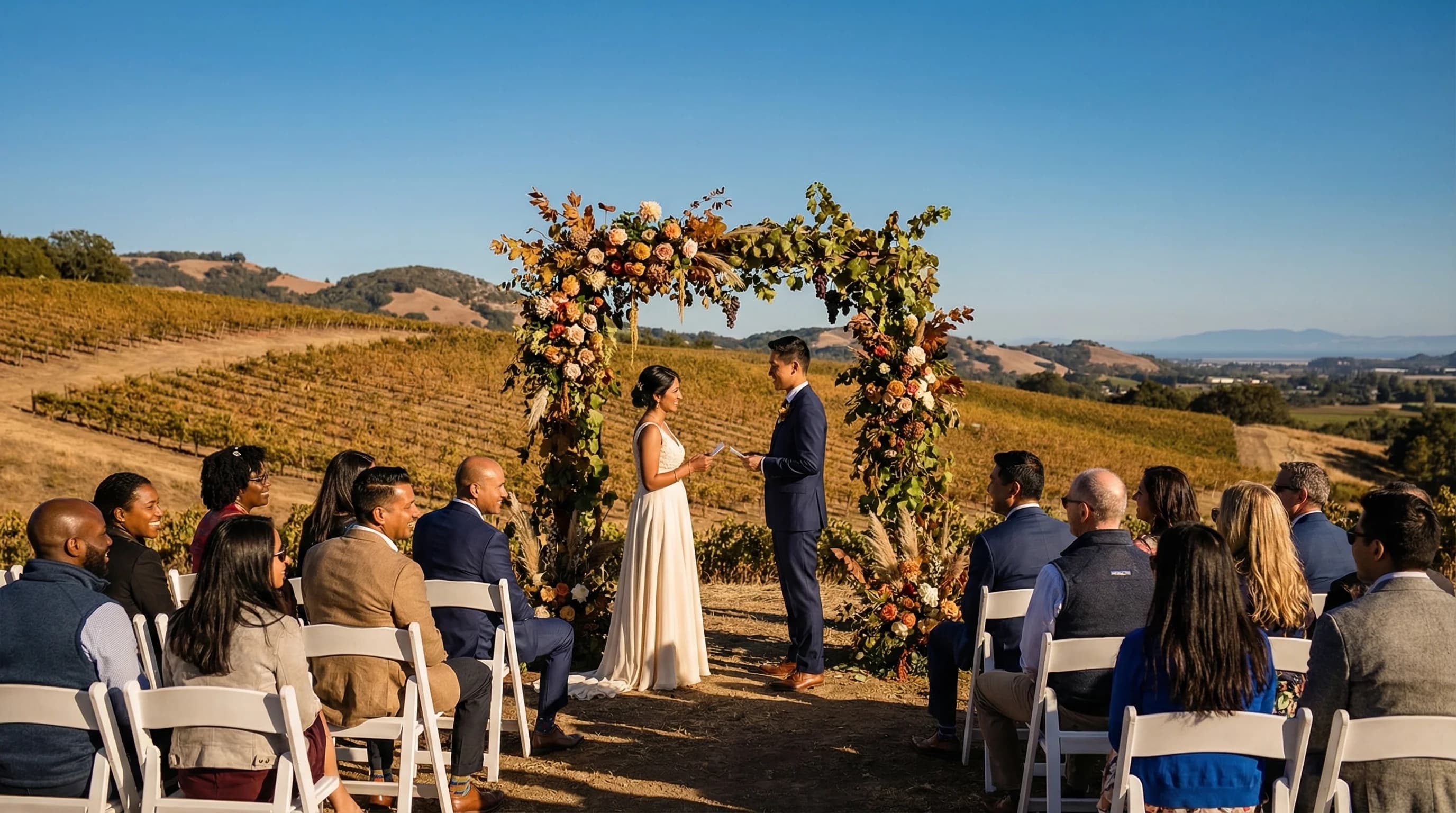
Planning an outdoor wedding in the Bay Area requires taking the region's microclimate system seriously. The same metropolitan area contains venues where July is cold and foggy, venues where July is reliably hot and sunny, and venues where any month might bring either. Getting the timing and location right means the difference between a ceremony held under clear warm skies and one where guests are shivering in fog while the photographer works around low visibility. The Bay Area offers exceptional outdoor wedding settings, vineyard terraces, coastal bluffs, redwood clearings, bayside lawns, but each setting has a distinct seasonal weather profile that should be part of the venue selection conversation.
Best Months for Outdoor Bay Area Weddings
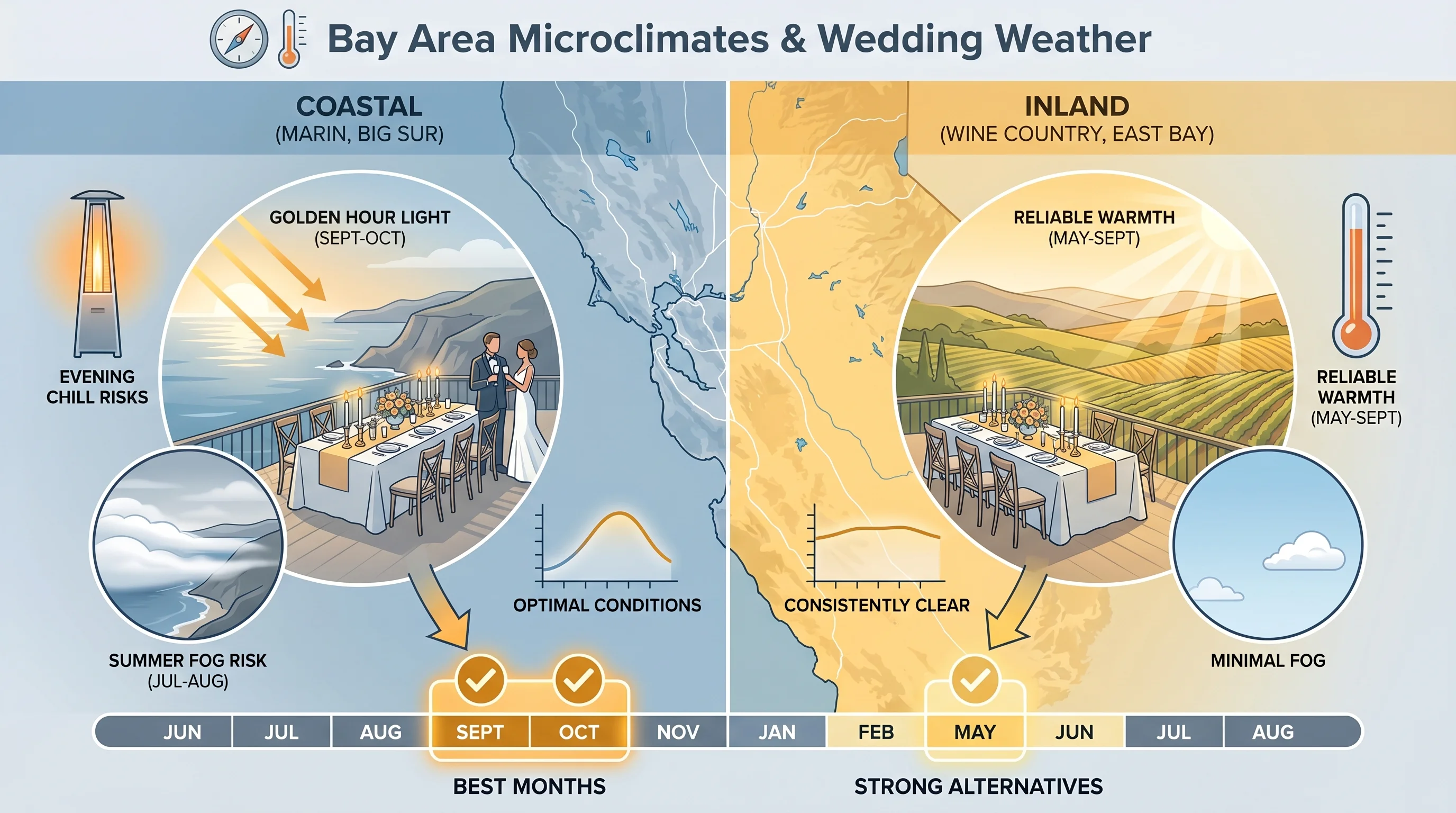
September and October are the gold standard months for outdoor Bay Area weddings. Indian summer conditions bring warm afternoons (65 to 78 degrees Fahrenheit at most Bay Area locations), reduced wind, low rain probability, and the golden afternoon light that photographers consistently describe as the best of the year. The marine layer has retreated from all but the most Pacific-exposed coastal locations, and the inland wine country venues in Napa and Sonoma are in their most photogenic harvest season. For a coastal or inland wedding anywhere in the greater Bay Area, September and October deliver the most reliably beautiful conditions.
May and early June are strong alternatives. Late spring brings clear weather before the summer fog establishes, wildflowers are at their peak in some locations, and the hills are still green from the winter rains. Late May is particularly appealing because the rain season has effectively ended (rain is rare after mid-April) and the fog season has not yet fully set in. A late May wedding in the Bay Area carries very low weather risk across most venue types.
Coastal vs. Inland Venues
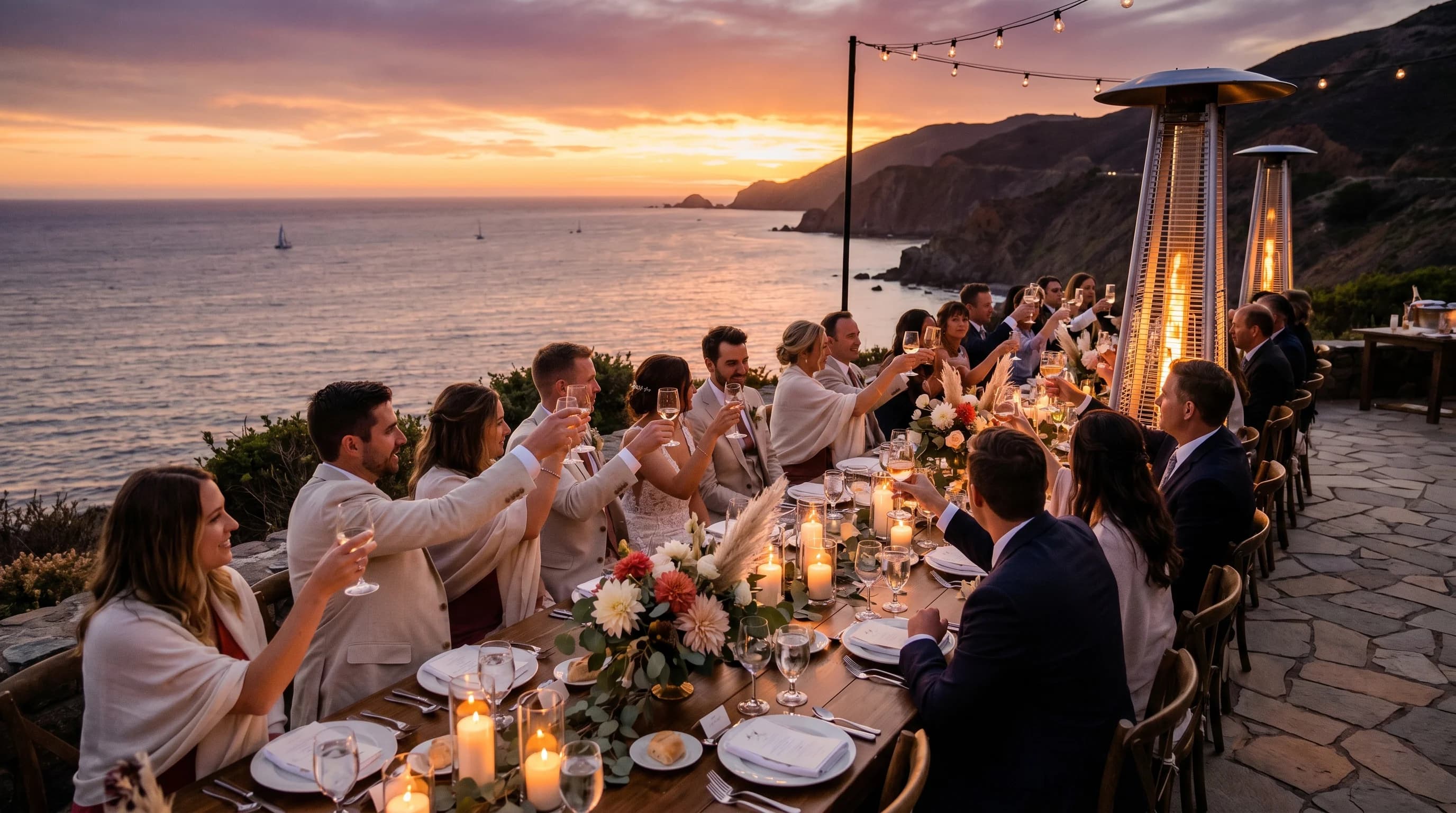
The fog and wind risk at coastal Bay Area venues, the Marin headlands, the coast at Half Moon Bay, venues facing the Pacific, is significantly higher in summer than at inland venues. San Francisco waterfront venues can be foggy and windy on July and August weekends when inland Napa Valley venues are warm and clear. If the wedding vision is an outdoor summer ceremony with warm, sunny weather, the risk at coastal locations is substantially higher than at inland wine country or East Bay valley venues.
Wine country venues in Napa and Sonoma, vineyard estates, winery event spaces, ranch properties in the inland valleys, have a much more forgiving summer weather profile than coastal SF venues. July and August afternoons in the Napa Valley are warm and sunny, often reaching 85 to 95 degrees, which requires planning for heat comfort but eliminates the fog and cold wind risk. An evening ceremony at a Napa vineyard in July or August starts warm and cools pleasantly as the sun sets. The combination of warm light, vineyard scenery, and reliably clear skies makes summer wine country weddings very popular and meteorologically well-founded.
San Francisco Weddings: Fog Risk and Timing
Venues within San Francisco itself vary dramatically by location. Venues on the eastern waterfront, the Embarcadero, the Ferry Building area, venues overlooking the bay from SoMa or Potrero Hill, have significantly less fog risk than venues in the western neighborhoods near Golden Gate Park or the Pacific coast. The Mission District and surrounding neighborhoods are reliably warmer and sunnier than the Sunset or Richmond districts on the same summer afternoon. Choosing a San Francisco wedding venue involves understanding which microclimate zone it sits in, not just which neighborhood it is in.
For October or September weddings, San Francisco waterfront venues are excellent: the fog has retreated, temperatures are warmer, and the city's fall beauty combines with the backdrop of the bay. The highest-risk scenario for any outdoor San Francisco wedding is a July or August date at a venue exposed to the afternoon sea breeze, which can guarantee fog, cold, and wind that no amount of planning can fully mitigate.
Contingency Planning and Practical Advice
Any outdoor Bay Area wedding should include a weather contingency plan, even for the best-weather months. A tent structure, an indoor backup space, or a covered ceremony area is particularly important for weddings from November through March, when rain is genuinely possible, and for any coastal venue year-round. Even September and October, the best outdoor wedding months, carry a small rain probability in October as the first early-season storms occasionally arrive. The ideal planning posture is to choose the best-weather venue and month, and then have a contingency that works aesthetically, a beautifully designed tent or a well-lit interior space, rather than treating weather contingency as an afterthought.
Communicating the weather reality to guests is also important. Out-of-town guests arriving from warmer climates for a Bay Area wedding often underpack for the evening chill that comes even on warm September days. A note in the invitation or on the wedding website, "evenings cool to the low 60s, layers recommended for the reception," is a kindness that guests appreciate when they arrive at the vineyard and watch the temperature drop as the sun sets over the Napa Range.