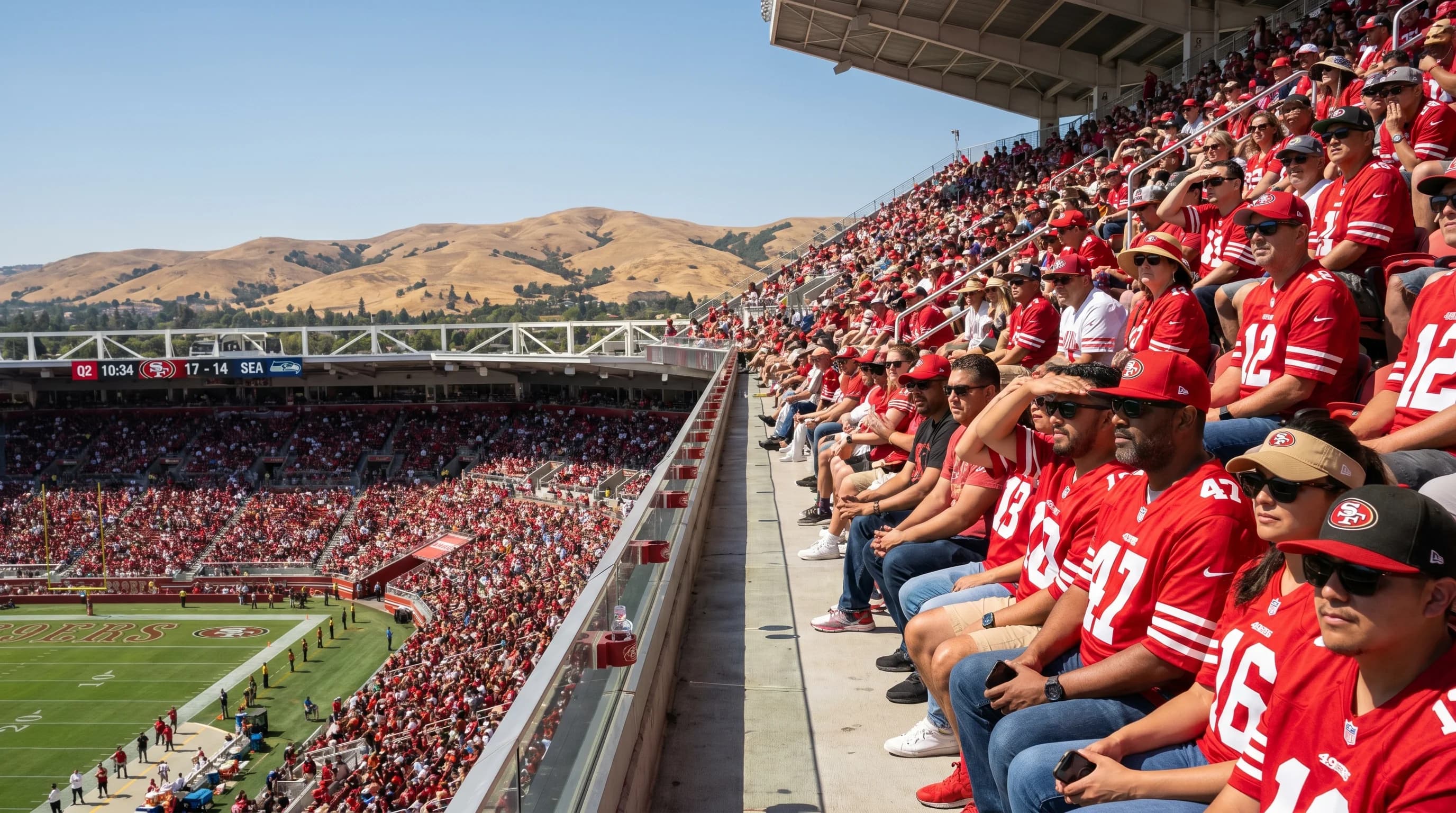
San Francisco Bay Area Stadium, the event name often used for Levi's Stadium in Santa Clara, sits in one of the warmest corners of the Bay Area, and its open-air design means weather is part of every game-day experience. September home games regularly see field-level temperatures above 90°F. December and January playoff games can drop into the 40s after sunset. The stadium's location in the South Bay, about 45 miles south of San Francisco, puts it in a fundamentally different climate zone than the fog-shrouded city the 49ers left behind at Candlestick Park. Understanding the weather at Levi's Stadium is essential for anyone attending a game, concert, or event at the 68,500-seat venue.
World Cup weather watch
Levi's Stadium World Cup forecast
Live forecast below uses the same Santa Clara data as the destination page. Forecasts update every 15 minutes and sharpen as kickoff gets closer.
What Is the Temperature at San Francisco Bay Area Stadium?
In early summer and early fall, San Francisco Bay Area Stadium usually feels much warmer than San Francisco itself. Afternoon events commonly sit in the 70s or 80s, and hot September games can push past 90°F in the stands. Winter night games are the opposite: temperatures often fall through the 50s and into the 40s, especially after sunset. If a forecast says "San Francisco Bay Area Stadium," check Santa Clara weather, not downtown San Francisco weather.
Why Is Levi's Stadium So Hot in Early Season?
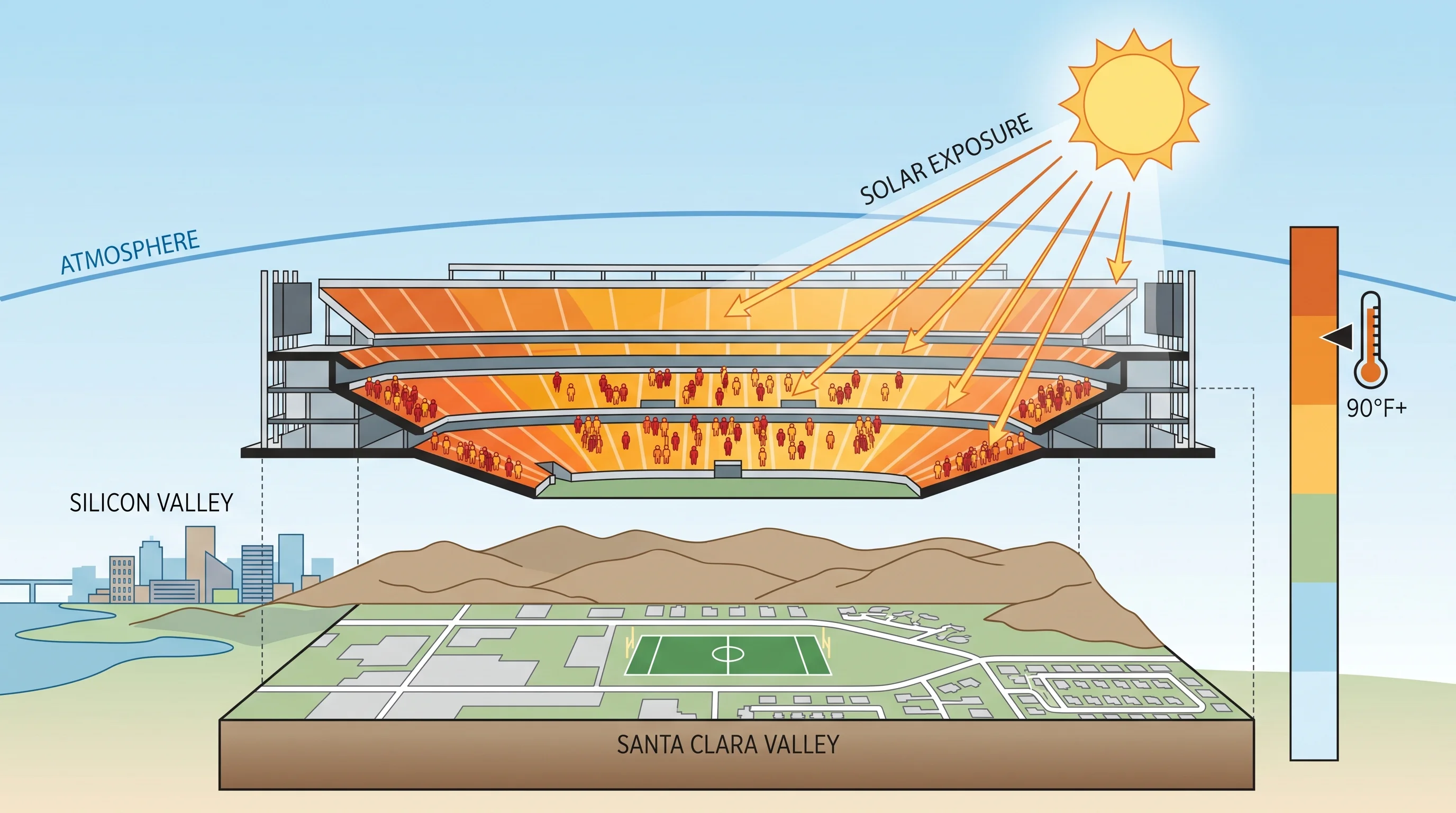
Santa Clara sits at the southern end of San Francisco Bay, well inland from the Pacific coast and largely shielded from marine influence by the Santa Cruz Mountains. While San Francisco might be 65°F and foggy on a September afternoon, Santa Clara can hit 95°F under clear skies. This is the same coastal-inland temperature divide that defines Bay Area microclimates, but at Levi's Stadium the effect is amplified by the venue's open design and the radiant heat from 68,000 fans packed into concrete and steel.
The stadium was designed with a canopy that shades the west side, but the east side (sections 101-121 and the visitor's sideline) receives direct afternoon sun for early-season 1:00 PM and 4:00 PM kickoffs. Surface temperatures on sun-exposed seats can exceed ambient air temperature by 15-20°F. The hottest regular-season games have recorded field-level temperatures above 100°F, making heat illness a genuine concern. The team and venue provide misting stations and free water refills, but the simplest solution is choosing seats on the shaded west side for September and October games.
What Is Game-Day Weather Like by Month?
September games are the hottest, with average highs of 82°F and frequent days above 90°F. There is essentially zero chance of rain. October cools slightly to average highs of 75°F, still warm and almost always dry. November brings the transition: highs average 65°F, and late-November games have about a 20% chance of rain as the wet season begins. By December and January, highs average 58-60°F, lows after sunset drop into the mid-40s, and rain becomes a real possibility for any given game.
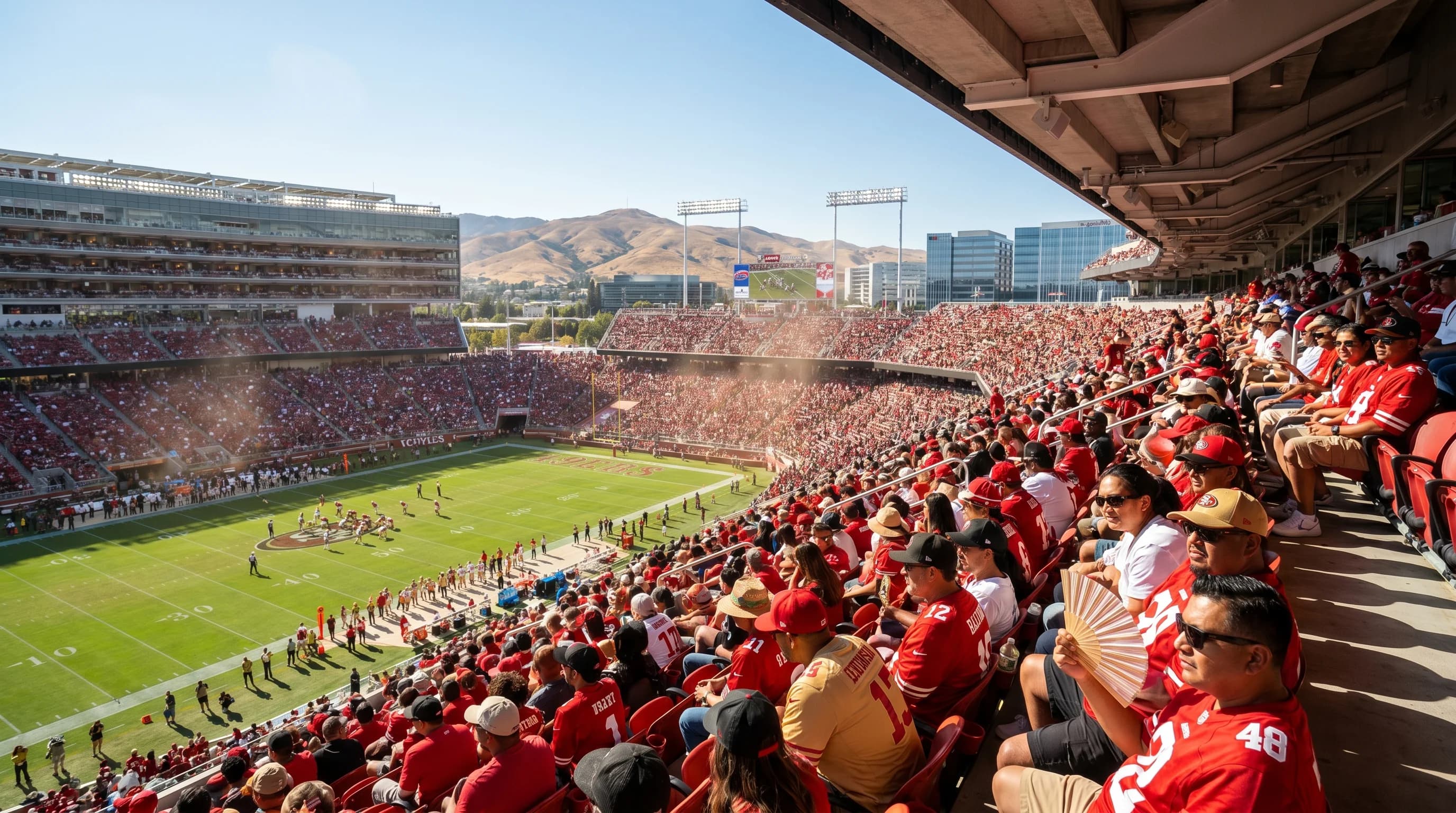
Night games add another layer. A 5:20 PM kickoff in September starts hot and stays warm. The same kickoff in December means the entire second half is played in near-darkness with temperatures dropping through the 50s and into the 40s. Wind is generally light in the South Bay, rarely above 10 mph at game time, so wind chill is not a major factor the way it is at exposed stadiums in the Midwest. The Delta Breeze, when active, can cool evening temperatures by 5-10°F in late summer and early fall.
What Should You Wear to a 49ers Game?
For September and early October: sunscreen, a hat, light clothing, and hydration are more important than anything else. Heat is the primary weather risk, not cold. For November: bring a light jacket and consider layers, as temperatures can drop 15°F between kickoff and the final whistle. For December and January: dress in layers with a warm outer layer, and bring a poncho or rain jacket for wet-season games. Gloves and beanies are not overkill for a January night game when temperatures fall into the mid-40s.
How Often Does It Rain During Games?
Levi's Stadium averages roughly 15 inches of rain per year, nearly all between November and March. Santa Clara is one of the drier spots in the Bay Area because of the rain shadow effect from the Santa Cruz Mountains. Of the roughly 10 home games per season, statistically one to two will see some rain. The most rain-exposed games are late December and early January, which also happen to be the highest-stakes games. The 2019 NFC Championship era and various Monday Night Football December games have seen wet conditions, but most seasons the majority of home games are played in dry, comfortable weather.
The bigger game-day weather story at Levi's Stadium has always been heat, not rain. The venue's location in the South Bay's warm inland climate, combined with its open-air design, means September is the month that requires the most preparation. By the time rain becomes a factor, temperatures have cooled enough that a wet game is at least a comfortable-temperature wet game. Pack for heat early in the season, pack for cold and rain late in the season, and check the forecast before every game.