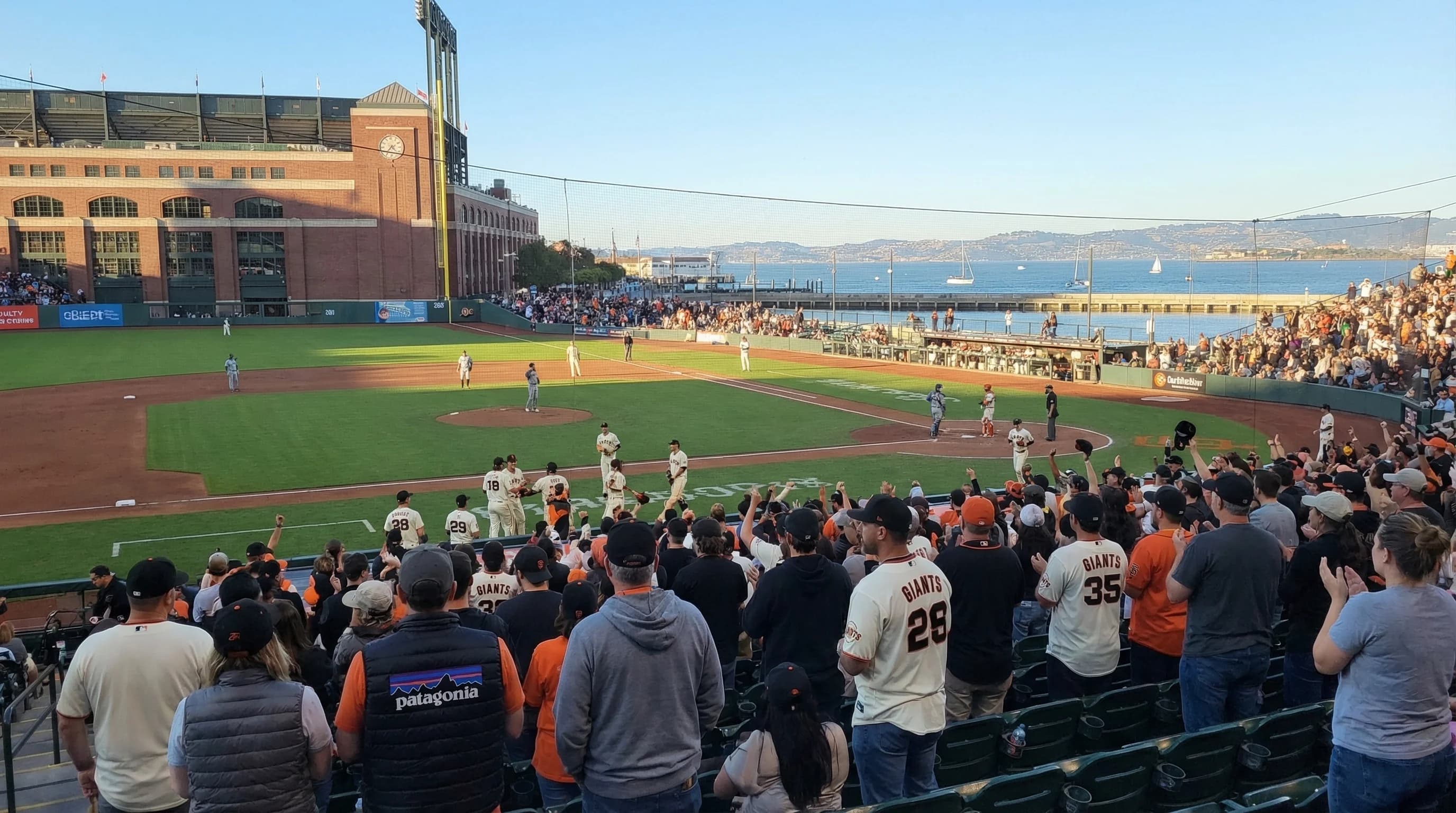
Oracle Park is one of the most weather-affected ballparks in Major League Baseball, and the effect is specific enough to have shaped San Francisco Giants strategy for decades. The park sits on the bay waterfront in China Basin, directly exposed to the westerly afternoon sea breeze that flows through the city's southeastern gap. On summer afternoons, the wind at Oracle Park blows out toward right-center field at 15 to 25 miles per hour, carrying fly balls toward McCovey Cove while suppressing drives to left field. This creates an asymmetric park effect: left-center is a graveyard for fly balls, while right field plays shorter than its dimensions suggest. The difference between a May Saturday afternoon game and a September Sunday afternoon game is significant, and knowing which games have which weather makes Oracle Park one of the most pleasant ballpark experiences in the country on the right afternoon.
The Sea Breeze Factor
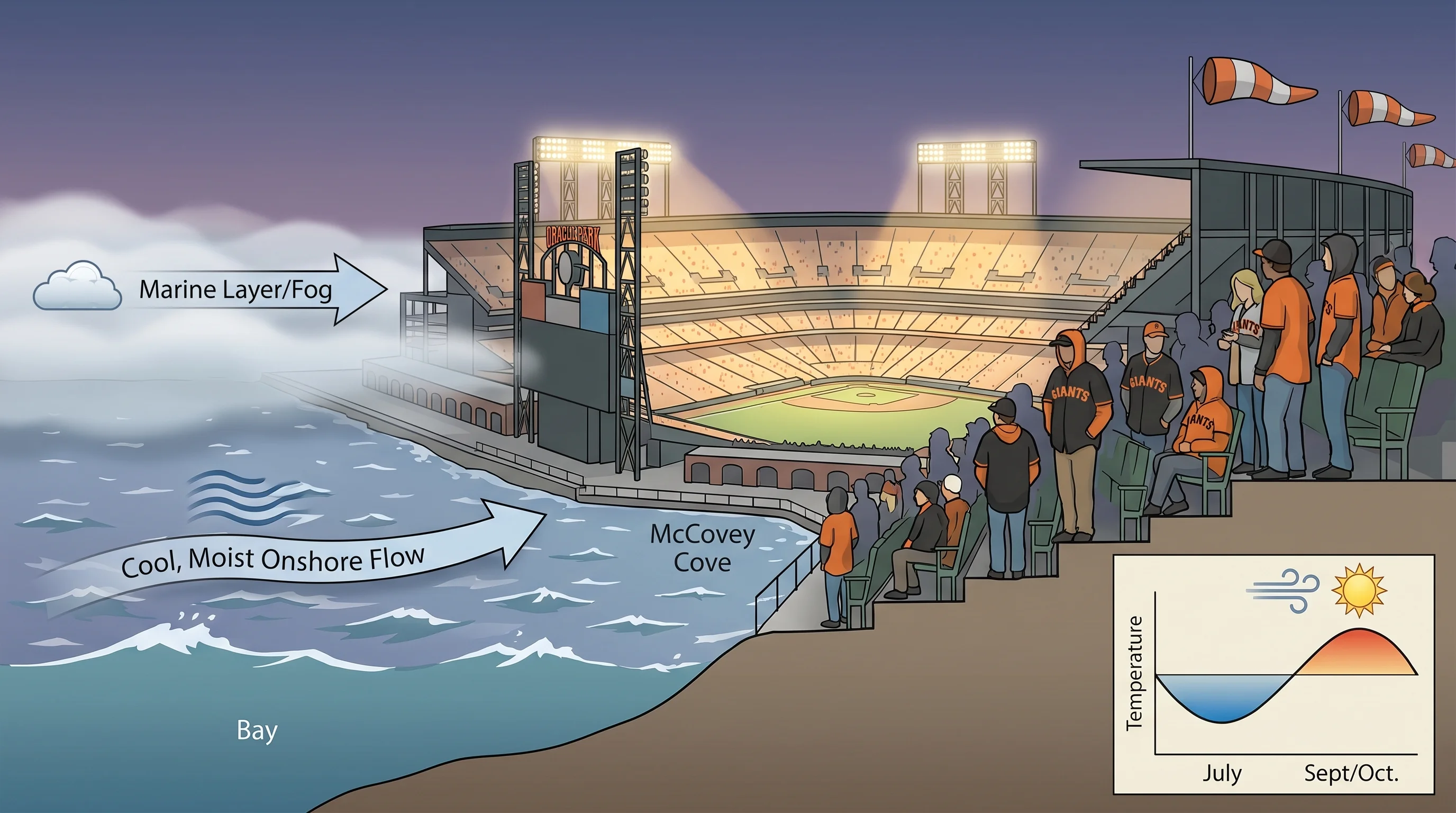
Oracle Park's orientation aligns right field toward the bay and the Embarcadero, and left field toward the city interior. The afternoon sea breeze at the park flows from the southwest to west, blowing out toward right-center field. This means fly balls to left field and center fight directly into the wind, and balls that would leave most parks die in the outfield at Oracle on a windy afternoon. The wind is most consistent from late May through August. Games starting at 1 p.m. on summer weekday afternoons can see the wind at its strongest: gusts to 25 or 30 miles per hour by the third or fourth inning as the sea breeze peaks.
The most memorable illustration of this effect is McCovey Cove and the splash hit, balls hit to right field that clear the right field arcade wall and land in the bay. Despite the park's tendency to suppress fly balls to left center, right-handed pull hitters who catch a ball perfectly can still reach the water. The right-to-center wind actually helps carry balls to right field, making the cove accessible even in windy conditions for hitters who hit in that direction.
Best Weather for a Game
The best weather at Oracle Park is in September and October, during the Indian summer period when the marine layer retreats, the sea breeze weakens, and the city experiences its warmest, sunniest weather of the year. A September weekend afternoon game at Oracle Park can be genuinely warm: 65 to 72 degrees in full sunshine, light wind, comfortable for shirtsleeves. These are the games when the ballpark setting, with the bay sparkling behind right field and the city skyline visible beyond left field, looks its absolute best. September series at Oracle Park frequently have the most pleasant game experiences of the entire home schedule.
May games are the next best option. Late spring brings clear weather before the summer fog establishes, the sea breeze has not yet reached its summer intensity, and afternoon games can be genuinely pleasant. The period from late April through the first week of June is often underrated for game weather at Oracle Park. July games are the trickiest to dress for; temperatures at the ballpark on a July afternoon can be in the low 60s with a stiff wind, requiring a jacket even though it is technically the height of summer.
Night Game vs. Day Game
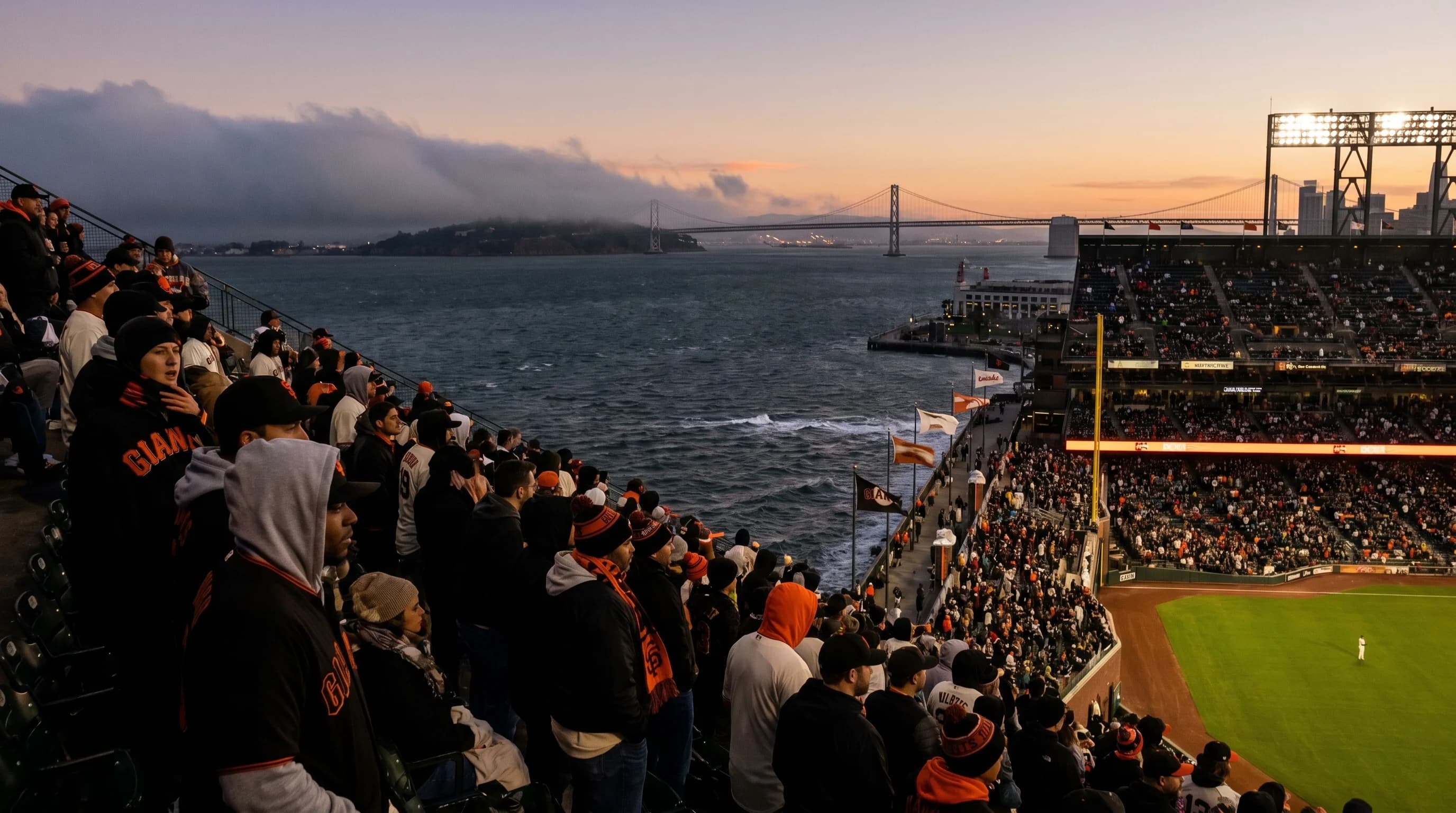
Evening games at Oracle Park, typically starting at 6:45 p.m., miss the peak afternoon sea breeze but replace it with the cooling effect of evening temperatures and bay air. July night games can be cold by most standards: 55 to 60 degrees by the later innings, with the marine air moving in off the bay. September night games are milder, 60 to 65 degrees, and much more comfortable. April and October night games can be outright cold, especially in the lower seating areas near the field that receive the bay breeze most directly.
The advice that visitors to Oracle Park hear, bring a jacket, dress in layers, is not just a local habit. The park genuinely requires more clothing than you would expect for a summer baseball game. June and July afternoon games are the most reliably cold; September afternoon and evening games are the most reliably pleasant. Any April or May night game should be treated as a cold-weather event.
Checking the Game-Day Forecast
The most useful forecast metric for an Oracle Park game is not temperature alone but wind speed and direction combined with the cloud cover forecast. A day with a predicted high of 65 degrees and 10 mph winds feels very different from a day with the same temperature and 25 mph winds. The park is in the city's warmest microclimate zone, the southeastern waterfront receives less fog than the western neighborhoods, but it is still directly bay-exposed and significantly windier than inland East Bay venues. Checking the hourly forecast for game time, rather than just the daily high, gives a much more accurate picture of what to expect.