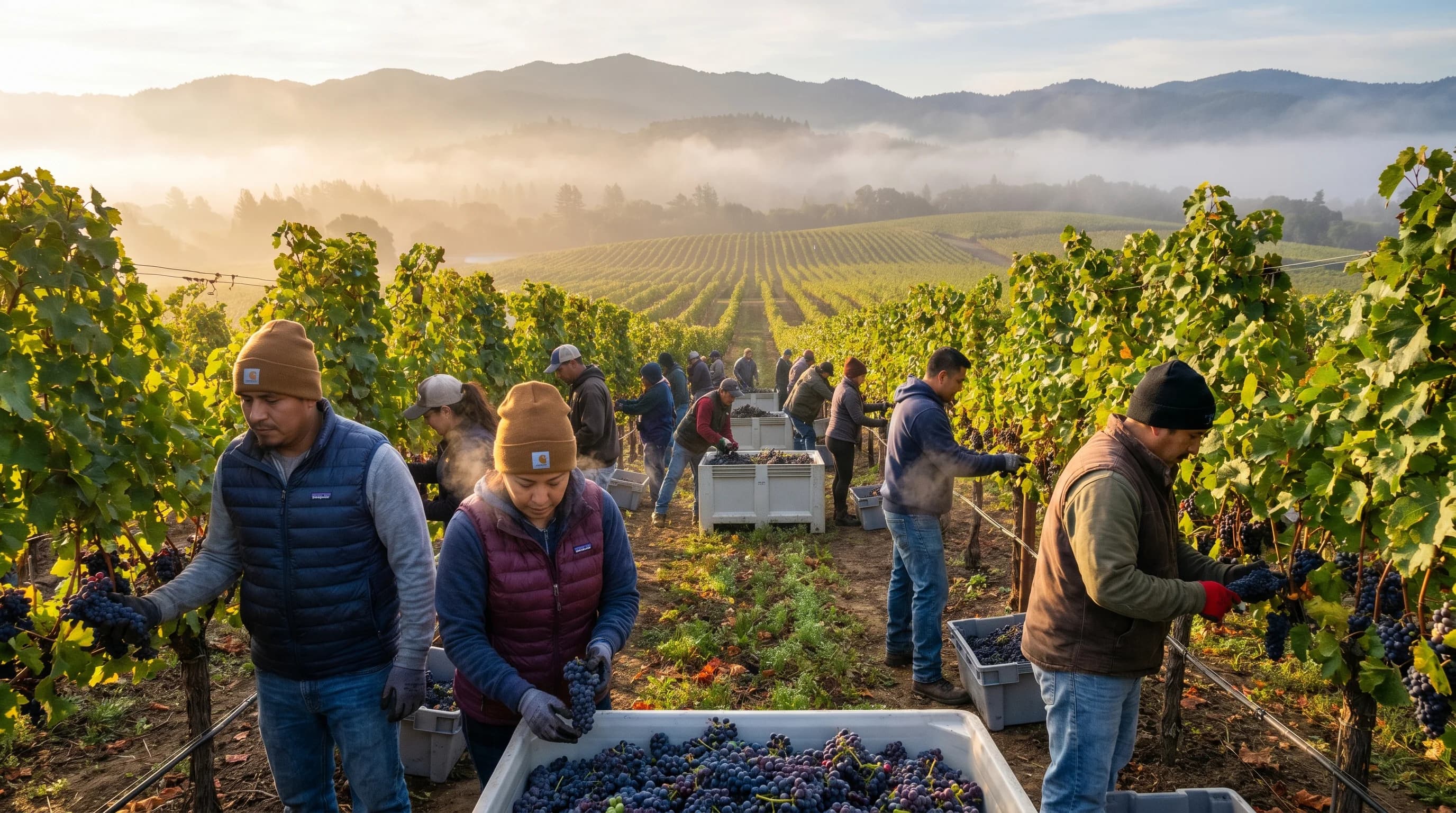
Wine country harvest season, known as "crush," runs from late August through mid-November in Napa and Sonoma counties, with the exact timing depending on grape variety, vineyard elevation, and that year's weather. The weather during harvest is the single most important factor determining wine quality in any given vintage. A warm, dry harvest allows grapes to ripen slowly and develop complex flavors. An early rain or heat spike can force winemakers into difficult decisions about when to pick. For visitors, harvest season also happens to be the best weather window of the year in wine country: warm days, cool nights, golden light, and almost zero rain.
What Is the Weather Like During Harvest Season?
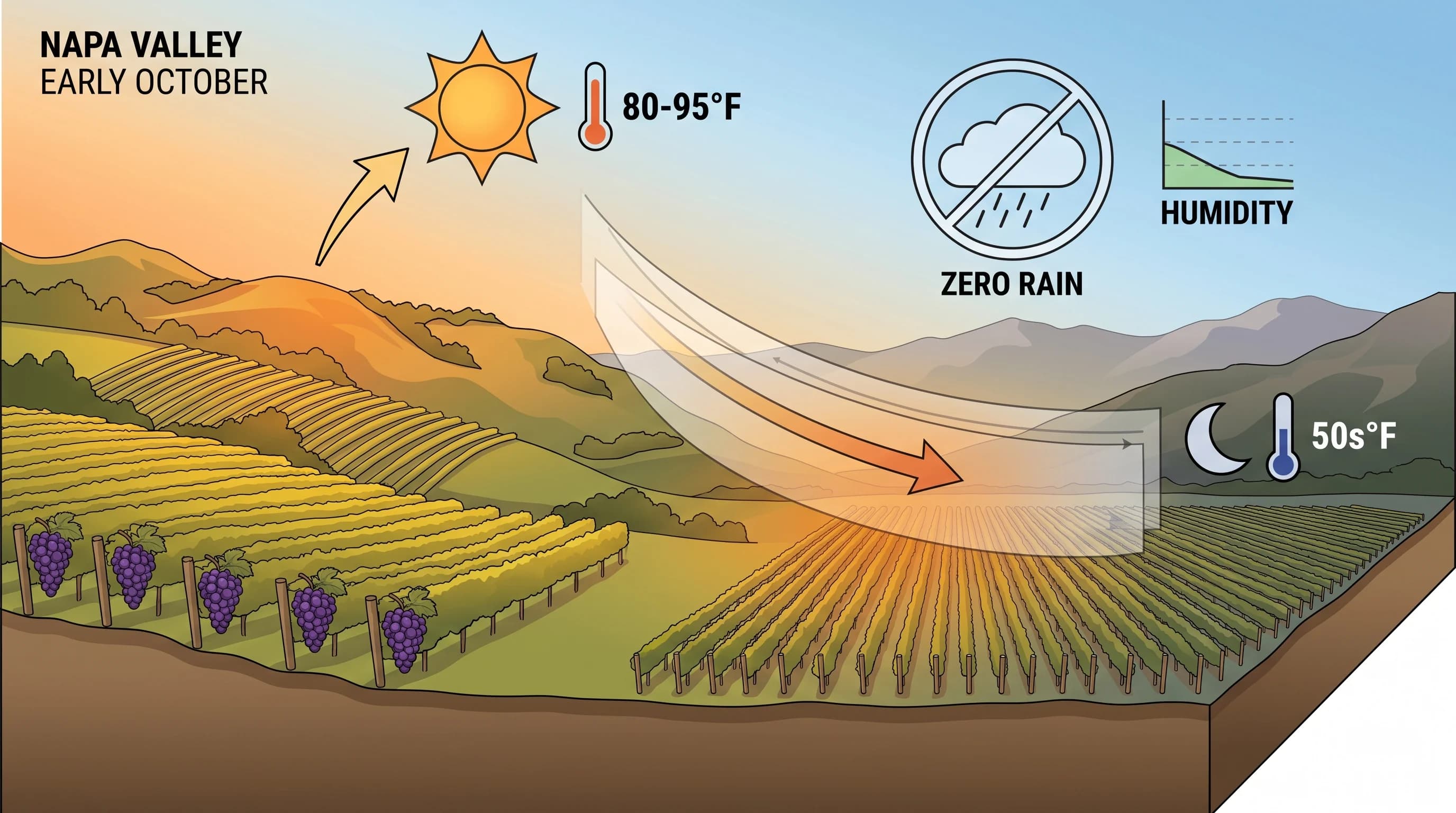
September is the peak harvest month and typically the warmest month in Napa Valley and Sonoma County. Average highs in Napa reach 88°F in early September and gradually cool to 78°F by late October. Nights are cool, dropping to 50-55°F, creating the diurnal temperature swing that winemakers prize for developing acidity and color in grapes. Rainfall is essentially zero in September and averages less than an inch in October. Humidity is low, skies are clear, and the marine layer fog that blankets the coast rarely penetrates inland to the valley floors.
The weather begins to shift in late October. The first rain of the wet season typically arrives between mid-October and mid-November, and winemakers watch the forecast anxiously. Late-ripening varieties like Cabernet Sauvignon may still be on the vine when the first storm approaches, forcing a decision between picking slightly early or risking rain damage. By November, harvest is wrapping up for most wineries, and the focus shifts to fermentation and barrel work indoors.
How Does Weather Affect Wine Quality During Harvest?
Heat spikes are the biggest weather concern during harvest. When temperatures exceed 100°F for multiple consecutive days, grapes can develop "raisining," where berries shrivel and sugar concentrations spike, producing unbalanced, high-alcohol wines. The September 2020 harvest was complicated by both a heat wave and wildfire smoke from the LNU Lightning Complex fires, which some winemakers said produced smoke taint in grapes. In contrast, the 2019 and 2021 harvests benefited from moderate, steady warmth without extreme spikes.
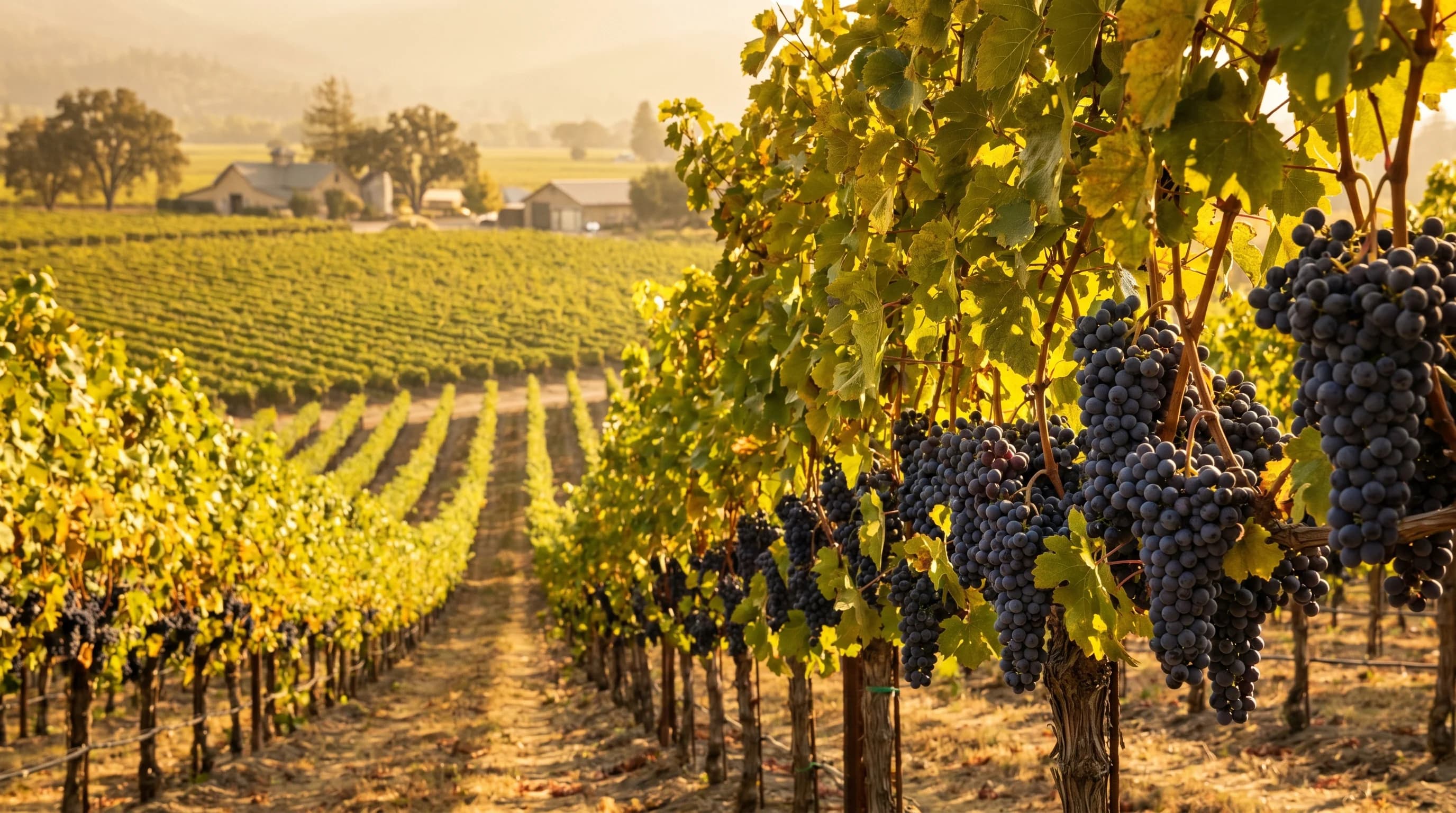
Rain during harvest is the other major concern. Light rain on thick-skinned red grapes (Cabernet Sauvignon, Zinfandel) is manageable if followed by dry weather. Heavy rain on thin-skinned whites (Chardonnay, Pinot Grigio) or on any grape close to full ripeness can cause splitting and rot within days. Winemakers monitor the NWS forecast and atmospheric river tracking closely from mid-October onward, sometimes harvesting entire vineyards in a 48-hour sprint ahead of an approaching storm.
When Is the Best Time to Visit Wine Country for Harvest?
The first three weeks of October are the ideal window for harvest-season visits. September is warmer but also the busiest and most expensive month for wine country tourism. By early October, the initial rush has calmed, temperatures have moderated to highs of 78-82°F, and the vineyards are at their most photogenic as leaves begin to turn gold and red. Many wineries are actively processing grapes in October, so you are more likely to see actual winemaking activity than in September when crews are focused on picking in the early morning hours.
Late October and early November are a gamble. Some years the dry season extends through November, giving visitors sunny 70°F days with spectacular fall color. Other years the rain arrives by late October, and wine country transforms into a quieter, greener landscape with fewer visitors and lower prices. If you are flexible with dates, watch the 10-day forecast and book a trip during a dry window. A sunny November week in Napa can be one of the most pleasant visits of the year, with tasting room crowds at their lowest and temperatures still comfortable in the mid-60s to low 70s.
What Happens After Harvest? The Frost Risk Window
Once the last grapes are picked, typically by mid-November, the vines begin going dormant. The first frost in Napa Valley usually arrives between late November and mid-December, though valley-floor vineyards can see frost as early as late October in cold years. Cold air pools in the valley bottom overnight, creating the same temperature inversions that make hillside vineyards warmer in winter. These frosts are welcome after harvest: they help trigger dormancy, kill pest populations, and mark the end of the growing season.
Harvest season in Napa and Sonoma is the convergence of agriculture and weather at its most consequential. Every vintage tells a weather story, and the best vintages are invariably the ones where September and October delivered warm days, cool nights, and no rain. For visitors, those same conditions make harvest the best time to experience wine country: the landscape is golden, the air is warm and dry, and the energy in the vineyards and tasting rooms is at its peak.