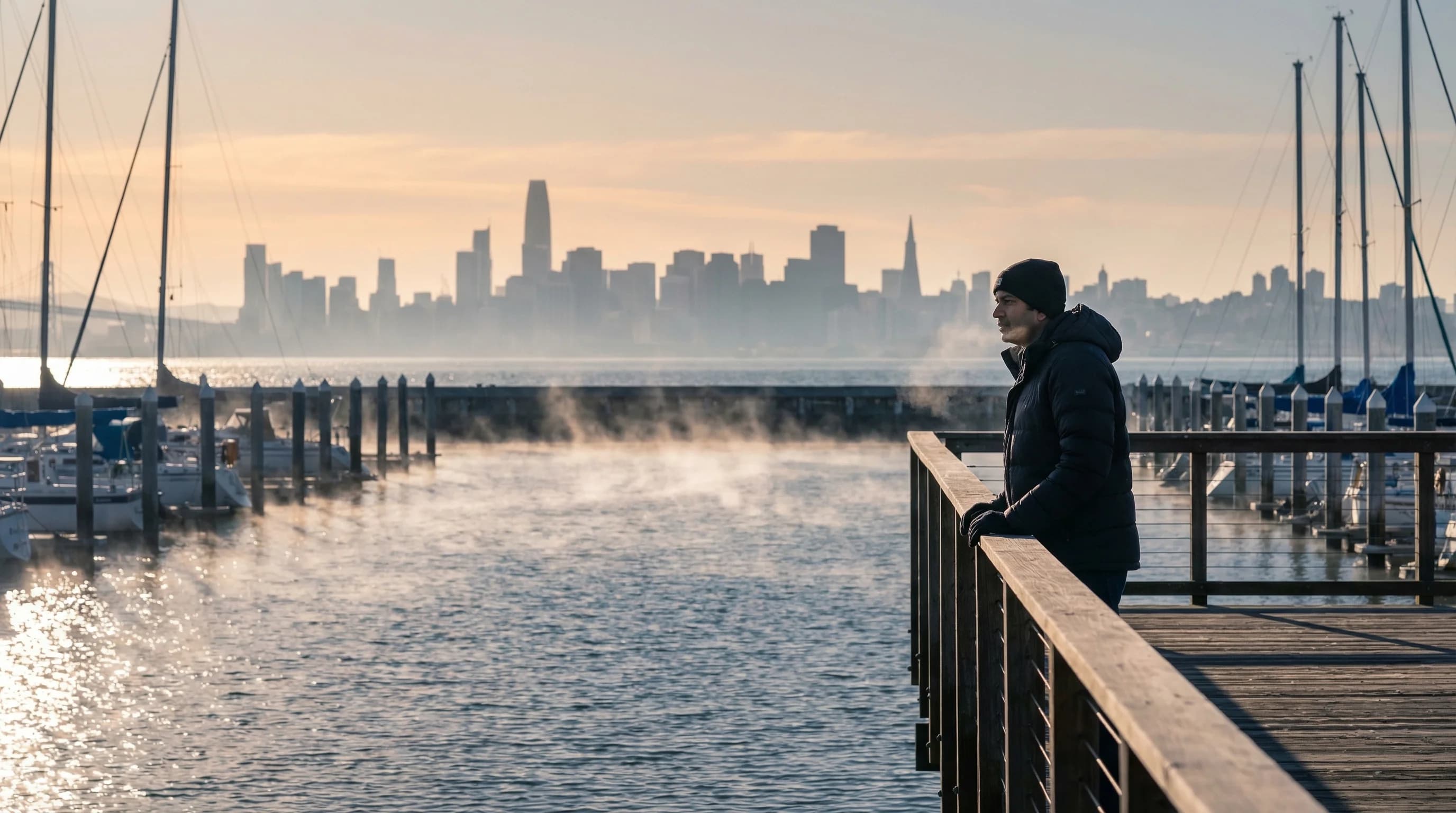
On a cold, clear Bay Area morning after an overnight cold snap, you might notice wisps of fog rising from the surface of the Bay, a lake, or even a pond as the sun comes up. The water appears to be smoking or steaming, and thin tendrils of mist curl upward into the cold air before evaporating a few feet above the surface. This is steam fog, also called evaporation fog or sea smoke when it occurs over large bodies of water. It is the opposite of advection fog in one fundamental way: instead of warm air cooling over cold water, steam fog forms when cold air sits above warm water. In the Bay Area, it is a minor but visually striking phenomenon that occurs primarily in winter on the coldest mornings.
How Steam Fog Forms
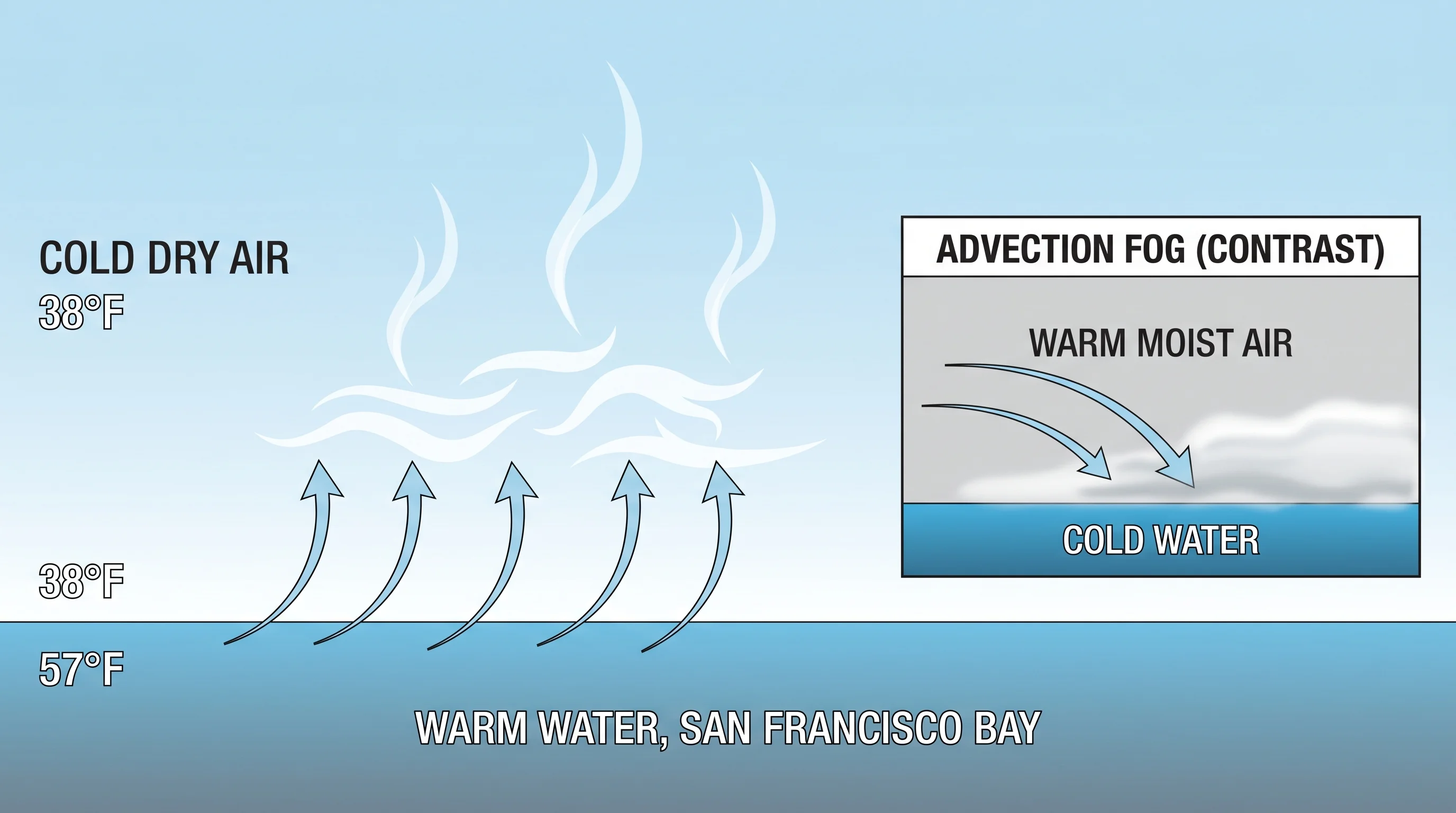
Steam fog forms through a process of evaporation and immediate condensation. When cold, dry air moves over a water surface that is significantly warmer than the air, water evaporates from the surface rapidly and adds moisture to the air immediately above the water. Because the air is cold, it quickly becomes saturated with this added water vapor and the vapor condenses back into tiny droplets almost immediately, forming a thin fog layer that rises off the surface.
The fog rises because the water surface is warm and heats the air in contact with it, making that air buoyant. The tendrils of steam fog rise until they reach the level where the air is warm enough to evaporate them. This gives steam fog its characteristic wispy, rising appearance, which looks exactly like steam rising from a hot surface and gives the phenomenon its colloquial name.
Steam fog over the ocean is called sea smoke, and it can be dense and extensive. Over large bodies of water during extreme cold outbreaks, sea smoke can reduce visibility significantly. In the Bay Area, the temperature differences between water and air are usually modest enough that steam fog is thin and limited to a few feet of height above the water surface.
When Steam Fog Occurs in the Bay Area
Steam fog in the Bay Area requires two conditions that are not always aligned: a water body that is significantly warmer than the overlying air, and cold, dry air flowing over it. The Bay itself has a relatively stable water temperature in the high 50s to low 60s Fahrenheit year-round. For steam fog to form over the Bay, air temperatures need to drop well below the water temperature, which happens during winter cold air intrusions.
The best conditions for Bay Area steam fog occur after a cold front passage that brings dry, cold continental air into the region. When overnight air temperatures drop to the low 40s or upper 30s while the Bay water remains in the high 50s, the temperature and moisture gradient is sufficient for steam fog to form. Early morning is the best time to observe it, before the sun warms the air and reduces the contrast between water and atmosphere.
Inland reservoirs and lakes can also produce steam fog under similar conditions. Napa's reservoirs, Lake Berryessa to the north, and the Contra Costa reservoirs occasionally show steam fog on the coldest winter mornings. The effect is usually subtle: a thin veil of mist at the water surface rather than the dense steam fog seen in colder climates.
Steam Fog vs. Other Bay Area Fog Types
Steam fog occupies a different niche in the Bay Area's fog taxonomy than the two major fog types. The marine layer (advection fog) and radiation fog account for nearly all of the fog that affects daily life in the region. Steam fog is a localized, short-lived phenomenon tied specifically to water bodies and cold air events.
The visual distinction is clear: steam fog rises from water surfaces in wisps and tendrils, giving the impression of a hot liquid rather than a cool, cloud-like mass. Advection fog and radiation fog sit as flat, uniform layers. Steam fog rarely reduces visibility at a distance and rarely triggers Dense Fog Advisories. It is primarily a photogenic morning phenomenon for hikers, kayakers, and anyone near the Bay or a reservoir on a cold, clear winter day.
Sea smoke, the ocean version of steam fog, is more common in colder climates where air temperatures can drop dramatically below ocean temperatures. In the Bay Area's mild climate, true sea smoke over the Pacific is rare. The California Current keeps ocean water cold enough that it would take extraordinarily cold air temperatures to produce sea smoke off the coast, and the Bay Area's weather system does not often deliver those extremes.
Where to See Steam Fog in the Bay Area
The best locations to observe Bay Area steam fog are elevated viewpoints overlooking the Bay on cold, clear winter mornings. The Berkeley Marina, the Berkeley Hills, and the ridgelines in Marin that overlook the Bay all offer good vantage points. The Angel Island ferry run on a cold morning occasionally crosses patches of steam fog on the Bay surface.
Timing is everything. Steam fog is most visible between sunrise and mid-morning, before solar heating warms the air enough to reduce the water-air temperature differential. By 9 or 10 a.m. on most days, the air has warmed enough that steam fog evaporates as quickly as it forms, and the effect disappears. After a cold front passage in December or January, check Bay viewpoints early in the morning for the best chance of witnessing this minor but beautiful Bay Area weather phenomenon.