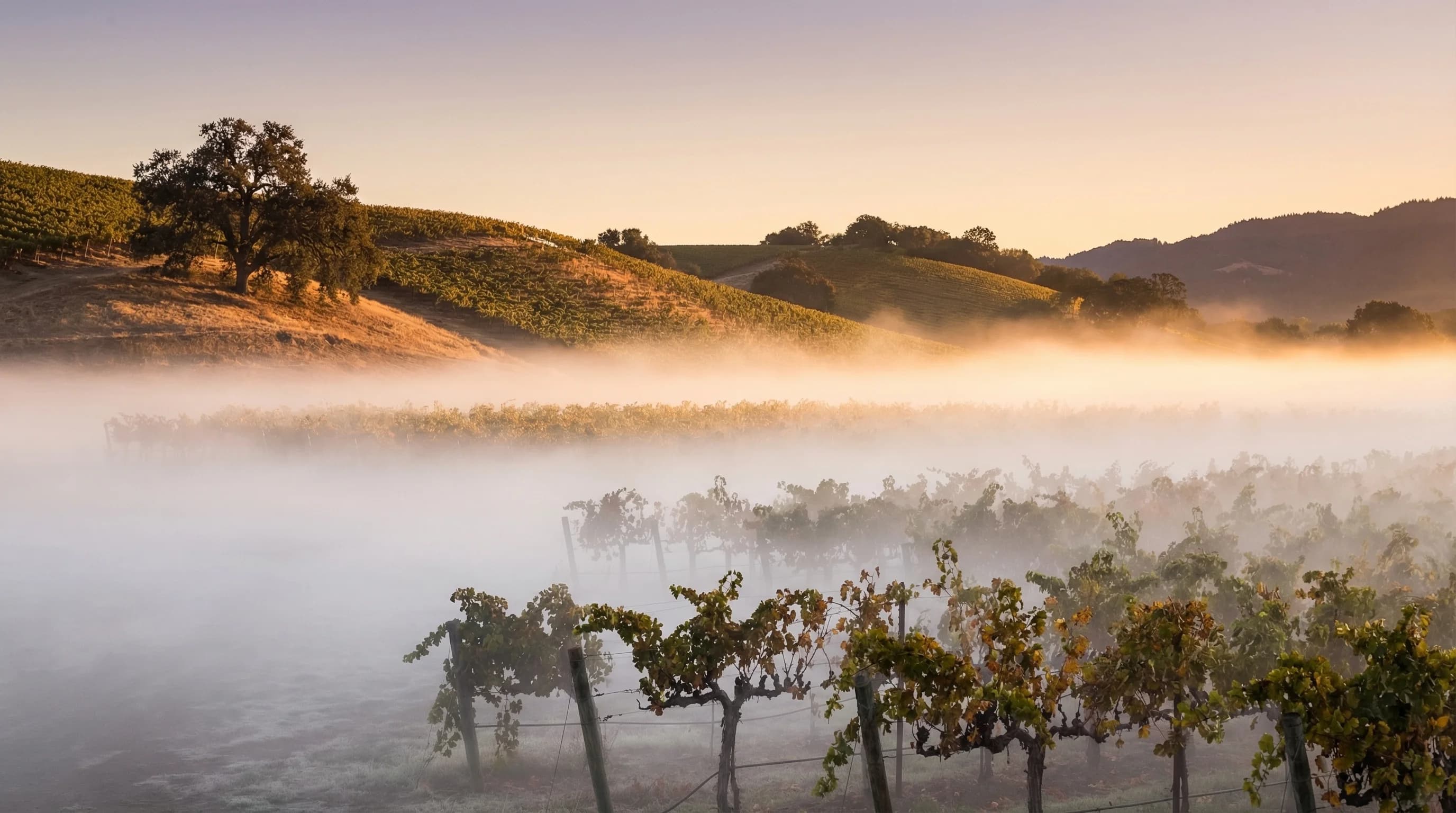
Radiation fog is the fog that forms on clear, calm nights when the ground loses heat rapidly and chills the air directly above it to below the dew point. It is fundamentally different from the marine layer fog that San Francisco is famous for, and understanding the distinction explains a lot about where fog appears in the Bay Area, when it burns off, and why it can be dramatically denser and more persistent than its coastal cousin. Radiation fog is the fog of low-lying valleys, river bottoms, and calm inland areas. In California, it is most extreme in the Central Valley, where it becomes tule fog. In the Bay Area, it forms regularly in the Livermore Valley, Napa Valley, Petaluma, and other areas of relatively flat terrain sheltered from the wind.
How Radiation Fog Forms
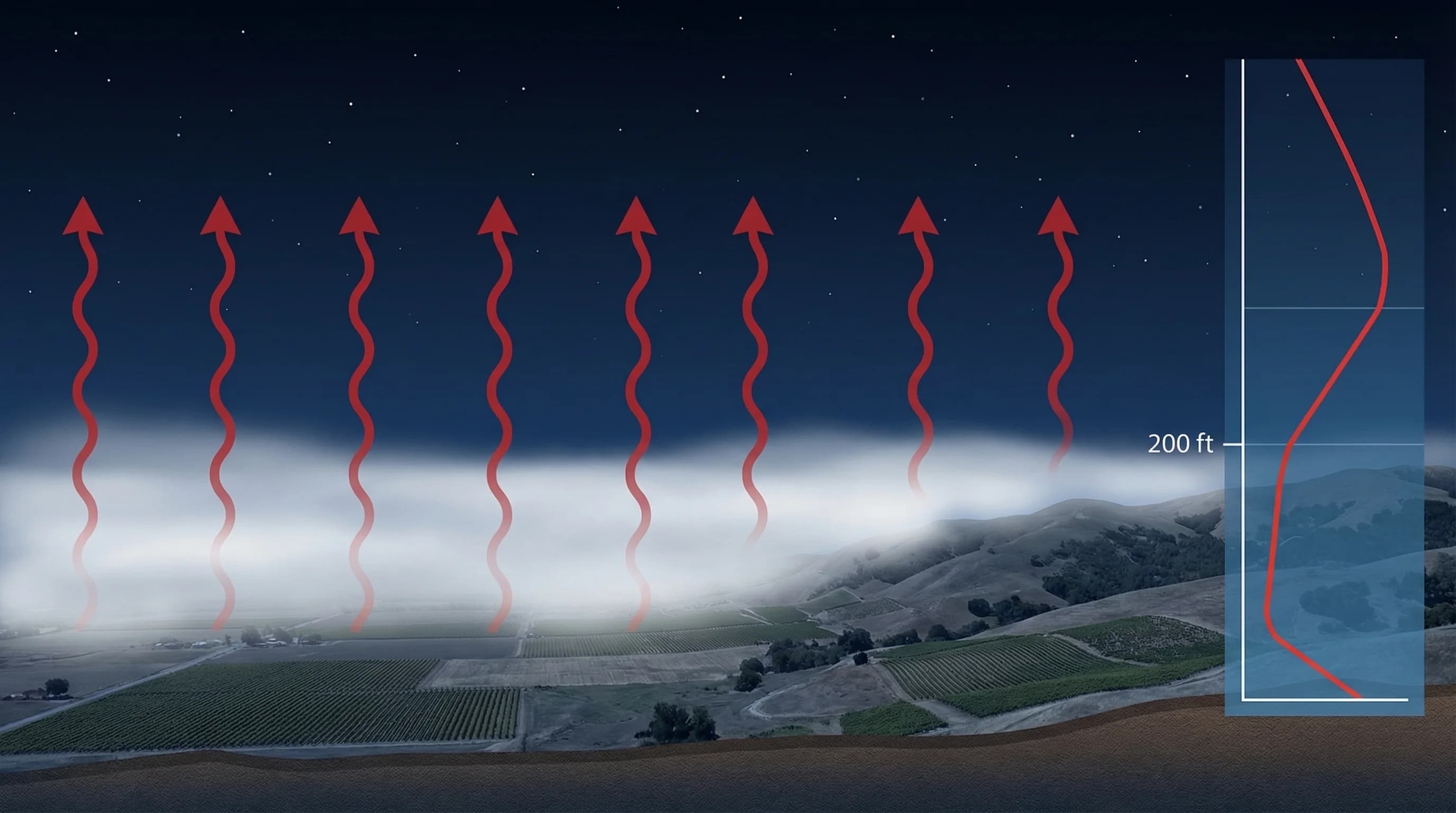
The name comes from radiative cooling: the process by which the Earth's surface loses heat by radiating infrared energy into space. During the day, the sun heats the ground. At night, that heat radiates back outward. On clear nights, there are no clouds to absorb and re-emit this radiation back toward the surface, so the ground cools rapidly and efficiently. The air in direct contact with the ground cools along with it. If that air cools to its dew point, the water vapor it holds condenses into tiny droplets suspended just above the surface. That is radiation fog.
Four conditions need to align for radiation fog to develop:
- Clear skies: clouds act as a thermal blanket, reducing radiative cooling and preventing the ground from dropping to fog-forming temperatures.
- Light or calm winds: wind mixes the air and prevents the cool, moist surface layer from becoming stable enough to form fog. Gentle winds can actually help spread fog once it forms, but strong winds destroy it.
- High surface moisture: moist soil, recent rain, irrigation, or proximity to a water body raises the dew point, reducing how much cooling is needed before fog forms.
- Long nights: fog needs time to develop. Winter nights, which are longer, allow more radiative cooling than summer nights. This is why radiation fog is predominantly a late fall and winter phenomenon.
Radiation Fog vs. Advection Fog: Key Differences
Bay Area residents encounter both types regularly, and they behave very differently. San Francisco's famous summer fog is advection fog: it forms over the cold Pacific Ocean and is transported inland by wind. Radiation fog forms in place, over the land surface itself, on calm nights. The differences in behavior follow from this distinction.
Advection fog is tied to the ocean and the pressure gradient driving marine air inland. It arrives with wind, often in the afternoon, and retreats when the pressure gradient weakens. Radiation fog forms after sunset, thickens through the night, and reaches its densest point around dawn. Unlike advection fog, which can persist as long as the marine layer is present, radiation fog burns off predictably once the sun rises and heats the ground. As the surface warms, the bottom of the fog layer lifts, visibility improves at street level first, and the fog dissipates from the ground up. On most days, radiation fog clears completely by 10 a.m. to noon.
The exception is tule fog in the Central Valley, which is an extreme form of radiation fog. During strong temperature inversions, when a layer of warm air aloft traps the cold foggy air near the surface, the sun's heating cannot break through the inversion and the fog can persist for days. This is why tule fog is genuinely dangerous while most Bay Area radiation fog is a morning inconvenience rather than a multi-day hazard.
Where Radiation Fog Forms in the Bay Area
Radiation fog in the Bay Area is geographically specific. It forms in low-lying areas with calm air, high moisture, and terrain that allows cold air to pool. Cold air is denser than warm air and drains downhill overnight, collecting in valley bottoms and low spots. The areas most prone to radiation fog are exactly where you would expect cold air to accumulate: valley floors, creek corridors, and flat low-elevation basins.
The Napa Valley and Sonoma Valley get radiation fog regularly in winter and fall, forming in the valley floor overnight and burning off to warm, clear afternoons. This pattern is actually essential to wine growing: the foggy mornings slow ripening and preserve acidity, while the clear afternoons allow the sugars to develop. Petaluma and the low-lying flat portions of Marin experience radiation fog more than the hillside communities above them.
The Livermore Valley is one of the Bay Area's more radiation-fog-prone locations. Despite being one of the hottest and driest parts of the region in summer, winter mornings in Livermore can be foggy when coastal San Francisco is clear. The valley's flat floor and relatively calm winter nights create the right conditions for cold air pooling and fog formation. The fog typically burns off quickly once the sun rises, making Livermore afternoons clear while the coast may still be under marine layer.
How Long Does Radiation Fog Last?
Under normal conditions, radiation fog clears within a few hours of sunrise. The sun heats the ground, the ground heats the air above it, and the fog lifts and evaporates. Dense fog that forms at 2 a.m. is usually gone by 9 or 10 a.m. In the Bay Area's inland valleys, this produces a characteristic winter day pattern: foggy and cool at dawn, then rapidly clearing to full sunshine by mid-morning, with warm afternoon temperatures that can reach the 50s or 60s even in December.
The burn-off time depends on fog density, cloud cover, and temperature. Thin radiation fog in a shallow layer may clear before sunrise. Dense fog in a deep valley may persist until noon. If high clouds move in overnight and reduce radiative cooling, the fog may never become thick enough to significantly reduce visibility. Checking both overnight cloud forecast and morning low temperatures gives you a reasonable read on whether radiation fog is likely on a given night.
Radiation Fog and Bay Area Wine Country
The fog that settles into Napa and Sonoma valleys on autumn mornings is almost entirely radiation fog, and winemakers depend on it. During harvest season in September and October, radiation fog keeps nighttime temperatures cool, slows the ripening process, and extends the window for developing complex flavor compounds in the grapes. Regions that lose their fog due to warmer nights have seen accelerated ripening that pushes harvest earlier and reduces the flavor complexity associated with slow, cool ripening.
The fog-to-sun pattern of a Napa Valley autumn morning, valley floor blanketed in white at 7 a.m., burning off to golden hillside light by 10 a.m., is radiation fog at its most beautiful and most useful. It is one of the few examples in California where fog is not just tolerated but actively valued as a component of what makes the place work.