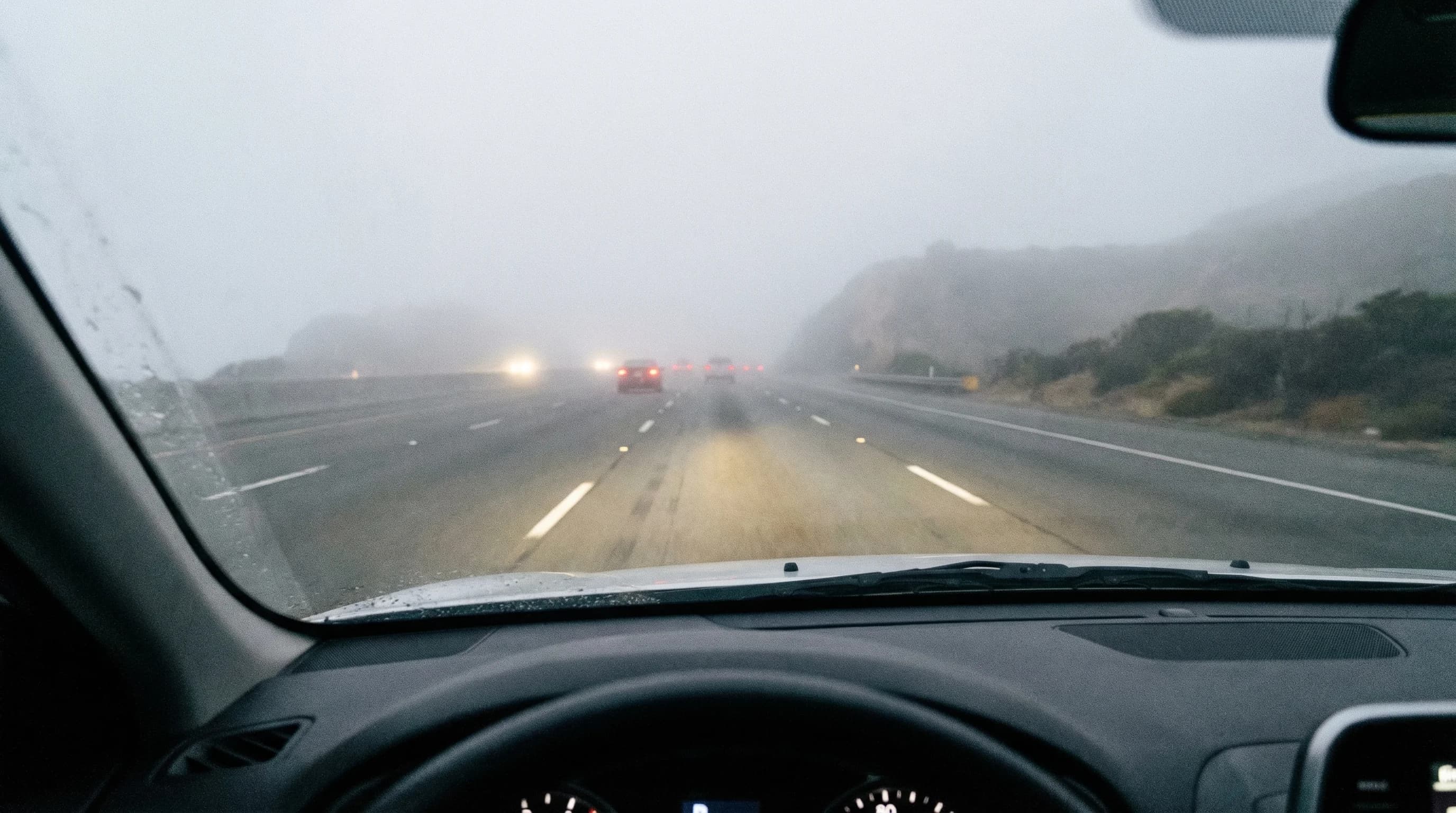
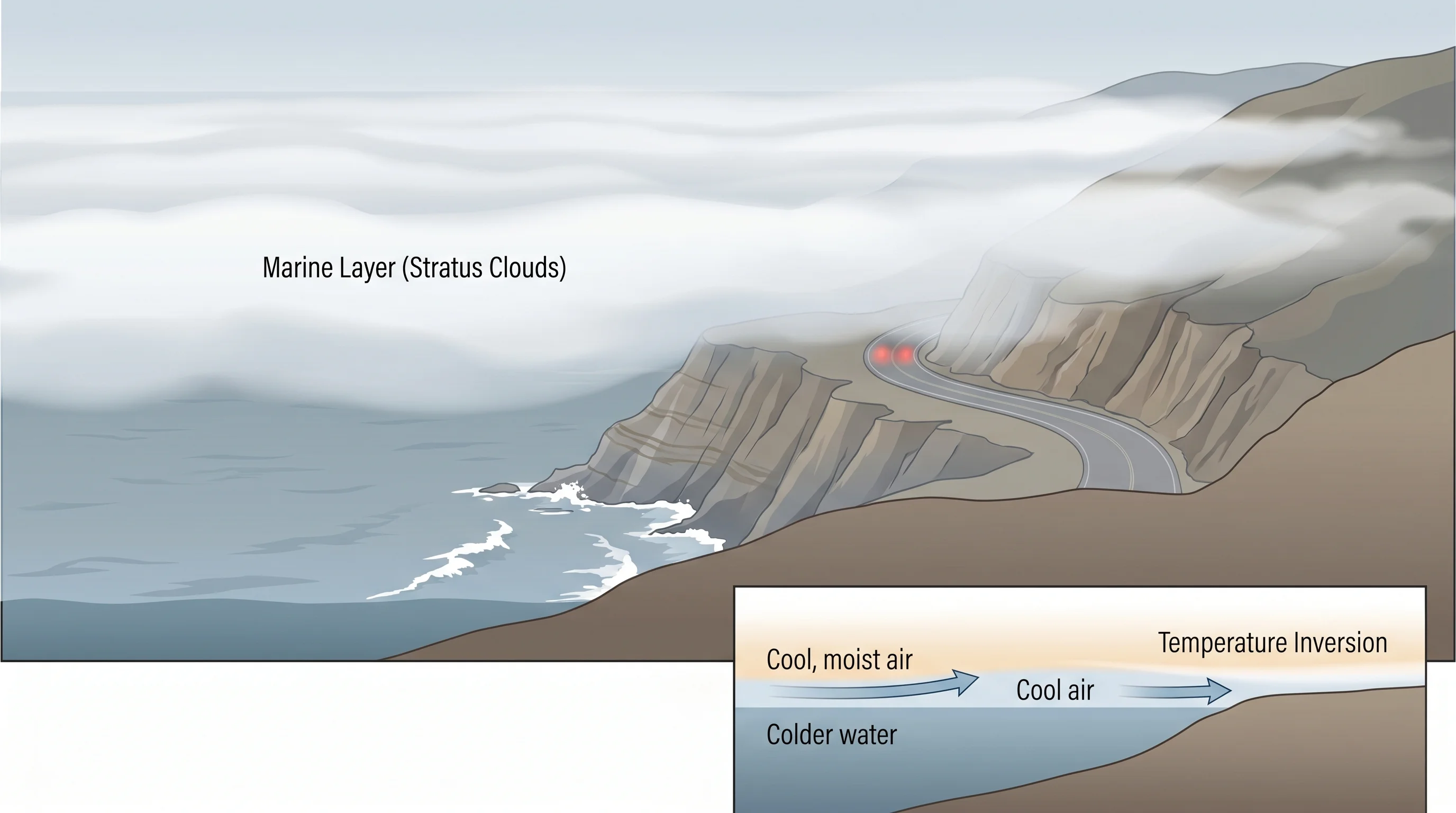
Driving in Bay Area fog is a fact of life for anyone who lives near the coast or commutes between the coast and inland valleys. The marine layer that blankets San Francisco, Daly City, Pacifica, and coastal stretches of Highway 1 routinely reduces visibility to a quarter mile or less in summer mornings. On certain routes, particularly the approaches to the Bay Bridge, the Waldo Grade on Highway 101, and the stretch of Interstate 280 through the San Bruno gap, dense fog is a regular morning hazard from June through September. Knowing how to drive safely in these conditions is not optional knowledge for Bay Area residents. It is a basic survival skill.
How Bay Area Fog Affects Driving Visibility
Bay Area marine layer fog is not uniformly dense. Its depth, thickness, and visibility effects vary significantly by location, elevation, and time of day. In the densest conditions, particularly in low-lying coastal areas or in highway cuts below the marine layer ceiling, visibility can drop to 200 to 400 feet. At freeway speeds of 65 mph, that means you have roughly 2 seconds to react to anything in the road ahead.
The fog is almost always densest close to the ground and becomes patchier at higher elevations. This creates a specific highway hazard: drivers emerge from a stretch of clear freeway, drop into a low section through a hill cut or valley, and suddenly find themselves in near-zero visibility at full speed. The transition can happen within seconds. Interstate 280 between San Francisco and San Jose is particularly prone to this because it dips through terrain that traps coastal fog in pockets while higher terrain on either side remains clear.
Bay Bridge approaches from the East Bay can transition from clear to socked-in fog within the span of the bridge itself. The Waldo Grade section of Highway 101 north of the Golden Gate frequently sits in thick fog while Marin communities to the north are in sunshine. Drivers unfamiliar with these conditions are often caught off-guard by how abrupt the visibility change can be.
The Most Important Rule: Slow Down More Than You Think You Need To
The single most dangerous behavior in fog is driving at a speed that exceeds your ability to stop within the distance you can see. At 65 mph, a vehicle needs roughly 300 feet to stop under good conditions. If visibility is 300 feet, you have zero margin for anything unexpected in the road. If there is a stopped vehicle, debris, or a collision ahead, you will not be able to stop in time.
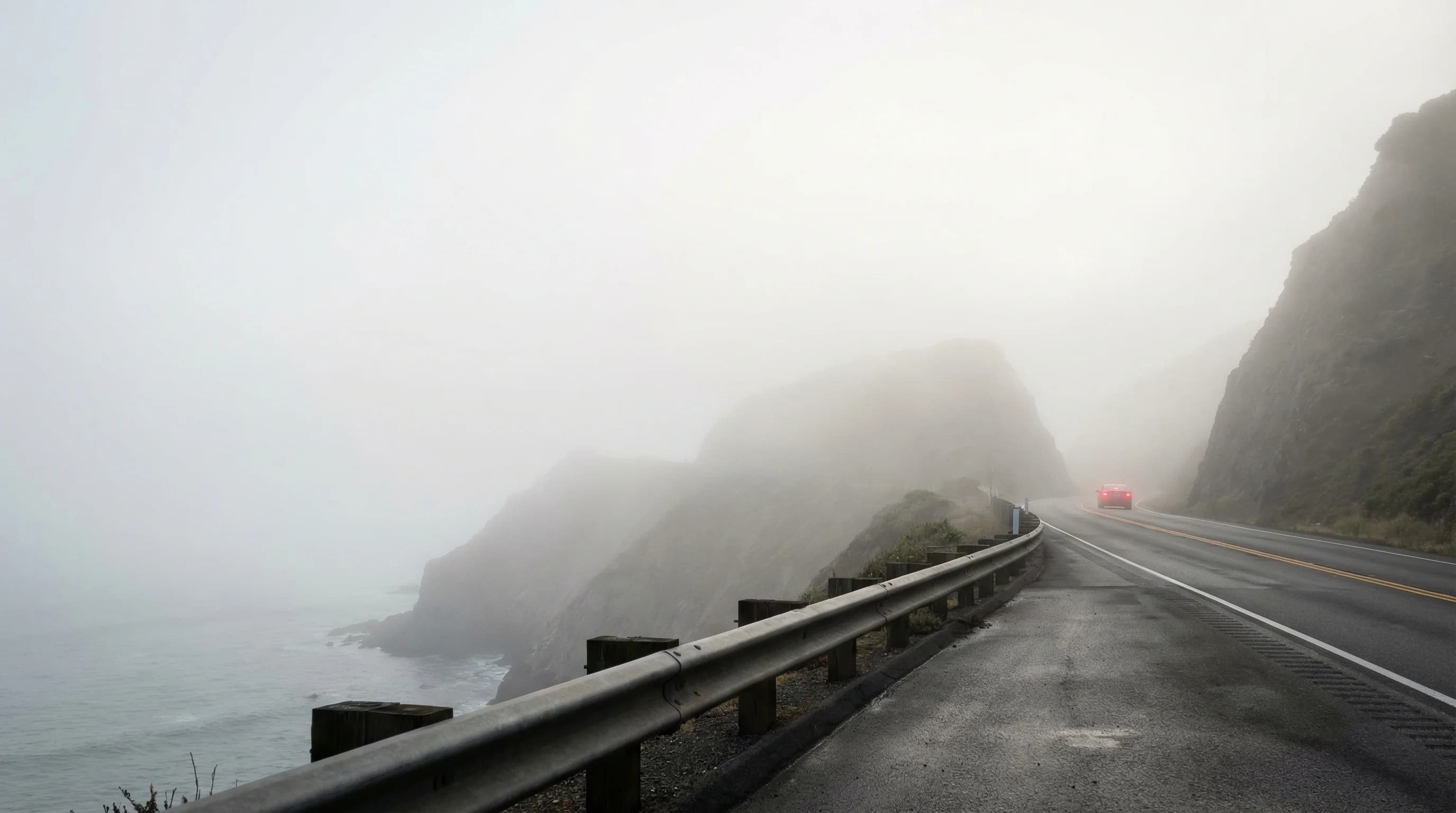
The appropriate speed in dense fog is one that leaves you able to stop within half of your visible distance, not all of it. This accounts for reaction time, which typically adds 1 to 1.5 seconds of travel before braking even begins. In visibility of 400 feet, that means keeping your speed below 40 mph. In visibility of 200 feet, speeds above 25 mph are too fast to react and stop safely.
This guidance feels wrong on an empty freeway in light fog. It does not feel wrong when there is a collision around the next curve. Speed reduction is the only action that meaningfully reduces your risk, and it needs to happen before you think you are in a dangerous situation, not after.
Headlights, Fog Lights, and What to Avoid
Use low-beam headlights in fog, not high beams. This is the single most misunderstood fog driving rule. High beams project light up and forward into the fog, where the water droplets reflect it back at you, creating a bright wall of white light that reduces visibility rather than improving it. Low beams project light down toward the road surface, below the densest part of the fog layer, providing usable illumination without the blinding reflection effect.
Rear fog lights, where available, should be used in heavy fog so vehicles behind you can see you at greater distance. California law requires headlights when visibility is less than 1,000 feet. In practice, turn them on whenever you encounter any fog, not just when visibility drops to the legal threshold. Being visible to other drivers is as important as seeing the road.
Hazard lights are not appropriate for fog unless your vehicle is stopped or moving significantly below the flow of traffic. Flashing hazard lights can be confused with emergency lights, cause drivers behind you to brake unexpectedly, and distract from the actual hazards ahead. Use your regular headlights and reduce speed instead.
Following Distance in Fog
In clear conditions, a three-second following distance is a common guideline. In fog, triple that minimum. A nine-second following distance gives you enough time to see brake lights ahead, process that the vehicle is stopping or stopped, and begin braking before you reach the gap that was safe when you chose it.
The reason following distance matters so much in fog is that you often cannot see hazards beyond the vehicle immediately ahead of you. If that vehicle hits something and stops suddenly, your following distance is the only buffer you have. Multi-vehicle chain-reaction collisions in fog almost always involve drivers maintaining normal following distances at normal speeds.
The Foggiest Bay Area Routes and When to Expect It
Several specific routes in the Bay Area are disproportionately fog-prone and deserve extra caution during summer mornings. Highway 1 through Pacifica and along the San Mateo coast sits in dense marine layer from roughly 6 a.m. through noon on most summer mornings. The route is scenic but includes curves, cliff edges, and limited guardrails, making fog particularly dangerous here.
Interstate 280 through the San Bruno gap, where the highway crosses a low divide between the San Francisco peninsula and the bay side, regularly traps fog pockets that are denser than the terrain on either side. The Waldo Grade on Highway 101 north of the Golden Gate collects fog from the marine layer pushing through the gate, and visibility on the grade can be near zero while Sausalito below and San Rafael to the north are clear.
Highway 92 between Half Moon Bay and the Bay side crosses the Santa Cruz Mountains through a gap that channels coastal fog inland. Inland East Bay routes like Interstate 580 approaching the Altamont Pass can catch tule fog in winter and marine layer in summer, particularly in the early morning hours before inland heating clears the air. If you commute any of these routes regularly, build fog caution into your default driving habits from May through September.
When to Pull Over and When Not To
If visibility drops to the point where you cannot safely see the road ahead at any reasonable speed, pulling over is the right call. The hazard, however, is where you pull over. Pulling off on the right shoulder of a freeway in dense fog places you in the path of vehicles that may drift right while trying to follow the road. If you must stop on a freeway shoulder, pull as far right as possible, turn off all lights except hazards, and exit the vehicle to stand behind a guardrail or up a bank away from the roadway if possible.
A better option when fog becomes severe is to take the next exit and wait at a gas station, parking lot, or other off-highway location until conditions improve. Morning fog on Bay Area coastal routes typically clears by 10 a.m. to noon. The cost of waiting an hour is far lower than the cost of continuing in dangerous conditions.
Use SFBayWeather to check current conditions before departing, especially during summer mornings if your route crosses coastal terrain. Knowing whether dense fog is forecast for your route lets you leave earlier, later, or plan an alternate inland route that may be significantly clearer.