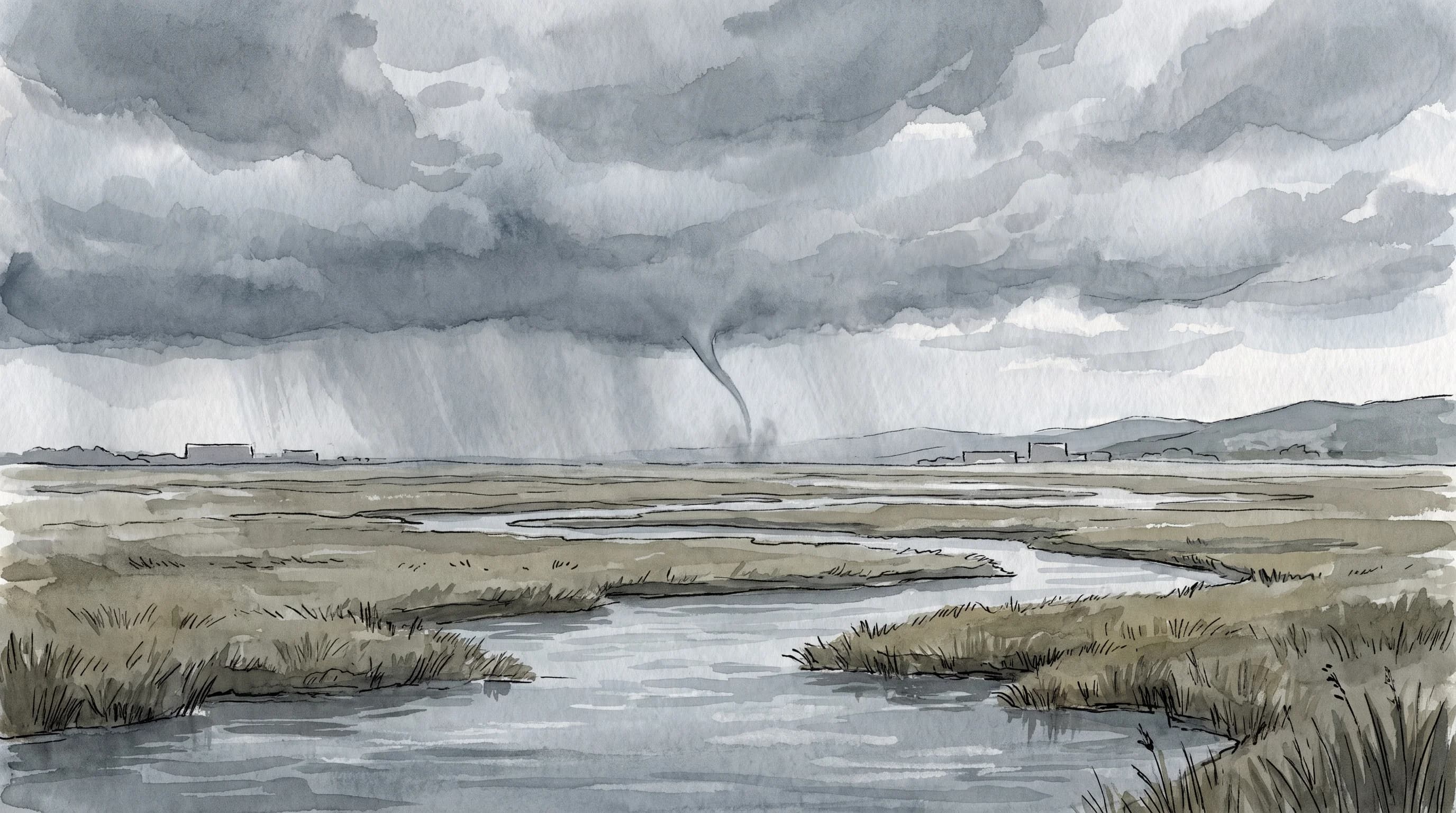
Yes, the Bay Area can get tornadoes, and yes, the National Weather Service has issued tornado warnings for the region. But Bay Area tornadoes are weak, brief, and extremely rare. The region averages fewer than one tornado per year, and most that do occur are rated EF0 on the Enhanced Fujita Scale, the weakest category, with winds of 65-85 mph. They typically touch down for less than a mile, last under five minutes, and cause minor damage: downed trees, stripped roof shingles, overturned patio furniture. No one has ever been killed by a tornado in the Bay Area. If you receive a tornado warning on your phone during a winter storm, you should take it seriously, but the risk profile is fundamentally different from Tornado Alley.
Can Tornadoes Actually Hit the Bay Area?
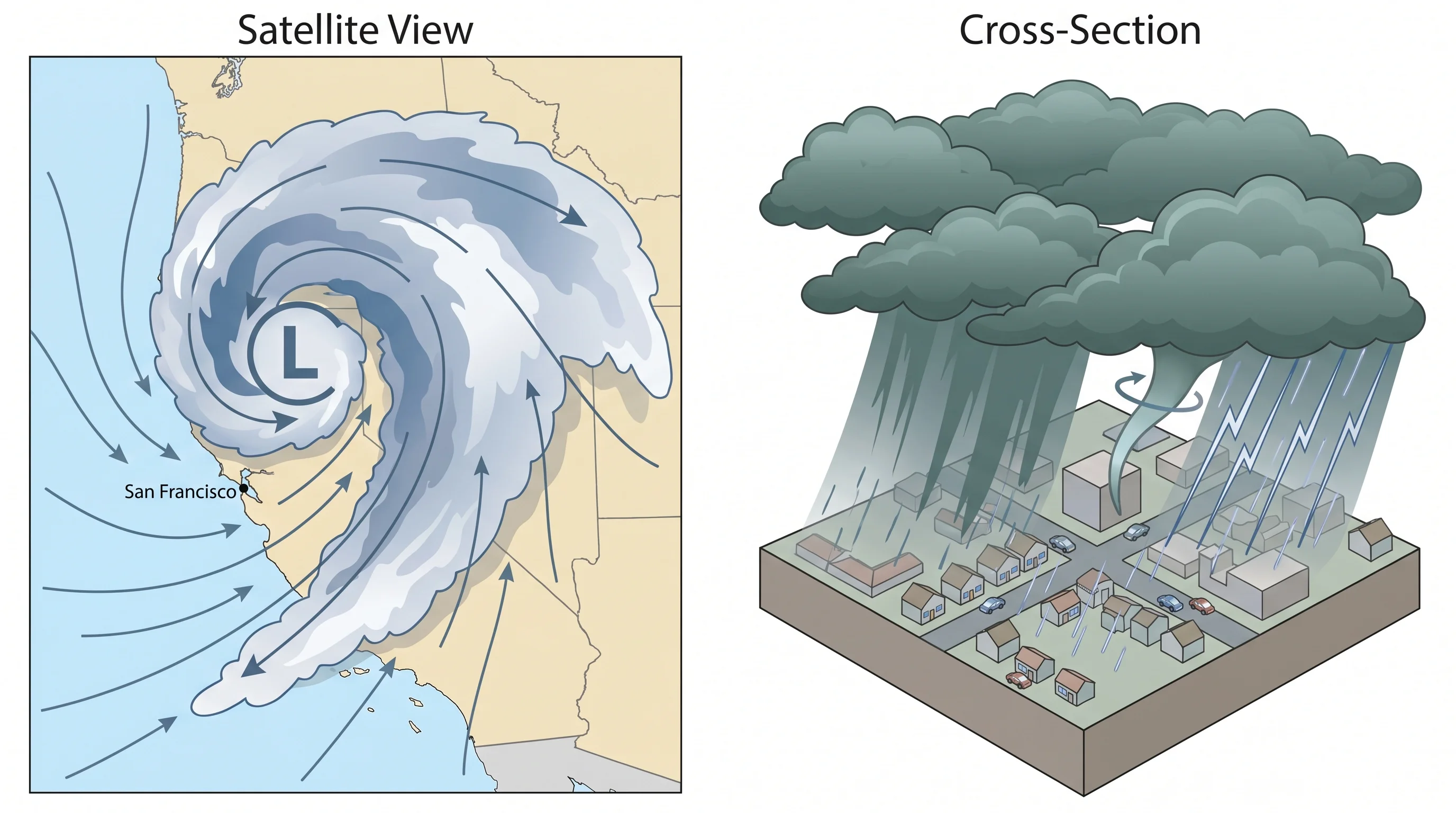
They can and they do, though the term "hit" is generous for most Bay Area tornadoes. The NWS Sacramento and NWS San Francisco offices have documented several dozen tornadoes and funnel clouds in the greater Bay Area over the past 70 years. Most are landspout tornadoes, which form from the ground up when surface wind shear creates rotation under a developing cumulus cloud. These are distinct from the supercell tornadoes of the Great Plains, which descend from massive rotating thunderstorms and can reach EF4 or EF5 intensity.
Bay Area tornadoes occur almost exclusively during strong winter storm systems, when cold-core lows bring instability and wind shear to the region. The areas most likely to see tornadoes are the flat, open lowlands of the Sacramento-San Joaquin Delta, the Livermore Valley, and the South Bay near San Jose. Urban San Francisco and Oakland have experienced funnel clouds, but confirmed tornadoes in dense urban areas are exceptionally rare.
What Is the Difference Between a Tornado Watch and a Tornado Warning?
A tornado watch means atmospheric conditions are favorable for tornado development over a broad area. The NWS Storm Prediction Center issues watches for regions where wind shear, instability, and moisture alignment create the potential for tornadoes. A tornado watch for the Bay Area does not mean a tornado is imminent. It means you should pay attention to the weather and be prepared to take shelter if conditions worsen.
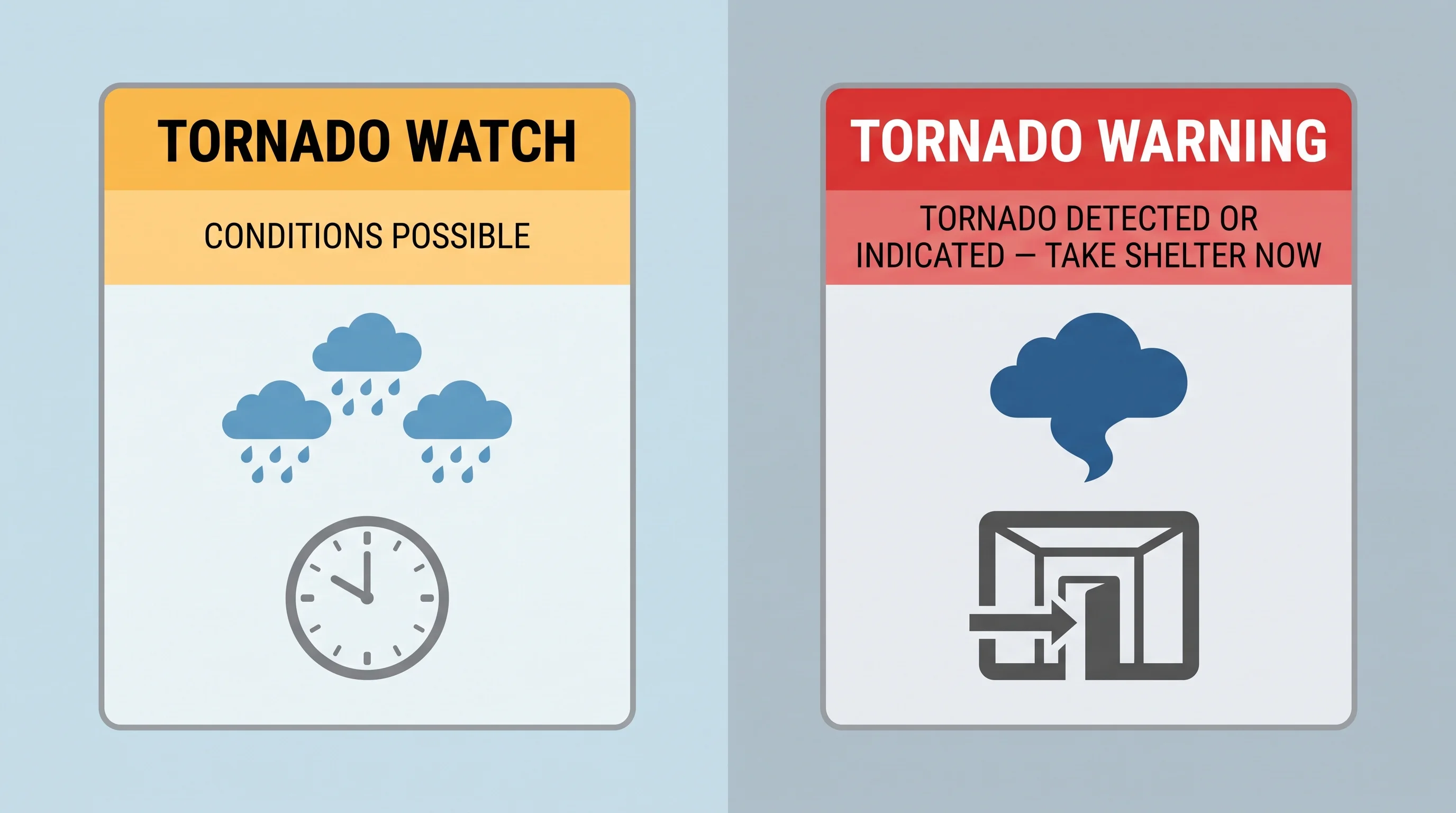
A tornado warning is far more urgent. It means a tornado has been confirmed by radar or spotted by a trained observer, or that radar indicates strong rotation in a storm capable of producing a tornado. Tornado warnings cover a specific, small area and typically last 30 to 60 minutes. When a tornado warning is issued for your location, the NWS guidance is immediate: move to an interior room on the lowest floor of a sturdy building, away from windows.
The Bay Area receives tornado watches a few times per year during winter storm season and tornado warnings less than once per year on average. When your phone blares a Wireless Emergency Alert for a tornado warning during a January rainstorm, it is worth taking seriously even in a region where tornadoes are weak, because even an EF0 tornado can cause injury from flying debris and falling trees.
Notable Bay Area Tornado Events
The strongest confirmed tornado in Bay Area history was an EF1 that struck near Gilroy in December 2019, with estimated winds of 90-100 mph. It damaged several structures and uprooted trees along a path of about half a mile. In January 2008, an EF0 tornado touched down in Oakland, damaging roofs and vehicles near the Coliseum area. In December 2014, an EF1 tornado struck near Denair in Stanislaus County (east of the Bay Area), and in February 2023, an EF0 touched down near South San Francisco during an atmospheric river event.
Waterspouts on San Francisco Bay are more common than land tornadoes and are occasionally observed during winter storms when cold air moves over the relatively warmer bay water. These are typically weak, non-mesocyclonic vortices that dissipate if they reach shore. They are visually dramatic but rarely cause damage.
What Should You Do During a Tornado Warning in the Bay Area?
Treat a tornado warning the same way you would anywhere: move to an interior room on the lowest floor, away from windows and exterior walls. If you are in a car, do not try to outrun the storm. Pull over, put on your seatbelt, and duck below the windows. If you are outdoors with no shelter available, lie flat in the lowest area you can find and cover your head.
The Bay Area's tornado risk is real but minor compared to the region's other weather hazards. Flooding from atmospheric rivers kills more Bay Area residents in a single bad winter than tornadoes have in the region's entire recorded history. Wildfire smoke, coastal flooding, and heat waves are all statistically more dangerous. But a tornado warning is not a time for complacency. Take shelter, wait for the warning to expire, and then return to worrying about the rain, which is the actual threat during the storms that produce Bay Area tornadoes.